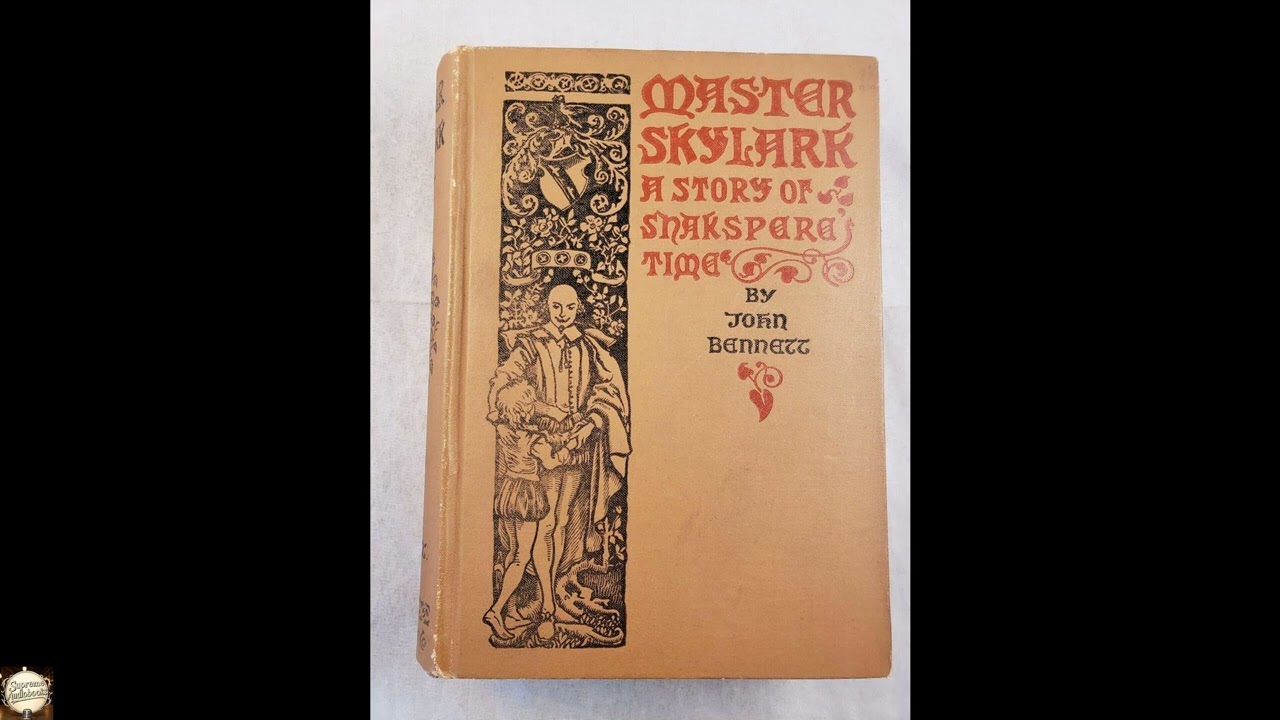
Master Skylark: A story of Shakspere's time
Step into the bustling, boisterous world of Elizabethan England, a time of grand pageantry, burgeoning theatre, and the very air thrumming with poetic potential. Master Skylark: A story of Shakspere's time offers more than just a glimpse into this remarkable era; it plunges you headfirst into the adventures of a young boy whose extraordinary voice opens doors to both wonders and dangers. This cherished classic, first published at the close of the nineteenth century, continues to resonate today, reminding us that the spirit of dreams, the longing for home, and the search for one's true place in the world are universal experiences, as relevant now as they were in the time of Queen Elizabeth I. It is a story about the irresistible call of art and the enduring pull of belonging, told through the eyes of a boy who becomes entangled in a world far grander and more perilous than he ever imagined. Our story introduces young Nick Attwood, a country boy from Stratford-upon-Avon, a town famous for its wool and, of course, for being the birthplace of William Shakespeare. Nick possesses a voice of such purity and power that it earns him the affectionate nickname "Master Skylark." Yet, despite his gift, Nick feels stifled by the quiet life of his small village, yearning for excitement beyond its familiar streets and fields. His restlessness, coupled with an impulsive decision, leads him into the company of a troupe of traveling players. Unwittingly, he finds himself swept away from his home, spirited off to the colossal, bewildering city of London. In London, Nick's life takes an astonishing turn. His singing abilities are quickly recognized by the manipulative but influential Master Grendel, who intends to exploit the boy's talent for his own gain, even presenting Nick as a "foundling" to the public. Amidst the grandeur and grime of the capital, Nick is introduced to the glittering world of the Elizabethan stage, singing before nobles and common folk alike, even catching the ear of Queen Elizabeth herself. He encounters famous actors, playwrights, and poets, including a kind and thoughtful gentleman named William Shakespeare, who recognizes Nick's longing for his family and offers a steadying presence in the boy's tumultuous new existence. Nick's days are filled with song and performance, but beneath the excitement lies a profound yearning for his loved ones in Stratford, and a growing determination to find his way back home, away from Grendel's clutches. The author of this celebrated work was John Bennett, an American writer born in Chillicothe, Ohio, in 1865. Bennett initially pursued a career in art, studying at the Art Students League in New York City, and even spending time painting in Italy. However, his true passion eventually led him to writing, specifically historical fiction aimed at younger readers. He possessed a keen interest in history and a talent for vivid storytelling, which he successfully combined to create narratives that were both educational and enthralling. Master Skylark became his most famous contribution to literature, cementing his reputation as a master of historical adventure. Bennett's literary output, though not extensive, was impactful. Following the success of Master Skylark, he penned other historical novels, such as Barnaby Lee (1900), set during the Dutch colonial period in New Amsterdam, and later diversified into collections of short stories and verses, including The Pigtail of Ah Lee Ben Loo (1928), which won the Newbery Honor. He spent much of his life in Charleston, South Carolina, immersing himself in the local history and culture, which often found its way into his work. Bennett’s meticulous research and ability to transport readers to different eras distinguish his writing, making him a significant figure in the development of children’s historical fiction in America during the late nineteenth and early twentieth centuries. He passed away in 1956, leaving a legacy of engaging historical narratives. Master Skylark enacts several enduring themes, beginning with the potent allure of art and performance. Nick's beautiful voice is not merely a plot device; it is a catalyst for his entire journey, representing the seductive power of creative expression. Listeners witness how his singing transports audiences, from tavern-goers to the Queen herself, showcasing how music and drama can transcend social divides and stir the human spirit. His experiences within the theatrical companies, despite the underlying dangers, illuminate the magic and communal spirit of the stage during its golden age. The story also powerfully addresses the theme of homecoming and the search for belonging. Nick’s initial desire for adventure outside Stratford is contrasted with his deep, abiding love for his family and the familiar comfort of his village. The grandeur of London eventually pales against the profound ache for his own bed and the faces of his loved ones, demonstrating that while the world may offer many excitements, true belonging often lies where one's heart is rooted. Furthermore, the book operates as a compelling coming-of-age narrative. Nick begins as an impulsive, somewhat naive country boy, eager for the world's wonders. Through his trials, the manipulations of Master Grendel, his encounters with both kind and cruel strangers, and his experiences navigating the complexities of London, he matures significantly. He learns resourcefulness, loyalty, and the importance of discernment, growing from a simple "skylark" into a young man with a stronger sense of self and purpose. Finally, the novel’s strength lies in its remarkable historical immersion. Bennett vividly reconstructs Elizabethan England, from the sights and sounds of crowded London streets, the specificities of period dress, to the inner workings of theatrical companies and even the language. The descriptions of the bustling London Bridge, the lively Bankside theatres, and the presence of historical figures like William Shakespeare and Queen Elizabeth I, do not merely serve as backdrop; they are integral to Nick's experience and provide an authentic window into a bygone era. When Master Skylark was first published in 1897, the world was undergoing immense change. The late Victorian era in America was a time of rapid industrialization, growing national confidence, and a burgeoning middle class with an increasing appetite for literature. There was a significant interest in historical fiction, particularly stories that romanticized earlier periods, and the Elizabethan era, with its association with Shakespeare, intellect, and adventure, held a special appeal. The turn of the century also saw a rise in the production of children's literature, often imbued with moral lessons and educational content, alongside tales of adventure and heroism. Authors like Bennett tapped into this desire, offering young readers not only exciting stories but also a chance to learn about history and culture in an engaging way. The enduring cultural reverence for Shakespeare also ensured a ready audience for any tale set in his orbit, creating a perfect environment for Master Skylark's emergence and success. To truly appreciate Master Skylark, listening to it as an audiobook provides an unparalleled experience. The narrator's skilled voice brings the historical settings and the rich dialogue to life, transforming the written word into a theatrical performance itself. Over several hours, listeners can become fully immersed in the world of young Nick Attwood, hearing the nuances of his courage, his fear, and his soaring voice. The pacing of the narration can expertly convey the breathless excitement of London's streets, the quiet desperation of Nick's longing for home, and the dramatic tension of his encounters with Master Grendel and the Queen. The distinct character voices in the dialogue, from the conniving player-master to the thoughtful Shakespeare, help listeners differentiate between personalities and truly feel part of the bustling Elizabethan scene. It’s an opportunity to close your eyes and let the sounds and spirit of Shakespeare's time wash over you, guided by a story of dreams, adventure, and the enduring power of music.
Enjoyed Master Skylark: A story of Shakspere's time? A few ways to support us
Audible & Amazon links are affiliate; we may earn a small commission at no extra cost.
About this production
Human narration by a volunteer reader from LibriVox.org, the public-domain audiobook project. LibriVox volunteers record literary works whose copyright has expired in the United States, releasing the resulting recordings into the public domain.
Master Skylark: A story of Shakspere's time by John with illustrations by Reginald. The underlying text is in the U.S. public domain. We do not republish any modern copyrighted edition, translation, or commentary.
The 4K cinematic visuals accompanying this audiobook are generated by an AI image model from prompts derived from the source text. No copyrighted photos, paintings, or stock footage are used. AI generation is disclosed on every video on our YouTube channel as required by YouTube's altered/synthetic content policy.
English subtitles are transcribed from the LibriVox recording with OpenAI Whisper. Translations into the 11 other supported languages are produced by Meta's NLLB-200 neural translation model. No human translator's copyrighted translation is used.
Questions about sourcing or rights? See our DMCA & Sourcing policy or contact us.
Enjoyed this audiobook?
If you'd like to own a copy of Master Skylark: A story of Shakspere's time or hear a professionally produced edition, the links below help support free audiobook production at no extra cost to you.
As an Amazon Associate we earn from qualifying purchases. Audible / print links are affiliate.