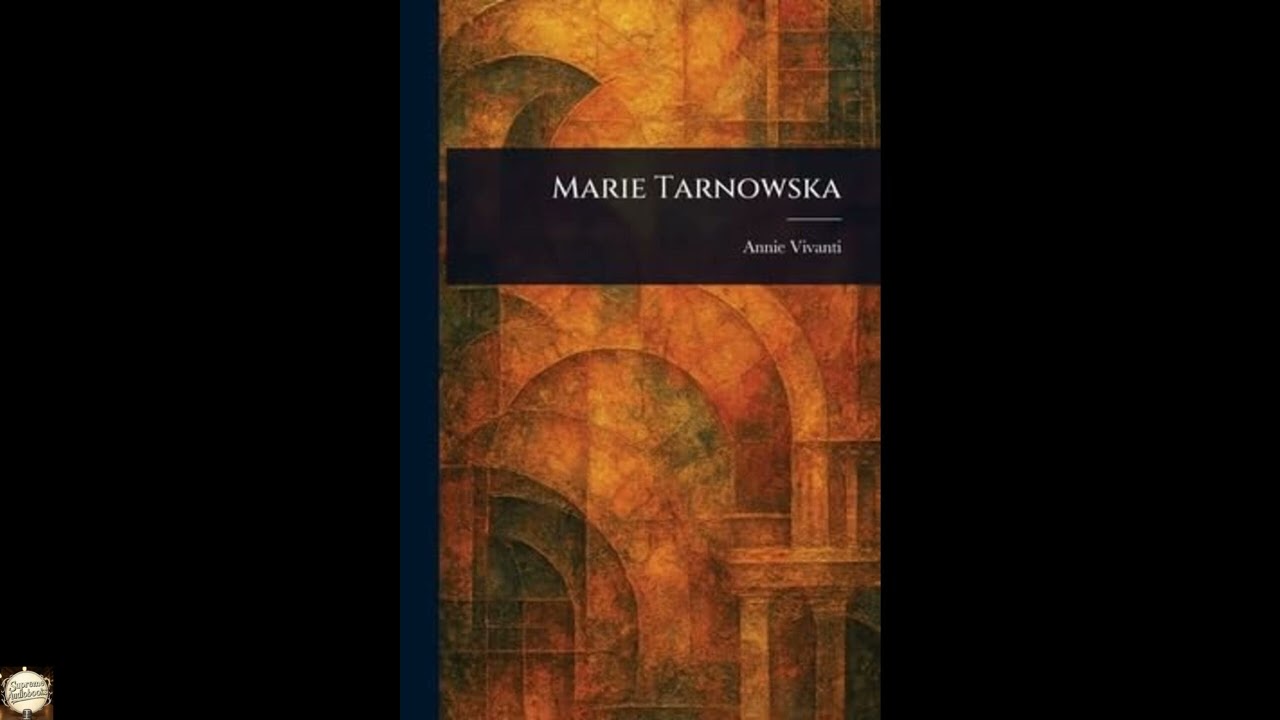
Marie Tarnowska
The early twentieth century witnessed a global fascination with figures who defied societal norms, whose lives became public spectacles of passion, crime, and morality. Among these, the story of Marie Tarnowska stands as one of the most compelling—a Russian countess accused of orchestrating a sensational murder, whose trial captivated Europe. Annie Vivanti’s literary rendering of Marie Tarnowska is not simply a recounting of legal proceedings; it is a profound examination of a woman pushed to extremes, a societal indictment, and a psychological drama that resonates with striking relevance today. This audiobook invites you to consider the enduring questions surrounding female agency, public perception, and the elusive nature of justice, all through the lens of a truly unforgettable historical figure. The narrative unfolds against the backdrop of turn-of-the-century Europe, beginning in the twilight of aristocratic Russia and moving towards the sun-drenched, yet morally ambiguous, canals of Venice, Italy. At its heart is Marie Tarnowska, a figure of striking beauty and enigmatic temperament, whose life is a series of tumultuous relationships and devastating betrayals. Born into privilege, Marie’s early experiences are marked by hardship and exploitation, shaping her into a woman capable of both immense charm and calculated manipulation. The story details her path through various liaisons, each increasingly destructive, as she seemingly leaves a trail of ruined men and shattered lives in her wake. The central conflict ignites with the murder of Count Paul Kamarowsky, a wealthy Russian nobleman and one of Marie's admirers. Suddenly, Marie finds herself at the center of a murder investigation, culminating in a highly publicized trial in Venice. The proceedings become a stage for dissecting her past, her character, and the very concept of female guilt and innocence. Vivanti meticulously portrays the arguments made by the prosecution and defense, each attempting to construct a definitive image of Marie—is she a cunning femme fatale, a cold-blooded killer who exploits men for their fortunes, or a tragic victim of circumstance, abused and manipulated by those around her? The novel keeps the listener on edge, never fully revealing Marie's true culpability, instead presenting a complex portrait where motives are murky and the line between victim and perpetrator is constantly blurred, leading towards a resolution that remains deliberately ambiguous. The author, Annie Vivanti (1868–1942), was a fascinating and prolific Italian writer whose own life spanned a period of immense social and cultural transformation. Born in London to an Italian father—Pasquale Vivanti, a distinguished scholar and politician—and a German-Jewish mother, Anna Lindau, herself a writer, Vivanti was immersed from an early age in a multilingual and intellectually stimulating environment. She spent her formative years traveling between England, Germany, and Italy, experiences that undoubtedly broadened her perspective and informed her later literary output. Vivanti established herself as a significant voice in Italian literature, publishing a wide array of works including poetry, novels, and journalistic pieces. Vivanti’s literary career gained early recognition with her poetry, but it was her novels that truly cemented her reputation. She was known for her acute psychological insight and her willingness to tackle complex issues surrounding women's lives, often challenging the prevailing societal expectations of her time. Her marriage to the Irish journalist John Chartres further connected her to international literary circles. Beyond Marie Tarnowska, other notable works such as I divoratori (The Devourers, 1910) and Gioia (Joy, 1921) continued to cement her place in the Italian literary canon, frequently focusing on themes of passion, motherhood, and the struggles of individual women within restrictive social frameworks. She was a prominent figure in an era when women writers were beginning to carve out more significant spaces in the literary world, articulating experiences that were often overlooked or silenced. Marie Tarnowska enacts several powerful themes, perhaps most notably the tension between individual free will and societal determinism. Vivanti continuously probes whether Marie is truly the architect of her own destiny, or if she is merely a product of her troubled past and the patriarchal society that seeks to define and control her. For instance, the courtroom scenes are not just about legal facts; they are a public dissection of Marie's entire history, where her beauty is simultaneously weaponized against her and presented as a source of her victimization, illustrating how society often judges women based on their perceived moral failings rather than concrete evidence. Another central theme is the intoxicating yet destructive nature of passion and desire. Marie's relationships are depicted with a raw intensity, showcasing how love, jealousy, and obsession can drive individuals to desperate acts. The novel offers glimpses into the psychological toll these entanglements take on all involved, portraying a cycle of infatuation, betrayal, and violence. The novel also powerfully interrogates the very definition of justice and the influence of public opinion, revealing how easily a trial can devolve into a moral spectacle, overshadowing the pursuit of truth with sensationalism and preconceived notions of guilt. The book emerged in a pivotal historical moment. Published in 1917, Vivanti’s novel appeared during the tumultuous years of the First World War, yet its subject matter dates back to the actual Tarnowska trial of 1907-1910. This period saw the burgeoning of mass media and tabloid journalism, which seized upon sensational criminal cases as fodder for public consumption. The Tarnowska trial itself was a global sensation, widely covered in newspapers, and Vivanti's novel capitalized on and critically engaged with this public fascination. Culturally, it was a time of shifting moral codes, particularly concerning women's roles and sexuality, alongside the rise of new psychological theories that sought to explain human behavior in more complex, often deterministic, ways. The book taps into the anxieties and fascinations of an age grappling with modernity, individualism, and the erosion of traditional values. Listening to Marie Tarnowska as an audiobook offers a unique gateway into this complex and compelling world. The extended runtime of several hours allows for a deeply immersive experience, letting the listener fully inhabit the nuanced characterizations and the escalating tension of the narrative. A skilled narrator can bring to life the distinct voices of Marie, her lovers, the impassioned lawyers, and the array of witnesses, each offering a different perspective on the central mystery. Pay close attention to the pacing, particularly during the courtroom sequences, where the deliberate rhythm of the legal arguments and cross-examinations builds a palpable sense of drama and suspense. The atmospheric descriptions of both opulent drawing rooms and stark prison cells are further enhanced by the auditory experience, allowing the story’s emotional weight and psychological depth to truly resonate.
Enjoyed Marie Tarnowska? A few ways to support us
Audible & Amazon links are affiliate; we may earn a small commission at no extra cost.
About this production
Human narration by a volunteer reader from LibriVox.org, the public-domain audiobook project. LibriVox volunteers record literary works whose copyright has expired in the United States, releasing the resulting recordings into the public domain.
Marie Tarnowska by Annie Vivanti. The underlying text is in the U.S. public domain. We do not republish any modern copyrighted edition, translation, or commentary.
The 4K cinematic visuals accompanying this audiobook are generated by an AI image model from prompts derived from the source text. No copyrighted photos, paintings, or stock footage are used. AI generation is disclosed on every video on our YouTube channel as required by YouTube's altered/synthetic content policy.
English subtitles are transcribed from the LibriVox recording with OpenAI Whisper. Translations into the 11 other supported languages are produced by Meta's NLLB-200 neural translation model. No human translator's copyrighted translation is used.
Questions about sourcing or rights? See our DMCA & Sourcing policy or contact us.
Enjoyed this audiobook?
If you'd like to own a copy of Marie Tarnowska or hear a professionally produced edition, the links below help support free audiobook production at no extra cost to you.
As an Amazon Associate we earn from qualifying purchases. Audible / print links are affiliate.