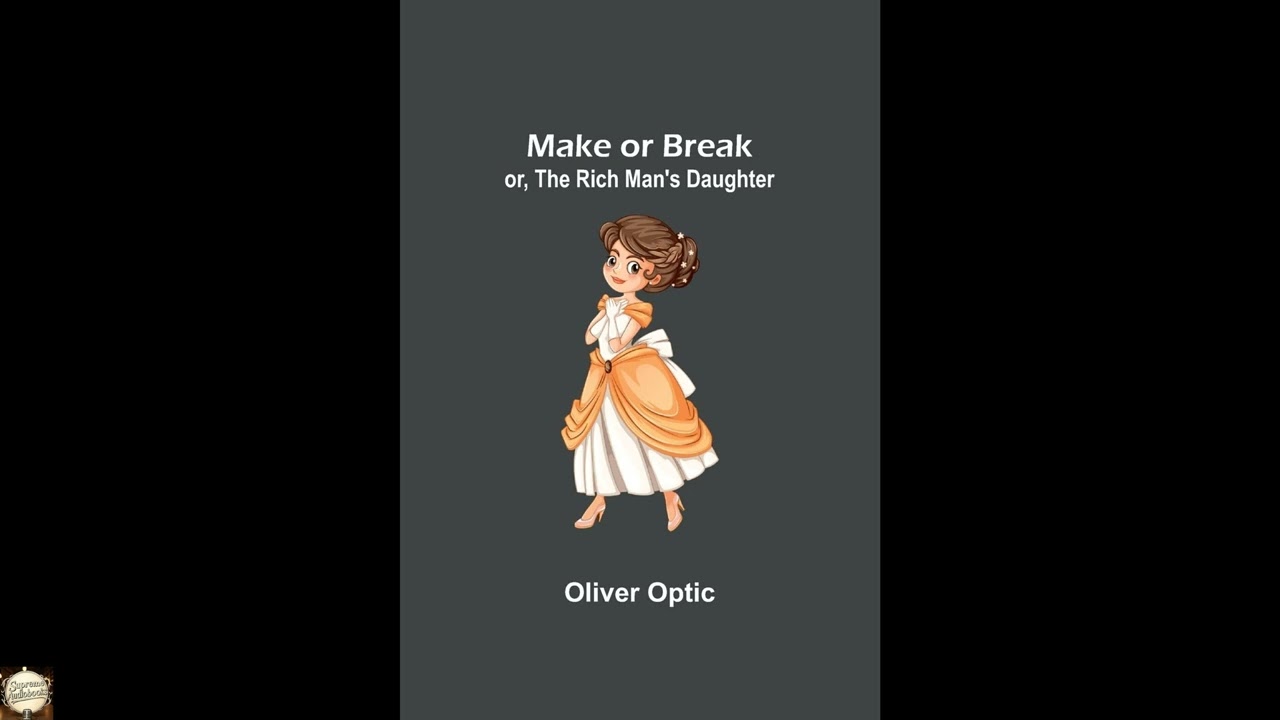
Make or Break; or, The Rich Man's Daughter
Step into a world where fortunes turn on a dime, where a family's reputation hangs by a thread, and where the mettle of youth is tested against the unforgiving currents of society. Oliver Optic's Make or Break; or, The Rich Man's Daughter is more than a tale of nautical adventure and domestic drama; it is a profound examination of integrity, class, and the enduring power of familial loyalty in the face of profound adversity. Originally published in the late nineteenth century, this compelling narrative resonates with enduring questions about what truly defines a person, how we navigate moral quandaries when everything is at stake, and whether virtue can truly triumph over the crushing weight of circumstance. It offers a window into the values and anxieties of an America undergoing rapid change, presenting a gripping story that feels remarkably pertinent to anyone grappling with personal or societal upheaval today. The story unfolds in a bustling seaport town, a place where wealth and status are as fluid and unpredictable as the tides. We are introduced to the Bennington family, headed by Captain Bennington, a man of considerable standing and prosperity whose life seems anchored in security. His children, Mark and Bella, represent the very picture of privileged youth, accustomed to comfort and the promise of a bright future. However, this idyllic existence is shattered with breathtaking speed when Captain Bennington suffers a catastrophic financial reversal, losing everything he possesses. This sudden plunge from affluence to poverty is not merely an inconvenience; it is a complete demolition of their social standing and their very means of survival. The Benningtons find themselves in a desperate struggle to regain their footing. Mark, still a young man, feels the immense weight of responsibility for his family's welfare. His efforts to earn money and restore their good name form the heart of the narrative, forcing him into a world far harsher than he ever imagined. Complicating matters is the enigmatic presence of the "Rich Man's Daughter," whose connection to the Bennington's downfall and potential future remains a source of both hope and tension. Her involvement highlights the stark class divisions and the precariousness of social standing in the era, adding layers of romantic and moral complexity to Mark's arduous path. As the family battles not only destitution but also the machinations of a ruthless adversary, the core conflict becomes one of survival – not just financially, but ethically, as Mark faces temptations and challenges that threaten to compromise his innate sense of right. The author behind the pseudonym "Oliver Optic" was William Taylor Adams, born in 1822 in Medway, Massachusetts. Adams was a towering figure in American juvenile literature during his lifetime, a prolific writer whose influence on young readers was immense. Before dedicating himself fully to writing, Adams worked for two decades as a teacher and principal in Boston's public schools, an experience that undoubtedly shaped his understanding of youthful minds and the moral lessons he wished to impart. His career as a professional writer truly began in the 1850s, and by the 1860s, he was producing an astonishing volume of work, often simultaneously publishing several serialized stories in different periodicals. Adams was a pioneer in the development of the "dime novel" and serialized fiction for young people, particularly boys. He published over 100 books under his Oliver Optic pen name, establishing popular series such as "The Boat-Club Series," "The Starry Flag Series," and "The Army and Navy Series." His stories were characterized by their emphasis on adventure, ingenuity, and strong moral principles, often set against backdrops of seafaring, military life, or the challenges of urban existence. Although his work is not as widely read today as it once was, Adams was an undisputed literary superstar of his era, selling millions of copies and shaping the moral imagination of a generation of American youth who looked to his protagonists as models of industry, honesty, and perseverance. Make or Break powerfully illustrates several key themes that were central to the sensibilities of its time, and which remain resonant. One prominent theme is the precariousness of social standing and the corrupting influence of wealth. Captain Bennington's sudden ruin showcases how quickly one can fall from grace, and how society's perception shifts with the ebb and flow of fortune. The Bennington children, once respected, now face scorn and suspicion, forcing them to confront the superficiality of their former world. Another theme is moral integrity versus expedient compromise. Mark, as he navigates the harsh realities of earning a living, repeatedly faces situations where he could take shortcuts or engage in morally dubious actions to alleviate his family's suffering. His internal struggles and his commitment to honesty, even when it means greater hardship, stand as a testament to the enduring value of character. The narrative also highlights the profound theme of family loyalty and resilience. Despite their sudden impoverishment and the societal pressures to abandon their struggles, the Bennington family unit remains steadfast. Mark's tireless efforts to provide for his mother and sister, and their mutual support, underscore the idea that familial bonds are the truest anchors in a storm. Furthermore, the novel touches upon justice and the pursuit of truth, as the family slowly unravels the circumstances behind Captain Bennington's downfall and seeks to rectify the wrongs committed against them, suggesting that perseverance and virtue can ultimately lead to a form of vindication. The late nineteenth century, when Make or Break first appeared, was a period of immense transformation in America. The nation was grappling with the aftermath of the Civil War, industrialization was rapidly changing economic landscapes, and urbanization brought new social challenges and opportunities. There was a burgeoning middle class, alongside stark disparities between the rich and the poor, making stories about upward mobility, financial ruin, and moral fortitude particularly appealing. The period also saw a boom in publishing, especially for juvenile literature, which often served as a vehicle for instructing young readers in Victorian-era virtues like self-reliance, hard work, temperance, and piety. Oliver Optic's stories emerged directly from this cultural milieu, providing entertainment that simultaneously offered clear moral guidance. His works reflected the prevailing belief that good character, combined with diligence, was the surest path to success and happiness, even in a world increasingly shaped by impersonal economic forces. Make or Break perfectly encapsulated these ideals, presenting a dramatic narrative where the hero's ultimate redemption is directly tied to his unwavering adherence to principle and his persistent efforts, making it a powerful and timely message for its initial audience. Listening to Make or Break; or, The Rich Man's Daughter as an audiobook offers a particularly rich and immersive experience. With several hours of narration, you have ample time to settle into the period language and the unfolding drama, allowing the world of the nineteenth-century seaport to truly come alive. The narrator's interpretation brings depth to the distinct voices of characters like the struggling but honorable Mark, the elegant and perhaps conflicted rich man's daughter, and the various figures who populate their journey from prosperity to despair and back. Pay close attention to the pacing, which often builds tension in the face of financial peril and moral dilemmas, and how the narration captures the evolving atmosphere—from the initial comfort of the Bennington home to the stark challenges of their penury. It's an opportunity to truly hear the spoken word as it might have been read aloud in parlors long ago, connecting you directly to the emotional core of this enduring classic.
Enjoyed Make or Break; or, The Rich Man's Daughter? A few ways to support us
Audible & Amazon links are affiliate; we may earn a small commission at no extra cost.
About this production
Human narration by a volunteer reader from LibriVox.org, the public-domain audiobook project. LibriVox volunteers record literary works whose copyright has expired in the United States, releasing the resulting recordings into the public domain.
Make or Break; or, The Rich Man's Daughter by Oliver Optic. The underlying text is in the U.S. public domain. We do not republish any modern copyrighted edition, translation, or commentary.
The 4K cinematic visuals accompanying this audiobook are generated by an AI image model from prompts derived from the source text. No copyrighted photos, paintings, or stock footage are used. AI generation is disclosed on every video on our YouTube channel as required by YouTube's altered/synthetic content policy.
English subtitles are transcribed from the LibriVox recording with OpenAI Whisper. Translations into the 11 other supported languages are produced by Meta's NLLB-200 neural translation model. No human translator's copyrighted translation is used.
Questions about sourcing or rights? See our DMCA & Sourcing policy or contact us.
Enjoyed this audiobook?
If you'd like to own a copy of Make or Break; or, The Rich Man's Daughter or hear a professionally produced edition, the links below help support free audiobook production at no extra cost to you.
As an Amazon Associate we earn from qualifying purchases. Audible / print links are affiliate.