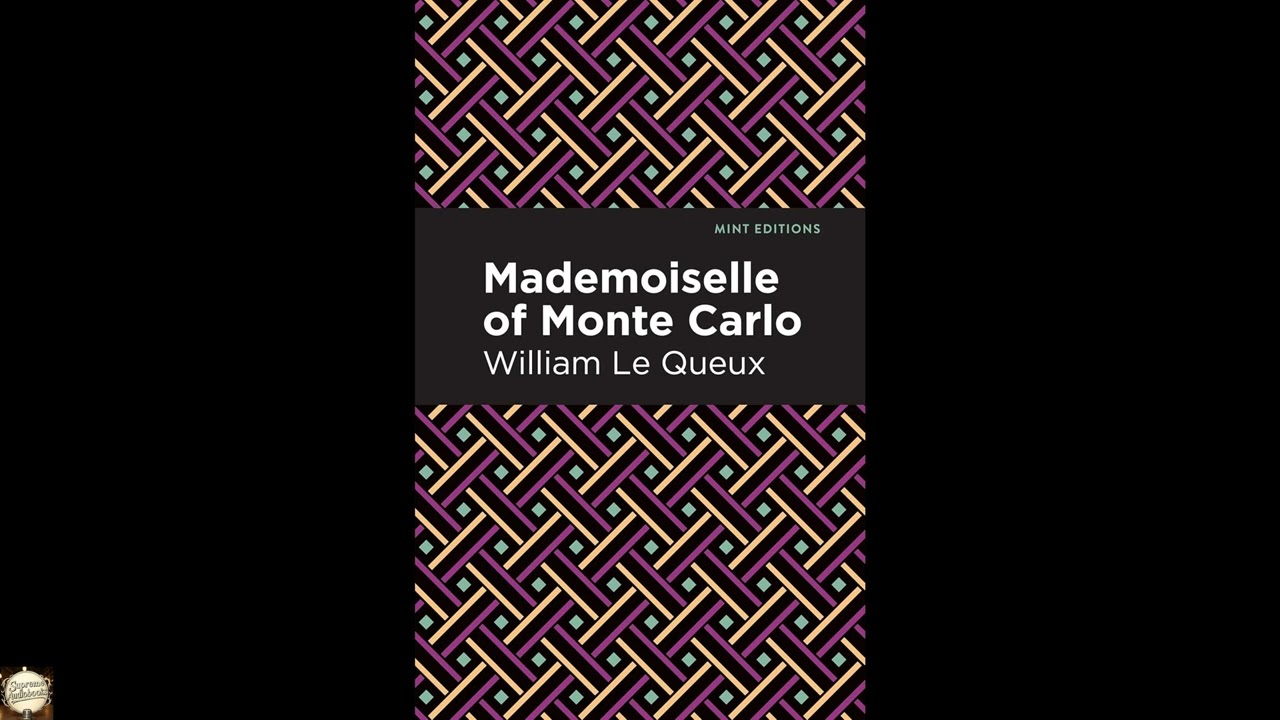
Mademoiselle of Monte Carlo
Step into a world where high stakes are measured not only in casino chips but in matters of international diplomacy and personal survival, where the glittering facade of European high society conceals a sinister undercurrent of espionage and danger. William Le Queux's Mademoiselle of Monte Carlo, first published in 1904, offers a gripping plunge into the gilded cages and shadowy alleys of the principality, a place synonymous with luxury, intrigue, and deception. For modern listeners, this audiobook is more than just a period thriller; it is a meticulously crafted clockwork of suspense, a foundational piece of the spy genre that continues to resonate with its exploration of secret agendas, hidden identities, and the precarious balance of power. It serves as a fascinating lens through which to view the anxieties and fascinations of the early twentieth century, all while delivering a truly breathless narrative that holds its own against today's fastest-paced thrillers. The story plunges us directly into the opulent, yet increasingly perilous, landscape of Monte Carlo. Our protagonist, a seemingly ordinary Englishman named Basil Murchison, arrives in the famed resort town drawn by its allure, only to find himself unwittingly caught in a web of international conspiracy. His path crosses with the enigmatic Mademoiselle – a woman of captivating beauty and impenetrable mystery, whose presence seems to ignite a chain of increasingly dangerous events. From the glittering gaming tables of the casino to the secluded villas nestled among the hills, Murchison quickly discovers that behind the veneer of wealth and leisure lies a murky world of secret agents, coded messages, and shadowy figures orchestrating events that could shake the very foundations of Europe. As Murchison attempts to decipher Mademoiselle's true allegiances and the nature of the plot unfolding around him, he finds himself in a desperate race against time. The central conflict revolves around a perilous scheme designed to destabilize international relations, with Monte Carlo serving as the unlikely, yet perfect, nexus for such a plot. Murchison, initially an observer, transforms into an active participant, driven by a growing sense of duty and an undeniable connection to the mysterious woman at the heart of the intrigue. His pursuit of the truth takes him through thrilling encounters, narrow escapes, and a constant questioning of who can be trusted, building a relentless arc of suspense as the grand, dangerous design slowly reveals itself without ever fully giving away its ultimate secret. William Le Queux, born in London in 1864, established himself as one of the most prolific and popular authors of his era, often hailed as a pioneer of the modern spy novel. Before he became a literary sensation, Le Queux worked as a journalist and war correspondent, covering conflicts across Europe and the Balkans. This firsthand experience, coupled with his keen interest in foreign affairs and a claimed personal involvement in secret service work—though the full extent of this remains debated by biographers—lent an unparalleled authenticity and urgency to his fiction. He possessed a remarkable ability to tap into the public’s anxieties about international espionage and the looming threat of conflict, crafting narratives that felt chillingly plausible. Le Queux’s bibliography is extensive, comprising over 150 novels, many of which dealt with themes of espionage, invasion, and political intrigue. His most famous work, The Invasion of 1910, initially serialized in the Daily Mail, caused a public sensation by vividly depicting a German invasion of Britain, influencing popular opinion and defense policy. Other notable titles like The Great White Hand and The Secret of the Sirdar further solidified his reputation as a master of suspense. He was a sensation writer in the truest sense, creating stories that gripped the public imagination, offering thrills and often weaving in strong nationalistic undertones that reflected the imperial era in which he wrote. His place in the literary canon is that of a foundational figure for the thriller genre, paving the way for later spy writers by demonstrating the power of merging geopolitical anxieties with compelling, fast-paced narratives. Le Queux passed away in 1927, leaving behind a legacy of stories that continue to entertain and inform about a particular moment in history. Mademoiselle of Monte Carlo enacts several compelling themes that resonate with profound literary significance. Central among these is the theme of deception and hidden appearances. Monte Carlo itself functions as a magnificent stage where lavish balls, opulent casinos, and private gatherings mask a clandestine world of spies, double-crossing, and treacherous plots. Characters are seldom what they seem; a charming diplomat might be a cunning agent, a benevolent socialite a ruthless conspirator. This constant questioning of identity and motive imbues the narrative with a pervasive sense of paranoia, exemplified in scenes where seemingly innocent conversations in public spaces are revealed to carry coded meanings or veiled threats, forcing Murchison to constantly re-evaluate his surroundings. Another prominent theme is that of international intrigue and the precarious balance of power. The story unfolds against a backdrop of simmering European tensions, where great nations vie for influence and secret treaties dictate destinies. Le Queux skillfully portrays how individual actions, even in a seemingly detached resort town, can have far-reaching geopolitical consequences. The machinations of the villains in Monte Carlo are not merely for personal gain but aim to ignite wider conflicts, illustrating how espionage was perceived as a critical, albeit covert, arm of foreign policy during that period. The author consistently underscores the vulnerability of peace to the schemes of ambitious individuals and shadowy organizations, making the personal stakes feel universally significant. When Mademoiselle of Monte Carlo was published in 1904, Europe was entering a period often referred to as the Belle Époque, a time of relative peace and economic prosperity, yet also one rife with underlying anxieties. The continent was a complex mosaic of competing empires and burgeoning nationalisms, with secret alliances forming and an arms race quietly gathering pace. The assassination of Archduke Franz Ferdinand and the outbreak of World War I were still a decade away, but the seeds of conflict were very much being sown through diplomatic maneuvering and intelligence operations across various capitals. Le Queux's novels tapped directly into this palpable sense of unease and the public's fascination with secret agents, foreign plots, and the threat of invasion. Culturally, the early 1900s saw a burgeoning popular press and a growing appetite for escapist literature that offered thrills and adventure. Le Queux, with his background in journalism and his knack for creating suspenseful, fast-paced narratives, was perfectly positioned to meet this demand. His stories often blended real-world geographical locations and political concerns with fictionalized espionage plots, giving them a contemporary urgency. Monte Carlo, a playground for the wealthy and powerful, also served as a convenient real-world setting where international figures—and by extension, international secrets—would naturally converge, making it an ideal stage for the kind of high-stakes drama Le Queux excelled at crafting. His work emerged from a cultural moment that both enjoyed and feared the implications of a rapidly interconnected, yet increasingly volatile, world. Listening to Mademoiselle of Monte Carlo as an audiobook offers a unique and immersive way to experience Le Queux's masterful storytelling. The several hours of narration provide the perfect length for a focused, yet not overwhelming, engagement with its intricate plot and vivid descriptions. A skilled narrator brings to life the distinct voices of the diverse cast—from the coolly calculating villains to the steadfast protagonist and the mysterious Mademoiselle herself—enhancing the psychological depth and the dramatic tension of each encounter. The pacing of the narration can expertly build suspense, allowing the listener to truly feel the urgency of Murchison's mission and the constant threat he faces. Moreover, the evocative descriptions of Monte Carlo, from the clinking of glasses in lavish ballrooms to the hushed whispers of secret meetings, gain an added layer of atmosphere when delivered through skilled vocal performance, transporting the listener directly into the heart of this dangerous, dazzling world.
Enjoyed Mademoiselle of Monte Carlo? A few ways to support us
Audible & Amazon links are affiliate; we may earn a small commission at no extra cost.
About this production
Human narration by a volunteer reader from LibriVox.org, the public-domain audiobook project. LibriVox volunteers record literary works whose copyright has expired in the United States, releasing the resulting recordings into the public domain.
Mademoiselle of Monte Carlo by William Le Queux. The underlying text is in the U.S. public domain. We do not republish any modern copyrighted edition, translation, or commentary.
The 4K cinematic visuals accompanying this audiobook are generated by an AI image model from prompts derived from the source text. No copyrighted photos, paintings, or stock footage are used. AI generation is disclosed on every video on our YouTube channel as required by YouTube's altered/synthetic content policy.
English subtitles are transcribed from the LibriVox recording with OpenAI Whisper. Translations into the 11 other supported languages are produced by Meta's NLLB-200 neural translation model. No human translator's copyrighted translation is used.
Questions about sourcing or rights? See our DMCA & Sourcing policy or contact us.
Enjoyed this audiobook?
If you'd like to own a copy of Mademoiselle of Monte Carlo or hear a professionally produced edition, the links below help support free audiobook production at no extra cost to you.
As an Amazon Associate we earn from qualifying purchases. Audible / print links are affiliate.