Lord Elgin
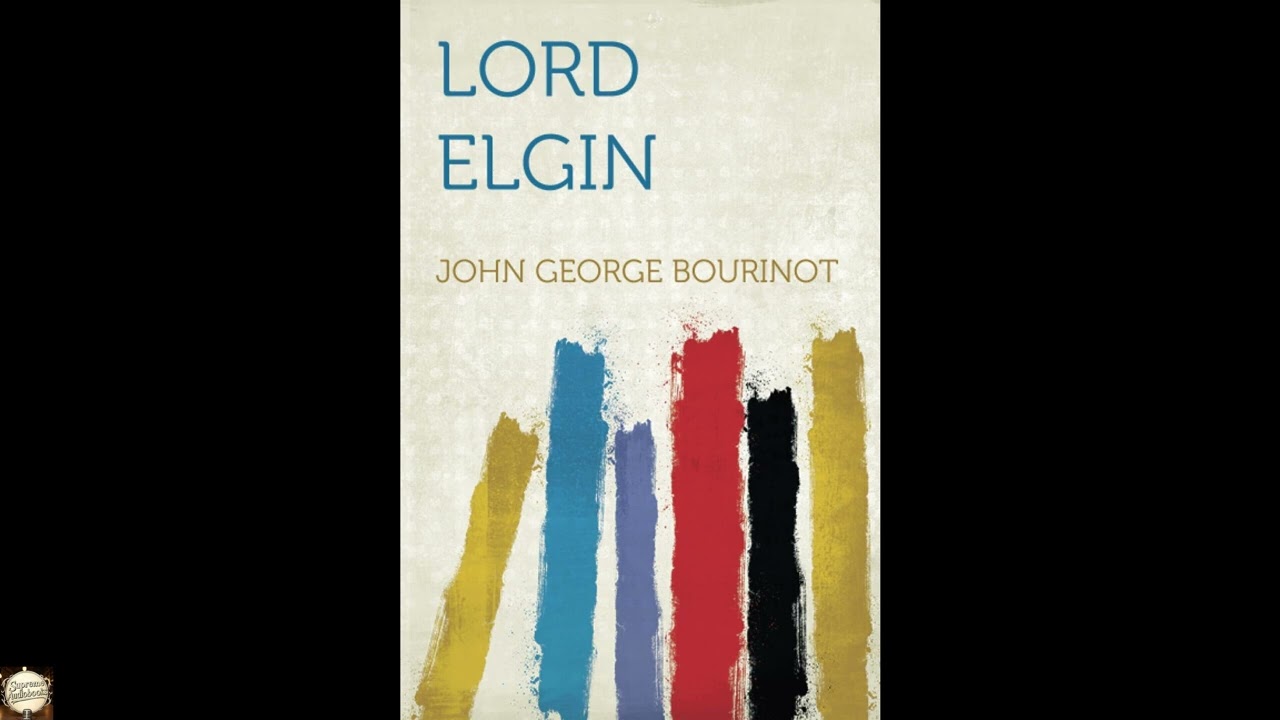
Step into a crucial moment in the story of modern Canada with John George Bourinot’s Lord Elgin, a biographical account that brings to life the statesman who helped define a nation. This is more than a historical record; it is a vivid depiction of principles clashing with prejudice, of political courage confronting mob rule, and the delicate birth of responsible government in a volatile colonial setting. Listeners today will find remarkable parallels in the ongoing global challenges of democratic governance, the tensions between diverse populations, and the enduring necessity of principled leadership. Bourinot’s work offers a clear-eyed perspective on how a complex society found its footing, guided by a figure whose decisions echo through the halls of parliamentary democracy even now. The narrative centers on James Bruce, the eighth Earl of Elgin, who arrived in Canada as Governor General in 1847. He stepped into a country still reeling from the Lower and Upper Canada Rebellions of 1837-38, a land deeply divided by language, religion, and political ideology. French and English Canadians often stood on opposite sides of nearly every issue, and the concept of genuine self-governance—where the colonial administration truly answered to an elected assembly—remained untested and fraught with peril. Lord Elgin, a man of considerable intellect and measured temperament, faced the daunting task of bridging these chasms, all while upholding the authority of the British Crown. His mission was to transform a contentious colony into a self-governing dominion under constitutional monarchy. The central conflict of Elgin’s tenure, and the pivotal event in Bourinot’s telling, revolves around the Rebellion Losses Bill of 1849. This legislation aimed to compensate individuals in Lower Canada (now Quebec) for property damage suffered during the 1837 rebellion, a move seen by many English Tories as rewarding traitors. Despite immense public outcry, including violent demonstrations and threats to his own safety, Elgin chose to assent to the bill, following the advice of his elected Executive Council. This decision, though deeply unpopular with a vocal segment of the population, was a profound commitment to the principle of responsible government—that the Crown would act on the will of the people’s elected representatives. The arc of Bourinot’s story traces Elgin’s steadfast commitment to this ideal, from the initial legislative debates, through the explosive Montreal riots that saw the Parliament buildings set ablaze, to the eventual calming of the political storm, cementing Canada’s path toward an independent parliamentary democracy. Sir John George Bourinot, the author, was a significant figure in Canadian letters during the late nineteenth and early twentieth centuries. Born in Sydney, Nova Scotia, in 1837, Bourinot initially pursued a career in journalism, which honed his skills in concise reporting and analytical prose. This foundational experience later informed his meticulous historical writing. He held various positions in the public service before being appointed Clerk of the House of Commons of Canada in 1880, a role he maintained until his death in 1902. This unique vantage point—at the very heart of Canadian parliamentary operations—gave him an unparalleled understanding of constitutional law, political procedure, and the practical workings of government. Bourinot’s intellectual output largely focused on Canadian political and constitutional history, establishing him as a foundational scholar in the field. His authoritative Parliamentary Procedure and Practice in the Dominion of Canada (1884) remains a seminal reference for Canadian law and governance. Lord Elgin, published posthumously in 1903, represents a culmination of his life’s dedication to understanding Canada’s political evolution. He was not merely a chronicler of facts but an interpreter of the forces that shaped the nation, writing with the insight of someone intimately familiar with the machinery of state, having personally observed the parliamentary processes that Lord Elgin helped establish. His place in the Canadian canon is secure as an essential voice in the nation's self-understanding. Bourinot’s biographical account skillfully highlights several key themes. One prominent theme is the evolution of responsible government and democratic principles. Through Elgin’s actions, Bourinot illustrates how a system where ministers answer to the elected assembly, rather than solely the monarch or imperial authority, became firmly entrenched. The Rebellion Losses Bill crisis serves as the concrete example: Elgin could have bowed to pressure and vetoed the bill, but his refusal to do so, despite facing physical danger and public scorn, demonstrated an unwavering belief in the democratic process. This was not a theoretical exercise for Elgin; it was a defining test of his commitment to the nascent Canadian democracy. Another significant theme is statesmanship and principled leadership amidst political turmoil. Elgin is depicted as a man who consistently placed long-term national interest above short-term political expediency or personal comfort. His ability to remain calm and decisive during periods of intense unrest, such as the Montreal riots, showcases a rare form of leadership. He navigated deep-seated ethnic and political divisions not by favoring one group, but by upholding constitutional principles that ensured fairness for all, thereby laying the groundwork for a unified Canadian identity. Bourinot’s portrayal emphasizes the individual courage required to steer a nation through its formative years, particularly when the path forward is unclear and fraught with risk. Published in 1903, Bourinot’s Lord Elgin arrived at a time when Canada was solidifying its national identity and reflecting on the events that led to its Confederation in 1867. The late nineteenth and early twentieth centuries were a period of intense historical scholarship across the British Empire, as dominions like Canada sought to define their unique place within the imperial structure while asserting their distinct national character. Bourinot, writing from the heart of Canadian political life, provided a historical justification for the parliamentary system and the principles of self-governance that had been so painstakingly established. This work emerged in an era when the legacy of figures like Lord Elgin—who helped transition Canada from a collection of fractious colonies to a self-governing dominion—was being keenly assessed. Culturally and politically, Canada was grappling with the ongoing challenges of nation-building: integrating diverse populations, balancing regional interests, and asserting its sovereignty. Bourinot's biography offered a coherent narrative of these formative years, providing both historical context and inspiration for contemporary leaders and citizens contemplating Canada's future within the broader context of the British Empire and the global stage. Listening to Lord Elgin as an audiobook offers a unique way to engage with this important piece of Canadian history. The run length, several hours in total, allows for a comprehensive yet accessible exploration of Elgin's transformative period as Governor General, without feeling rushed. A skilled narrator will bring Bourinot’s direct, scholarly prose to life, giving voice to the historical figures and the high-stakes political dramas that unfolded. You will hear the measured tone suitable for a constitutional historian, yet also the underlying drama in descriptions of fervent public debate and moments of societal unrest. The clarity of the narration can make complex constitutional principles understandable, allowing listeners to grasp the nuances of responsible government as it was being forged. It is an experience best suited for focused listening—perhaps while commuting or during dedicated study time—where you can truly absorb the gravity of the decisions and the atmosphere of a nation finding its democratic stride.
Enjoyed Lord Elgin? A few ways to support us
Audible & Amazon links are affiliate; we may earn a small commission at no extra cost.
About this production
Human narration by a volunteer reader from LibriVox.org, the public-domain audiobook project. LibriVox volunteers record literary works whose copyright has expired in the United States, releasing the resulting recordings into the public domain.
Lord Elgin by John George Bourinot. The underlying text is in the U.S. public domain. We do not republish any modern copyrighted edition, translation, or commentary.
The 4K cinematic visuals accompanying this audiobook are generated by an AI image model from prompts derived from the source text. No copyrighted photos, paintings, or stock footage are used. AI generation is disclosed on every video on our YouTube channel as required by YouTube's altered/synthetic content policy.
English subtitles are transcribed from the LibriVox recording with OpenAI Whisper. Translations into the 11 other supported languages are produced by Meta's NLLB-200 neural translation model. No human translator's copyrighted translation is used.
Questions about sourcing or rights? See our DMCA & Sourcing policy or contact us.
Enjoyed this audiobook?
If you'd like to own a copy of Lord Elgin or hear a professionally produced edition, the links below help support free audiobook production at no extra cost to you.
As an Amazon Associate we earn from qualifying purchases. Audible / print links are affiliate.