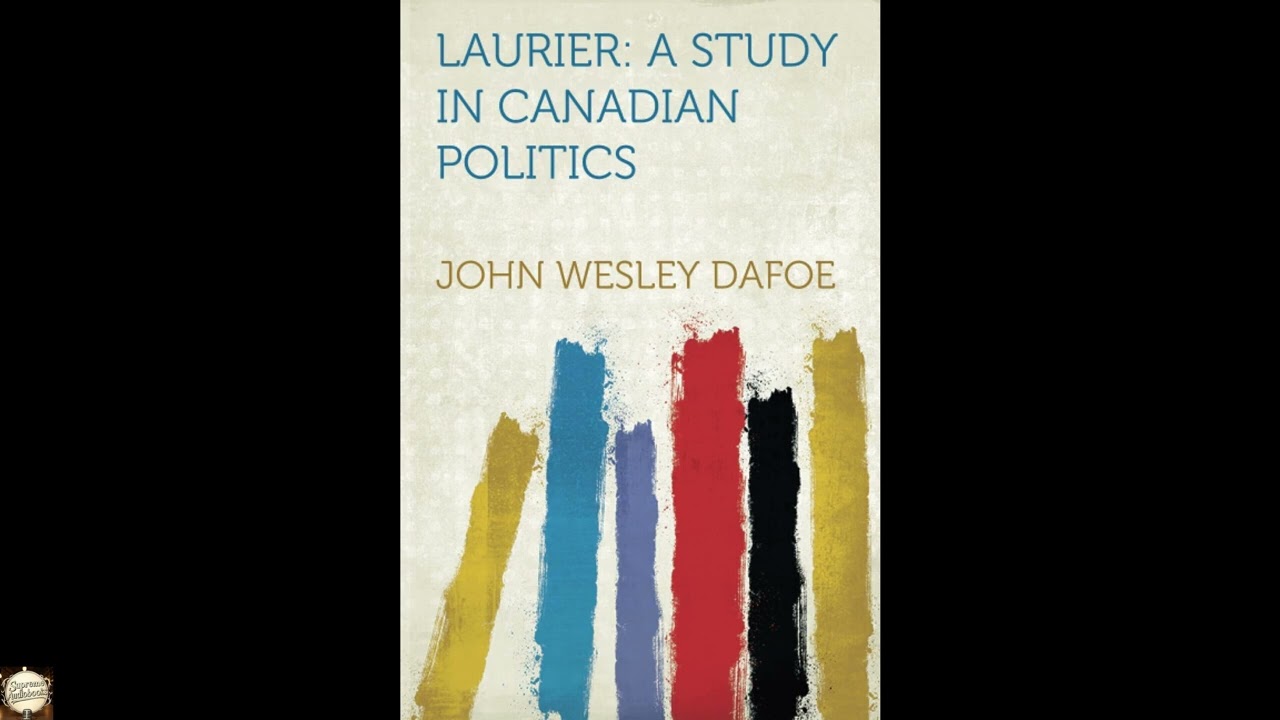
Laurier: A Study in Canadian Politics
This seminal work, Laurier: A Study in Canadian Politics by John Wesley Dafoe, offers more than a mere historical recounting; it presents a penetrating analysis of Canada's seventh Prime Minister, Sir Wilfrid Laurier, through the discerning eye of one of the nation's most respected journalists. Listeners encounter a vivid portrait of a leader who navigated Canada through a pivotal period of nation-building, striving to forge unity from disparate cultural and political forces. Dafoe, writing shortly after Laurier's death, provides a near-contemporaneous perspective, offering insights into federalism, cultural identity, and Canada's evolving place on the world stage that remain remarkably resonant today. Dafoe's study situates Wilfrid Laurier within the complex political landscape of late 19th and early 20th-century Canada. Born in Saint-Lin, Quebec, in 1841, Laurier's trajectory from a legal career to Member of Parliament is chronicled, highlighting his oratorical skill and unique ability to bridge French and English linguistic divides. His ascent through the Liberal Party, becoming its leader in 1887, sets the stage for his lengthy premiership from 1899 to 1911—a period of both economic growth and profound national policy debates. The central conflict animating Laurier's political life revolves around the perpetual tension between Canadian unity and powerful centrifugal forces of regionalism, religion, and language. Laurier consistently grappled with momentous issues, from the Manitoba Schools Question—a controversy over minority education—to Canada's evolving relationship with the British Empire, always striving to balance imperial loyalty with a desire for national autonomy. Dafoe details Laurier's political strategies, his commitment to compromise, and his persistent efforts to unite a diverse nation. John Wesley Dafoe, born in 1866 in Combermere, Ontario, stands as one of Canada's most influential journalists and public intellectuals of the early 20th century. His career was marked by an unwavering commitment to public service and rigorous, independent thought, largely expressed through the pages of the Manitoba Free Press, which he edited for an extraordinary 43 years, from 1901 until his death in 1944. Under his leadership, the newspaper, later renamed the Winnipeg Free Press, became a powerful voice for Western Canadian interests and a significant platform for national commentary. Dafoe was more than just an editor; he was a fervent advocate for Canadian autonomy and a staunch proponent of the League of Nations, believing passionately in international cooperation. His editorials often shaped national debates, pushing for free trade and advocating for Canada's maturation into an independent nation. Beyond his prolific newspaper work, Dafoe authored significant books like Clifford Sifton in Relation to His Times and Canada: An American Nation. His direct, analytical style, reflecting his journalistic training and profound understanding of Canadian political history, secured his unique place in the Canadian canon. Dafoe's Laurier illuminates several enduring themes crucial to Canadian identity. Foremost among these is the perpetual struggle for national unity and compromise. Laurier's career, as Dafoe shows, was a masterclass in navigating the linguistic, religious, and regional fault lines that perpetually challenged the young Dominion. For instance, in his handling of the highly divisive Manitoba Schools Question, Laurier employed patient negotiation and political dexterity to defuse a crisis rooted in provincial rights and minority language education, demonstrating the vital importance of finding common ground in a diverse nation. Another significant theme is Canada's evolving relationship with the British Empire and the assertion of national autonomy. Dafoe captures the nuanced shift from colonial dependency to a more independent international stance, evident during debates like Canada's involvement in the Boer War, where Laurier skillfully defined Canada’s contributions on its own terms. The book also highlights liberal statesmanship, showcasing Laurier’s profound belief in parliamentary democracy, individual rights, and economic progress as the bedrock of a stable society, offering a powerful model for governing a pluralistic state. This study of Laurier emerged at a fascinating juncture in Canadian history, published in 1922, just three years after Laurier's death and a few years after the end of the First World War. Canada was still grappling with the profound emotional and political aftermath of the Great War, which had both cemented a sense of national identity and exacerbated internal divisions. It was a period of intense reflection on the nation's past and its future direction, as Canada sought to define its role on the international stage, separate from immediate imperial influence. Dafoe, a seasoned journalist who had observed Laurier for decades, offered a timely assessment of a figure whose legacy remained a subject of public debate, placing Laurier's efforts at unity and nation-building into sharp perspective for a public actively considering their country's path forward. Listening to Laurier: A Study in Canadian Politics as an audiobook transforms a detailed historical analysis into an accessible and immersive experience. The extended run length offers ample time to absorb Dafoe's carefully constructed arguments and the complex narrative of Laurier's life without interruption, allowing the listener to follow intricate political maneuverings and policy debates at their own pace. A skilled narrator brings a sense of gravitas and clarity to Dafoe's prose, enhancing the understanding of names, places, and the nuances of early 20th-century Canadian politics. It is a compelling way to engage with a seminal text and deepen one's appreciation for the figures who shaped a nation.
Enjoyed Laurier: A Study in Canadian Politics? A few ways to support us
Audible & Amazon links are affiliate; we may earn a small commission at no extra cost.
About this production
Human narration by a volunteer reader from LibriVox.org, the public-domain audiobook project. LibriVox volunteers record literary works whose copyright has expired in the United States, releasing the resulting recordings into the public domain.
Laurier: A Study in Canadian Politics by John Wesley Dafoe. The underlying text is in the U.S. public domain. We do not republish any modern copyrighted edition, translation, or commentary.
The 4K cinematic visuals accompanying this audiobook are generated by an AI image model from prompts derived from the source text. No copyrighted photos, paintings, or stock footage are used. AI generation is disclosed on every video on our YouTube channel as required by YouTube's altered/synthetic content policy.
English subtitles are transcribed from the LibriVox recording with OpenAI Whisper. Translations into the 11 other supported languages are produced by Meta's NLLB-200 neural translation model. No human translator's copyrighted translation is used.
Questions about sourcing or rights? See our DMCA & Sourcing policy or contact us.
Enjoyed this audiobook?
If you'd like to own a copy of Laurier: A Study in Canadian Politics or hear a professionally produced edition, the links below help support free audiobook production at no extra cost to you.
As an Amazon Associate we earn from qualifying purchases. Audible / print links are affiliate.