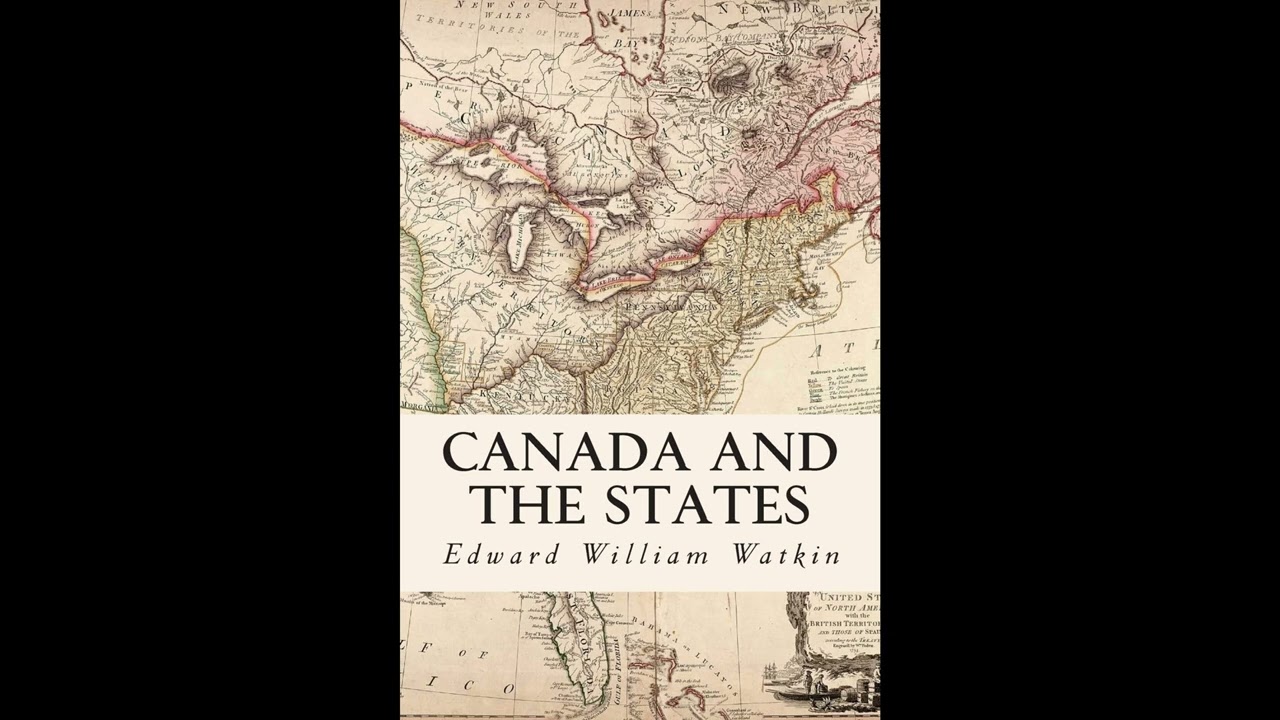
Canada and the States
For anyone seeking a direct, firsthand account of how two North American nations—Canada and the United States—began to truly define themselves through commerce, infrastructure, and an often-fraught relationship, Edward William Watkin’s Canada and the States offers an unparalleled perspective. This isn't just a historical document; it's the personal narrative of a man who stood at the intersection of British imperial ambition and the burgeoning identities of new world powers. Listeners today gain not only a vivid sense of the challenges and triumphs of nation-building in the late nineteenth century but also a surprising resonance with contemporary debates on trade, borders, and national character. It’s a compelling look at the foundational decisions that continue to shape the continent. The narrative unfolds across several decades of the mid-to-late nineteenth century, charting the colossal efforts to connect and develop the vast expanses of North America. Edward William Watkin positions himself as an active observer and participant in the ambitious projects that sought to knit together a sprawling Canada and to navigate its complex association with the rapidly industrializing United States. The setting moves from the boardrooms of London and Montreal to the rugged, often untamed frontiers where new railway lines were surveyed and constructed. Watkin introduces a range of figures he encountered: British colonial administrators, Canadian politicians wrestling with confederation, American industrialists, and the diverse populations whose lives were impacted by these grand schemes. At its core, the central conflict revolves around the monumental task of economic and geographical integration. Watkin’s personal endeavors, particularly his significant involvement with the Grand Trunk Railway of Canada and his persistent vision for a transcontinental line, form the backbone of the story. He recounts the immense financial risks, the arduous engineering feats, and the political wrangling required to push these projects forward. From the challenges of securing capital to the intricacies of land acquisition and the competing interests of various regions, Watkin’s account brings to life the sheer scale of ambition required to transform a disparate collection of provinces into a unified nation, always mindful of the powerful presence of the American republic to the south. The book paints a detailed picture of the logistical hurdles and the human ingenuity employed in shaping the continent’s future, without revealing the eventual success or failure of all his specific propositions. Sir Edward William Watkin, born in Salford, England, in 1819, was a colossal figure of the Victorian age. He was a railway magnate and politician whose influence stretched far beyond the British Isles. His early career saw him rise swiftly within the railway industry, managing various lines across England and even extending his reach into European projects. Watkin was not merely an administrator; he was a visionary, constantly conceiving of new connections and grander schemes. He served as a Member of Parliament for Stockport and later for Hythe, using his political platform to further his commercial and infrastructural goals. His dedication to connecting nations was perhaps best exemplified by his early, fervent advocacy for a Channel Tunnel linking Britain and France—a project he tirelessly championed for decades. His significant engagement with North America began in the 1850s, a period he vividly recounts in Canada and the States. He became a key player in Canadian railway development, particularly as president of the Grand Trunk Railway. His tireless efforts in Canada earned him a reputation as a driving force behind the country’s burgeoning national infrastructure. While Canada and the States stands as his most comprehensive personal account of these North American experiences, his broader impact is felt through the physical landscape he helped shape. Watkin passed away in 1901, leaving a legacy as one of the most ambitious and effective industrialists and public servants of his era, whose memoirs provide a rare, insider look at the forces that drove Victorian progress and colonial development. Among the key themes that emerge from Watkin’s recollections is the profound idea of industrial progress as an engine for nation-building. He consistently illustrates how the extension of railway lines wasn't just about moving goods and people, but about forging economic unity and a shared national identity across immense distances. For instance, his detailed descriptions of the engineering challenges in pushing tracks through the Canadian Shield or across the prairies demonstrate a belief in human ingenuity overcoming natural barriers, literally paving the way for a unified Canada. Another significant theme is the complex interplay between imperial ambition and local autonomy. Watkin, as a representative of British capital and expertise, frequently navigates the aspirations of a burgeoning Canadian self-governance against the backdrop of British strategic interests and the ever-present economic and political influence of the United States. His observations often highlight the delicate balance Canada had to strike to assert its distinct identity while remaining within the British sphere and managing its powerful neighbor. The book also offers a compelling, often analytical, perspective on American republicanism from an outsider’s view. Watkin, a product of a monarchical system, comments on the dynamism and pragmatism of American enterprise, but also occasionally on the perceived vagaries of its democratic processes, particularly in the period following the American Civil War. His comparisons, though subtly drawn, provide a fascinating counterpoint to contemporary self-perceptions of both Canada and the States. Finally, a central thread running through the narrative is the power of individual vision and tenacity. Watkin's own relentless drive, his capacity to conceive of and push for grand schemes against considerable opposition, stands as a testament to how determined individuals can significantly alter the course of history and continental development. His accounts of persuading skeptical investors or lobbying hesitant politicians underscore the impact of a single, forceful will. Canada and the States emerged at a crucial juncture in North American history, published in 1887. Canada, having federated just two decades earlier, was actively engaged in consolidating its vast territories, with the completion of the Canadian Pacific Railway (though Watkin's projects were primarily with the Grand Trunk) being a symbol of this national ambition. The book captures the spirit of this consolidation, reflecting the debates around tariffs, trade, and the ever-present question of Canadian identity vis-à-vis both Britain and the United States. To the south, the United States was in its Gilded Age, undergoing rapid industrialization and westward expansion following the upheaval of the Civil War. Watkin’s observations provide an external commentary on a powerful, rapidly growing nation that was both a model and a rival for Canada. From a broader British perspective, the late 19th century was the zenith of imperial power, yet also a time when discussions about colonial self-governance were gaining momentum. Watkin’s memoir, therefore, serves as a vital historical document, chronicling a period of intense geopolitical and economic transformation through the eyes of one of its most prominent movers and shakers. Listening to Canada and the States as an audiobook offers a unique gateway into this pivotal historical period. The narration typically presents Watkin’s recollections with a clear, measured pace, allowing the listener to absorb the significant detail and complex arguments presented. Given its run length of several hours, this audiobook is perfectly suited for extended listening sessions, whether during a long drive or as a companion for quiet reflection. Pay attention to the narrator’s voice as it lends gravitas to Watkin’s pronouncements and subtly conveys the atmosphere of bustling railway stations, tense political meetings, and the vast, untamed landscapes he describes. The reported dialogue, though likely somewhat reconstructed, gives a sense of the conversational style and rhetorical norms of the era, bringing the figures of the past to life. This auditory experience allows the listener to fully immerse themselves in Watkin’s world, hearing the unfolding story of two nations as if it were being recounted by a thoughtful, authoritative friend.
Enjoyed Canada and the States? A few ways to support us
Audible & Amazon links are affiliate; we may earn a small commission at no extra cost.
About this production
Human narration by a volunteer reader from LibriVox.org, the public-domain audiobook project. LibriVox volunteers record literary works whose copyright has expired in the United States, releasing the resulting recordings into the public domain.
Canada and the States by Edward William Watkin. The underlying text is in the U.S. public domain. We do not republish any modern copyrighted edition, translation, or commentary.
The 4K cinematic visuals accompanying this audiobook are generated by an AI image model from prompts derived from the source text. No copyrighted photos, paintings, or stock footage are used. AI generation is disclosed on every video on our YouTube channel as required by YouTube's altered/synthetic content policy.
English subtitles are transcribed from the LibriVox recording with OpenAI Whisper. Translations into the 11 other supported languages are produced by Meta's NLLB-200 neural translation model. No human translator's copyrighted translation is used.
Questions about sourcing or rights? See our DMCA & Sourcing policy or contact us.
Enjoyed this audiobook?
If you'd like to own a copy of Canada and the States or hear a professionally produced edition, the links below help support free audiobook production at no extra cost to you.
As an Amazon Associate we earn from qualifying purchases. Audible / print links are affiliate.