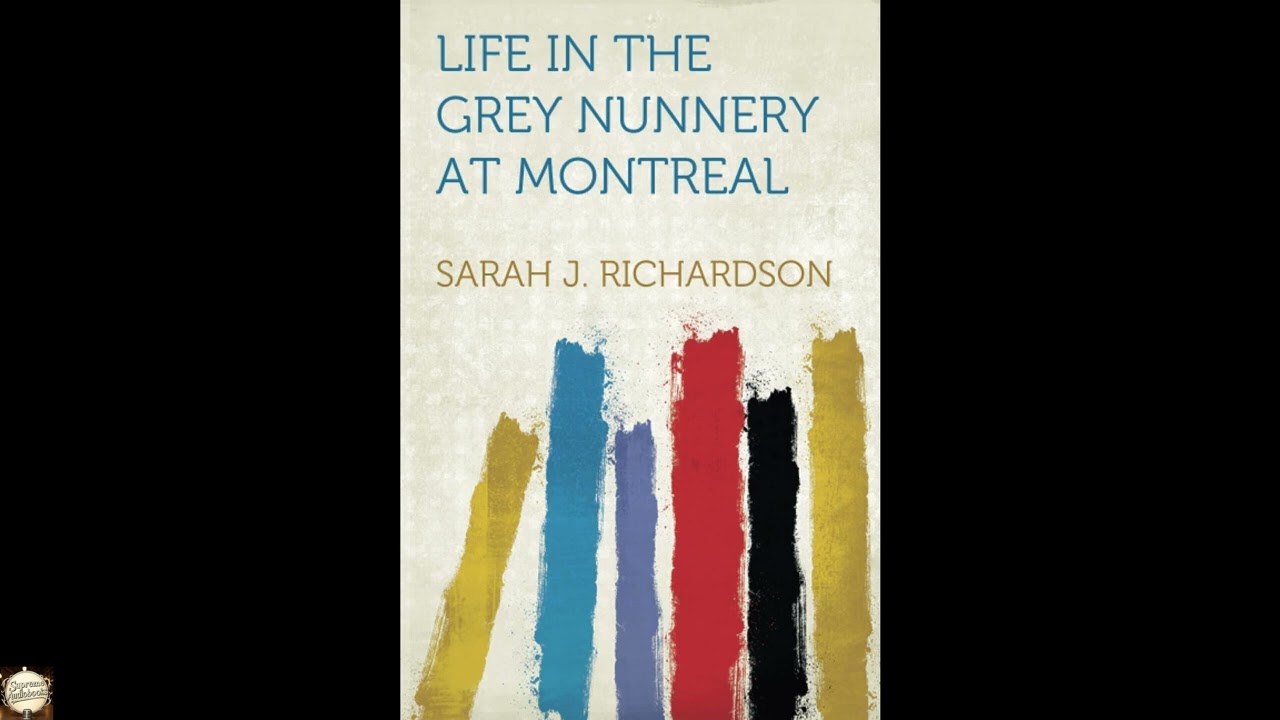
Life in the Grey Nunnery at Montreal
Step inside a world largely hidden from public view, a sphere of quiet devotion and unwavering discipline that shaped the lives of countless women for centuries. Sarah J. Richardson's "Life in the Grey Nunnery at Montreal" offers an extraordinarily intimate glimpse into the inner workings of a prominent religious order, transporting listeners to a bygone era where faith, community, and personal sacrifice intertwined daily. This significant work stands not merely as a historical record but as a profound meditation on the choices women made, the structures that governed their lives, and the spiritual yearning that defined their existence. It presents a unique opportunity to understand a society through the lens of its religious institutions, revealing enduring questions about belonging, purpose, and the human spirit that resonate deeply even today. The story unfolds within the venerable walls of the Grey Nunnery, home to the Sisters of Charity of Montreal, affectionately known as the Grey Nuns. The setting itself, historic Montreal, provides a backdrop of bustling colonial life just outside the contemplative calm of the convent. Richardson’s narrative, likely a personal account or an exceptionally well-researched observational study, introduces us to the routines and rhythms that govern the lives of the sisters. We witness their mornings beginning before dawn, filled with prayer and meditation, the quiet order of their daily tasks—from tending to the infirm to educating the young, preparing meals, and maintaining the extensive grounds. The central focus is less a dramatic plot and more a sustained observation of a way of life, charting the experiences of individual sisters as they navigate their vows and duties. While specific names are often secondary to the communal identity, Richardson brings to life the archetypes within the nunnery: the venerable Mother Superior, whose wisdom guides the community; the earnest novices grappling with their calling; the steadfast professed sisters who have found their peace in service; and perhaps the infirm or elderly, cared for with tender hands. The underlying tension throughout the narrative stems from the constant interplay between individual personality and the demands of collective life, between personal spiritual struggles and communal support. How does one maintain a sense of self within a structure built on renunciation? What motivates a woman to dedicate her entire existence to God and service within such a disciplined framework? The arc of the account reveals an ever-deepening understanding of these profound questions, inviting the listener to consider the spiritual and practical challenges inherent in a cloistered life. Sarah J. Richardson, the author, appears to be an insightful chronicler of institutional life, particularly concerning women's experiences. While precise biographical details often elude historical records for many writers of her period, her focused and evocative writing suggests someone with either direct personal experience within such a community or an exceptional talent for empathetic observation. Works like "Life in the Grey Nunnery at Montreal" often emerged from a desire to document social structures, perhaps as a form of memoir, historical record, or even a nuanced piece of social commentary during a time when women’s roles were both rigidly defined and quietly expanding. Richardson's contribution lies in offering a detailed, sympathetic yet clear-eyed portrayal of a world that, for many, remained a mystery behind high walls. She provides a vital primary source for understanding the lived reality of religious women in a specific historical context. Richardson's writing, therefore, situates itself within a tradition of early realist and biographical literature that sought to illuminate the lesser-known corners of society. Her focus on daily life, the subtle dynamics of community, and the interior lives of the sisters elevates this account beyond mere documentation. It stands as a testament to the quiet power of observation and the enduring human need to articulate and understand one's place in the world, whether within a convent or beyond its confines. The text thoughtfully engages with several enduring themes. Foremost among them is Devotion and Faith, illustrated through the sisters' unwavering commitment to prayer, ritual, and spiritual practice. We see this enacted in scenes of silent contemplation in the chapel, the melodic chanting during vespers, or the simple, consistent acts of service performed as acts of worship. Another prominent theme is the tension between Community and Individuality. Richardson shows how the communal structure, while demanding conformity, also fosters deep bonds and a shared sense of purpose. Yet, underneath, each sister retains her unique personality and spiritual struggle, finding ways to express her distinct self within the collective. The author also subtly addresses Women's Agency and Choice in a historical context that offered limited options. For many, entering a religious order was not a retreat from the world but a proactive choice for education, independence, or spiritual fulfillment, offering a structured environment for purposeful living outside conventional marriage and family roles. Finally, the idea of Sacrifice and Renunciation is central. The account details what is given up—personal possessions, family ties, worldly ambitions—but also what is gained: a sense of profound purpose, spiritual solace, and a supportive community. The literary significance of Richardson's book lies in its direct and unadorned portrayal of a world rarely depicted with such internal perspective. It stands as a valuable socio-historical document, contributing to our understanding of Canadian social history, the history of women, and the history of religious life. It offers an authentic counterpoint to sensationalized or idealized accounts of convent living, providing a balanced and humanizing portrait. The period in which "Life in the Grey Nunnery at Montreal" likely emerged, roughly the late nineteenth or early twentieth century, was a time of significant transition. Industrialization was reshaping urban centers like Montreal, bringing new social challenges and opportunities. Culturally, there was a growing interest in realism in literature, a desire to depict life as it truly was, often focusing on institutions or marginalized communities. Simultaneously, women’s suffrage movements were gaining momentum, and societal conversations around women's roles, education, and autonomy were becoming more vocal. Within this backdrop, a work detailing the day-to-day realities inside a women's religious institution would have been particularly compelling, offering insights into a traditional path chosen by women at a time of emerging modern possibilities. The Grey Nuns themselves were deeply embedded in Montreal's social fabric, running hospitals, orphanages, and schools, making their internal life a subject of both local and wider interest. Listening to "Life in the Grey Nunnery at Montreal" as an audiobook allows the subtle atmosphere of the convent to truly unfold. A skilled narrator can capture the quietude, the gentle yet firm cadence of daily routines, and the underlying spiritual resonance of the sisters' lives. The duration, several hours, is perfectly suited for a reflective listening experience, allowing for sustained immersion without feeling rushed. A narrator's measured pacing can reflect the slow, deliberate rhythm of convent life, emphasizing moments of quiet contemplation alongside the details of service and community. The vocal choices for different "characters"—the serene Mother Superior, the earnest young novice, the compassionate infirmarian—can deepen the connection to the individuals within the collective, while the overall tone maintains a respectful yet insightful view of this unique world. It allows for an auditory entry into a space usually closed off, providing a rich, personal encounter with a profound historical subject.
Enjoyed Life in the Grey Nunnery at Montreal? A few ways to support us
Audible & Amazon links are affiliate; we may earn a small commission at no extra cost.
About this production
Human narration by a volunteer reader from LibriVox.org, the public-domain audiobook project. LibriVox volunteers record literary works whose copyright has expired in the United States, releasing the resulting recordings into the public domain.
Life in the Grey Nunnery at Montreal by Sarah J. Richardson. The underlying text is in the U.S. public domain. We do not republish any modern copyrighted edition, translation, or commentary.
The 4K cinematic visuals accompanying this audiobook are generated by an AI image model from prompts derived from the source text. No copyrighted photos, paintings, or stock footage are used. AI generation is disclosed on every video on our YouTube channel as required by YouTube's altered/synthetic content policy.
English subtitles are transcribed from the LibriVox recording with OpenAI Whisper. Translations into the 11 other supported languages are produced by Meta's NLLB-200 neural translation model. No human translator's copyrighted translation is used.
Questions about sourcing or rights? See our DMCA & Sourcing policy or contact us.
Enjoyed this audiobook?
If you'd like to own a copy of Life in the Grey Nunnery at Montreal or hear a professionally produced edition, the links below help support free audiobook production at no extra cost to you.
As an Amazon Associate we earn from qualifying purchases. Audible / print links are affiliate.