Legends of Vancouver
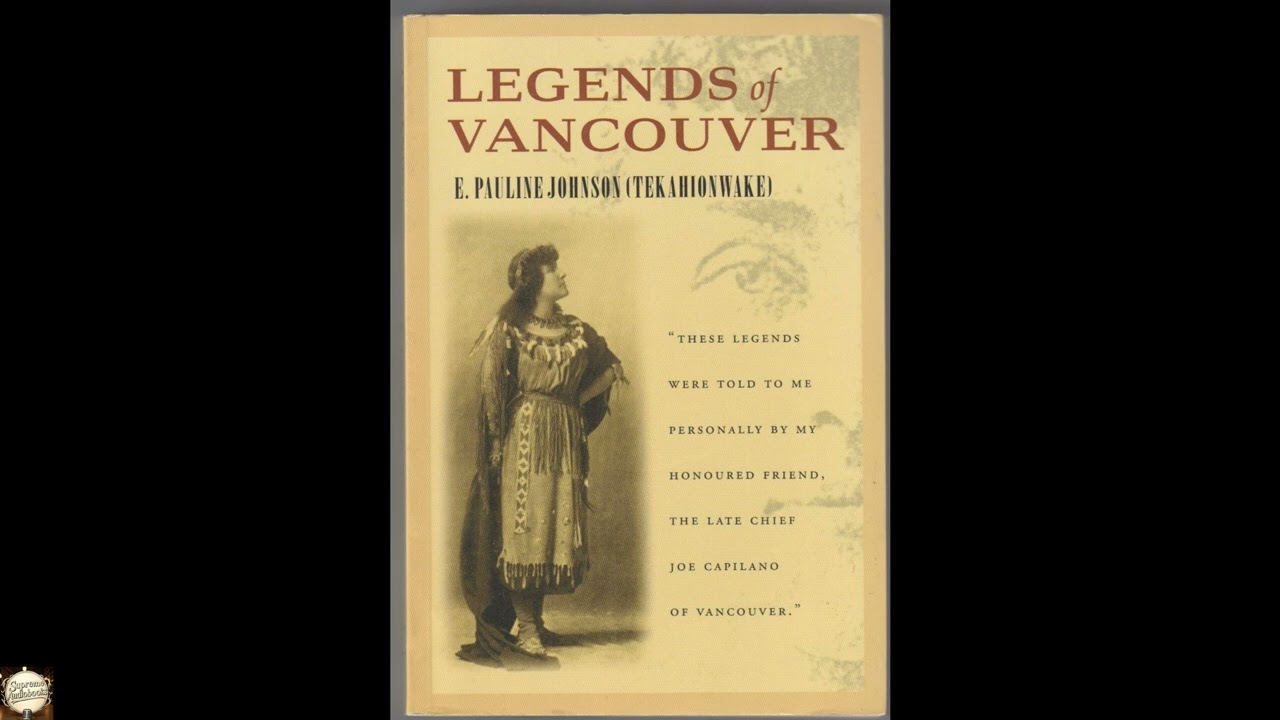
Step into a realm where the mountains speak, the sea holds ancient secrets, and the very landscape of Vancouver Island and the British Columbia coast pulses with the lifeblood of myth. E. Pauline Johnson’s Legends of Vancouver is not merely a book; it is a gateway to the foundational stories of a land and its original peoples, a bridge built between cultures by a woman uniquely positioned to interpret one for the other. First published in 1911, this extraordinary collection resurrects the oral traditions of the Squamish Nation, offering listeners today an intimate understanding of a worldview rooted deeply in nature and ancestral wisdom, a perspective as vital and resonant now as it was a century ago. It’s a chance to hear the land speak through its most ancient voices, reminding us that every place has a story, and some stories are powerful enough to shape our understanding of the world. The book is a carefully curated anthology of traditional tales, shared with Johnson by her dear friend, Chief Joe Capilano of the Squamish Nation. Listeners are transported to the misty shores of Burrard Inlet, the craggy peaks surrounding Stanley Park, and the cedar forests that once dominated the coastal landscape. Instead of following a single protagonist through a linear narrative, the collection introduces us to a pantheon of spirits, transformers, and wise animals, alongside human figures who navigate a world brimming with supernatural forces and profound natural law. Each legend unfolds a distinct piece of the Squamish cosmology, explaining the origins of natural phenomena—why Siwash Rock stands alone in the Narrows, how the salmon came to the rivers, or the tragic love story behind the Two Sisters, a pair of ancient cedars. The central thread weaving through these disparate stories is humanity’s intrinsic connection to the environment, and the consequences, both wondrous and fearsome, of honoring or disrespecting that sacred bond. The arc of the book is less about a single plot and more about an unfolding revelation of a culture’s spiritual and historical geography. We hear tales of powerful "transformers" who shaped the land, turning people into geographical features or animals, leaving lessons embedded in stone and tree. There are moral fables, narratives of courage and folly, and explanations for the customs and beliefs of the Coast Salish peoples. The stories often highlight themes of transformation, the interconnectedness of all living things, and the importance of humility and respect for the natural world. While each legend stands on its own, together they paint a coherent picture of a complex world view, one where the visible and invisible realms constantly interact, and where the past is always present in the landscape. The collection ultimately invites us to see the familiar West Coast through different eyes, imbued with layers of meaning and myth previously hidden to many. E. Pauline Johnson, born Emily Pauline Johnson in 1861 on the Six Nations Reserve in Ontario, was a remarkable figure whose life was as compelling as her literary contributions. Her father was George Henry Martin Johnson, a prominent Mohawk chief, and her mother was Emily Susanna Howells, an Englishwoman. This dual heritage profoundly shaped her identity and career. Known by her Mohawk name Tekahionwake, meaning "double wampum," Johnson embraced both her Indigenous and European roots, becoming a celebrated poet and performer. For decades, she toured extensively across Canada, the United States, and England, captivating audiences with her dramatic recitations of her own poetry. She would often appear on stage in buckskin and beadwork, performing pieces that celebrated Indigenous culture and challenged prevailing colonial attitudes, before changing into elegant evening wear to perform her more traditional English poetry. Johnson's literary output includes several volumes of poetry, most notably Flint and Feather, a collection that remains widely read. However, Legends of Vancouver represents a distinct and equally significant contribution, born from her deep friendship with Chief Joe Capilano. Recognizing the urgency of preserving these oral traditions in the face of rapid cultural change, Johnson dedicated herself to transcribing the stories told to her by the Chief, ensuring they would reach a wider audience in written form. She stands as a pivotal figure in Canadian literature, not only as a pioneering woman writer and performer but crucially as one of the first Indigenous voices to gain widespread recognition in the English-speaking literary world, bridging the divide between oral storytelling and printed text, and advocating for understanding and respect for First Nations cultures. The themes woven through Legends of Vancouver are as enduring as the mountains and seas they describe. Central among these is the profound connection to the land and the spiritual forces inherent within it. We see this vividly in the legend of Siwash Rock, where a man is transformed into a towering stone sentinel, forever watching over the waters, a permanent reminder of courage and sacrifice. This tale, like many others, imbues the physical landscape with a living history and moral significance, showing how the natural world is not just a backdrop but an active participant in human and spiritual dramas. Another key theme is the power and importance of oral tradition and cultural memory. Johnson's act of writing these stories down was itself a testament to this theme, preserving narratives that had been passed down through generations. The legends themselves are mnemonic devices, embedding history, ethics, and cosmological understanding within memorable narratives, ensuring the survival of a people's wisdom. We also find a recurring theme of transformation and consequence. Characters, whether human or animal, often undergo profound changes, sometimes as a reward for virtue, other times as a punishment for wrongdoing. The story of the Thunderbird and the Whale, for instance, speaks of immense power and the delicate balance required to maintain peace, with natural events like storms being attributed to the struggles of these mythic beings. This theme highlights a worldview where actions have far-reaching effects, and the line between the physical and spiritual realms is fluid. Furthermore, the collection subtly asserts the dignity and depth of Indigenous knowledge at a time when such traditions were often dismissed or suppressed by colonial society. Johnson's respectful and eloquent presentation of these tales validated the rich intellectual and spiritual heritage of the Squamish people, offering a window into a complex and sophisticated culture. The period in which Legends of Vancouver emerged – the early twentieth century – was a time of immense transition and often conflicting cultural currents in Canada. British Columbia was undergoing rapid colonial expansion, with cities like Vancouver growing quickly, reshaping the landscape and displacing Indigenous communities. Simultaneously, there was a burgeoning interest in Canadian identity, often grappling with how to incorporate or understand the country's Indigenous heritage. While some ethnographers were collecting "folklore" in a scientific, often detached manner, Johnson’s approach was deeply personal and collaborative, born from a trusted relationship with Chief Joe Capilano. Her unique position as a mixed-race woman, publicly advocating for Indigenous rights and cultural understanding through her art, allowed her to present these stories with an authenticity and empathy that was rare for her time. The book served as an essential counter-narrative to the prevailing prejudices, offering a dignified and respectful portrayal of Indigenous spiritual and historical narratives to a broad settler audience. To experience Legends of Vancouver as an audiobook is to honor its very essence. These are stories born from an oral tradition, meant to be heard, not merely read silently from a page. The act of listening allows the listener to connect directly with the ancient rhythm and cadences of storytelling, transforming the collection from text into a living experience. The run length of several hours is ideal, offering ample opportunity to immerse oneself fully in the myths, either in one extended sitting or across several focused sessions. A skilled narrator will bring forth the mythic grandeur, the subtle humor, and the moments of profound reverence that characterize these tales, allowing the listener to absorb the atmosphere of the West Coast forests and waters, where every feature tells a story. Listen closely for the pacing, which can shift from the deliberate, almost meditative unfolding of an origin myth to the quickened pace of a dramatic confrontation, carrying you deeper into a world where the land breathes with the voices of ancestors and spirits.
Enjoyed Legends of Vancouver? A few ways to support us
Audible & Amazon links are affiliate; we may earn a small commission at no extra cost.
About this production
Human narration by a volunteer reader from LibriVox.org, the public-domain audiobook project. LibriVox volunteers record literary works whose copyright has expired in the United States, releasing the resulting recordings into the public domain.
Legends of Vancouver by E. Pauline Johnson. The underlying text is in the U.S. public domain. We do not republish any modern copyrighted edition, translation, or commentary.
The 4K cinematic visuals accompanying this audiobook are generated by an AI image model from prompts derived from the source text. No copyrighted photos, paintings, or stock footage are used. AI generation is disclosed on every video on our YouTube channel as required by YouTube's altered/synthetic content policy.
English subtitles are transcribed from the LibriVox recording with OpenAI Whisper. Translations into the 11 other supported languages are produced by Meta's NLLB-200 neural translation model. No human translator's copyrighted translation is used.
Questions about sourcing or rights? See our DMCA & Sourcing policy or contact us.
Enjoyed this audiobook?
If you'd like to own a copy of Legends of Vancouver or hear a professionally produced edition, the links below help support free audiobook production at no extra cost to you.
As an Amazon Associate we earn from qualifying purchases. Audible / print links are affiliate.