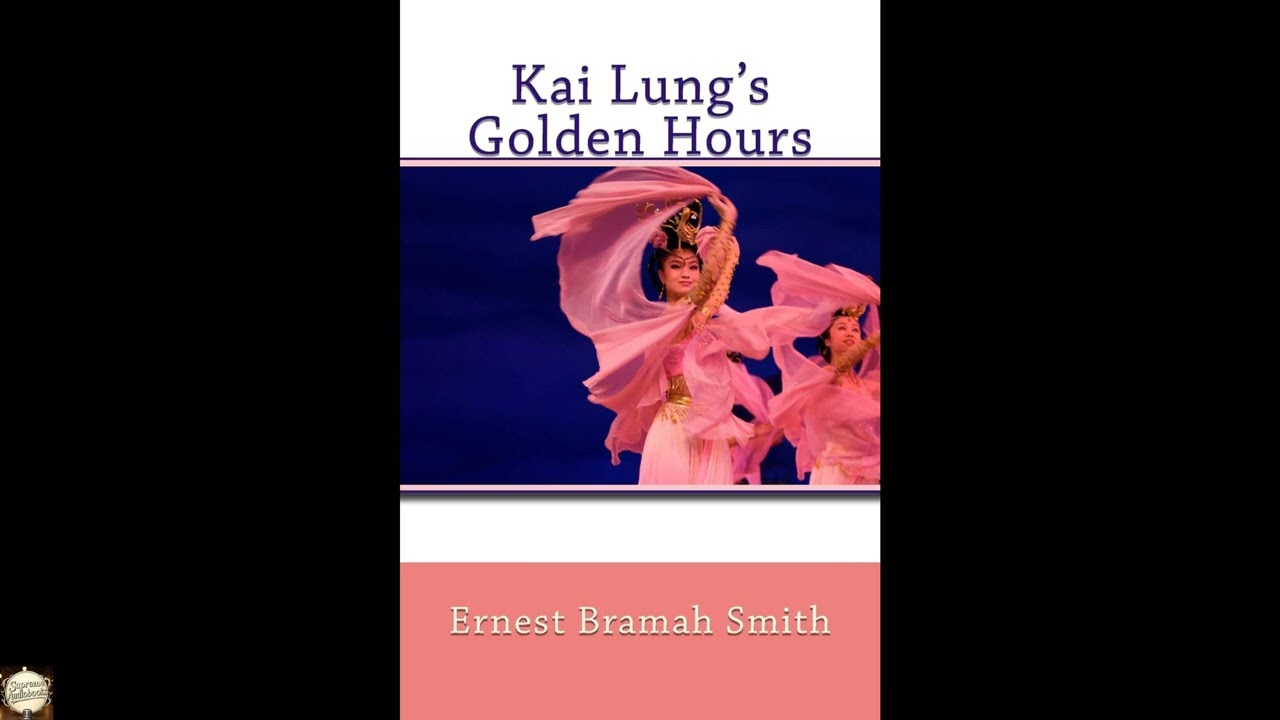
Kai Lung's Golden Hours
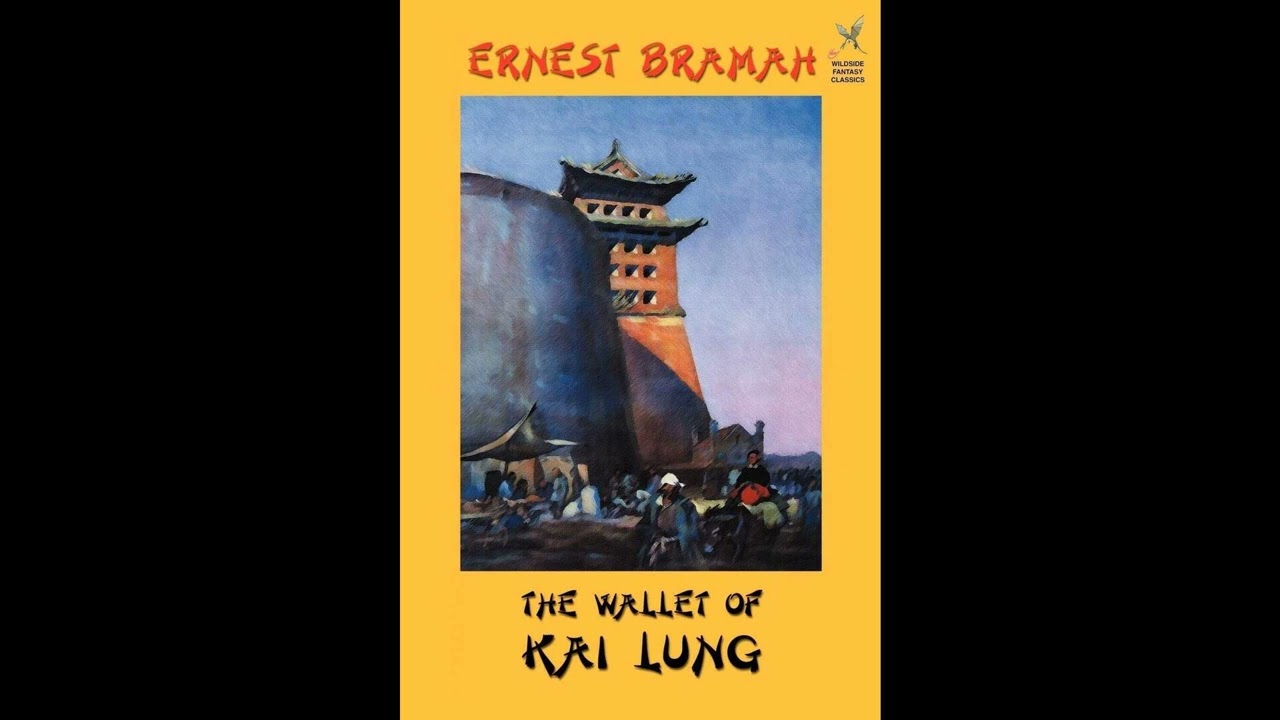
In the sometimes bewildering library of classic literature, where venerable tomes often demand a certain academic reverence, occasionally a book appears that simply delights with its unique voice and inventive spirit. Such a work is Ernest Bramah's Kai Lung's Golden Hours, a collection of tales that invites listeners into a fantastical, hyper-stylized version of ancient China. This is not a dry historical document, but a literary confection, a sparkling display of wit and narrative craft that remains strikingly original even a century after its first appearance. For those seeking prose that sings with its own peculiar music, humor that operates on multiple levels, and stories that twist and turn with unexpected wisdom, this volume offers a genuine escape and a reminder of the enduring power of a truly distinctive literary imagination. The central figure of these linked narratives is Kai Lung, a professional storyteller of modest means and considerable verbal dexterity. He finds himself repeatedly in precarious situations, often accused of various minor offenses or held captive by local magistrates and brigands, his freedom, and indeed his very life, hanging by a thread. His only recourse, his most potent weapon, is his ability to spin elaborate and beguiling tales. The overarching story, then, is Kai Lung's desperate, yet always charming, struggle for survival and, ultimately, for the hand of his beloved Hwa-mei, a young woman who frequently becomes entangled in his misfortunes. Each tale Kai Lung recounts is not merely for entertainment; it is carefully chosen and subtly crafted to influence his audience—be they corrupt mandarins, cynical bandits, or simple villagers. Through these stories-within-a-story, we meet a diverse cast of characters: wise philosophers, cunning merchants, honorable warriors, and foolish officials, all navigating a world governed by rigid social customs, unexpected turns of fate, and sometimes absurd logic. The progression of the frame narrative sees Kai Lung moving from one predicament to another, each solved, or at least mitigated, by the power of his narrative art, demonstrating repeatedly that a well-told story can indeed change destinies. The author behind this distinctive creation was Ernest Bramah Smith (1868–1942), who published under the simpler name Ernest Bramah. Born in Manchester, England, Bramah led a life that, on the surface, seemed far removed from the fantastical realms he conjured. He worked for a period as a farmer before turning to journalism, a profession that perhaps honed his sense of observation and his precise use of language. Despite his relatively quiet existence, Bramah left an indelible mark on English literature through his two most celebrated fictional creations: Kai Lung and the blind detective Max Carrados, the latter considered an early and innovative figure in detective fiction. While the Carrados stories brought Bramah recognition, it is the Kai Lung series, beginning with The Wallet of Kai Lung (1900) and culminating in Kai Lung's Golden Hours (1922), for which he is most fondly remembered. Bramah's literary output was not extensive, but its quality and originality secured his place as a cult favorite among connoisseurs of unique prose. He did not fit neatly into any prevailing literary movement, instead forging a style so idiosyncratic—a highly formal, almost ceremonial English prose infused with a faux-Chinese idiom—that it stands alone, a testament to his singular vision and meticulous craftsmanship. His work is a reminder that literary genius can sometimes bloom in the quiet corners, far from the bustling centers of literary fashion. One of the central themes running through Kai Lung's Golden Hours is the profound power of storytelling itself. Kai Lung’s very existence hinges on his ability to spin yarns; his narratives are not merely diversions but potent instruments of persuasion, often subtly critiquing the arbitrary justice of his captors or offering veiled advice that serves his immediate aims. For instance, in one situation, when faced with an overly officious magistrate, Kai Lung might recount a story about a foolish judge who misinterprets a simple truth, subtly guiding his current audience toward a more favorable verdict without ever directly accusing them. This highlights how narrative can serve as both a shield and a weapon. Another prominent theme is the playful satire of bureaucracy and rigid social conventions. Bramah uses the exotic, formalized setting of imperial China as a mirror to reflect and gently mock universal human follies, particularly those related to officialdom, pride, and corruption. Characters in Kai Lung’s stories, and often Kai Lung’s interlocutors in the frame story, are comically bound by elaborate rules of etiquette and status, leading to absurd misunderstandings and circuitous arguments. The text constantly questions what constitutes "justice" in a system prone to caprice, often showing how common sense and human ingenuity can triumph over entrenched, if illogical, authority. Kai Lung's Golden Hours was published in 1922, a year firmly planted in the interwar period, a time of significant cultural shifts. The trauma of the First World War had reshaped societal perspectives, leading to both a modernist surge in literature and a parallel appetite for escapism and imaginative fiction. There was a widespread fascination in the West with the "Orient," often expressed through highly romanticized or exoticized portrayals. Bramah's work, while drawing on this fascination, transcends simple exoticism through its profound comedic intelligence and its distinctive literary style. At a time when authors like T.S. Eliot were revolutionizing poetry and Virginia Woolf was pushing the boundaries of the novel, Bramah offered a different kind of innovation: a meticulously constructed world of intricate language and storytelling that looked both backward to traditional oral narratives and forward with its sly, ironic wit. The book emerged when the British Empire was still vast, and the concept of "cultural appropriation" was not yet widely discussed, allowing Bramah to create a "China" that existed primarily in the realm of imagination, a stage for universal human dramas and comedies, rather than a historically accurate depiction. His approach allowed him to comment on human nature without being tethered to specific contemporary events, giving the work a unique and enduring quality. Listening to Kai Lung's Golden Hours as an audiobook transforms the experience of this distinctive prose. Bramah’s language is not meant to be skimmed; its ornate sentences, precise vocabulary, and rhythm are crafted for oral delivery, reminiscent of the ancient tradition of bards and storytellers. A skilled narrator can bring out the nuanced humor in Kai Lung's careful circumlocutions, the subtle shifts in tone as he recounts different tales, and the distinct voices of the many characters he encounters and invents. The several hours of listening time allow the listener to become fully immersed in this unique literary world, letting the sound of the words wash over them and allowing the intricate structure of the stories-within-stories to unfold naturally. It is a work that truly comes alive when spoken, enhancing the listener's appreciation for Bramah's meticulous craft and the sheer pleasure of his linguistic inventiveness.
Enjoyed Kai Lung's Golden Hours? A few ways to support us
Audible & Amazon links are affiliate; we may earn a small commission at no extra cost.
About this production
Human narration by a volunteer reader from LibriVox.org, the public-domain audiobook project. LibriVox volunteers record literary works whose copyright has expired in the United States, releasing the resulting recordings into the public domain.
Kai Lung's Golden Hours by Ernest Bramah Smith. The underlying text is in the U.S. public domain. We do not republish any modern copyrighted edition, translation, or commentary.
The 4K cinematic visuals accompanying this audiobook are generated by an AI image model from prompts derived from the source text. No copyrighted photos, paintings, or stock footage are used. AI generation is disclosed on every video on our YouTube channel as required by YouTube's altered/synthetic content policy.
English subtitles are transcribed from the LibriVox recording with OpenAI Whisper. Translations into the 11 other supported languages are produced by Meta's NLLB-200 neural translation model. No human translator's copyrighted translation is used.
Questions about sourcing or rights? See our DMCA & Sourcing policy or contact us.
Enjoyed this audiobook?
If you'd like to own a copy of Kai Lung's Golden Hours or hear a professionally produced edition, the links below help support free audiobook production at no extra cost to you.
As an Amazon Associate we earn from qualifying purchases. Audible / print links are affiliate.