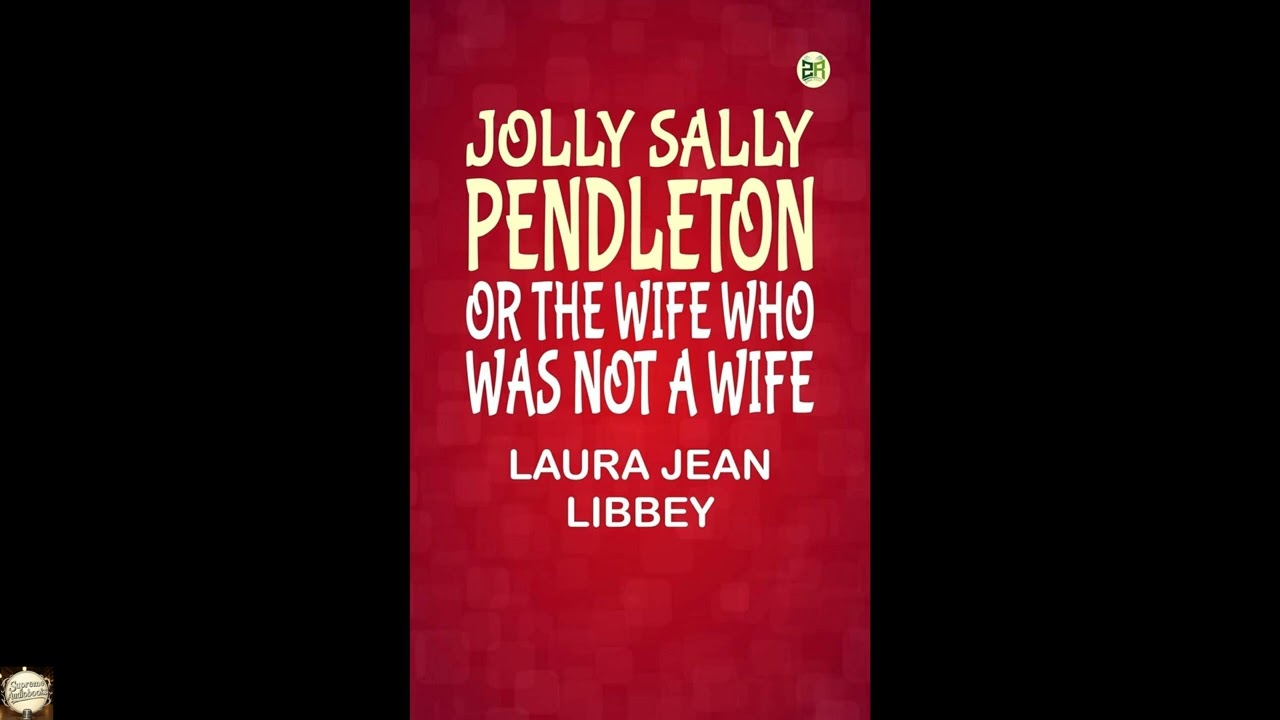
Jolly Sally Pendleton Or the Wife Who Was Not a Wife
Step into a world of dramatic secrets, fervent passions, and societal whispers with Laura Jean Libbey’s "Jolly Sally Pendleton Or the Wife Who Was Not a Wife." This thrilling novel, a sensational success in its day, pulls back the curtain on the hidden lives of women in late 19th-century America, challenging conventions and spotlighting the emotional turmoil often concealed beneath polite society’s veneer. More than a century after its initial publication, Libbey’s work remains a fascinating relic, a powerful reminder of the popular fiction that once captivated millions, and a surprisingly resonant narrative about identity, deception, and the relentless quest for truth in a world that often sought to deny women their agency. For anyone curious about the roots of popular romance, the social anxieties of a bygone era, or simply seeking a story that delivers on its promise of high-stakes melodrama, Sally Pendleton’s plight offers a genuinely compelling listen. The story opens, as so many melodramas do, with the seeming picture of domestic bliss. We meet Sally Pendleton, a woman whose buoyant spirit earns her the moniker "Jolly." She is, by all outward appearances, happily married, residing in a respectable if not opulent home, and navigating the social circles of her time with a bright outlook. Her world, however, is built on a foundation far less stable than she believes. Slowly, insidiously, doubts begin to creep into Sally’s mind, whispers from the fringes of her life that hint at a profound deception. Her husband, initially presented as a devoted partner, begins to reveal subtle complexities, a shadowy past, or perhaps a present duplicity that casts a dark pall over their union. The central conflict quickly crystallizes around the very title of the novel: is Sally truly a wife, or merely a woman living under a false pretense? As suspicion mounts, Sally finds herself caught in a bewildering web of circumstances. She faces not only the agonizing emotional betrayal of her supposed husband but also the chilling prospect of social ruin. In an era where a woman’s entire standing, her reputation, and her future were inextricably linked to her marital status, Sally's uncertainty becomes a terrifying descent into personal and societal limbo. She must navigate legal ambiguities, confront powerful societal judgments, and contend with rivals and manipulators who seek to capitalize on her vulnerable position, all while desperately seeking to uncover the truth of her own identity and legitimacy. Laura Jean Libbey, born in Brooklyn, New York, in 1862, became one of the most astonishingly popular and prolific authors of the late 19th and early 20th centuries. Despite being largely overlooked by literary critics and academic circles during her lifetime and for decades afterward, Libbey’s impact on the reading public was immense. She wrote over eighty novels, many of which sold millions of copies, first appearing in story papers and then as dime novels and cheap paperbacks. Her early career saw her self-publishing her first works, a testament to her entrepreneurial spirit and understanding of the burgeoning mass market for fiction. She was, in essence, the "queen of the dime novel," a purveyor of sensational romances and heart-wrenching melodramas that resonated deeply with her largely female, working-class readership. Libbey’s life itself offered a fascinating contrast to the often-distressed heroines of her novels. She was a commercially savvy woman who built a significant fortune from her writing, often defying the expectations placed upon women writers of her time. Her stories, like "Jolly Sally Pendleton," consistently featured virtuous heroines facing overwhelming odds, betrayals, and social ostracism, only to triumph through perseverance and inherent goodness. While she may not fit neatly into the "literary canon" as defined by highbrow critics, her cultural significance cannot be overstated. She provided escapism, emotional validation, and often a sense of moral vindication for countless readers, creating a powerful, accessible form of entertainment that shaped the popular imagination of an entire generation. Libbey passed away in 1924, leaving behind a legacy of enthralling tales that continue to offer insights into the social fabric of her era. At its core, "Jolly Sally Pendleton" deftly enacts several enduring themes. Foremost among them is identity and legitimacy, particularly as it pertains to women in a deeply patriarchal society. Sally's entire being is challenged when her marital status is questioned. The shame she feels, the confusion over her name and social standing, and the potential for a life of ignominy are vividly portrayed. Consider the scene where a veiled hint from a stranger causes Sally’s joyful demeanor to crumble, forcing her to confront the terrifying possibility that her existence as a respected wife is a fragile illusion, dependent entirely on a piece of paper or a man's word. Another significant theme is deception and appearances. The very premise of the novel relies on a grand secret, where what seems to be true is anything but. Her husband’s potential duplicity, the carefully constructed facades of various characters, and the layers of misunderstanding Sally must penetrate all highlight how easily truth can be obscured and how much hinges on outward shows in a reputation-conscious society. The reader is drawn into Sally's desperate search for the genuine article behind the elaborate charade. Beyond identity and deception, the novel also keenly observes female vulnerability and agency. Sally’s plight underscores how precarious a woman’s position could be when her status was tied to a man’s actions or pronouncements. She faces the threat of social ostracism and financial destitution, common fears for women lacking independent means in the late 19th century. Yet, amid this vulnerability, Libbey also instills Sally with a fierce determination, showcasing a nascent form of female agency. Even as she endures heartache and public scrutiny, Sally actively seeks answers, confronts those who might betray her, and refuses to simply accept her fate. Her journey demonstrates a spirited resilience, a woman fighting to reclaim her rightful place and honor against formidable societal and personal obstacles. Lastly, we see reflections of class and social mobility, a persistent undercurrent in much of Libbey’s work. The potential loss of Sally’s marital legitimacy often carries with it the threat of slipping down the social ladder, highlighting the importance of maintaining appearances and status in a rapidly changing American society grappling with new wealth and old prejudices. The late 19th century, the period when Libbey’s most popular works like "Jolly Sally Pendleton" emerged, was a fascinating time in American history—a period of rapid industrialization, urbanization, and significant social change often dubbed the Gilded Age. While new technologies and economic booms reshaped cities, traditional values still held sway, especially regarding women’s roles. This era saw the rise of a new middle class with more leisure time and disposable income, fueling an enormous demand for popular entertainment, including fiction. Literary tastes were diverse; while realism and naturalism gained critical attention, there was an even larger, enthusiastic market for sentimental, romantic, and often sensational stories. Libbey tapped directly into this cultural moment, understanding the yearning for escapism, emotional catharsis, and clear moral narratives among her audience, many of whom were women navigating societal expectations and domestic spheres. Her books offered not just entertainment but often vicarious experiences of overcoming injustice, affirming virtue, and finding love—themes that resonated powerfully with readers facing their own, albeit less dramatic, challenges. Listening to "Jolly Sally Pendleton Or the Wife Who Was Not a Wife" as an audiobook truly brings this historical melodrama to vibrant life. The very nature of Libbey’s prose—often direct, emotionally heightened, and designed for dramatic effect—lends itself perfectly to the spoken word. Over several hours of listening, you can immerse yourself fully in Sally's escalating predicament, hearing the nuances of her distress and her growing determination. A skilled narrator can capture the specific pacing of these turn-of-the-century novels, often characterized by swift developments and dramatic climaxes, punctuated by moments of intense reflection. Listen for the distinct voices given to the various characters—the seemingly honorable but potentially deceitful husband, the sympathetic confidante, the conniving rival—each brought to life through vocal performance. The dialogue, sometimes florid yet always conveying potent emotion, gains additional weight and authenticity when delivered aloud, building an atmosphere of suspense, romance, and palpable tension that transports you directly into the heart of Sally Pendleton’s unforgettable struggle.
Enjoyed Jolly Sally Pendleton Or the Wife Who Was Not a Wife? A few ways to support us
Audible & Amazon links are affiliate; we may earn a small commission at no extra cost.
About this production
Human narration by a volunteer reader from LibriVox.org, the public-domain audiobook project. LibriVox volunteers record literary works whose copyright has expired in the United States, releasing the resulting recordings into the public domain.
Jolly Sally Pendleton Or the Wife Who Was Not a Wife by Laura Jean Libbey. The underlying text is in the U.S. public domain. We do not republish any modern copyrighted edition, translation, or commentary.
The 4K cinematic visuals accompanying this audiobook are generated by an AI image model from prompts derived from the source text. No copyrighted photos, paintings, or stock footage are used. AI generation is disclosed on every video on our YouTube channel as required by YouTube's altered/synthetic content policy.
English subtitles are transcribed from the LibriVox recording with OpenAI Whisper. Translations into the 11 other supported languages are produced by Meta's NLLB-200 neural translation model. No human translator's copyrighted translation is used.
Questions about sourcing or rights? See our DMCA & Sourcing policy or contact us.
Enjoyed this audiobook?
If you'd like to own a copy of Jolly Sally Pendleton Or the Wife Who Was Not a Wife or hear a professionally produced edition, the links below help support free audiobook production at no extra cost to you.
As an Amazon Associate we earn from qualifying purchases. Audible / print links are affiliate.