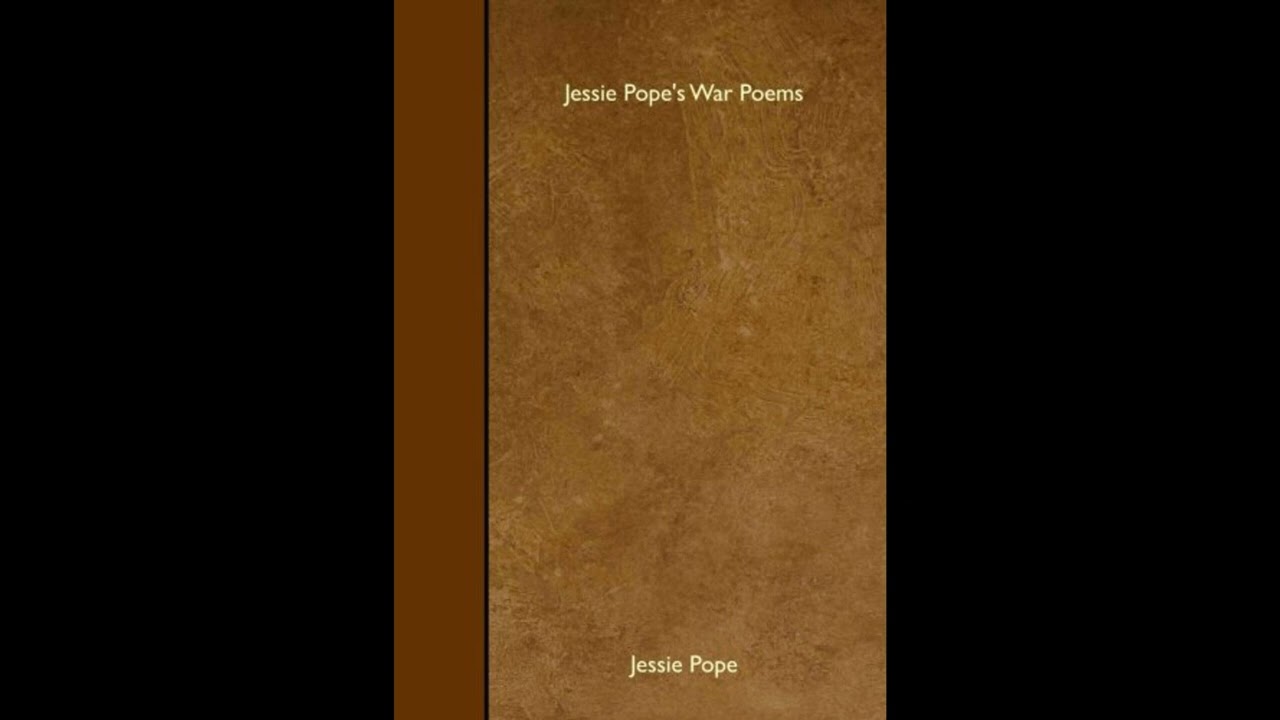
Jessie Pope's War Poems
The name Jessie Pope often conjures a specific, sometimes uncomfortable, echo in the annals of literary history. Her war poems stand as a fascinating, and at times jarring, testament to public sentiment during one of humanity's most cataclysmic conflicts. This collection offers a vital window into the home front of Great Britain during the First World War, presenting a perspective largely lost or overshadowed by the grim realities expressed from the trenches. Listening to these poems today invites us to consider not just their historical impact, but also the enduring power of rhetoric, the complexities of national identity, and the profound human need for purpose, even in the face of widespread destruction. They provoke reflection on the voices that shape public opinion and the narratives we construct around conflict, making her work as relevant for understanding our present as it is for illuminating the past. Jessie Pope's war poems represent a unique snapshot of a nation gearing up for, and then prosecuting, total war. The collection captures the mood and messaging prevalent in Britain from 1914 onwards, focusing on themes of patriotism, duty, and the urgency of national service. Her verses often take on the persona of a direct address to young men, challenging their inaction and subtly — or sometimes not so subtly — shaming them into enlisting. One can almost picture the recruitment posters of the era coming to life through her words, portraying the battlefield as a place of adventure and honor, a "game" to be joined by all true Englishmen. Beyond the call to arms, Pope's poems also focus on the home front's crucial role. They celebrate the efforts of women and children in supporting the war, highlighting activities like knitting socks for soldiers, sending care packages, and generally maintaining morale through steadfast cheerfulness. The emotional arc of the collection moves from an initial burst of jingoistic enthusiasm to a more sustained, if still resolutely optimistic, encouragement for perseverance. Her poems serve as a mirror to the prevalent societal expectations and the collective psychological landscape of a nation grappling with the scale of the conflict, often through a carefully constructed narrative of heroism and national unity. Jessie Pope, born in Leicester in 1868, was a prolific English writer whose career spanned several decades, though her war poems remain her most distinctive, and often debated, contribution to literature. Prior to the First World War, Pope was best known for her light verse, humorous poems, and children's stories, often published in popular magazines and newspapers like Punch and The Daily Mail. Her style was characterized by its accessibility, rhythmic cadence, and directness – qualities that would later lend themselves perfectly to the demands of wartime communication. She was part of a larger trend of popular journalism that aimed to entertain and inform a mass audience. Her output during the war years, however, shifted dramatically. Pope became a prominent voice in the popular press, publishing numerous poems that encouraged enlistment and supported the Allied cause. She continued to write after the war, but her later work never achieved the same notoriety, either positive or negative, as her wartime verses. Jessie Pope passed away in 1941, her legacy firmly, if somewhat controversially, cemented by her association with the initial, fervent phase of Britain's involvement in the Great War. Her position in the literary canon is not as a master poet of profound insight, but rather as an influential figure whose widely circulated verses shaped popular sentiment and, by extension, became a significant part of the historical record of the period. Several key themes resonate throughout Jessie Pope's war poems, offering insight into the cultural psychology of the time. Foremost among these is patriotism and duty, often presented with an almost competitive spirit. Her poems frequently utilize rhetorical questions, such as "Who's for the Game?", directly challenging men who had not yet volunteered, implying that their masculinity and national pride were in question. This framing of war as an honorable "game" or a simple obligation underscores the intense pressure to conform to societal expectations of heroism and sacrifice. Another significant theme is the idealization of warfare, portraying the conflict as a glorious undertaking where bravery and virtue would inevitably triumph. This perspective largely omits the brutal realities of trench warfare, instead focusing on an abstract, almost chivalrous, view of battle. A third prominent theme is the home front's crucial role in supporting the war effort. Pope's poems celebrate the everyday actions of civilians – women knitting socks, children collecting scraps – framing these domestic tasks as vital contributions to national victory. This highlights how the war permeated all aspects of daily life and united the populace under a common cause. Finally, her work also acts as a powerful example of wartime propaganda, albeit often in an unintentional, organic sense. By appealing to honor, national pride, and the perceived excitement of battle, her poems effectively served to bolster morale and encourage enlistment, demonstrating the profound influence popular verse could wield in shaping public opinion during a time of national crisis. Jessie Pope's war poems emerged during a period of intense global upheaval and fervent nationalism. When the First World War broke out in 1914, there was widespread initial enthusiasm in Britain, fueled by a sense of imperial pride and a belief in the righteousness of their cause. Recruitment drives were in full swing, and public sentiment, especially in the early years of the conflict, was largely supportive and optimistic. The popular press played a critical role in shaping this narrative, and writers like Pope, with their accessible and emotionally direct style, were instrumental in disseminating government-sanctioned messages of duty, sacrifice, and the romanticism of war. Her work stands in stark contrast to the later, more cynical and realistic poetry that would emerge from the trenches, from figures like Wilfred Owen and Siegfried Sassoon, whose verses detailed the horrific realities of modern warfare. Pope's poems, therefore, represent the initial, less jaded voice of a nation mobilizing for a conflict whose true cost was yet to be understood. Listening to Jessie Pope's War Poems as an audiobook provides an intimate and immediate encounter with this pivotal period. The narration brings to life the earnestness, and at times the almost chirpy, challenging tone, that characterized Pope's style. Over several hours, listeners can absorb the full spectrum of her wartime output, experiencing the rhythmic drive and direct address of her verses without the visual distraction of print. Pay attention to the pacing, which often mirrors the urgent calls to action or the steady cheerfulness intended to uplift a nation. The voice chosen for this collection captures the specific atmosphere of early 20th-century Britain, a mix of determined optimism, nationalistic fervor, and an underlying current of the immense stakes involved. It allows the listener to fully appreciate how these popular poems functioned as an auditory experience in their own right, read aloud in homes, schools, and public gatherings, shaping the collective consciousness of a country at war.
Enjoyed Jessie Pope's War Poems? A few ways to support us
Audible & Amazon links are affiliate; we may earn a small commission at no extra cost.
About this production
Human narration by a volunteer reader from LibriVox.org, the public-domain audiobook project. LibriVox volunteers record literary works whose copyright has expired in the United States, releasing the resulting recordings into the public domain.
Jessie Pope's War Poems by Jessie Pope (1868 - 1941). The underlying text is in the U.S. public domain. We do not republish any modern copyrighted edition, translation, or commentary.
The 4K cinematic visuals accompanying this audiobook are generated by an AI image model from prompts derived from the source text. No copyrighted photos, paintings, or stock footage are used. AI generation is disclosed on every video on our YouTube channel as required by YouTube's altered/synthetic content policy.
English subtitles are transcribed from the LibriVox recording with OpenAI Whisper. Translations into the 11 other supported languages are produced by Meta's NLLB-200 neural translation model. No human translator's copyrighted translation is used.
Questions about sourcing or rights? See our DMCA & Sourcing policy or contact us.
Enjoyed this audiobook?
If you'd like to own a copy of Jessie Pope's War Poems or hear a professionally produced edition, the links below help support free audiobook production at no extra cost to you.
As an Amazon Associate we earn from qualifying purchases. Audible / print links are affiliate.