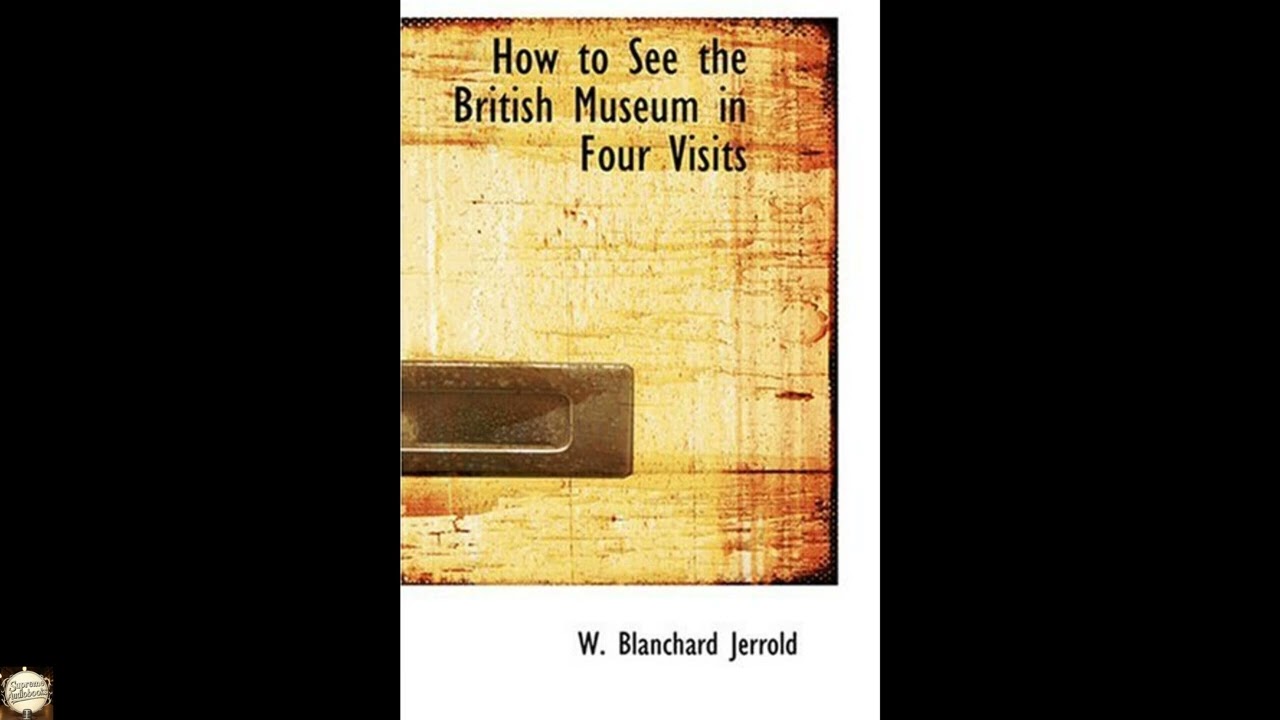
How to See the British Museum in Four Visits
Imagine stepping back in time, not merely into history, but into a specific Victorian moment, guided by a most erudite and congenial companion. W. Blanchard Jerrold’s How to See the British Museum in Four Visits is far more than a simple museum guidebook; it is an intimate conversation across centuries, offering a rare glimpse into the discerning eye of a 19th-century intellectual confronting one of the world’s greatest repositories of culture and knowledge. For anyone fascinated by the evolution of public institutions, the shifting perspectives on art and antiquity, or simply the very particular charm of Victorian prose, this book provides not only practical advice, still surprisingly pertinent in spirit, but also a rich understanding of how our ancestors engaged with their heritage and the wonders of the wider world. It is a portal to an age when the British Museum was an emergent, magnificent marvel, a beacon of imperial acquisition and scholarly endeavor, seen through the eyes of a contemporary who sought to make its overwhelming grandeur accessible to all. The setting for this classic work is, of course, the British Museum itself, not as it stands today, but as it was configured and understood in the latter half of the nineteenth century. Jerrold positions himself as a seasoned, thoughtful mentor, addressing the reader directly as a fellow enthusiast, eager to unlock the museum’s treasures without succumbing to the fatigue often brought on by its sheer scale. He understands the potential for sensory overload, the blur of ancient statues and faded manuscripts that can greet an unprepared visitor. His central premise is that true appreciation comes not from a frantic dash through every hall, but from a methodical, reflective approach, breaking down the monumental task into manageable, themed explorations. The "arc" of Jerrold’s Four Visits unfolds not as a narrative plot with characters and dramatic tension, but as a carefully curated intellectual progression. Each visit is designed to focus on distinct areas and civilizations, allowing the listener to absorb the details of particular collections—perhaps the Assyrian reliefs first, with their imposing scale and narrative power, or the Egyptian antiquities, revealing millennia of fascinating funerary rites and monumental art. Jerrold’s intention is to cultivate a deep, rather than superficial, understanding, guiding the eye and mind towards significant artifacts and the stories they tell. He encourages a slow, contemplative pace, providing historical context and aesthetic commentary that elevates the experience beyond mere sightseeing, transforming it into a genuine encounter with human history and artistic achievement. The listener follows Jerrold’s recommendations through the vast halls, learning not just what to see, but how to see it, culminating in a holistic appreciation for the museum’s immense scope and purpose. William Blanchard Jerrold (1826–1884) was a prolific English journalist, editor, and author, born into a distinguished literary family as the son of the renowned dramatist Douglas Jerrold. Growing up in the intellectual ferment of mid-Victorian London, Jerrold inherited his father's keen observational skills and engaging literary style. His career was marked by a wide range of interests, from social commentary to international reportage. He served as editor of Lloyd's Weekly Newspaper, one of the most widely circulated papers of its era, using his platform to champion social reforms and articulate a progressive viewpoint. This journalistic background instilled in him a precise, clear prose style, evident in his ability to distill complex information into accessible and entertaining forms. Beyond his editorial duties, Jerrold was a prolific writer of both fiction and non-fiction. He produced biographies, including a notable life of Napoleon III, and a sympathetic account of the caricaturist George Cruikshank. His travel writing was particularly admired, offering vivid descriptions and astute observations on continental Europe, reflecting a broad, cosmopolitan outlook. Works like The Imperial Paris Guide or his writings on Norway demonstrated his talent for immersing himself in new environments and sharing his experiences with an eager public. His standing in Victorian literary circles was considerable, placing him among those who shaped public opinion and intellectual discourse through a combination of wit, scholarship, and an unwavering commitment to clarity. One of the prominent themes running through How to See the British Museum in Four Visits is the democratization of knowledge and culture. Jerrold firmly believed that the treasures held within the museum should not be the exclusive domain of scholars, but rather a source of education and inspiration for the broader public. He exemplifies this by guiding the visitor through the Egyptian galleries, not just naming artifacts like the Rosetta Stone, but explaining their significance in a way that makes ancient history tangible and relatable. He frames the museum as a grand civic institution, a classroom for all, and his guide as the essential primer for any earnest student of humanity. His systematic approach also highlights the Victorian impulse towards rational organization and classification. The sheer volume of objects in the British Museum could be overwhelming, yet Jerrold’s four-visit structure is a testament to the era's faith in method and order. For instance, by suggesting a single visit dedicated primarily to the sculptures of Greece and Rome, he imposes an intellectual framework, enabling the listener to appreciate the stylistic evolution and cultural impact of classical art without feeling lost in a sea of unrelated relics. This reflects a prevailing belief that understanding could be achieved through careful segmentation and logical progression. The late nineteenth century, the period in which W. Blanchard Jerrold was writing, was a time of immense change and national pride in Britain. The British Empire was at its zenith, and the British Museum served as a physical manifestation of this global reach, housing artifacts acquired from every corner of the world. Public museums were evolving from private collections into truly public institutions, intended to educate and uplift the masses, reflecting a growing belief in the power of accessible culture. The Industrial Revolution had created a growing middle class with increased leisure time, fostering a demand for educational and self-improvement guides. This era also saw a boom in tourism and travel literature, positioning authors like Jerrold as indispensable facilitators for those wishing to engage with the world's wonders, both domestic and foreign. The guide emerged in this fertile ground, reflecting the spirit of an age that valued systematic learning, intellectual curiosity, and a sense of collective ownership over the vast human heritage collected within Britain's premier cultural institutions. Listening to How to See the British Museum in Four Visits as an audiobook offers a uniquely immersive and contemplative experience. The precise and eloquent prose of W. Blanchard Jerrold truly comes alive when read aloud, allowing his genial, instructive tone to guide you through the Victorian corridors of the British Museum. The careful pacing of the narration mirrors Jerrold's own thoughtful approach, inviting a gradual absorption of historical detail and artistic appreciation, rather than a hurried scan. A skilled narrator can imbue Jerrold's detailed descriptions with a sense of wonder and erudition, making each proposed "visit" feel like a personal tour led by a knowledgeable friend. The several hours of content allow for a relaxed engagement, perfect for listening during a long walk, a quiet evening, or even while planning your own eventual trip to the museum, letting Jerrold's insights color your perceptions before you even step through the doors. It offers a chance to savor the language, the historical context, and the enduring wisdom of a guide who sought to illuminate the world for his contemporaries, and now for us.
Enjoyed How to See the British Museum in Four Visits? A few ways to support us
Audible & Amazon links are affiliate; we may earn a small commission at no extra cost.
About this production
Human narration by a volunteer reader from LibriVox.org, the public-domain audiobook project. LibriVox volunteers record literary works whose copyright has expired in the United States, releasing the resulting recordings into the public domain.
How to See the British Museum in Four Visits by W. Blanchard Jerrold. The underlying text is in the U.S. public domain. We do not republish any modern copyrighted edition, translation, or commentary.
The 4K cinematic visuals accompanying this audiobook are generated by an AI image model from prompts derived from the source text. No copyrighted photos, paintings, or stock footage are used. AI generation is disclosed on every video on our YouTube channel as required by YouTube's altered/synthetic content policy.
English subtitles are transcribed from the LibriVox recording with OpenAI Whisper. Translations into the 11 other supported languages are produced by Meta's NLLB-200 neural translation model. No human translator's copyrighted translation is used.
Questions about sourcing or rights? See our DMCA & Sourcing policy or contact us.
Enjoyed this audiobook?
If you'd like to own a copy of How to See the British Museum in Four Visits or hear a professionally produced edition, the links below help support free audiobook production at no extra cost to you.
As an Amazon Associate we earn from qualifying purchases. Audible / print links are affiliate.