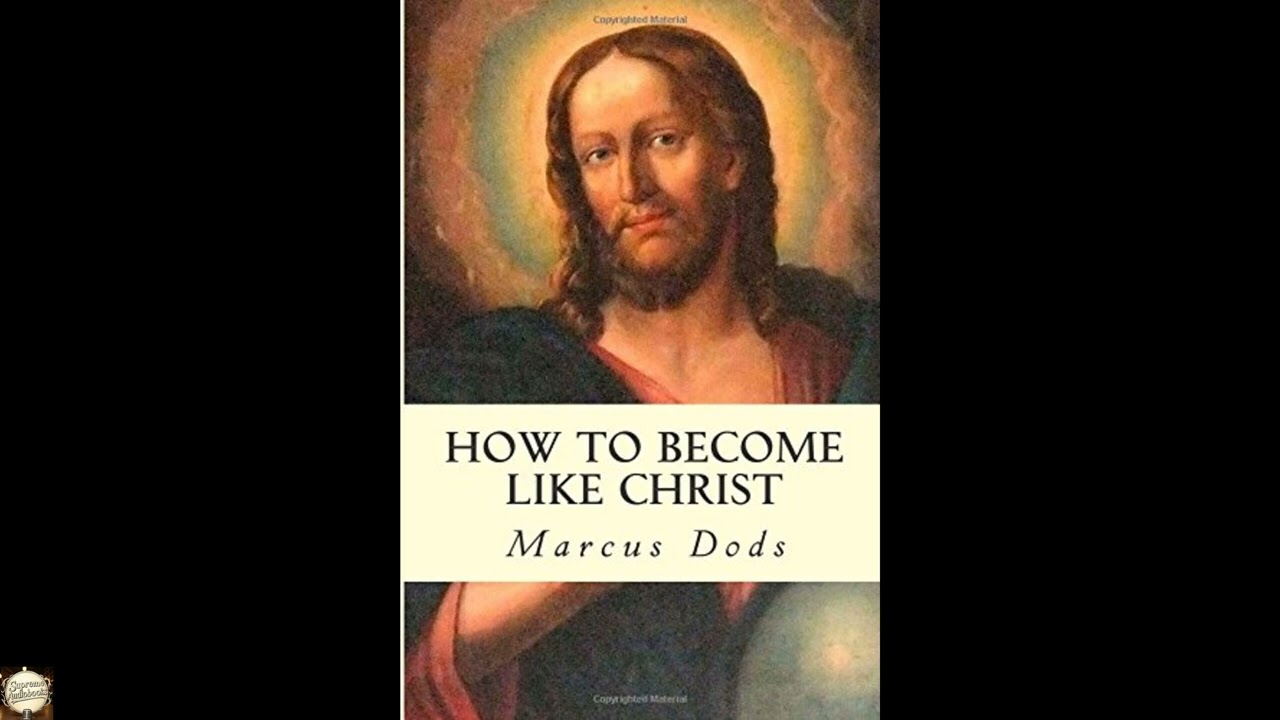
How to become like ChristDods, Marcus
In a world often loud with conflicting advice and fleeting trends, the ancient wisdom of spiritual growth retains a quiet power. Marcus Dods’s profound work, "How to become like Christ," offers not just a momentary pause, but a sustained, thoughtful invitation to a deeper mode of living. This isn't a quick-fix manual, but rather a guiding light for anyone seeking substantive personal and spiritual transformation. It asks us to look beyond superficial changes and consider a profound shift in our inner being, echoing principles that have resonated across centuries and continue to speak to the yearning for purpose, integrity, and genuine self-improvement in today's demanding landscape. Dods articulates a path that, while rooted in specific theological traditions, offers universal insights into character, virtue, and the pursuit of a life aligned with one's highest ideals. The book lays out a systematic approach to spiritual and ethical development, addressing the inherent challenges and aspirations of the human spirit. It doesn't present a fictional narrative with characters in the traditional sense, but rather positions the listener as the central figure, a seeker navigating the landscape of their own conscience and daily existence. The setting is primarily internal—the spiritual struggles and triumphs occurring within the individual's heart and mind, framed against the backdrop of common human experience. Dods methodically presents concepts that gradually build upon one another, moving from fundamental principles of faith and humility to more complex considerations of love, service, and moral courage. The central conflict animating this discussion arises from the perennial tension between human frailty and the aspiration towards an ideal of moral and spiritual perfection. Dods understands that the gap between who we are and who we aspire to be can seem immense, and his writing serves as a bridge across that chasm. He unpacks the qualities attributed to Christ—compassion, self-sacrifice, forgiveness, integrity—and then provides practical, understandable guidance on how these qualities can be cultivated and made manifest in an individual's life. The arc of the book, therefore, is not a dramatic progression of events, but a careful, step-by-step elucidation of spiritual principles designed to lead the listener toward a more Christ-like character, culminating in a deeper understanding of personal responsibility and the potential for inner peace. It is a carefully constructed argument, designed to uplift and instruct without ever simplifying the profound undertaking it describes. Marcus Dods, born in 1834 in Dean Bridge, Midlothian, Scotland, was a towering figure in Scottish theological circles during the late nineteenth and early twentieth centuries. The son of a Free Church of Scotland minister, he was immersed in a robust intellectual and spiritual environment from an early age. He received his education at Edinburgh University, where he distinguished himself as a brilliant student, later going on to study theology at New College, Edinburgh. After a period of dedicated pastoral service, including fourteen years as minister of Renfield Free Church in Glasgow, Dods was appointed Professor of New Testament Exegesis at New College in 1889. This academic role allowed him to blend rigorous scholarship with his deep spiritual convictions. Dods was renowned not only for his profound biblical scholarship—his commentaries on books like John and Genesis are still respected today—but also for his eloquent preaching and insightful devotional writings. He stood as a prominent voice during a period of significant intellectual and social change, navigating the shifting currents of scientific discovery and theological inquiry with both intellectual honesty and unwavering faith. His ability to synthesize deep theological understanding with practical spiritual guidance made his works widely accessible and influential. Alongside "How to become like Christ," other notable works include "An Introduction to the New Testament" and "The Parables of Our Lord," each demonstrating his commitment to making the scriptures understandable and relevant for contemporary readers. He passed away in 1909, leaving behind a legacy of profound theological insight and enduring spiritual instruction. One of the principal themes of "How to become like Christ" is, naturally, the imitation of Christ. Dods carefully delineates what this means, moving beyond mere outward mimicry to a profound internal transformation. He illustrates this by discussing, for example, Christ's humility, showing how genuine humility is not self-abasement but an accurate assessment of one's place in the divine order, freeing one from pride and anxiety. Another core theme is the nature of true love and compassion. Dods presents examples from the gospels, such as Christ's interaction with the marginalized or his teachings on forgiveness, not as abstract ideals but as concrete actions that spring from an inner disposition of empathy and selflessness, encouraging the listener to cultivate these qualities in their daily interactions. Further, the book strongly emphasizes the themes of self-denial and ethical living. Dods argues that true spiritual growth often requires a conscious setting aside of selfish desires for the sake of higher principles and the well-being of others. He might cite passages concerning the pursuit of righteousness over material gain, explaining how such choices, while challenging, ultimately lead to a more fulfilling and purposeful existence. The book's literary significance lies in its clear, accessible prose which nonetheless conveys profound theological depth. It bridges the gap between scholarly exegesis and practical devotional literature, making complex ideas about Christian character attainable for a broad audience. It functions as both a spiritual guide and a work of classical Christian thought, offering a methodical yet inspiring presentation of the tenets of Christian living. "How to become like Christ" emerged at a significant juncture in Western thought and religious practice. The late Victorian and Edwardian eras saw societies grappling with the implications of industrialization, rapid scientific advancements, and evolving social structures. Traditional religious beliefs were being scrutinized by new philosophies and the burgeoning field of biblical criticism. In this environment, there was a widespread hunger for spiritual reassurance and practical guidance on living a moral life amidst increasing complexity. Dods's work resonated deeply because it offered a grounded, yet intellectually sound, approach to faith that emphasized personal responsibility and ethical conduct. It stood in contrast to both rigid dogmatism and unmoored skepticism, instead presenting a thoughtful argument for an active, lived faith. The period also witnessed a flourishing of devotional literature that sought to make spiritual truths accessible and applicable to everyday life, moving beyond purely academic theology. Dods’s clear, persuasive style and his focus on the practical application of spiritual ideals perfectly aligned with this cultural moment, providing solace and direction to many seeking a deeper connection to their faith and a moral compass in a changing world. It represented a form of robust, yet personal, Christianity that appealed to the sensibilities of its era. Listening to "How to become like Christ" as an audiobook offers a uniquely intimate and reflective experience. The spoken word allows for the careful consideration of Dods's arguments at a pace that encourages absorption and contemplation, rather than hurried reading. With a run length of several hours, this audiobook provides ample time to immerse oneself in its profound ideas, perfect for extended listening sessions during quiet moments or while engaged in routine activities. A skilled narrator will bring a thoughtful, measured cadence to Dods's prose, allowing the listener to truly settle into the reflective atmosphere the text fosters. Pay attention to the narrator's interpretation of emphasis and tone, which can illuminate the subtle nuances of Dods's theological and ethical points. This format transforms the act of engaging with the text into a personal dialogue, inviting introspection and a deeper engagement with the timeless wisdom it contains.
Enjoyed How to become like ChristDods, Marcus? A few ways to support us
Audible & Amazon links are affiliate; we may earn a small commission at no extra cost.
About this production
Human narration by a volunteer reader from LibriVox.org, the public-domain audiobook project. LibriVox volunteers record literary works whose copyright has expired in the United States, releasing the resulting recordings into the public domain.
How to become like ChristDods, Marcus by Marcus Dods. The underlying text is in the U.S. public domain. We do not republish any modern copyrighted edition, translation, or commentary.
The 4K cinematic visuals accompanying this audiobook are generated by an AI image model from prompts derived from the source text. No copyrighted photos, paintings, or stock footage are used. AI generation is disclosed on every video on our YouTube channel as required by YouTube's altered/synthetic content policy.
English subtitles are transcribed from the LibriVox recording with OpenAI Whisper. Translations into the 11 other supported languages are produced by Meta's NLLB-200 neural translation model. No human translator's copyrighted translation is used.
Questions about sourcing or rights? See our DMCA & Sourcing policy or contact us.
Enjoyed this audiobook?
If you'd like to own a copy of How to become like ChristDods, Marcus or hear a professionally produced edition, the links below help support free audiobook production at no extra cost to you.
As an Amazon Associate we earn from qualifying purchases. Audible / print links are affiliate.