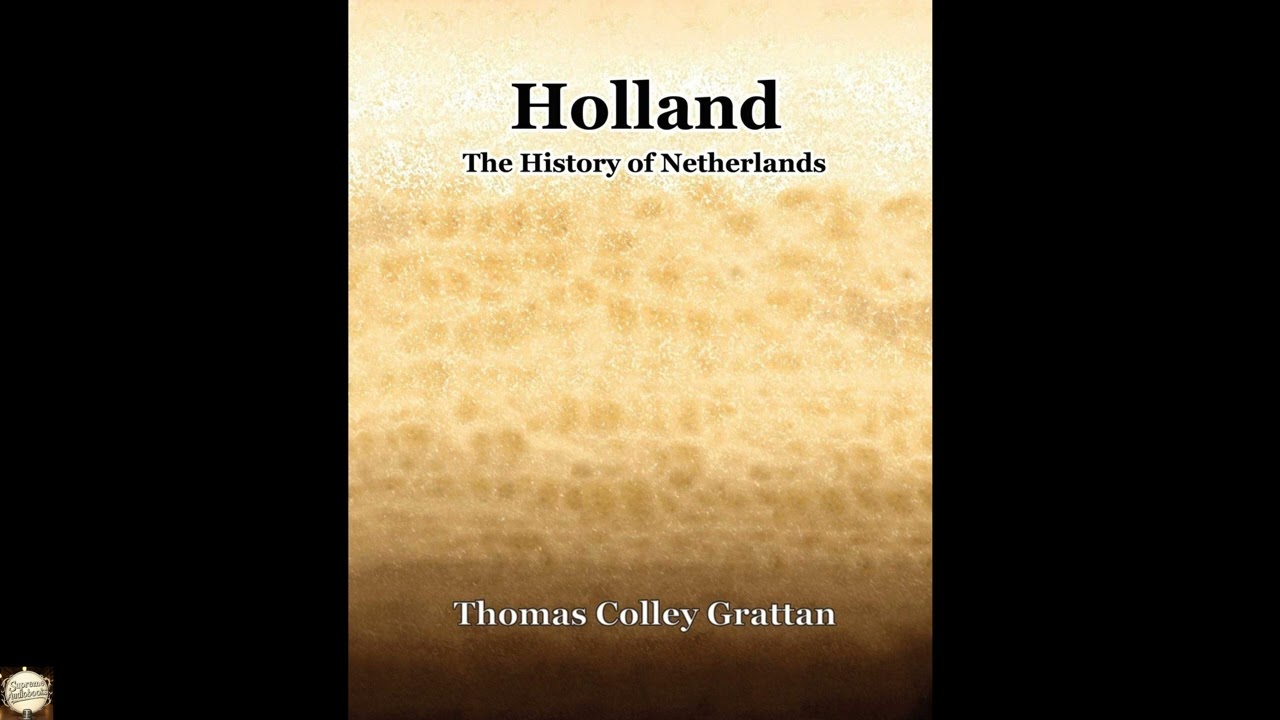
Holland The History Of Netherlands
The story of the Netherlands is a narrative of improbable triumphs, of a people who quite literally carved their nation out of the sea and then defended it against the mightiest empires of Europe. Thomas Colley Grattan’s Holland The History Of Netherlands invites us to witness this extraordinary genesis and evolution. It is far more than a dry chronicle; it is a foundational account that asks how a small collection of territories, perpetually threatened by both water and foreign powers, could forge a unique identity, build an economic powerhouse, and become a beacon of republican ideals. Listening to this history today offers profound insights into the enduring power of resilience, the complex interplay of geography and destiny, and the foundational struggles for freedom that continue to shape our understanding of nationhood and self-determination. The narrative Grattan presents begins with the earliest stirrings of human habitation in the Low Countries, sketching a landscape perpetually in flux, subject to the whims of the North Sea and the great rivers that crisscross it. We are introduced to the various tribal groups and later the Roman influence that laid early administrative groundwork, even as the distinctive character of the region began to form. The account then moves through the medieval period, detailing the rise of powerful dukedoms and countships – Flanders, Brabant, Holland, Zeeland – each with its own customs and loyalties, yet all gradually drawn into a larger sphere of influence, first under the Burgundian dukes and subsequently, through dynastic marriages, under the vast Habsburg Empire of Spain. This period establishes the core tension: a spirited, independent-minded populace, often urban and commercially inclined, chafing under distant imperial rule. The central conflict ignites with the Protestant Reformation and the severe Spanish Catholic response. The narrative follows the prolonged and brutal Eighty Years' War, a seemingly unwinnable struggle for religious freedom and political autonomy against the Spanish crown. Here, figures like William of Orange emerge, not as fictional heroes, but as real leaders wrestling with impossible choices, uniting disparate provinces and inspiring desperate resistance. The unfolding events chart the gradual transformation from scattered rebellions into a concerted national effort, culminating in the establishment of the independent Dutch Republic. Grattan details the strategic genius, the immense sacrifices, and the political innovations that allowed this small nation to not only survive but to thrive, ultimately leading to its remarkable Golden Age, a period of unparalleled artistic, scientific, and economic ascendancy that reshaped global commerce and culture. Thomas Colley Grattan, born in Dublin in 1792, was an Irish diplomat and writer whose life spanned a period of significant geopolitical change and burgeoning national consciousness across Europe. He spent many years abroad, particularly in the Netherlands, France, and Germany, experiences that deeply informed his historical and literary output. From 1839 to 1846, Grattan served with distinction as the British Consul in Boston, Massachusetts, further broadening his international perspective. He became well-known not only for his comprehensive historical works but also for his travel narratives, which blended keen observation with engaging prose, and for several novels, including Highways and Byways, or, Tales of the Roadside published in 1823, and The Heiress of Bruges from 1830. Grattan’s History of the Netherlands, first appearing in 1830-1831, established his reputation as a meticulous chronicler and a compelling storyteller, earning its place among the foundational histories of the period. He approached his subject matter with a blend of scholarly rigor and an appreciation for the human drama inherent in historical events, a characteristic that marks him as a key figure in 19th-century historical writing, reflecting the Romantic era’s fascination with national origins and identity. He passed away in 1864, leaving behind a substantial body of work that continues to offer valuable perspectives on European history. Grattan's history powerfully illustrates several core themes. One prominent thread is the sheer resilience and defiance of the Dutch people in the face of overwhelming odds. The book repeatedly demonstrates how, whether against the relentless tides that threatened to engulf their lands or the formidable armies of the Spanish Habsburgs, the inhabitants of the Low Countries consistently found ways to persevere and innovate. Listeners will hear accounts of cities under siege holding out for months, of dikes breached strategically to repel invaders, and of a population adapting to harsh conditions with ingenuity. This unyielding spirit is vividly portrayed through the long course of the Eighty Years' War. Another compelling theme is the birth and consolidation of a distinct national identity. Prior to the great wars of independence, the Low Countries were a collection of distinct provinces with varying interests. Grattan shows how shared struggle, common grievances against imperial rule, and the necessity of mutual defense gradually fostered a sense of "Dutchness" that transcended provincial loyalties, solidifying with the formation of the United Provinces and the development of unique republican institutions. The narrative also highlights the transformative power of commerce and innovation. The Dutch, denied access to traditional resources, leveraged their geographic position and maritime skills to become a dominant global trading force. Grattan details the emergence of a merchant class, the development of sophisticated financial instruments, and the creation of global trading companies like the Dutch East India Company. This economic prowess was not merely a byproduct of independence but a vital engine that sustained the war effort and funded the cultural explosion of the Golden Age. Furthermore, the book examines the complex, yet ultimately influential, role of religious freedom and intellectual tolerance. While the initial struggles were fiercely sectarian, the Dutch Republic, in contrast to much of contemporary Europe, became a relatively safe haven for various Protestant denominations and Jewish communities. This openness, as Grattan suggests, attracted great thinkers and merchants from across the continent, fueling intellectual curiosity and contributing to the nation's rapid advancements in science, philosophy, and the arts. Grattan's Holland The History Of Netherlands emerged during a critical juncture in European history, published between 1830 and 1831. This period was characterized by the ongoing reconfiguration of Europe following the Napoleonic Wars and the rise of fervent nationalist sentiments. Indeed, as Grattan was publishing his multi-volume history of the Netherlands, the United Kingdom of the Netherlands (created in 1815) was being torn apart by the Belgian Revolution, which erupted in 1830. This immediate political context undoubtedly underscored the significance of understanding the historical roots of national identity, sovereignty, and the complex relationships between diverse populations within shared territories. For a British diplomat like Grattan, writing for a broad English-speaking audience, providing a clear, comprehensive account of a strategically vital neighbor, one with a history of both alliance and rivalry, was particularly relevant. His work contributed to a broader 19th-century movement among historians to document and interpret national histories, shaping public understanding and national self-perception in an era of profound political and social change. Listening to Holland The History Of Netherlands as an audiobook offers a unique gateway into this sprawling historical narrative. The voice of a skilled narrator can transform what might be dense historical text into an engaging, living account, guiding the listener through centuries of political maneuvering, economic shifts, and epic battles. With a run length of several hours, this allows for a deep immersion into the subject, perfect for sustained listening over many days or weeks, letting the grandeur and the minute details of the historical progression truly sink in. Listen for the narrator’s pacing, how they manage the sweep of grand historical epochs alongside the intensity of specific moments like a siege or a crucial diplomatic exchange. The clarity and authoritative tone can make the complex names and dates more accessible, allowing the listener to appreciate the overall arc of the story—the long, arduous process by which a marshy delta became a global power, and the profound struggles that defined its people.
Enjoyed Holland The History Of Netherlands? A few ways to support us
Audible & Amazon links are affiliate; we may earn a small commission at no extra cost.
About this production
Human narration by a volunteer reader from LibriVox.org, the public-domain audiobook project. LibriVox volunteers record literary works whose copyright has expired in the United States, releasing the resulting recordings into the public domain.
Holland The History Of Netherlands by Thomas Colley Grattan. The underlying text is in the U.S. public domain. We do not republish any modern copyrighted edition, translation, or commentary.
The 4K cinematic visuals accompanying this audiobook are generated by an AI image model from prompts derived from the source text. No copyrighted photos, paintings, or stock footage are used. AI generation is disclosed on every video on our YouTube channel as required by YouTube's altered/synthetic content policy.
English subtitles are transcribed from the LibriVox recording with OpenAI Whisper. Translations into the 11 other supported languages are produced by Meta's NLLB-200 neural translation model. No human translator's copyrighted translation is used.
Questions about sourcing or rights? See our DMCA & Sourcing policy or contact us.
Enjoyed this audiobook?
If you'd like to own a copy of Holland The History Of Netherlands or hear a professionally produced edition, the links below help support free audiobook production at no extra cost to you.
As an Amazon Associate we earn from qualifying purchases. Audible / print links are affiliate.