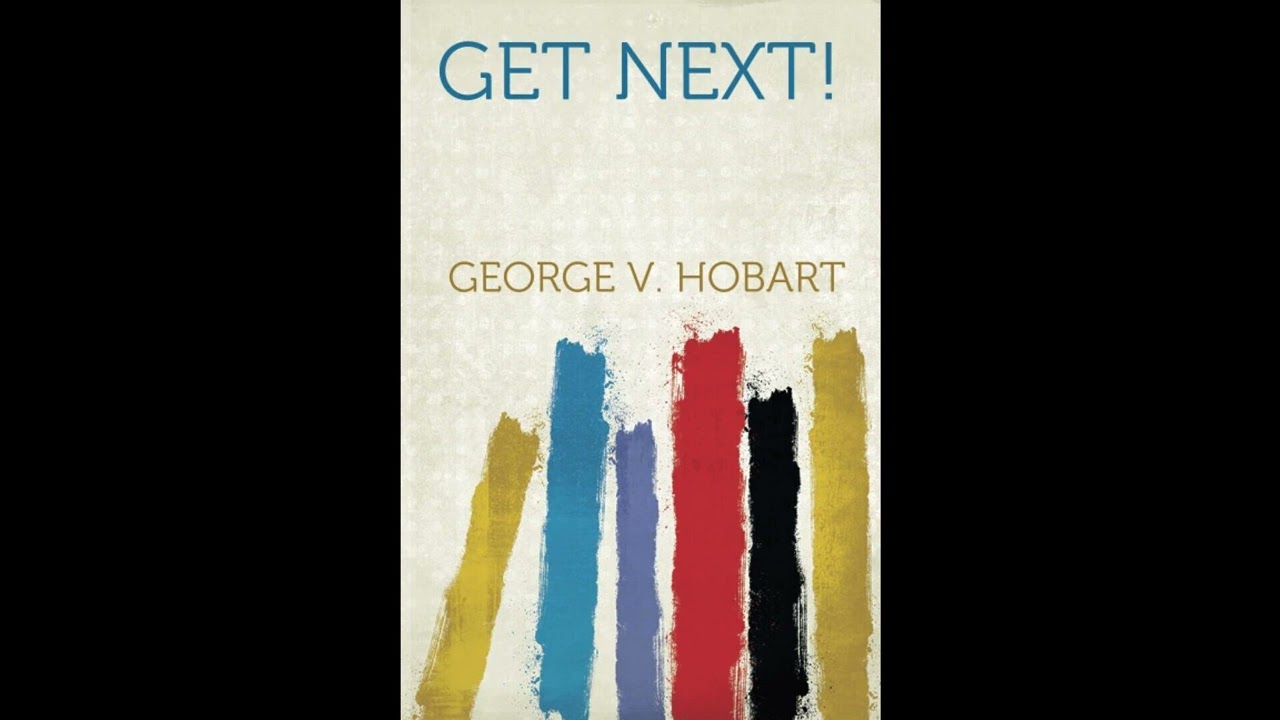
Get Next!
Step into the bustling, ambitious world of early 20th-century America with George V. Hobart’s uproarious collection, Get Next! This remarkable volume offers a spirited, witty commentary on the human desire to constantly ascend, to keep pace with—or ideally, surpass—one’s neighbors, both socially and financially. Hobart’s keen observations, penned at the dawn of a new century, reveal anxieties and aspirations that, while wrapped in period finery, feel surprisingly familiar today. It is a comedic mirror held up to the eternal quest for status, a charming reminder that the more things change, the more certain aspects of human nature remain hilariously constant. Listeners will find themselves transported to an era of rapid transformation, laughing alongside the author at the enduring foibles of ambition and the relentless pursuit of what comes next. Set against the vibrant backdrop of burgeoning American cities—places like New York or Chicago, where trolleys clanged and skyscrapers began to kiss the clouds—Get Next! introduces a cast of memorable characters, each striving in their own unique way to secure their place in the social hierarchy. One might encounter a well-meaning but hopelessly out-of-touch socialite, desperately attempting to host the season’s most exclusive dinner party, only to be confounded by the latest fads and the rigid, unspoken rules of polite society. Or perhaps a young, ambitious clerk, fresh from the countryside, who arrives in the metropolis armed with big dreams and an even bigger desire to "get next" to the right people, quickly discovering that the path to success is paved with both opportunity and embarrassing social gaffes. The central conflict of these interwoven narratives often revolves around the struggle to maintain appearances, to project an image of prosperity and sophistication that may or may not align with reality. Whether it is a frantic effort to acquire the latest technological marvel, or the comical lengths one goes to impress a potential business associate or romantic interest, Hobart’s vignettes paint a vivid picture of individuals caught in the relentless currents of a modernizing world. The stories arc through a series of such humorous misadventures, each presenting a fresh angle on the universal human impulse to connect, to belong, and above all, to succeed. George Vere Hobart, born in East Haddam, Connecticut, in 1867, emerged as one of America’s most popular humorists and satirists during a particularly fertile period for American letters. Hobart’s career began in journalism, where his sharp wit and talent for caricature quickly found an audience. He spent formative years contributing to various newspapers and magazines, honing his observational skills and developing a distinct voice that resonated with the common person. Unlike some of his literary contemporaries who focused on the gritty realities of industrial life or the psychological depths of the individual, Hobart carved out a niche in lighthearted, yet insightful, social commentary. His prose was accessible, often employing slang and colloquialisms that made his characters feel instantly recognizable and his situations universally amusing. Before his passing in 1926, Hobart authored numerous books, often featuring recurring characters who became household names. His "John Henry" series, detailing the exploits and pronouncements of a lovable, opinionated everyman, was particularly popular, as were works such as Dinkelspiel’s Letters to Looey and The Married Man’s Story. Many of his works found success beyond the printed page, adapted into popular plays and early silent films, a testament to their broad appeal. Hobart stood squarely within the tradition of American humorists, following in the footsteps of figures like Mark Twain and Bill Nye, but updating the genre for an increasingly urbanized, consumer-driven society. He brought a distinct East Coast sensibility to his observations, focusing on the anxieties and aspirations of the middle and upper-middle classes navigating the complexities of modern life. While his name might not be as widely celebrated today as some of his more "serious" contemporaries, his body of work offers an invaluable, often hilarious, glimpse into the social fabric and popular culture of his era, securing his place as a significant voice in American popular literature. Get Next! enacts several enduring themes, chief among them the relentless pursuit of social advancement and the inherent absurdities of status anxiety. One can observe this in the recurring scenario of characters agonizing over the proper etiquette for a social event, perhaps frantically researching the latest fashion trends or struggling to adopt a suitably sophisticated accent. Hobart deftly portrays the comical lengths to which people will go to impress their peers, whether it involves feigning an interest in obscure European art or pretending to understand the intricacies of the stock market. A character might find themselves tangled in an elaborate web of social obligations, committing faux pas after faux pas in a desperate bid to be seen in the right circles, all while the reader is invited to chuckle at their well-intentioned but often misguided efforts. Another prominent theme woven through the collection is the impact of urbanization and the nascent consumer culture on individual identity. As cities swelled and new technologies emerged, Americans were grappling with a rapidly changing landscape, both physical and social. Hobart highlights the comical disjunctions that arise when traditional values meet the demands of modern life. A scene might show a character bewildered by the cacophony of a bustling department store, attempting to navigate the overwhelming array of new products, or struggling to operate a newly installed telephone. Through such vignettes, Get Next! provides a humorous commentary on the shifting American Dream, where success was increasingly measured by material possessions and the ability to keep up with the latest advancements, often leading to hilarious predicaments and a reconsideration of what truly constitutes progress. When Get Next! was published in 1906, America was in the throes of the Progressive Era, a period marked by profound social, economic, and political change. The country was rapidly transforming from an agrarian society into an industrial powerhouse, with massive waves of immigration reshaping its cultural landscape. Cities were growing at an unprecedented rate, giving rise to new social classes, new forms of entertainment, and new anxieties about everything from public health to moral decay. Politically, figures like Theodore Roosevelt championed reforms aimed at curbing corporate power and improving living conditions, while culturally, the nation was eagerly embracing new technologies like the automobile, the telephone, and moving pictures. This was a time of both boundless optimism and underlying apprehension, a sense that the future was arriving faster than many could comprehend. In this dynamic environment, literature often served as both a reflection and a critique of society. While serious novelists like Upton Sinclair were exposing the harsh realities of industrial labor and Theodore Dreiser was dissecting the darker aspects of ambition, Hobart offered a different lens. His work emerged from a strong tradition of popular humor that allowed readers to process the dizzying changes of the age through laughter. Get Next! provided an entertaining escape, yet its sharp wit also subtly highlighted the pressures and pretensions of a society striving to define itself amidst newfound prosperity and rapid modernization. It perfectly captured the zeitgeist—the striving, the showing off, the endearing awkwardness of a nation coming into its own. Listening to Get Next! as an audiobook offers a unique opportunity to experience Hobart’s particular genius in its most immediate form. The several hours of narration provide ample time to settle into the rhythms of early 20th-century American humor, allowing the listener to truly savor the nuances of the period dialogue and the clever turns of phrase. A skilled narrator brings the diverse cast of characters to life, imbuing each socialite, clerk, or bewildered observer with distinct vocalizations and inflections that underscore the comedy of their predicaments. You can practically hear the bustling streets, the nervous laughter at a dinner party, or the exasperated sighs of characters trying to keep up with the Joneses. The pacing, often brisk and witty, makes for an engaging listen perfect for commutes, long walks, or simply a relaxed afternoon at home. Immerse yourself in the atmosphere of a bygone era, where human ambition, pretension, and the universal desire to “get next” provide endless sources of mirth and a surprising sense of connection to our own modern-day aspirations.
Enjoyed Get Next!? A few ways to support us
Audible & Amazon links are affiliate; we may earn a small commission at no extra cost.
About this production
Human narration by a volunteer reader from LibriVox.org, the public-domain audiobook project. LibriVox volunteers record literary works whose copyright has expired in the United States, releasing the resulting recordings into the public domain.
Get Next! by George V. Hobart. The underlying text is in the U.S. public domain. We do not republish any modern copyrighted edition, translation, or commentary.
The 4K cinematic visuals accompanying this audiobook are generated by an AI image model from prompts derived from the source text. No copyrighted photos, paintings, or stock footage are used. AI generation is disclosed on every video on our YouTube channel as required by YouTube's altered/synthetic content policy.
English subtitles are transcribed from the LibriVox recording with OpenAI Whisper. Translations into the 11 other supported languages are produced by Meta's NLLB-200 neural translation model. No human translator's copyrighted translation is used.
Questions about sourcing or rights? See our DMCA & Sourcing policy or contact us.
Enjoyed this audiobook?
If you'd like to own a copy of Get Next! or hear a professionally produced edition, the links below help support free audiobook production at no extra cost to you.
As an Amazon Associate we earn from qualifying purchases. Audible / print links are affiliate.