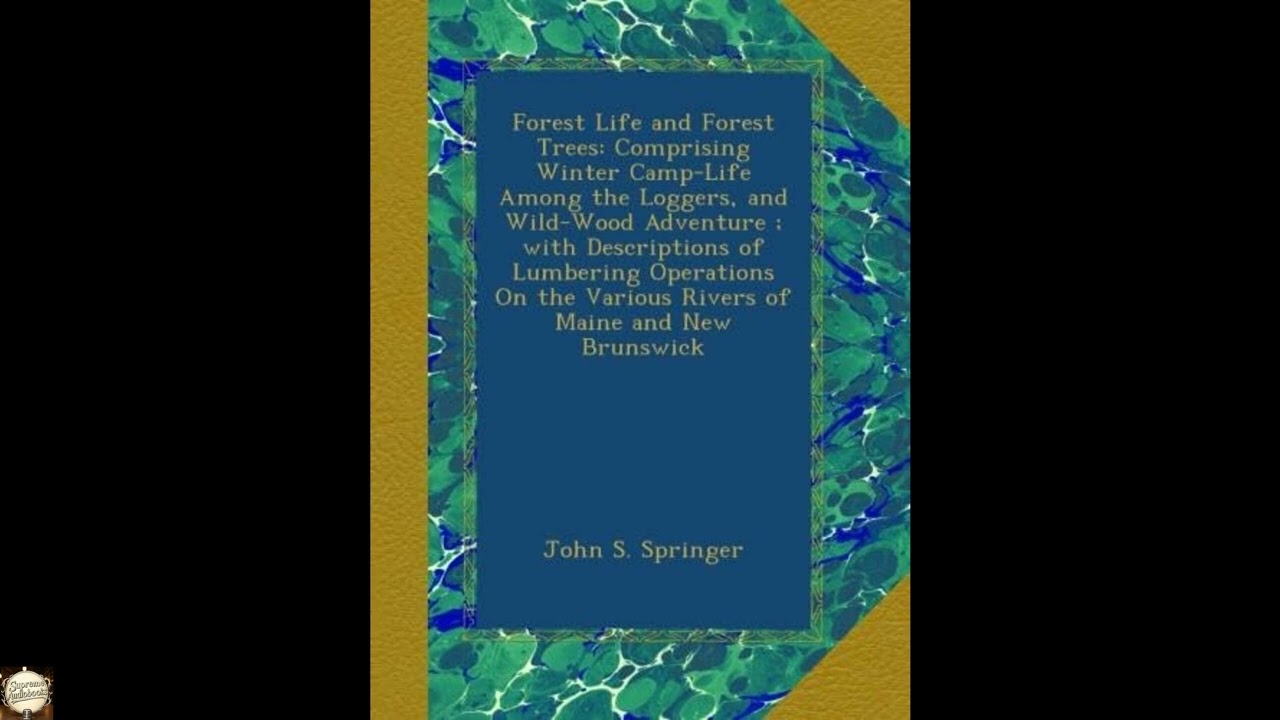
Forest Life and Forest Trees: Comprising Winter Camp-Life Among the Loggers, and Wi
Step into a world where the wilderness held sway, where human endeavor was pitted directly against the raw power of nature, and where a unique way of life carved itself out amidst towering trees and biting winter winds. This classic account, "Forest Life and Forest Trees: Comprising Winter Camp-Life Among the Loggers," invites listeners to journey back to a time when North America's vast forests were both an untamed frontier and a burgeoning resource. It’s a compelling look at the practicalities of survival, the camaraderie forged in isolation, and the sheer scale of early logging operations, offering a window into a foundational period of American industry and our evolving relationship with the natural world. Far more than a simple historical document, this presentation resonates today, prompting reflection on our environmental impact and the spirit of resilience that defined generations. The narrative unfolds through the eyes of an astute observer, guiding us first through the general characteristics of the forest itself – the species of trees, the seasonal changes, the intricate ecosystems that flourish beneath the canopy. We learn about the life cycles of various flora, understanding the forest not just as a backdrop, but as a living, breathing entity with its own rhythms and demands. From the subtle rustlings of summer to the stark beauty of a snow-laden landscape, the prose paints vivid pictures of this wild domain, setting the stage for the human drama that is to follow. The central part of the work then shifts focus dramatically, immersing us in the challenging existence of the loggers. Our perspective narrows to a specific winter camp, a temporary settlement deep within the woods, where men gathered to fell trees and process timber. Here, the story truly comes alive, detailing the daily routines, the specific tools and techniques employed, and the immense physical labor involved in bringing down giant trees and moving them through frozen terrain. The listener gains an intimate understanding of the loggers' day-to-day existence: the early mornings, the hearty meals cooked over open fires, the long hours spent in the bitter cold, the moments of shared laughter and quiet reflection. It portrays the intense physical demands and the ever-present dangers, capturing the essence of a demanding profession and the hardy individuals who pursued it, without revealing their ultimate fates or the specific outcome of any individual logger's season. While an author’s name for this particular work remains elusive, the very nature of "Forest Life and Forest Trees" places it squarely within a significant tradition of American observational and descriptive writing that flourished throughout the nineteenth and early twentieth centuries. During this era, many keen observers—naturalists, adventurers, and even those working in various industries—penned accounts of their experiences in the wild or on the fringes of civilization. These authors often sought to document vanishing landscapes, describe unique ways of life, or simply share practical knowledge of the natural world and emerging industries with a curious public. Works of this kind provided both education and entertainment, serving as vital records of a rapidly changing continent. This book stands as an excellent example of such an anonymous, yet highly informative and evocative, contribution to that body of literature, offering a genuine glimpse into the specifics of a particular trade and environment. The text articulates several key themes, making it a piece that speaks beyond its immediate subject. One prominent theme is the enduring power of nature and humanity's complex relationship with it. The descriptions of the forest's majesty and the relentless challenges posed by winter weather underscore the profound impact the natural world has on human endeavor. For instance, the detailed accounts of loggers battling blizzards or navigating treacherous frozen rivers highlight both their resilience and their vulnerability when confronted by elemental forces. Another strong current running through the work is the theme of community and the specialized nature of labor. The isolated logging camps necessitated a deep interdependence among the men, where individual skills—from felling trees to cooking meals—were essential for the group's survival and success. The anecdotes of shared hardships and collective effort in moving enormous logs down icy slopes vividly illustrate this sense of a tight-knit working fraternity, where each man played a crucial role. Furthermore, the work subtly examines the tension between resource exploitation and the inherent value of the wilderness. While the primary focus is on the practical aspects of logging, the author's detailed observations of forest life—the various species of trees, the wildlife, the seasonal cycles—often imbue the natural environment with a sense of intrinsic worth, almost independent of its commercial potential. This duality reflects a broader societal shift in understanding America's vast natural resources during the period. On one hand, there was the drive to harness these resources for national growth; on the other, a burgeoning awareness of their beauty and eventual finitude. This context provides a rich backdrop for considering the book's place in the broader conversation about America's evolving environmental consciousness. Culturally and politically, the period likely encompassing the creation of this work was one of immense change and expansion in North America. The vast forests were often seen as both an obstacle to settlement and an inexhaustible source of wealth. As the nation pushed westward and industries boomed, the demand for timber for housing, railroads, and factories skyrocketed. This economic imperative drove the establishment of logging operations deeper and deeper into the wilderness. Literary tastes also reflected a growing public interest in practical knowledge, accounts of frontier life, and natural history. These books offered readers in more urbanized areas a window into the rugged experiences that were shaping the nation, often romanticizing the "sturdy pioneer" or the "hardworking logger" as archetypes of American character. The work thus emerged from a confluence of industrial growth, westward expansion, and a popular appetite for authentic, on-the-ground reportage from the wild heartlands. Listening to "Forest Life and Forest Trees" as an audiobook offers a uniquely immersive way to connect with this historical perspective. The spoken word allows the listener to absorb the detailed descriptions of the forest and the intricacies of logger life at a comfortable pace, perhaps while engaged in their own quiet observations of nature or during moments of thoughtful reflection. A skilled narrator can truly bring the atmosphere to life, conveying the crisp chill of winter air, the resounding crack of a felled tree, or the quiet murmur of conversations around a camp stove. The several-hour length allows for a gradual unfolding of information, providing ample time to settle into the historical period and fully appreciate the arduous, yet profoundly human, experiences depicted within this compelling account. It encourages a meditative engagement with the subject matter, letting the sounds and silences of a bygone era settle into the mind.
Enjoyed Forest Life and Forest Trees: Comprising Winter Camp-Life Among the Loggers, and Wi? A few ways to support us
Audible & Amazon links are affiliate; we may earn a small commission at no extra cost.
About this production
Human narration by a volunteer reader from LibriVox.org, the public-domain audiobook project. LibriVox volunteers record literary works whose copyright has expired in the United States, releasing the resulting recordings into the public domain.
Forest Life and Forest Trees: Comprising Winter Camp-Life Among the Loggers, and Wi by John Springer. The underlying text is in the U.S. public domain. We do not republish any modern copyrighted edition, translation, or commentary.
The 4K cinematic visuals accompanying this audiobook are generated by an AI image model from prompts derived from the source text. No copyrighted photos, paintings, or stock footage are used. AI generation is disclosed on every video on our YouTube channel as required by YouTube's altered/synthetic content policy.
English subtitles are transcribed from the LibriVox recording with OpenAI Whisper. Translations into the 11 other supported languages are produced by Meta's NLLB-200 neural translation model. No human translator's copyrighted translation is used.
Questions about sourcing or rights? See our DMCA & Sourcing policy or contact us.
Enjoyed this audiobook?
If you'd like to own a copy of Forest Life and Forest Trees: Comprising Winter Camp-Life Among the Loggers, and Wi or hear a professionally produced edition, the links below help support free audiobook production at no extra cost to you.
As an Amazon Associate we earn from qualifying purchases. Audible / print links are affiliate.