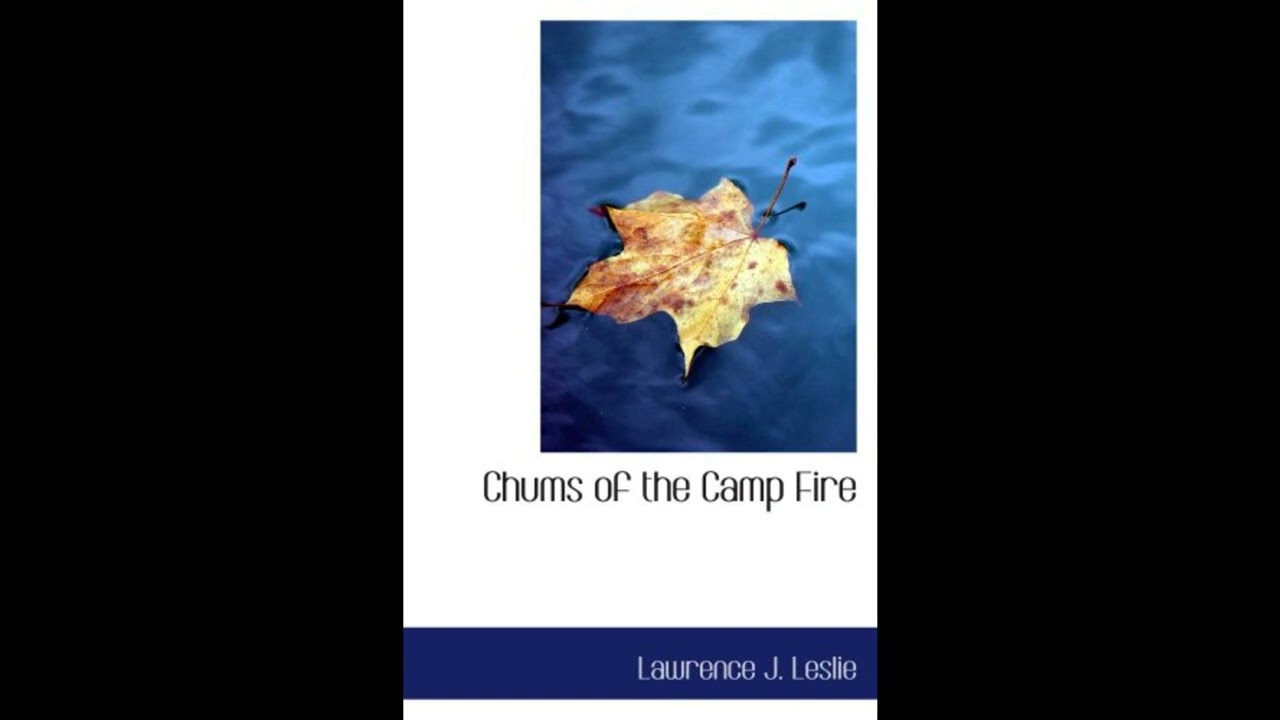
Chums of the Camp Fire
Step into a world where crackling campfires cast long shadows against towering trees, where the scent of pine and fresh earth fills the air, and where the most profound lessons are learned under an open sky. Lawrence J. Leslie’s Chums of the Camp Fire stands as a resonant echo from a bygone era, a story that, despite its classic origins, speaks with surprising clarity to listeners today. This is more than a simple boys' adventure tale; it is an exploration of character forged in the crucible of nature, a testament to enduring friendship, and a gentle reminder of the values that shape us. In an age often overwhelmed by screens and indoor pursuits, Leslie’s work offers a refreshing plunge into the spirit of outdoor camaraderie and self-discovery, inviting us to rediscover the thrill of genuine connection and the quiet wisdom of the wilderness. The narrative unfolds in a bustling summer camp, nestled deep within a sprawling forest, far from the clamor of city life. Here, a diverse group of young boys, ranging in age from early teens to the cusp of young manhood, gather under the watchful, yet encouraging, eye of their seasoned leader, Mr. Harrison. Our central figures are perhaps Billy, the impetuous but good-hearted newcomer; Sam, the steady, resourceful natural leader; and Tom, the quiet observer with an unexpected knack for storytelling. They arrive with varying degrees of outdoor experience and a medley of youthful hopes and insecurities, all eager for the adventures promised by the camp brochure and the lore passed down by older brothers. The initial days are a whirlwind of tent pitching, trail blazing, and learning the rhythms of their temporary home, as they begin to shed their city habits and acclimate to the wild. The central conflict soon emerges not from a singular external threat, but from a series of escalating challenges inherent to their rugged environment and their own developing characters. A vital supply run goes awry in unexpected weather, forcing the boys to rely on their wits and nascent bushcraft skills. An older, more jaded boy named Mark, struggling with his own personal issues, sows seeds of discord among the younger campers, threatening to unravel the fragile bonds of friendship forming within their group. The boys must learn to navigate treacherous terrain, both literally through dense woods and metaphorically through complex social dynamics, confronting their fears and prejudices. As the days lengthen and the camp draws closer to its grand finale — a challenging trek to a remote peak — the boys find themselves continually tested, their individual strengths and weaknesses laid bare, forcing them to understand that true companionship demands both personal responsibility and selfless teamwork. While specific biographical details surrounding Lawrence J. Leslie remain somewhat elusive, a common characteristic among authors writing in this particular vein during the turn of the twentieth century was a profound appreciation for the moral and physical development of youth. Leslie likely contributed to the popular literature movement focused on adventure and character-building for younger readers, a genre that flourished in an era captivated by ideas of self-reliance and the formative power of nature. Authors like Leslie often acted as conduits for societal ideals, crafting narratives that instilled virtues deemed essential for the coming generations. Their works, though perhaps not as widely studied as the canonical literary figures of the time, played a significant role in shaping the moral compass and imaginative landscapes of countless young people. Like many authors of popular juvenile fiction, Leslie's writing style would have been clear, direct, and engaging, designed to draw young readers into a world of relatable challenges and aspirational heroism. His contribution, through works such as Chums of the Camp Fire, would have been in solidifying a particular brand of wholesome, character-driven storytelling. These narratives provided not only entertainment but also a gentle form of instruction, often depicting scenarios where moral choices had tangible consequences and where resilience in the face of adversity was consistently rewarded. His place in the broader literary canon is perhaps not that of a stylistic innovator, but rather as an effective and beloved purveyor of stories that mirrored and reinforced the values of his time, creating a lasting impact on the collective imagination of a generation. At its heart, Chums of the Camp Fire enacts several powerful themes. Friendship and camaraderie stand paramount. We witness this early on, as the initially disparate boys learn to share tasks, support one another during a challenging canoe trip, and bond over shared stories around the evening fire. One poignant scene involves a smaller boy, fearful of heights, being gently encouraged and physically supported by an older companion during a difficult rock climb, showcasing empathy and collective strength over individual prowess. Another central theme is self-reliance and personal growth. Billy, the somewhat sheltered newcomer, initially struggles with basic camp tasks, but through patient instruction and a few humbling failures, he gradually masters knot-tying and fire-starting, culminating in a moment where he independently uses these skills to assist a peer in a minor emergency, demonstrating his burgeoning confidence. The book also champions the profound value of nature as a teacher and healer. The wilderness is not merely a backdrop but an active force, demanding respect and offering solace. The boys learn lessons in observation when tracking animal signs, in patience when fishing, and in humility when confronted by a sudden summer storm that tests their shelter-building skills. The text shows the natural world as a crucible that strips away artifice, forcing the characters to connect with fundamental truths and discover their inner resources. Finally, the theme of leadership and mentorship is evident in the character of Mr. Harrison, who guides the boys not through strict dictates but through setting an example, fostering problem-solving, and providing quiet wisdom, allowing the young campers to make their own discoveries and build their own sense of responsibility. The emergence of books like Chums of the Camp Fire is deeply rooted in the cultural shifts of the late nineteenth and early twentieth centuries. This period saw a growing concern over the perceived "softening" of youth, especially boys, as society became increasingly urbanized and industrialized. There was a strong movement to reconnect young people with nature and instill virtues like physical robustness, moral integrity, and practical skills. Organizations like the Boy Scouts of America and the Camp Fire Girls were founded around this time, emphasizing outdoor education, patriotism, and character development. Authors like Leslie wrote into this cultural current, providing narrative models that supported these movements, offering inspiring stories of young protagonists who found their courage and competence in the wilds, away from the perceived dangers and distractions of modern urban life. These stories served a dual purpose: they entertained and educated, providing both escapism and instruction. They reflected a nostalgic yearning for simpler times and a belief in the inherent goodness and formative power of the natural world. Politically, the era often emphasized American exceptionalism and a need for strong, virtuous citizens, making tales of resourceful and honorable youth particularly popular. Literary trends also favored clear, moralistic narratives for young readers, often featuring protagonists who overcame challenges through pluck, ingenuity, and a strong moral compass, aligning perfectly with the didactic yet adventurous spirit of Chums of the Camp Fire. Listening to Chums of the Camp Fire as an audiobook offers a unique and intimate way to experience this classic. The narrator's voice becomes the conduit to the rustic charm and youthful energy of the camp, allowing the listener to fully immerse in the atmosphere of rustling leaves, the distant call of an owl, and the warmth of a flickering fire. With several hours of run time, it provides an ideal companion for a long drive, an afternoon spent in a hammock, or during a quiet evening, allowing the narrative to unfold at its own deliberate pace. Pay close attention to the pacing, which often mirrors the rhythm of camp life—moments of energetic activity giving way to reflective quietude. The distinct voices given to each character—from Billy's youthful eagerness to Mr. Harrison's measured authority—bring the camaraderie and conflicts vividly to life. The dialogue, often brimming with youthful slang and earnest pronouncements, grounds the story in its period while the underlying themes of friendship and self-discovery resonate universally. It is an invitation to slow down, listen closely, and rediscover the simple, profound joys of growing up under the open sky.
Enjoyed Chums of the Camp Fire? A few ways to support us
Audible & Amazon links are affiliate; we may earn a small commission at no extra cost.
About this production
Human narration by a volunteer reader from LibriVox.org, the public-domain audiobook project. LibriVox volunteers record literary works whose copyright has expired in the United States, releasing the resulting recordings into the public domain.
Chums of the Camp Fire by Lawrence J. Leslie. The underlying text is in the U.S. public domain. We do not republish any modern copyrighted edition, translation, or commentary.
The 4K cinematic visuals accompanying this audiobook are generated by an AI image model from prompts derived from the source text. No copyrighted photos, paintings, or stock footage are used. AI generation is disclosed on every video on our YouTube channel as required by YouTube's altered/synthetic content policy.
English subtitles are transcribed from the LibriVox recording with OpenAI Whisper. Translations into the 11 other supported languages are produced by Meta's NLLB-200 neural translation model. No human translator's copyrighted translation is used.
Questions about sourcing or rights? See our DMCA & Sourcing policy or contact us.
Enjoyed this audiobook?
If you'd like to own a copy of Chums of the Camp Fire or hear a professionally produced edition, the links below help support free audiobook production at no extra cost to you.
As an Amazon Associate we earn from qualifying purchases. Audible / print links are affiliate.