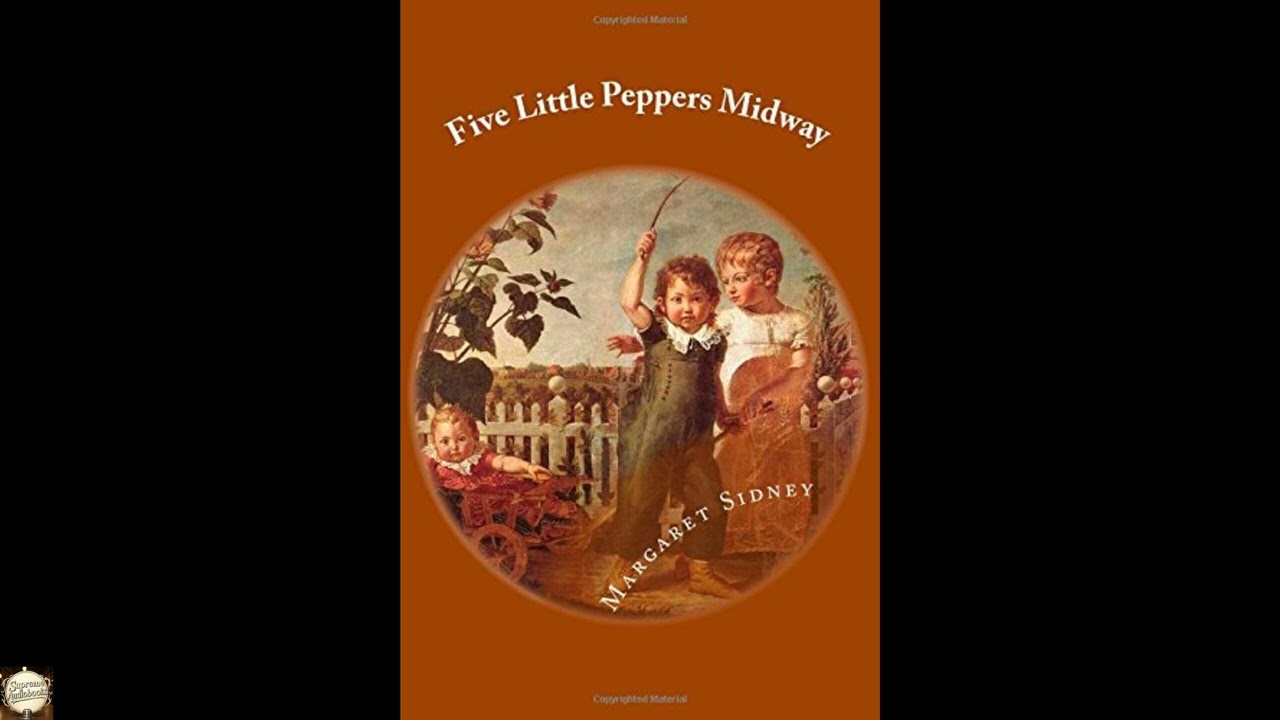
Five Little Peppers Midway
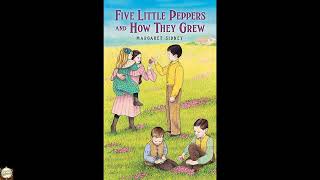
Revisit a beloved family and rediscover the enduring power of kindness and unity with Five Little Peppers Midway, a heartwarming continuation of Margaret Sidney's cherished series. This particular entry finds the spirited Pepper children navigating the unexpected waters of good fortune, a profound change from their humble beginnings. Far from being a mere nostalgic read, the story offers listeners a gentle yet insightful look at how character and values hold firm even when external circumstances shift dramatically. It's a comforting narrative that reminds us that true wealth lies not in possessions, but in the bonds of family and the strength of a loving heart, making it just as relevant and uplifting for contemporary audiences as it was for its first readers. The story picks up with the lively Pepper family—Mrs. Pepper, Polly, Ben, Joel, Phronsie, and Davie—no longer living in their iconic "little brown house." Through a twist of fate, their benefactor, Mr. King, has brought them into the expansive, if sometimes quiet, world of the Whitney mansion. This new setting provides a striking contrast to their previous life of joyful struggle and inventive resourcefulness. The children, particularly the older ones like Polly and Ben, find themselves in an environment of comfort and plenty, but also one with new rules, new expectations, and new social dynamics to master. They form deep friendships with the Whitney children, especially Jasper and Maud, integrating into a life of lessons, leisure, and occasional grand adventures, all while retaining the genuine warmth and unpretentious spirit that made them so endearing from the start. The central conflict of Five Little Peppers Midway isn't a dramatic external threat, but rather the more subtle challenge of adaptation and maintaining one's identity amid changed circumstances. The Pepper children, accustomed to making do with little and finding joy in simple pleasures, must learn to navigate a world where material desires are easily met. They wrestle with minor misunderstandings, the occasional pangs of homesickness for their simpler past, and the natural growing pains of adolescence. Polly, the eldest and most responsible, continues to grapple with her artistic aspirations and her role in caring for her younger siblings, while also coming into her own as a young woman. Her journey, and that of her siblings, illustrates the delicate balance between embracing new opportunities and remaining true to the principles instilled in them by their wise and loving mother. Margaret Sidney was the pseudonym of Harriet Mulford Stone Lothrop, born in 1844 in New Haven, Connecticut. Her early life was spent in a vibrant intellectual environment, fostering a love for stories and literature. In 1878, she married Daniel Lothrop, a prominent Boston publisher who founded D. Lothrop & Company. This union placed her at the heart of the publishing world, providing a fertile ground for her own literary aspirations. It was through her husband's encouragement and her own innate talent that she began writing children's stories under the pen name Margaret Sidney, a choice often linked to her desire for a more formal writing identity or even a playful nod to her husband's publishing initials, "D. Lothrop." Her breakthrough success came in 1880 with Five Little Peppers and How They Grew, which quickly captivated readers and launched a highly popular series. Sidney became one of the most prolific and beloved children's authors of her era, crafting tales that emphasized moral lessons, family values, and the power of love and perseverance. Beyond the Peppers, her notable works include The Golden Gate Series and A Little Maid of Concord Town, often set in historical New England, reflecting her deep appreciation for American heritage. She passed away in 1924, leaving behind a legacy of wholesome and enduring stories that have touched generations of readers, firmly establishing her place in the canon of American children's literature alongside contemporaries like Louisa May Alcott and Kate Douglas Wiggin. A central theme woven throughout Five Little Peppers Midway is the unwavering strength of family unity and love. Despite their newfound wealth and the spaciousness of the Whitney mansion, the Peppers remain tightly knit, finding comfort and identity in their shared bond. We see this enacted repeatedly, such as in Mrs. Pepper’s consistent guidance and comforting presence, serving as the moral compass for her children, or in Polly’s quiet protectiveness over Phronsie and Davie, ensuring their transition is as smooth as possible. Another prominent theme is adaptation to change and new environments. The children’s initial wonder at the grand house, their efforts to learn new social graces, and even their small anxieties about fitting in beautifully illustrate this. An example is Ben’s earnest attempts to navigate new school settings and friendships, occasionally stumbling but always learning with good humor and resilience. Furthermore, the book subtly underscores the importance of maintaining one's core values and integrity, even when surrounded by the allure of prosperity. The Peppers never become spoiled or forget their roots; their inherent kindness, honesty, and humility shine through, often serving as a quiet influence on those around them. Phronsie’s innocent goodness, for instance, frequently disarms more cynical characters and brings joy to the occasionally austere atmosphere of the mansion. This also ties into the theme of kindness and generosity, not just in material terms, but in spirit. The Peppers' open hearts and willingness to share their joy and compassion are evident in their interactions with the often-reserved Mr. King, slowly thawing his distant demeanor, and in their genuine affection for the Whitney family, proving that true riches are found in human connection. The late 19th century, when Five Little Peppers Midway was originally published, was a fascinating period in American history, often referred to as the Gilded Age. This era followed the Civil War and saw rapid industrialization, significant social change, and the rise of a distinct middle class, alongside lingering issues of poverty and urban growth. Culturally, there was a strong emphasis on domesticity, moral instruction, and the importance of family, particularly within children's literature. It was a time when stories for young readers were often imbued with didactic elements, designed to teach virtues and proper conduct. Margaret Sidney's work emerged directly from this cultural context. Her stories provided reassurance and moral guidance during a period of swift societal transformation. They presented an idealized vision of childhood and family life, even when depicting challenges. The Five Little Peppers series, with its focus on resilience, the triumph of good character over adversity, and the enduring power of familial love, resonated deeply with parents and educators seeking wholesome, uplifting content for children. Sidney’s narratives offered a comforting reflection of enduring values in a world that often felt like it was changing too quickly, solidifying her reputation as a voice of warmth and moral clarity for young readers. Listening to Five Little Peppers Midway as an audiobook offers a truly delightful and immersive experience. The story’s gentle pacing and episodic structure make it an ideal companion for a variety of everyday activities, whether you are managing household chores, commuting, or simply seeking a soothing narrative to wind down your day. A skilled narrator can bring each member of the Pepper family to vivid life, capturing Polly’s earnestness, Ben’s practical spirit, Joel’s mischievous energy, Phronsie’s sweet innocence, and Mrs. Pepper’s unwavering wisdom. The descriptive language, from the bustling scenes of family life to the serene moments of reflection within the grand mansion, truly comes alive through spoken word. Listen for the subtle inflections that convey the children’s youthful enthusiasm and the quiet strength of their mother’s love. The dialogue, brimming with the warmth and authentic voices of the period, feels more immediate and engaging when performed, inviting listeners to step directly into the charming world of the Peppers and experience their joys and lessons firsthand.
Enjoyed Five Little Peppers Midway? A few ways to support us
Audible & Amazon links are affiliate; we may earn a small commission at no extra cost.
About this production
Human narration by a volunteer reader from LibriVox.org, the public-domain audiobook project. LibriVox volunteers record literary works whose copyright has expired in the United States, releasing the resulting recordings into the public domain.
Five Little Peppers Midway by Margaret Sidney. The underlying text is in the U.S. public domain. We do not republish any modern copyrighted edition, translation, or commentary.
The 4K cinematic visuals accompanying this audiobook are generated by an AI image model from prompts derived from the source text. No copyrighted photos, paintings, or stock footage are used. AI generation is disclosed on every video on our YouTube channel as required by YouTube's altered/synthetic content policy.
English subtitles are transcribed from the LibriVox recording with OpenAI Whisper. Translations into the 11 other supported languages are produced by Meta's NLLB-200 neural translation model. No human translator's copyrighted translation is used.
Questions about sourcing or rights? See our DMCA & Sourcing policy or contact us.
Enjoyed this audiobook?
If you'd like to own a copy of Five Little Peppers Midway or hear a professionally produced edition, the links below help support free audiobook production at no extra cost to you.
As an Amazon Associate we earn from qualifying purchases. Audible / print links are affiliate.
![by Margaret [Harriet Margaret Stone Lothrop]. Sidney by Unknown — free full audiobook](https://img.youtube.com/vi/k_Gr_WSxsPA/maxresdefault.jpg)