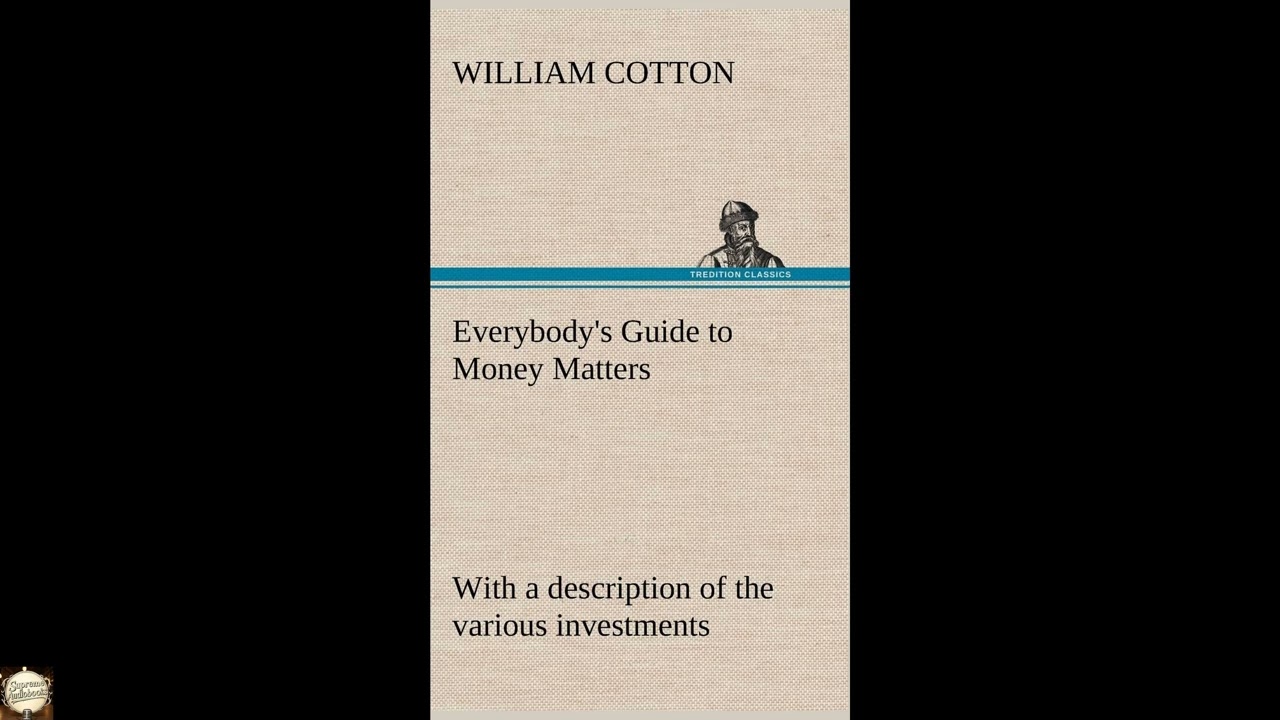
Everybody's Guide to Money Matters: with a description of the various investments c
Even as the world churns with cryptocurrencies and algorithm-driven trading, the fundamental principles of managing personal wealth remain stubbornly constant. Before the advent of digital wallets and instant global markets, everyday citizens faced similar dilemmas regarding savings, income, and the bewildering array of ways to grow their meager earnings. This is precisely the landscape addressed by Everybody's Guide to Money Matters: with a description of the various investments c. Far from being a relic, this classic manual offers a fascinating window into the financial wisdom—and anxieties—of a bygone age, presenting a bedrock understanding that, surprisingly, still resonates with our contemporary search for financial stability and informed decision-making. This comprehensive guide doesn't present a fictional narrative with named protagonists; instead, its 'main character' is the earnest individual—the householder, the young professional, the aspiring investor—grappling with the complexities of economic life. The 'setting' is the bustling financial world of its original publication, a time when new opportunities for investment were emerging but often shrouded in mystery for the uninitiated. The central conflict here is the universal struggle against financial ignorance, the anxiety of making sound choices with one's hard-earned money. The text sets out to demystify, translating jargon into plain language for the common person. The arc of Everybody's Guide begins with a foundational discussion of personal finance, establishing the importance of thrift, budgeting, and the careful management of income and expenditures. It moves systematically through the different avenues available for saving and growing wealth. Readers are introduced to what were then considered cutting-edge—or at least accessible—investment vehicles, such as government bonds, corporate stocks, real estate, and perhaps even early forms of mutual associations or insurance policies. Each type is presented with a clear explanation of its characteristics, potential returns, and inherent risks. The guide culminates not in a single, definitive answer, but in empowering the reader to make personalized, informed decisions. It encourages prudence and a long-term perspective, cautioning against speculative ventures and promoting a steady, sensible approach to wealth creation. While it lays out the mechanisms of the financial world, it also subtly advocates for a certain ethos: responsibility, diligence, and a practical understanding of how one's personal economy fits into the broader societal framework of commerce and industry. The origins of Everybody's Guide to Money Matters are as intriguing as the advice it contains, emerging from a tradition where practical wisdom was often disseminated anonymously or collaboratively. Unlike a novel born from a singular creative vision, this guide appears to be a distillation of prevailing financial knowledge and common-sense principles gathered for a general readership. Its unknown authorship suggests it may have been compiled by a collective of experts, a publishing house keen to meet a rising demand for financial literacy, or perhaps even a respected, but unassuming, figure who preferred their work to stand on its own merits. This anonymity reinforces its purpose as a communal resource for economic understanding. During the historical period when such guides began to flourish—a time generally marked by expanding industrialization and the professionalization of finance—there was a palpable need for accessible education in economic principles. The shift from agrarian to complex, market-driven economies meant individuals needed to navigate banks, stock exchanges, and a burgeoning array of financial products. Everybody's Guide thus belongs to a lineage of instructional literature that sought to democratize knowledge, empowering citizens to participate effectively in the new economic order without falling prey to ignorance or deception. It wasn't merely about making money, but about understanding the system. This work stands as a testament to the enduring human desire for security and prosperity, and the consistent need for clear, practical instruction. Its very existence speaks to a specific cultural moment when the intricacies of investment and savings became a pressing concern for a broader segment of the population. The fact that its author remains uncredited only adds to its mystique, allowing its wisdom to be perceived as something universal, drawn from the wellspring of collective human experience with wealth and its management. While Everybody's Guide to Money Matters serves primarily as a practical manual, its enduring appeal and place within classic literature stems from the fundamental human themes it addresses. A prominent theme is the democratization of knowledge. At a time when financial information could be opaque and held closely by an elite few, this guide explicitly aims to make understanding money matters accessible to 'everybody.' For example, the text likely offers straightforward explanations of complex instruments like stocks, breaking down concepts such as dividends and market fluctuations into terms a layperson could grasp, leveling the playing field for ordinary citizens seeking a secure future. Another significant theme is prudence and long-term vision. The guide subtly—and sometimes overtly—advocates for a measured approach to wealth accumulation, emphasizing steady growth over speculative gambles. It might present a scenario where a diligent saver, consistently investing a small portion of their income in a diversified portfolio, ultimately achieves greater financial stability than someone who chases quick, risky profits. This focus on moderation and foresight speaks to a deeper ethical framework, one that values responsibility and sustained effort over immediate gratification. It highlights the inherent tension between risk and reward, carefully outlining how investment choices carry varying degrees of each, guiding readers to make decisions aligned with personal comfort and objectives. The period that likely birthed Everybody's Guide to Money Matters was a crucible of social and economic change. It was a time marked by rapid industrial expansion, burgeoning cities, and the rise of a distinct middle class with disposable income and a growing interest in preserving and expanding it. Politically, the era saw increasing regulation and formalization of financial institutions, even as free-market capitalism continued to shape daily life. The stock market, though perhaps not yet a household fixture, was certainly a more accessible arena for investment than in previous generations. Culturally, there was a strong emphasis on self-improvement, education, and the virtues of hard work and thrift. This ethos created a fertile ground for instructional texts of all kinds, from etiquette manuals to self-help books, and especially those pertaining to personal finance. People were eager for practical advice to navigate the complexities of modern life and secure their place. Everybody's Guide emerged directly from this confluence of increasing economic complexity, growing individual wealth, and a cultural drive towards practical education, offering a timely and much-needed resource to a public keen to master the mechanics of money. Listening to Everybody's Guide to Money Matters as an audiobook transforms what might otherwise be a dense instructional text into an accessible and contemplative experience. The several hours of narration provide ample time to absorb each concept, allowing listeners to process financial wisdom at a comfortable pace, perhaps during a commute or while engaging in household tasks. A skilled narrator brings clarity and gravitas to the technical subject matter, making complex descriptions of investments and economic principles feel less daunting and more like a conversation with a trusted advisor. Listen for the measured cadence of the voice, which naturally lends itself to the book’s sensible and measured approach to finance. The lack of traditional 'dialogue' is replaced by a direct address, fostering an atmosphere of quiet instruction and thoughtful reflection on one's financial landscape. This format ensures that the foundational insights of this classic work are not just read, but truly heard and considered.
Enjoyed Everybody's Guide to Money Matters: with a description of the various investments c? A few ways to support us
Audible & Amazon links are affiliate; we may earn a small commission at no extra cost.
About this production
Human narration by a volunteer reader from LibriVox.org, the public-domain audiobook project. LibriVox volunteers record literary works whose copyright has expired in the United States, releasing the resulting recordings into the public domain.
Everybody's Guide to Money Matters: with a description of the various investments c by William Cotton. The underlying text is in the U.S. public domain. We do not republish any modern copyrighted edition, translation, or commentary.
The 4K cinematic visuals accompanying this audiobook are generated by an AI image model from prompts derived from the source text. No copyrighted photos, paintings, or stock footage are used. AI generation is disclosed on every video on our YouTube channel as required by YouTube's altered/synthetic content policy.
English subtitles are transcribed from the LibriVox recording with OpenAI Whisper. Translations into the 11 other supported languages are produced by Meta's NLLB-200 neural translation model. No human translator's copyrighted translation is used.
Questions about sourcing or rights? See our DMCA & Sourcing policy or contact us.
Enjoyed this audiobook?
If you'd like to own a copy of Everybody's Guide to Money Matters: with a description of the various investments c or hear a professionally produced edition, the links below help support free audiobook production at no extra cost to you.
As an Amazon Associate we earn from qualifying purchases. Audible / print links are affiliate.