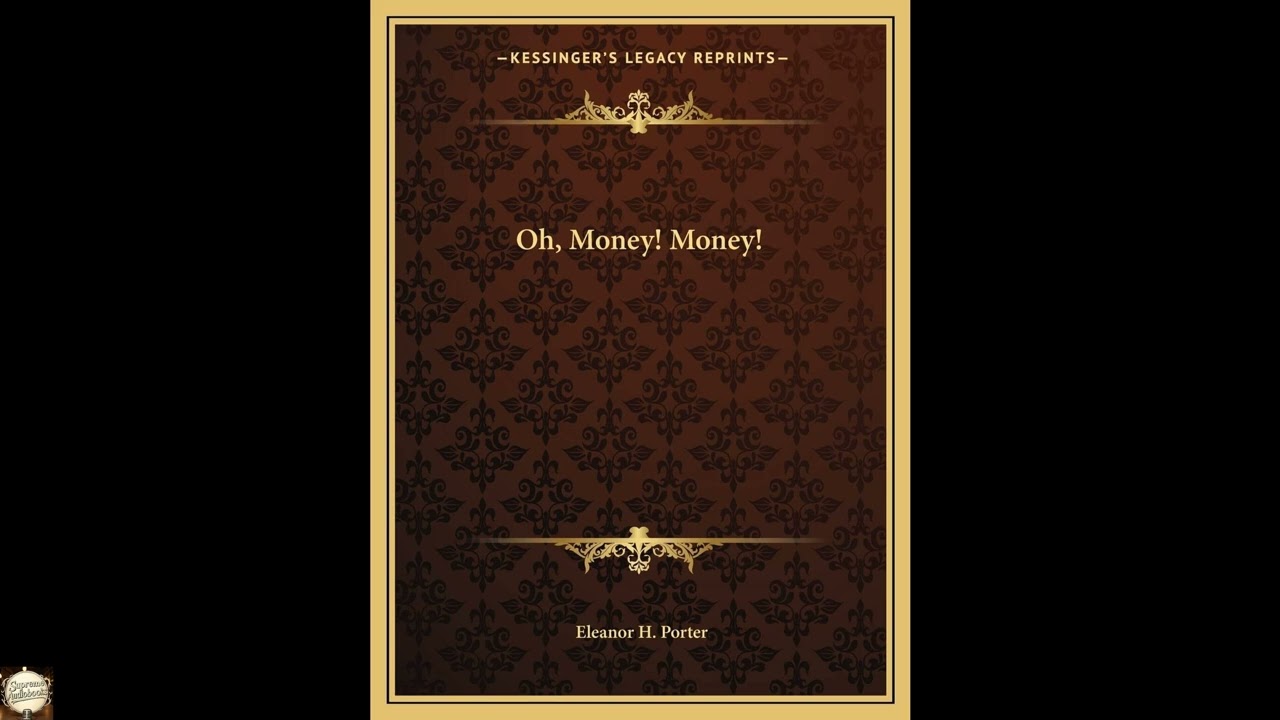
Oh, Money! Money!
Eleanor H. Porter's "Oh, Money! Money!" opens a window into the perennial human fascination—and occasional folly—surrounding wealth. Published in 1918, this clever novel asks a question that remains profoundly relevant more than a century later: what happens when the promise of a fortune hangs over a family, threatening to expose the hidden currents of greed, generosity, and genuine affection? Porter, celebrated for her ability to weave moral lessons into thoroughly engaging narratives, invites listeners to ponder the true cost of material gain versus the invaluable currency of character. This story is a keen social observation, a gentle satire, and a heartfelt affirmation of human decency, making it a compelling listen for anyone who has ever considered the complex interplay between money and the human spirit. The story centers on Peter Doxie, a man of immense, carefully guarded wealth, known as "Peter the Great" among his distant relatives. Peter, feeling increasingly isolated and curious about the true natures of his extended family, conceives an audacious plan. He decides to feign destitution, adopting the persona of a humble, down-on-his-luck elderly man named Mr. Doxie. Under this clever disguise, he moves into the boarding house managed by his unsuspecting niece, Aunt Elvira, struggling with her own financial burdens. From this vantage point, Peter observes the comings and goings, the whispered conversations, and the daily lives of his various nieces, nephews, and their spouses, all of whom are unknowingly part of his elaborate social experiment. The catalyst for Peter's grand test arrives in the form of a fabricated letter. This letter announces a purported inheritance from a long-lost, extremely wealthy relative, creating an immediate stir among the Doxie kin. Suddenly, the relatives—who previously showed little interest in Peter Doxie, the "poor" boarder—begin to see him in a new light, not for who he appears to be, but for his potential connection to the imminent fortune. As the news spreads and the expectation of riches builds, the narrative unfolds through Peter’s keen observations. He watches as personalities shift, as alliances form and dissolve, and as individuals reveal their deepest desires and flaws when faced with the tantalizing prospect of sudden affluence. Some relatives display open avarice, others a more subtle, manipulative self-interest, while a few, refreshingly, continue to demonstrate kindness and integrity, seemingly untouched by the prevailing materialism. The core conflict lies in the tension between genuine human connection and the distorting lens of monetary aspiration, all under the discerning eye of the charade's architect. Eleanor H. Porter was an American novelist whose works resonated deeply with readers in the early decades of the twentieth century. Born Eleanor Hodgman on August 19, 1868, in Littleton, New Hampshire, she initially pursued a career in music, studying at the New England Conservatory of Music. Her training as a soprano laid a foundation for an appreciation of rhythm and voice, subtly informing the flow and dialogue in her written narratives. However, a growing passion for storytelling eventually led her away from the stage and toward the pen, a decision that would ultimately define her literary legacy. Porter’s name became synonymous with optimism and resilience following the immense success of her 1913 novel, Pollyanna. This story, featuring a young girl who finds something to be glad about in every situation, even the most dire, launched a cultural phenomenon and cemented Porter’s place in American literature. The book’s message of finding joy amidst adversity, often dubbed "Pollyannaism," captured the spirit of a nation grappling with the rapid changes and challenges of the early 20th century. She followed this success with Pollyanna Grows Up in 1915 and wrote prolifically, producing novels such as Just David (1916), which also celebrated innocent wisdom, along with numerous short stories. Her literary output often centered on themes of moral fortitude, the power of positive thinking, and the quiet heroism of ordinary individuals. Porter crafted stories that, while appearing simple on the surface, offered insightful commentary on social values and human nature. She died relatively young on May 21, 1920, leaving behind a body of work that continues to remind readers of the enduring value of integrity and kindness. Although sometimes categorized as a children's author due to Pollyanna's popularity, her novels for adults, including "Oh, Money! Money!", showcase her keen observational skills and her talent for crafting narratives that entertain while subtly imparting moral inquiries. "Oh, Money! Money!" skillfully illuminates several powerful themes that resonate with depth and clarity. Foremost among these is the theme of true character versus superficial appearance. Peter Doxie's elaborate disguise directly challenges his relatives to reveal their authentic selves. Prior to the "inheritance" announcement, some relatives exhibit indifference or disdain for Peter, the seemingly impoverished boarder; yet, once the prospect of wealth enters the picture, their attitudes dramatically shift, exposing a veneer of politeness that quickly crumbles under avarice. This sharp contrast reveals how easily social graces can be shed when confronted with material temptation, emphasizing that genuine character—kindness, compassion, honesty—is far more valuable than outward show or assumed piety. Another significant theme that emerges from Porter's narrative is the corrupting influence of wealth, or more accurately, the anticipation of wealth. The mere idea of a large fortune acts as a potent solvent, dissolving familial bonds and exposing underlying selfish motives. We observe relatives who previously coexisted peacefully now engage in petty jealousies, strategic maneuvering, and thinly veiled attempts to curry favor, all aimed at securing a larger share of the imagined bounty. Conversely, the story highlights the contrasting theme of unselfish generosity. Certain characters, less driven by the pursuit of riches, demonstrate a quiet dignity and a willingness to help others, even when they themselves have little. These individuals stand as beacons, proving that money does not inherently dictate morality, but rather serves as a catalyst amplifying existing human tendencies, whether noble or ignoble. "Oh, Money! Money!" appeared in 1918, a pivotal year shadowed by the ongoing Great War and the profound societal shifts it precipitated. While America was embroiled in the final, brutal year of World War I, the home front experienced its own internal dynamics, including burgeoning industrialization, evolving social structures, and the persistent promise of economic prosperity for some. The early 20th century saw traditional values clash with rising consumerism and changing class distinctions. Porter's novel, with its focus on inherited wealth and the anxieties surrounding it, offered a timely commentary. It tapped into a societal conversation about the ethics of accumulating and distributing money, as well as the pressures of maintaining social standing. The narrative subtly questioned whether material gain truly led to happiness or simply unveiled deeper human flaws, a concern likely heightened by the wartime context which forced a re-evaluation of what truly mattered in life. In a sense, the book acts as a moral compass for its era, navigating the ethical dilemmas posed by a society increasingly defined by its financial aspirations and perceived opportunities. Listening to "Oh, Money! Money!" as an audiobook offers a particularly immersive experience into Eleanor H. Porter's astute social commentary. The subtle humor and sharp observations woven throughout the narrative truly come alive when narrated by a skilled voice artist. Listeners can savor the nuances in the dialogue, hearing the varying tones of sincerity, manipulation, or genuine kindness that define Peter Doxie’s relatives. The pacing of the story, as Peter slowly uncovers the true personalities around him, is well-suited to the audiobook format, building a quiet tension that pays off in emotional resonance. The period atmosphere, too, benefits from careful narration, transporting the listener to an earlier American sensibility where character and morality were often weighed against the allure of the dollar. It is a story to listen to not just for its plot, but for its gentle wisdom and its enduring reflection on human nature.
Enjoyed Oh, Money! Money!? A few ways to support us
Audible & Amazon links are affiliate; we may earn a small commission at no extra cost.
About this production
Human narration by a volunteer reader from LibriVox.org, the public-domain audiobook project. LibriVox volunteers record literary works whose copyright has expired in the United States, releasing the resulting recordings into the public domain.
Oh, Money! Money! by Eleanor H Porter. The underlying text is in the U.S. public domain. We do not republish any modern copyrighted edition, translation, or commentary.
The 4K cinematic visuals accompanying this audiobook are generated by an AI image model from prompts derived from the source text. No copyrighted photos, paintings, or stock footage are used. AI generation is disclosed on every video on our YouTube channel as required by YouTube's altered/synthetic content policy.
English subtitles are transcribed from the LibriVox recording with OpenAI Whisper. Translations into the 11 other supported languages are produced by Meta's NLLB-200 neural translation model. No human translator's copyrighted translation is used.
Questions about sourcing or rights? See our DMCA & Sourcing policy or contact us.
Enjoyed this audiobook?
If you'd like to own a copy of Oh, Money! Money! or hear a professionally produced edition, the links below help support free audiobook production at no extra cost to you.
As an Amazon Associate we earn from qualifying purchases. Audible / print links are affiliate.