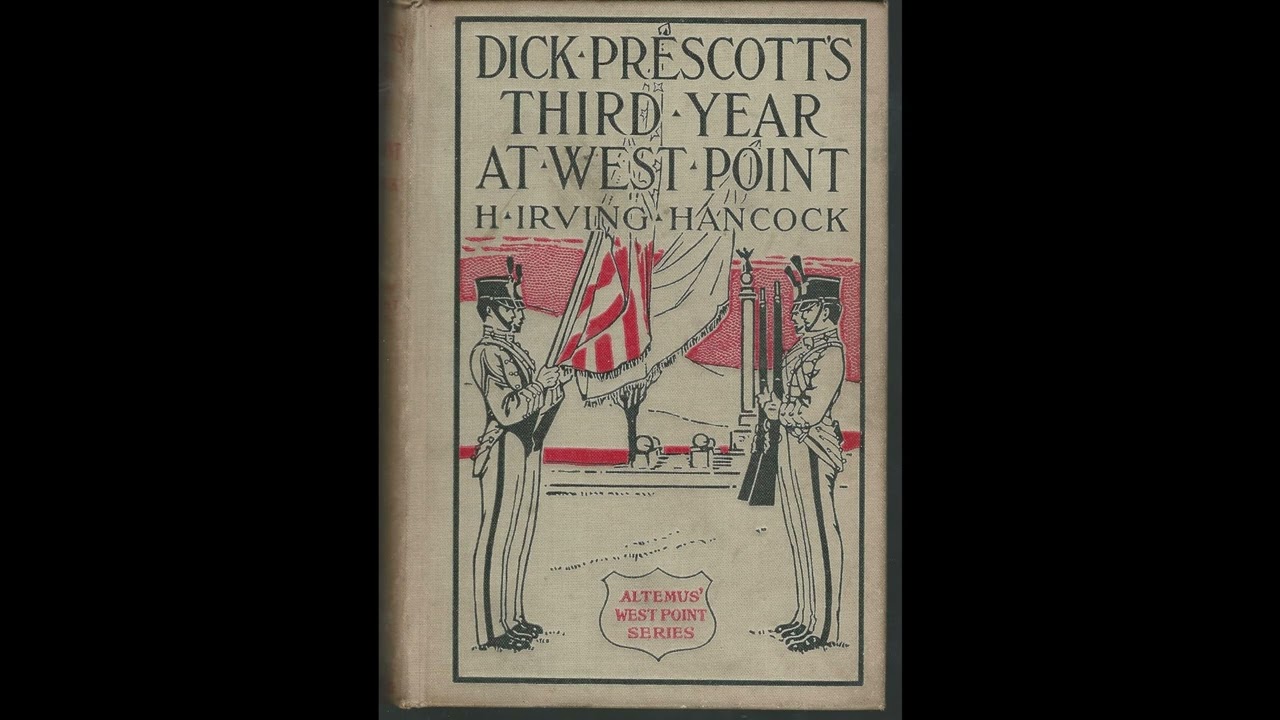
Dick Prescott's Third Year at West Point; or, Standing Firm for Flag and Honor (#3
Step into a bygone era of American ideals and burgeoning character with "Dick Prescott's Third Year at West Point; or, Standing Firm for Flag and Honor (#3)." This classic work, the third volume in a well-loved series, invites listeners into the hallowed grounds of the United States Military Academy at a pivotal moment in one young man's development. More than just a tale of drills and academic rigors, it is a story of moral testing, personal growth, and the forging of men destined for service. For contemporary audiences, it offers a fascinating glimpse into the values championed during the late 19th and early 20th centuries, presenting universal themes of friendship, perseverance, and the pursuit of integrity that resonate even today, reminding us how fundamental these tenets remain in any walk of life. The story drops us squarely into the demanding environment of West Point, where young Dick Prescott, having successfully navigated his first two years, now faces the heightened expectations and responsibilities of a First Classman. This is a crucial period, often considered the most challenging, as cadets are expected not only to master advanced military science and engineering but also to assume leadership roles, mentoring younger classes and upholding the academy's strict code of conduct. Dick, known for his earnestness and strong moral compass, finds himself tested in new ways, balancing the pressures of his studies with the social dynamics and subtle rivalries that inevitably arise within such an intense, close-knit community. Throughout his third year, Dick confronts both academic hurdles and personal dilemmas. He strives to excel in demanding courses, from strategy to surveying, all while participating in rigorous physical training and complex tactical exercises. His mettle is constantly evaluated, not just by instructors, but by his peers. A central thread involves Dick’s unwavering commitment to fair play and justice, often leading him to intercede on behalf of others or to confront instances of dishonesty and unfairness among his fellow cadets. The narrative skillfully illustrates the delicate balance between loyalty to one’s comrades and adherence to the academy’s unyielding honor code, creating compelling moments of decision that define Dick’s evolving character and leadership potential without revealing the eventual outcome of his struggles. The creator of the Dick Prescott series remains uncredited, a common practice for popular serial fiction aimed at younger audiences during the period these books gained prominence. Many such series were produced by publishing syndicates or staff writers who operated under "house names" or simply allowed the characters and the overarching message to take precedence over individual authorship. This commercial model prioritized consistent output and thematic continuity, ensuring a steady stream of adventures for an eager readership. Instead of a singular authorial voice, works like this emerge from a collective publishing tradition, reflecting broader cultural currents rather than the unique perspective of one literary figure. This approach highlights a specific era in American publishing where the focus was often on the educational and moral upliftment of readers, particularly boys. These books served as guidebooks for behavior, instilling patriotism, discipline, and a sense of duty through engaging narratives. The "Unknown" author, therefore, represents a fascinating phenomenon—a skilled storyteller whose individual identity was subsumed by the larger purpose of shaping young minds and promoting aspirational ideals, thereby contributing significantly to the fabric of juvenile literature without seeking personal recognition. "Dick Prescott's Third Year at West Point" enacts several core themes central to its appeal and enduring significance. Foremost is the theme of duty and honor, exemplified by Dick's unwavering commitment to the academy's stringent rules and the higher call of service. We see this in scenes where Dick chooses to report an infraction, even when it might strain a friendship, understanding that the integrity of the institution and the principles it stands for outweigh personal convenience. Another prominent theme is friendship and loyalty, portrayed through the intense bonds forged among cadets under shared hardship. Dick’s relationships with his closest companions demonstrate mutual support through academic struggles, shared triumphs in athletic contests, and steadfast loyalty during moments of personal crisis, all while navigating the strict hierarchy and competitive spirit inherent to West Point life. The narrative also strongly develops the theme of moral fortitude and character development. Dick Prescott is not without his own struggles and temptations, but his internal compass consistently guides him toward ethical choices, even when they are difficult or unpopular. He learns to lead by example, to withstand unfair criticism, and to admit his own mistakes, embodying the very qualities of leadership the academy sought to cultivate. These concrete instances, where Prescott actively chooses the path of integrity and perseverance, showcase the book's intent to both entertain and instruct, presenting an idealized yet relatable model of virtuous young manhood for its target audience. This book emerged during a significant cultural moment in American history, roughly spanning the late 19th and early 20th centuries, a time marked by post-Civil War nation-building and increasing industrialization. There was a burgeoning interest in military professionalism and an expanding role for the United States on the global stage, which naturally elevated institutions like West Point in the public imagination. Culturally, this period saw a dramatic rise in the popularity of juvenile literature, particularly "series books" for boys. These stories often centered on adventure, sport, and vocational training, promoting virtues like patriotism, discipline, and self-reliance. "Dick Prescott’s Third Year at West Point" perfectly captured the spirit of its age, offering young readers a window into an institution that symbolized national strength and individual dedication. It reflected a society deeply concerned with instilling a strong moral compass and a sense of civic responsibility in its youth, viewing military training as a crucible for forging ideal citizens. The book functioned not merely as entertainment, but as a cultural artifact, reinforcing societal expectations for young men and offering aspirational models of leadership and upright conduct during a period of rapid national change and expanding horizons. Listening to "Dick Prescott’s Third Year at West Point" as an audiobook offers a unique and immersive way to experience this classic. A skilled narrator brings the earnest tone of the period to life, making the West Point setting and its distinct atmosphere palpable. The several-hour run time makes it a perfect companion for focused listening sessions or for enjoying in segments during commutes, exercise, or household tasks. Listeners can fully appreciate the distinct pacing of early 20th-century prose, the formal yet engaging dialogue, and the subtle nuances of character development that might be missed on the page. The voice performance bridges the historical gap, allowing contemporary audiences to connect directly with the foundational American ideals and the character-building experiences that defined Dick Prescott’s pivotal third year at the academy.
Enjoyed Dick Prescott's Third Year at West Point; or, Standing Firm for Flag and Honor (#3? A few ways to support us
Audible & Amazon links are affiliate; we may earn a small commission at no extra cost.
About this production
Human narration by a volunteer reader from LibriVox.org, the public-domain audiobook project. LibriVox volunteers record literary works whose copyright has expired in the United States, releasing the resulting recordings into the public domain.
Dick Prescott's Third Year at West Point; or, Standing Firm for Flag and Honor (#3 by H. Irving Hancock. The underlying text is in the U.S. public domain. We do not republish any modern copyrighted edition, translation, or commentary.
The 4K cinematic visuals accompanying this audiobook are generated by an AI image model from prompts derived from the source text. No copyrighted photos, paintings, or stock footage are used. AI generation is disclosed on every video on our YouTube channel as required by YouTube's altered/synthetic content policy.
English subtitles are transcribed from the LibriVox recording with OpenAI Whisper. Translations into the 11 other supported languages are produced by Meta's NLLB-200 neural translation model. No human translator's copyrighted translation is used.
Questions about sourcing or rights? See our DMCA & Sourcing policy or contact us.
Enjoyed this audiobook?
If you'd like to own a copy of Dick Prescott's Third Year at West Point; or, Standing Firm for Flag and Honor (#3 or hear a professionally produced edition, the links below help support free audiobook production at no extra cost to you.
As an Amazon Associate we earn from qualifying purchases. Audible / print links are affiliate.
More by H. Irving Hancock
Dave Darrin at Vera Cruz: Fighting with the U.S. Navy in Mexico
Dave Darrin's First Year at Annapolis Or Two Plebe Midshipmen at the United States N- Full Audiobook

Dick Prescotts's Fourth Year at West Point: Ready to Drop the Gray for Shoulder Str