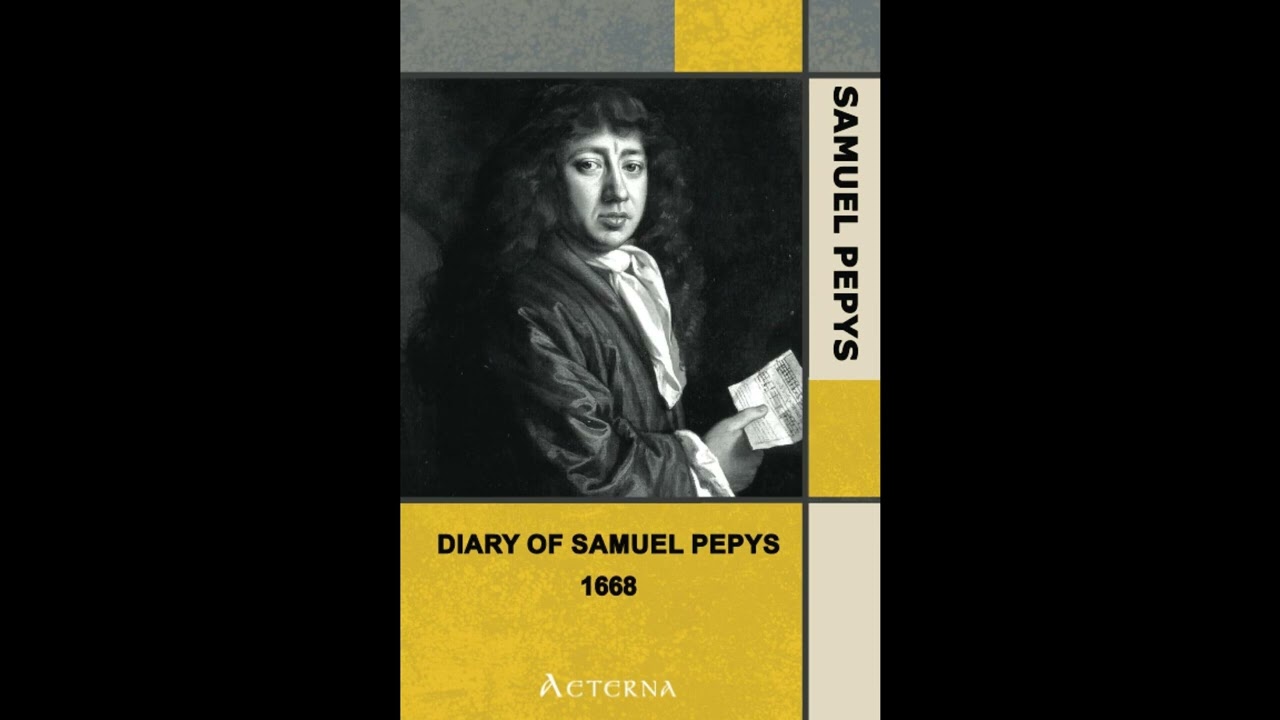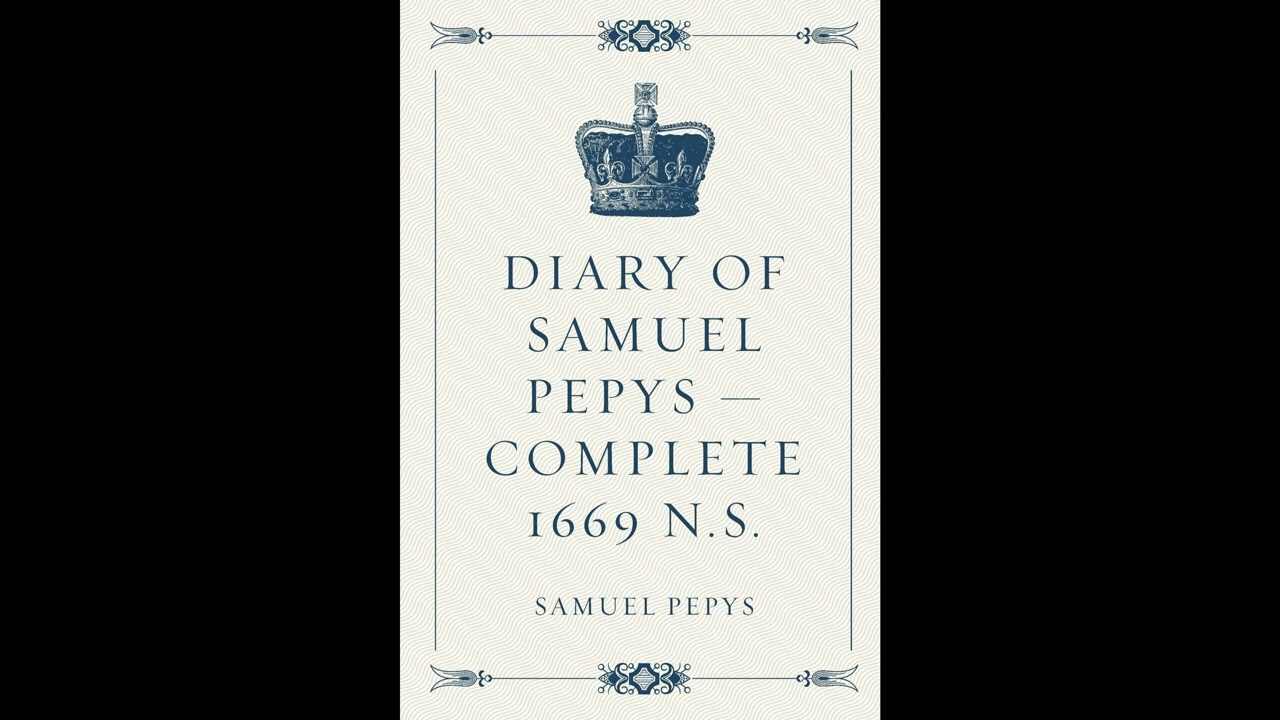
Diary of Samuel Pepys — Complete 1669 N.S
Step back in time to an era of plague, fire, and political upheaval, glimpsed through the incredibly personal lens of one man's daily existence. The Diary of Samuel Pepys offers an unprecedented, unvarnished window into 17th-century London, capturing not just the grand sweep of history but also the intimate details of everyday life, ambition, and human folly. This is not a dry historical record but a living, breathing account, scrawled in secret by a man whose honesty about himself—his triumphs, his temptations, his fears—makes his experiences resonate with us centuries later. It provides a unique opportunity to overhear the private thoughts of a key figure during one of England’s most tumultuous periods, making the distant past feel startlingly immediate and universally relatable. The listener is dropped into the heart of Restoration England, specifically London, from the year 1660 until Pepys ceases writing in 1669. The diary begins with King Charles II's return to the throne, marking a significant shift in English society after years of Commonwealth rule. As a relatively obscure but ambitious young man, Samuel Pepys chronicles his rise in the naval administration, navigating the treacherous waters of court politics and bureaucratic advancement. We follow him from a modest existence to a position of considerable influence and wealth, all while witnessing London transform around him. His days are a mixture of serious official duties—dealing with naval provisions, auditing accounts, advising ministers—and the more private concerns of a husband and householder, attending plays, socializing with friends, managing servants, and struggling with his own moral failings. The narrative arc is less about a single dramatic plot and more about the relentless progression of time and experience. Pepys documents the Great Plague of London in 1665, describing the chilling spread of disease, the emptying streets, and the constant fear of contagion. He then provides a first-hand, awe-inspiring account of the Great Fire of London in 1666, detailing its devastating sweep through the city, his personal efforts to save his possessions, and the sheer scale of the destruction. Throughout these cataclysms, Pepys reveals his resilience, his pragmatic nature, and his deep affection for his wife, Elizabeth, despite his frequent infidelities. The diary concludes in 1669, not with a climactic resolution, but with Pepys’s decision to cease writing due to failing eyesight, leaving us with a poignant sense of a life unfolding and then, abruptly, going silent. The author, Samuel Pepys, was born in London in 1633, the son of a tailor. He received his education at St. Paul's School and Magdalene College, Cambridge, where he distinguished himself academically. After university, he found employment through his cousin, Sir Edward Montagu (later Earl of Sandwich), which eventually led him into the burgeoning naval administration. Pepys quickly proved himself an exceptionally capable and diligent administrator, rising through the ranks to become Clerk of the Acts to the Navy Board and later Secretary to the Admiralty. His tireless work was instrumental in reforming and modernizing the Royal Navy, laying foundations that would serve England for centuries. His renown, however, rests almost entirely on the diary he kept in secret from 1660 to 1669. Written in a complex shorthand, it was kept entirely private during his lifetime and remained undeciphered for over a century after his death in 1703. The sheer honesty of his self-revelation—his vanities, his sexual desires, his insecurities, his moments of kindness and cruelty—is what sets the diary apart. Unlike public memoirs intended for posterity, Pepys’s diary was a conversation with himself, making it an unparalleled document of human candor and historical record. He continued to serve the Crown and Parliament with distinction for many years after he stopped writing the diary, even facing accusations of Popery and treason during the Exclusion Crisis, but it is the ten years captured in his hidden journal that have secured his place in literary and historical memory. Among the many compelling aspects of Pepys’s diary are its central themes, which remain surprisingly resonant. One prominent theme is the interplay between public duty and private desire. Pepys, a dedicated public servant, meticulously records his work building the Royal Navy, managing finances, and navigating political intrigue. Yet, in the same entries, he frankly details his domestic quarrels with his wife, his pursuit of various women, his worries about money, and his simple pleasures like music, food, and new clothes. This juxtaposition reveals a man constantly balancing his ambitious public persona with a highly fallible and human inner life, often confessing acts that would have ruined his reputation had they been known. For instance, he openly admits to peeping at women in church or wrestling with guilt after an infidelity, directly alongside descriptions of attending Parliament or advising the King. Another key theme is the experience of history from the ground up. While history books often present grand narratives of kings and battles, Pepys shows us how major events—like the Great Plague and the Great Fire—affected ordinary (albeit well-connected) individuals. We hear of the fear of contracting the disease, the sight of bodies being carted away, the eerie silence of a depopulated city. During the fire, he describes climbing a church tower to watch the inferno spread, burying his wine and Parmesan cheese in his garden for safekeeping, and seeing pigeons too terrified to fly away from burning houses. These highly specific, sensory details root the monumental events in human experience, bringing them vividly to life and demonstrating how personal narratives shape our understanding of the past. The diary emerges from a period of profound transition in England, following the end of the Commonwealth and the return of the monarchy with King Charles II in 1660. This era, known as the Restoration, was characterized by a loosening of Puritanical strictures and a return to more celebratory and often scandalous court culture. It was also a time of significant scientific advancement and intellectual curiosity, with figures like Isaac Newton and Robert Hooke beginning their groundbreaking work. London itself was a bustling, growing metropolis, but one still vulnerable to medieval scourges like plague and conflagration. Pepys’s diary serves as an invaluable primary source for understanding this complex society, illustrating the political machinations, the social customs, the intellectual currents, and the everyday realities of a nation rebuilding itself and grappling with its identity after years of civil war and republican rule. His personal account offers a microcosmic view of these broader cultural and historical shifts. Listening to The Diary of Samuel Pepys as an audiobook offers an unparalleled sense of intimacy and immersion. The spoken word bridges the centuries, transforming his private confessions into a direct communication with the listener. A skilled narrator can capture the changing moods of Pepys—his excitement, his guilt, his moments of fear or elation—giving voice to a man who literally spoke his thoughts into being. The pacing of the narration can underscore the diary’s rhythm, moving from the mundane to the momentous, from the humorous to the heartbreaking, much as life itself unfolds. It allows one to experience the slow, accumulation of detail that defines Pepys’s style, letting the weight of history and personal experience settle in naturally. This complete edition, spanning several hours, provides ample time for the listener to become truly absorbed in Pepys’s world, hearing the sounds and feeling the atmosphere of 17th-century London as perhaps no silent reading ever could.
Enjoyed Diary of Samuel Pepys — Complete 1669 N.S? A few ways to support us
Audible & Amazon links are affiliate; we may earn a small commission at no extra cost.
About this production
Human narration by a volunteer reader from LibriVox.org, the public-domain audiobook project. LibriVox volunteers record literary works whose copyright has expired in the United States, releasing the resulting recordings into the public domain.
Diary of Samuel Pepys — Complete 1669 N.S by Samuel Pepys. The underlying text is in the U.S. public domain. We do not republish any modern copyrighted edition, translation, or commentary.
The 4K cinematic visuals accompanying this audiobook are generated by an AI image model from prompts derived from the source text. No copyrighted photos, paintings, or stock footage are used. AI generation is disclosed on every video on our YouTube channel as required by YouTube's altered/synthetic content policy.
English subtitles are transcribed from the LibriVox recording with OpenAI Whisper. Translations into the 11 other supported languages are produced by Meta's NLLB-200 neural translation model. No human translator's copyrighted translation is used.
Questions about sourcing or rights? See our DMCA & Sourcing policy or contact us.
Enjoyed this audiobook?
If you'd like to own a copy of Diary of Samuel Pepys — Complete 1669 N.S or hear a professionally produced edition, the links below help support free audiobook production at no extra cost to you.
As an Amazon Associate we earn from qualifying purchases. Audible / print links are affiliate.