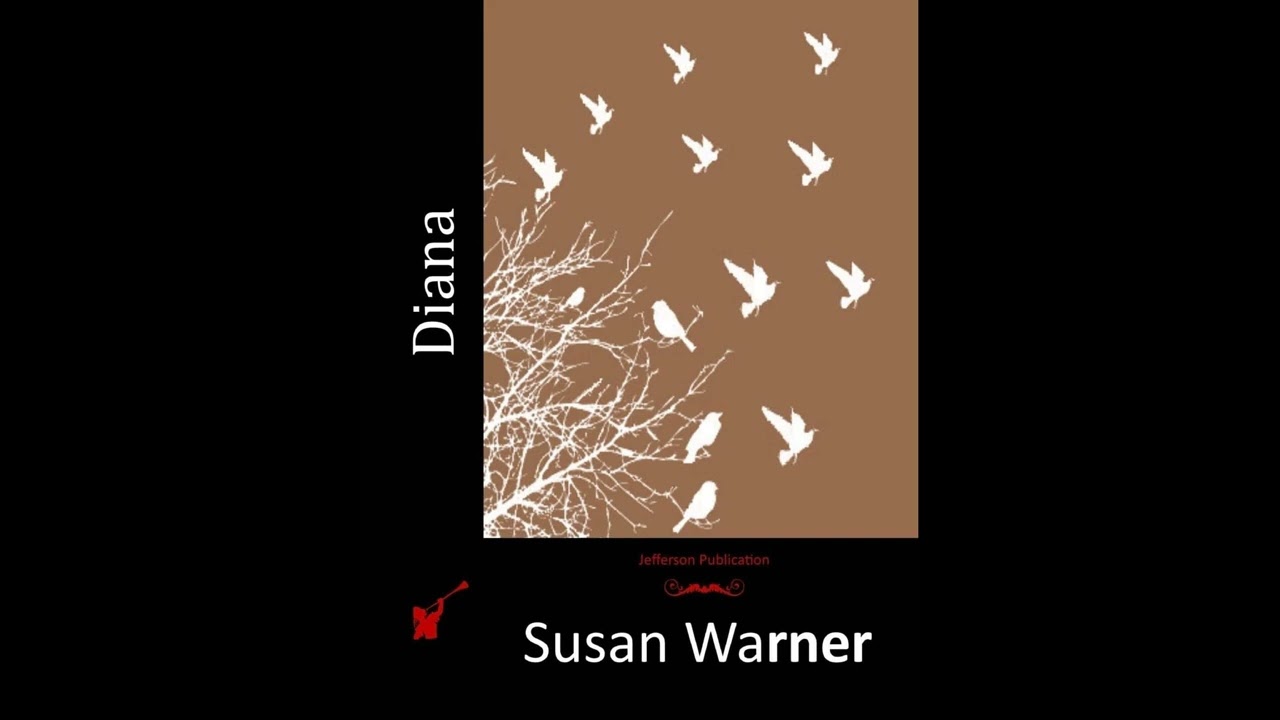
Diana
Enter the world of Diana, a poignant and deeply felt novel by Susan Warner that resonates with the quiet strength and enduring struggles of a young woman navigating the complexities of the nineteenth century. Far from a mere historical artifact, this story offers a mirror to our own times, reflecting universal human experiences of love, loss, moral dilemma, and the quest for personal identity amidst societal pressures. Warner, a hugely popular author in her day, crafted narratives that spoke directly to the hearts of her readers, particularly women, and Diana stands as a testament to her keen observation of character and her ability to weave a compelling tale of perseverance. It asks profound questions about duty, independence, and the true meaning of belonging, making it a compelling listen for anyone interested in the human spirit's capacity for growth and resilience. The story opens upon a landscape of quiet domesticity, yet one fraught with unseen tensions. We meet Diana, a young woman of refined sensibilities and a sensitive nature, whose early life is marked by unexpected turns of fortune. Perhaps born into comfortable circumstances, she soon finds herself confronting the harsh realities of diminished means or the burden of family responsibilities that fall disproportionately upon her shoulders. The narrative carefully establishes her environment—a world where social standing and decorum are paramount, yet where genuine affection and moral fortitude are often tested. Diana’s character is meticulously drawn, revealing her inner life, her hopes, and the silent anxieties that often accompany a young woman’s path in a society with rigid expectations. As Diana matures, she encounters a series of individuals who shape her understanding of the world and herself. There are figures of authority, sometimes benevolent, sometimes restrictive; friends who offer solace or challenge her perspectives; and romantic interests whose intentions may be less than straightforward. The central conflict often revolves around Diana’s struggle to reconcile her deeply held personal values—her sense of right and wrong, her yearning for authenticity—with the often-conflicting demands of family, society, and economic necessity. She faces difficult choices that require not just intelligence, but also immense moral courage, forcing her to confront her own weaknesses and to discover reserves of strength she never knew she possessed. The story follows her through a series of trials and revelations, each experience peeling back layers of youthful idealism to expose the sturdy core of her character, all without revealing the ultimate resolution of her struggles. Susan Warner, born Anna Bartlett Warner in 1819 in New York City, was a prominent American novelist whose literary career blossomed in the mid-nineteenth century. She wrote under the pseudonym Elizabeth Wetherell, a name that became synonymous with the popular domestic fiction genre of her era. Warner came from a family of legal professionals and scholars; her father was a successful lawyer who suffered significant financial setbacks during the Panic of 1837. This reversal of fortune profoundly impacted Susan and her sister, Anna, forcing them to turn to writing to support their family. They lived for much of their lives on Constitution Island in the Hudson River, a place that often inspired the natural settings in their novels. Warner’s most famous work, The Wide, Wide World, published in 1850, became an immediate bestseller, rivaling even Harriet Beecher Stowe’s Uncle Tom’s Cabin in popularity during its time. This success was followed by other well-received novels such as Queechy (1852) and The Hills of the Shatemuc (1856), all of which cemented her reputation as a powerful voice in American literature. Her stories were characterized by their moral earnestness, their focus on the inner lives of women, and their didactic undertones rooted in evangelical Protestantism. She was a key figure in the sentimental novel movement, a genre that prioritized emotional connection and moral instruction, placing her firmly within the canon of nineteenth-century American authors who shaped public discourse and private virtues. Susan Warner passed away in 1885, leaving behind a legacy of enduring stories that continue to offer insight into the values and challenges of her time. Diana, like much of Warner’s output, strongly features themes of piety and moral instruction. The narrative often highlights Diana’s internal battles with temptation, pride, or despair, showing how her religious faith provides a guiding light and a source of solace during her darkest hours. For instance, when faced with a seemingly insurmountable personal loss or a betrayal, Diana does not simply wallow in sorrow but turns to spiritual reflection, finding comfort and a renewed sense of purpose in her devotion. This emphasis on faith as a practical tool for navigating life's difficulties was a hallmark of Warner's approach, demonstrating how religious conviction could empower individuals, particularly women, in an often-unforgiving world. Another prominent theme is the role and agency of women within a patriarchal society. Diana consistently grapples with the limitations placed upon her gender, whether it be restricted educational opportunities, limited professional avenues, or the pressure to marry for financial security rather than affection. The story depicts her yearning for a measure of independence and self-determination, often contrasted with the societal expectations that push her towards subservience or a predetermined domestic role. Through Diana's experiences, Warner subtly critiques these societal strictures while simultaneously illustrating the quiet strength and intelligence with which women often navigated them. The story also touches upon social class and economic precarity, as Diana’s shifting fortunes force her to confront the realities of poverty and dependence, testing her character and forcing her to adapt. The mid-nineteenth century in America, when Susan Warner was writing, was a period of significant social and cultural flux. The nation was grappling with rapid industrialization, westward expansion, and the escalating tensions leading up to the Civil War. Culturally, it was an era defined by a growing middle class, a rise in literacy rates, and a burgeoning market for popular literature. This environment fostered the popularity of domestic fiction, a genre largely written by and for women, which focused on the home, family life, and moral development. These novels served as both entertainment and instruction, offering models of virtuous womanhood and guidance on navigating the complex emotional and social landscapes of the era. Warner’s Diana emerged precisely from this cultural context. Her work provided moral lessons wrapped in engaging narratives, reinforcing values such as piety, perseverance, and the importance of domestic virtue, all of which were central to the "cult of domesticity" prevalent at the time. Yet, her characters, like Diana, often display a subtle resilience and an inner strength that goes beyond mere passivity, offering a more nuanced portrayal of female experience. The popularity of such books speaks volumes about the concerns of the period: anxieties about moral decay, the desire for stability in a changing world, and the search for meaning in everyday life, particularly for women who were increasingly finding their voice through literature. Listening to Diana as an audiobook offers a unique and intimate immersion into its world. The narrator's voice becomes the conduit for Warner’s meticulously crafted prose, bringing to life Diana's internal monologues and the nuanced dialogue between characters. The run length, several hours long, allows for a truly absorbing experience, perfect for long commutes, quiet evenings, or moments when you wish to simply escape into a thoughtfully told story. Pay particular attention to the pacing of the narration, which can emphasize the slow, deliberate unfolding of Diana’s character and the weight of her decisions. The narrator's portrayal of various voices, from the earnest young heroine to the more world-weary or authoritative figures she encounters, enhances the emotional depth, allowing you to connect directly with the atmosphere of the novel, feeling the quiet struggles and profound triumphs as if they were unfolding before you.
Enjoyed Diana? A few ways to support us
Audible & Amazon links are affiliate; we may earn a small commission at no extra cost.
About this production
Human narration by a volunteer reader from LibriVox.org, the public-domain audiobook project. LibriVox volunteers record literary works whose copyright has expired in the United States, releasing the resulting recordings into the public domain.
Diana by Susan Warner. The underlying text is in the U.S. public domain. We do not republish any modern copyrighted edition, translation, or commentary.
The 4K cinematic visuals accompanying this audiobook are generated by an AI image model from prompts derived from the source text. No copyrighted photos, paintings, or stock footage are used. AI generation is disclosed on every video on our YouTube channel as required by YouTube's altered/synthetic content policy.
English subtitles are transcribed from the LibriVox recording with OpenAI Whisper. Translations into the 11 other supported languages are produced by Meta's NLLB-200 neural translation model. No human translator's copyrighted translation is used.
Questions about sourcing or rights? See our DMCA & Sourcing policy or contact us.
Enjoyed this audiobook?
If you'd like to own a copy of Diana or hear a professionally produced edition, the links below help support free audiobook production at no extra cost to you.
As an Amazon Associate we earn from qualifying purchases. Audible / print links are affiliate.