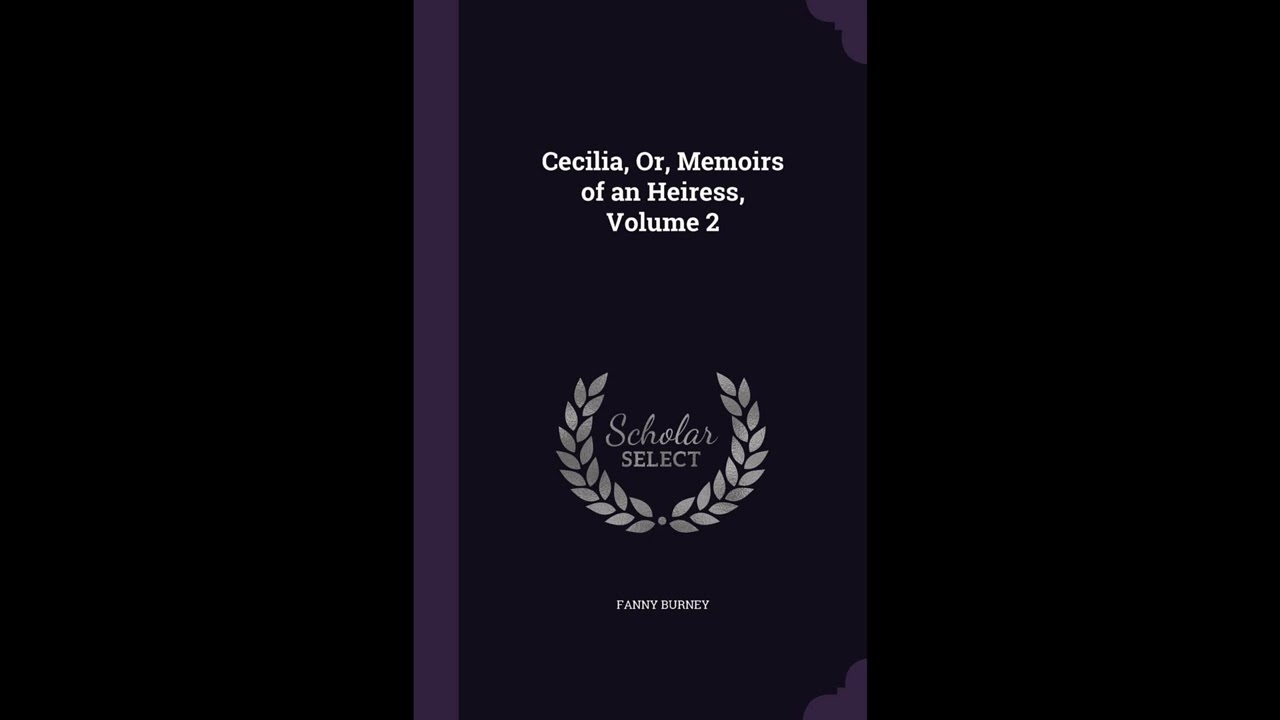
Cecilia, Or, Memoirs of an Heiress, Volume 2
Fanny Burney's "Cecilia, Or, Memoirs of an Heiress" stands as a cornerstone of the English novel, a profound examination of wealth, reputation, and the challenging position of women in late 18th-century society. This second volume continues the trials of its namesake heroine, Cecilia Beverley, as she navigates a world designed to test her fortune and her spirit. Written with a keen eye for social satire and a deep understanding of human psychology, the story invites listeners to consider the enduring questions of independence, integrity, and what truly constitutes happiness amidst a tangle of societal expectations and personal desires. For anyone interested in the foundational works that paved the way for authors like Jane Austen, or simply seeking a compelling narrative about a young woman's fight for self-determination, Cecilia's tale resonates with timeless relevance. The story unfolds in the glittering, yet often treacherous, world of fashionable London and the refined country estates of late 18th-century England. Cecilia Beverley, a beautiful and inherently good-natured young woman, finds herself newly an heiress following the death of her uncle. Her inheritance, while substantial, comes with a peculiar and highly restrictive clause: any man she marries must forsake his own surname and adopt hers, Beverley, or she forfeits her entire fortune. This stipulation sets the stage for a series of complications that form the heart of the narrative. As the story progresses into its second volume, Cecilia continues to grapple with the conflicting advice and self-serving interests of her three appointed guardians: the extravagant Mr. Harrel, whose reckless spending threatens to ruin them both; the miserly Mr. Briggs, obsessed only with parsimony; and the proud, aristocratic Mr. Delvile, whose honor is impeccable but whose family pride presents a formidable obstacle. Cecilia's affections turn increasingly towards Mortimer Delvile, the eldest son of her guardian, a man of integrity and refined sensibilities. Their mutual esteem grows, but the rigid condition of her inheritance—the name change—clashes directly with the ancient lineage and unyielding pride of the Delvile family. Cecilia finds herself caught between her love, the expectations of society, and the specific terms of her fortune, all while observing the follies and deceits of the company she keeps. Fanny Burney, born Frances Burney on June 13, 1752, into a distinguished literary and musical family, emerged as a significant voice in English literature. Her father, Dr. Charles Burney, was a renowned music historian, ensuring that Fanny grew up surrounded by intellect and artistry, even though her formal education was minimal. She began writing in secret as a teenager, developing her keen observational skills and satirical wit. Her first novel, Evelina, published anonymously in 1778, achieved immediate and widespread acclaim, establishing her reputation as a formidable novelist. Burney's life took a significant turn when she was appointed Second Keeper of the Robes to Queen Charlotte in 1786, a position she held for five years. While this offered a privileged view of court life, it was also a period of immense personal strain and restriction, which she meticulously documented in her celebrated journals and letters. After leaving court, she married Alexandre D'Arblay, a French émigré, in 1793. Her later novels include Camilla (1796) and The Wanderer (1814), though none achieved the same immediate success as Evelina or Cecilia. Fanny Burney passed away on January 6, 1840, leaving behind a remarkable body of work that cemented her place as a precursor to the novel of manners and a vital link in the development of the English novel. "Cecilia" vividly presents several powerful themes. One central concern is the burden of inheritance and wealth. Cecilia’s vast fortune, rather than guaranteeing happiness, becomes a source of endless anxiety and makes her a target for exploitation. She constantly faces opportunists, sycophants, and manipulators who seek to benefit from her generosity or her position, forcing her to learn bitter lessons about trust and discernment. Her attempts to use her wealth benevolently often backfire, illustrating how even good intentions can be corrupted by societal pressures. Another prominent theme is female agency versus societal constraint. Despite her wealth, Cecilia's ability to make independent choices about her life and love is severely restricted by legal stipulations, the guardianship system, and the prevailing social norms of the time. The conflict over the surname clause perfectly encapsulates this struggle, as her personal desires are pitted against ancient family pride and the rigidity of her uncle’s will. Burney also masterfully showcases the theme of pride versus love, particularly through the evolving relationship between Cecilia and Mortimer Delvile. Mortimer's initial reluctance to abandon his family name, even for the woman he loves, speaks volumes about the value placed on aristocratic lineage and social standing in the era. This internal and external conflict highlights the social prejudices that often dictated personal happiness. Finally, the novel offers sharp social satire, critically observing the absurdities, hypocrisy, and superficiality of polite society. Burney skewers various character types—the fops, the social climbers, the spendthrifts, and the overly proud—revealing the often-shallow motivations behind their actions and conversations, drawing a clear distinction between outward appearances and true character. Published in 1782, "Cecilia" arrived during a fascinating period in English history and literature. The late 18th century was a time of burgeoning social change, where the rise of a mercantile middle class began to challenge the entrenched power of the aristocracy, though traditional hierarchies remained strong. The novel as a form was gaining greater literary respectability, evolving from its picaresque and sentimental roots toward the more realistic and psychologically nuanced narratives that would define the 19th century. Burney herself was instrumental in this transition, moving away from earlier epistolary styles to a more omniscient third-person narration, which allowed for deeper insight into her characters' minds. Culturally, there was a growing fascination with sensibility and moral instruction in literature, alongside a developing appreciation for detailed depictions of domestic and social life. "Cecilia" perfectly captures this moment, reflecting anxieties about wealth, class, and the moral compass of society, all while dissecting the specific challenges faced by women within these structures. Listening to "Cecilia, Or, Memoirs of an Heiress, Volume 2" as an audiobook offers a unique and immersive way to experience Fanny Burney's intricate prose and insightful social commentary. The novel's length, spanning several hours, makes it an ideal companion for extended periods, whether on a long journey, during daily chores, or simply when seeking a substantial narrative to lose oneself in. A skilled narrator can bring to life the distinctive voices of Burney's diverse cast, from the spirited Cecilia herself to the pompous Mr. Delvile, the calculating Mr. Monckton, and the many figures of London society. Listen for the subtle inflections that convey Burney's irony and wit, the pacing that builds dramatic tension, and the way the narration illuminates the emotional undercurrents beneath the formal language of the period. The spoken word renders the period's dialogue and social customs more immediate and accessible, allowing listeners to fully appreciate the atmosphere of late Georgian England and the enduring dilemmas of its inhabitants.
Enjoyed Cecilia, Or, Memoirs of an Heiress, Volume 2? A few ways to support us
Audible & Amazon links are affiliate; we may earn a small commission at no extra cost.
About this production
Human narration by a volunteer reader from LibriVox.org, the public-domain audiobook project. LibriVox volunteers record literary works whose copyright has expired in the United States, releasing the resulting recordings into the public domain.
Cecilia, Or, Memoirs of an Heiress, Volume 2 by Fanny Burney. The underlying text is in the U.S. public domain. We do not republish any modern copyrighted edition, translation, or commentary.
The 4K cinematic visuals accompanying this audiobook are generated by an AI image model from prompts derived from the source text. No copyrighted photos, paintings, or stock footage are used. AI generation is disclosed on every video on our YouTube channel as required by YouTube's altered/synthetic content policy.
English subtitles are transcribed from the LibriVox recording with OpenAI Whisper. Translations into the 11 other supported languages are produced by Meta's NLLB-200 neural translation model. No human translator's copyrighted translation is used.
Questions about sourcing or rights? See our DMCA & Sourcing policy or contact us.
Enjoyed this audiobook?
If you'd like to own a copy of Cecilia, Or, Memoirs of an Heiress, Volume 2 or hear a professionally produced edition, the links below help support free audiobook production at no extra cost to you.
As an Amazon Associate we earn from qualifying purchases. Audible / print links are affiliate.