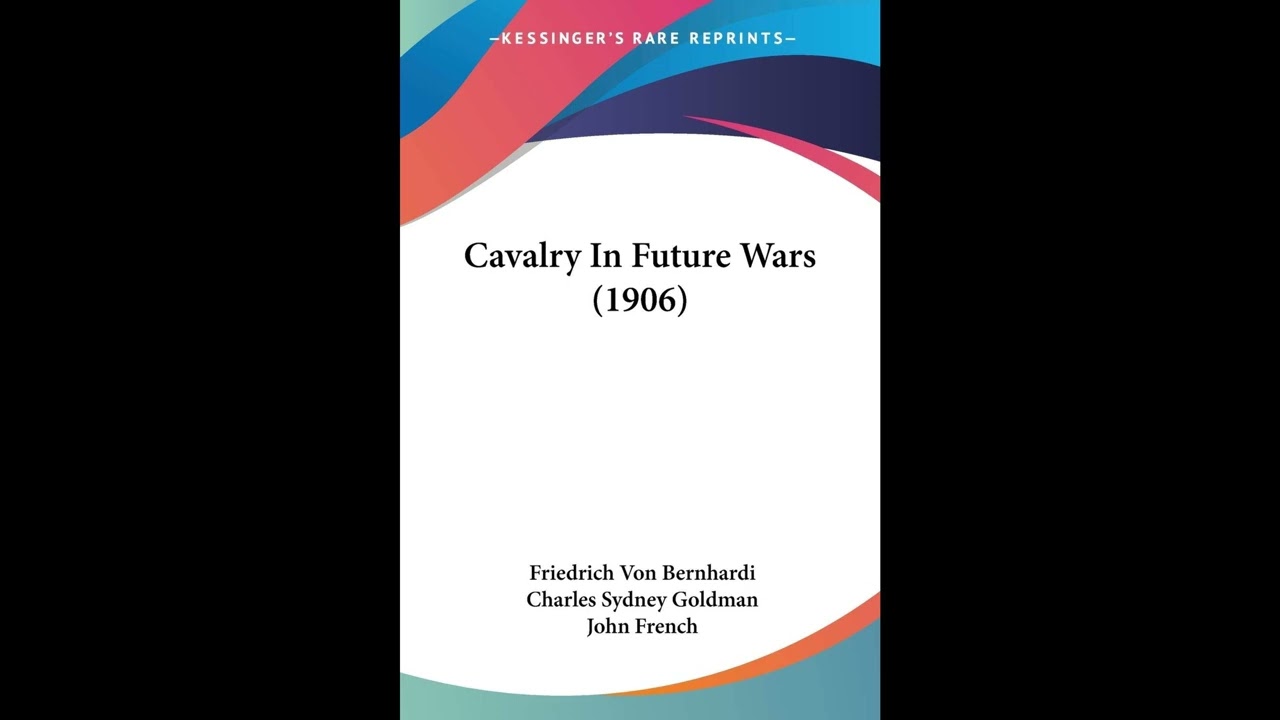
Cavalry In Future Wars
Even a century after its initial publication, Friedrich von Bernhardi’s Cavalry In Future Wars holds a stark, compelling relevance, not merely as a historical artifact but as a window into the mind of a pivotal era. This is more than a technical manual for military strategists; it stands as a classic of military thought, a document that profoundly influenced the direction of European armies on the eve of the First World War. For listeners today, it offers an unparalleled opportunity to understand the intellectual currents, the strategic anxieties, and the profound miscalculations that shaped one of humanity's most devastating conflicts. It is a work that challenges us to consider the persistent human tendency to cling to established doctrines even in the face of revolutionary technological change, making its arguments resonate far beyond the battlefield. At its core, Bernhardi’s treatise is an impassioned and rigorous argument for the continued, indeed heightened, importance of cavalry in a new age of warfare. Published in 1906, the book plunges into the tactical and strategic quandaries facing military planners as the advent of rapid-fire artillery, machine guns, and increasingly sophisticated infantry weapons threatened to render traditional cavalry charges obsolete. Bernhardi does not shy away from confronting these challenges head-on. He meticulously examines the limitations and perceived weaknesses of cavalry in modern engagements, particularly in its capacity to break through entrenched positions. He then systematically rebuilds the case for its enduring utility, positing new roles and refined tactics for horsemen in reconnaissance, flank protection, pursuit, and decisive breakthrough operations. The central conflict within the book arises from Bernhardi's effort to reconcile the romanticized image of the charging cavalryman with the brutal realities of industrial warfare. He grapples with the tension between speed and firepower, maneuverability and defensive strength. His "story" unfolds through a series of logical progressions, beginning with a critical assessment of existing cavalry doctrines, moving through a detailed analysis of various operational scenarios, and culminating in his prescriptive vision for how cavalry divisions should be organized, trained, and deployed to achieve maximum effect. He stresses the psychological impact of mounted troops, the need for bold leadership, and the crucial role of surprise and initiative. Rather than abandoning cavalry, Bernhardi argues for its evolution, urging for specialized training that emphasizes skirmishing, dismounted action when necessary, and swift, coordinated strikes that exploit weaknesses in the enemy's lines without revealing the ultimate outcome of these proposed reforms on the actual battlefields that soon followed. Friedrich von Bernhardi, born in St. Petersburg in 1849, was a distinguished German general and military theorist whose career spanned the late 19th and early 20th centuries. Son of an eminent historian, Bernhardi followed a military path, serving with distinction in the Franco-Prussian War of 1870-71. Rising through the ranks, he held various command and staff positions, including commander of the 7th Cavalry Division. His practical experience on horseback and in strategic planning deeply informed his later theoretical writings. After retiring from active service in 1909, he dedicated himself to writing, becoming one of Germany's most prominent and controversial military intellectuals. Bernhardi became a leading voice in the pre-World War I era, advocating for a strong, expansionist German foreign policy and for the necessity of war as a tool of national policy. Beyond Cavalry In Future Wars, his most infamous work was Germany and the Next War (1912), a book that openly championed militarism and Social Darwinism, arguing that war was a "biological necessity" and a moral imperative for national growth. These works positioned him squarely within the intellectual tradition of Prussian militarism, alongside figures like Carl von Clausewitz, whose emphasis on the decisive battle and the "fog of war" Bernhardi clearly absorbed, even as he adapted these principles to the demands of a new century. He passed away in 1930, having witnessed the devastating consequences of the very military doctrines he helped to shape. One of the prominent themes that permeates Bernhardi's analysis is the crucial interplay between technological advancement and tactical doctrine. He dissects how the invention of the repeating rifle and the machine gun threatened to negate the traditional shock value of a cavalry charge, forcing military thinkers to reconsider fundamental approaches. For example, he illustrates how a swift flank maneuver by mounted troops, even if dismounted for the final assault, could still exploit an enemy's vulnerability to superior firepower applied from an unexpected direction, demonstrating cavalry's adaptation rather than its obsolescence. A second, equally powerful theme is the enduring importance of the "offensive spirit" and initiative in warfare. Bernhardi consistently argues that victory belongs to the side that seizes the initiative, acts boldly, and is prepared to take calculated risks. He cites historical examples of daring cavalry raids and flanking movements that turned the tide of battle, reinforcing his belief that a well-trained, aggressive cavalry force could still be the decisive factor in open warfare. Beyond the tactical discussions, Bernhardi's text also enacts the theme of adaptation versus tradition within military institutions. He clearly struggles against entrenched ideas about cavalry's role, pushing for a radical rethinking that acknowledges new technologies while preserving the unique advantages of mounted warfare. He provides concrete proposals for how cavalry could act as a crucial screen for larger infantry formations, conducting reconnaissance far ahead of the main body, disrupting enemy communications, and ensuring strategic surprise. His detailed scenarios for cavalry engagements – from harassing actions to full-scale breakthroughs – serve as practical examples of his theories in action. A final theme that quietly underpins his arguments is the necessity of military professionalism and continuous training; he envisions a cavalry that is not merely brave but highly skilled, versatile, and intellectually prepared for the complexities of modern battlefields. Cavalry In Future Wars emerged from a Europe gripped by profound geopolitical anxieties and an accelerating arms race. The early 20th century was a period of intense imperial competition, the formation of complex alliance systems, and widespread nationalistic fervor. Germany, having unified relatively recently, was eager to assert its position as a major European power, leading to a significant expansion and modernization of its armed forces. Militarily, the experiences of the Boer War and the Russo-Japanese War had dramatically demonstrated the devastating power of modern firepower, particularly against massed formations, leading many to question the future of traditional arms like cavalry. It was in this specific cultural and political crucible that Bernhardi's work took shape. He wrote to influence the German General Staff, to counter the arguments of those who believed cavalry was obsolete, and to champion a proactive, offensive military strategy that he felt was essential for Germany's security and future greatness in an increasingly volatile world. Listening to Cavalry In Future Wars as an audiobook transforms a potentially dense military treatise into an immersive and highly engaging experience. The narrator’s clear, authoritative voice brings Bernhardi's precise arguments and strategic reasoning to life, allowing the listener to follow the intricate logical progressions without the distractions of reading. The several hours of running length provide ample time for deep contemplation of the author's ideas, allowing the arguments to settle and resonate. Listeners will appreciate the deliberate pacing, which mirrors the careful thought Bernhardi put into each tactical scenario and strategic recommendation. Without traditional dialogue, the narrative voice becomes paramount, carrying the weight of Bernhardi's convictions and his urgent message to his contemporaries. It creates an atmosphere of serious military inquiry, inviting the listener to step back in time and consider the intellectual challenges facing military leaders on the brink of unprecedented global conflict.
Enjoyed Cavalry In Future Wars? A few ways to support us
Audible & Amazon links are affiliate; we may earn a small commission at no extra cost.
About this production
Human narration by a volunteer reader from LibriVox.org, the public-domain audiobook project. LibriVox volunteers record literary works whose copyright has expired in the United States, releasing the resulting recordings into the public domain.
Cavalry In Future Wars by Friedrich Von Bernhardi. The underlying text is in the U.S. public domain. We do not republish any modern copyrighted edition, translation, or commentary.
The 4K cinematic visuals accompanying this audiobook are generated by an AI image model from prompts derived from the source text. No copyrighted photos, paintings, or stock footage are used. AI generation is disclosed on every video on our YouTube channel as required by YouTube's altered/synthetic content policy.
English subtitles are transcribed from the LibriVox recording with OpenAI Whisper. Translations into the 11 other supported languages are produced by Meta's NLLB-200 neural translation model. No human translator's copyrighted translation is used.
Questions about sourcing or rights? See our DMCA & Sourcing policy or contact us.
Enjoyed this audiobook?
If you'd like to own a copy of Cavalry In Future Wars or hear a professionally produced edition, the links below help support free audiobook production at no extra cost to you.
As an Amazon Associate we earn from qualifying purchases. Audible / print links are affiliate.
More Audiobooks
Artillery Through the Ages
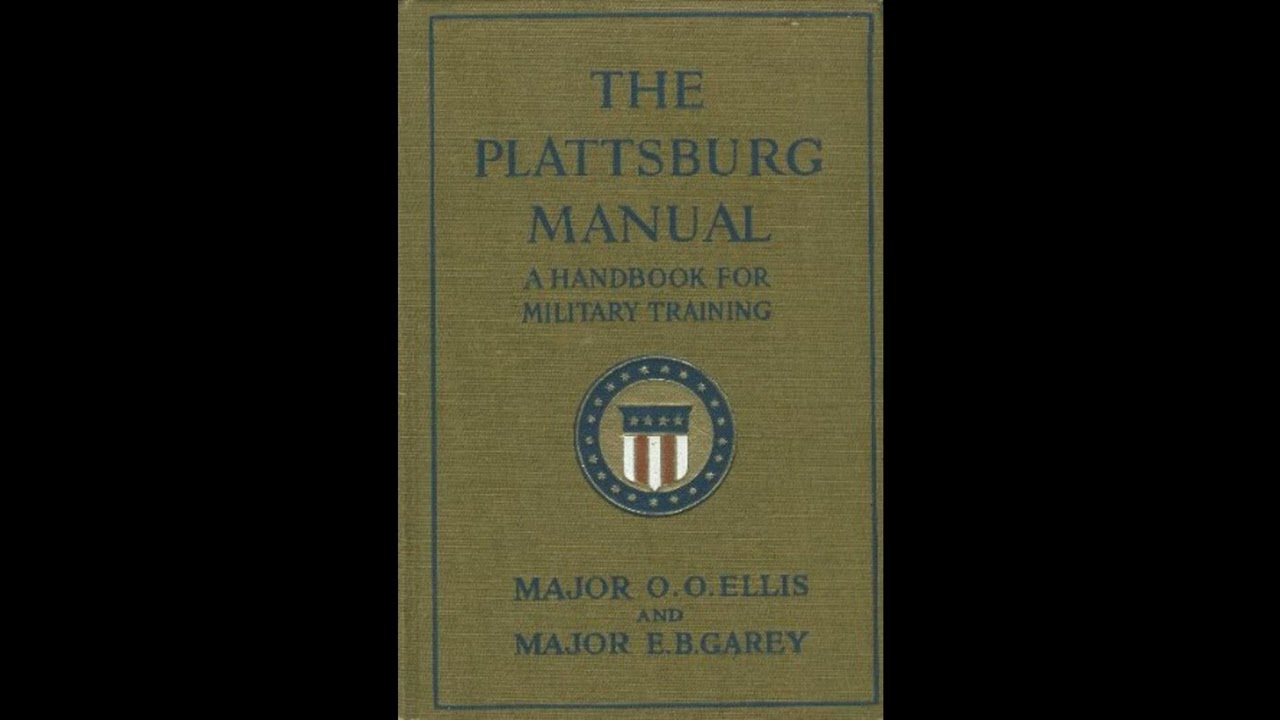
The Plattsburg Manual: A Handbook for Military Training

Memoirs of a Cavalier ; or a Military Journal of the Wars in Germany, and the Wars i- Full Audiobook
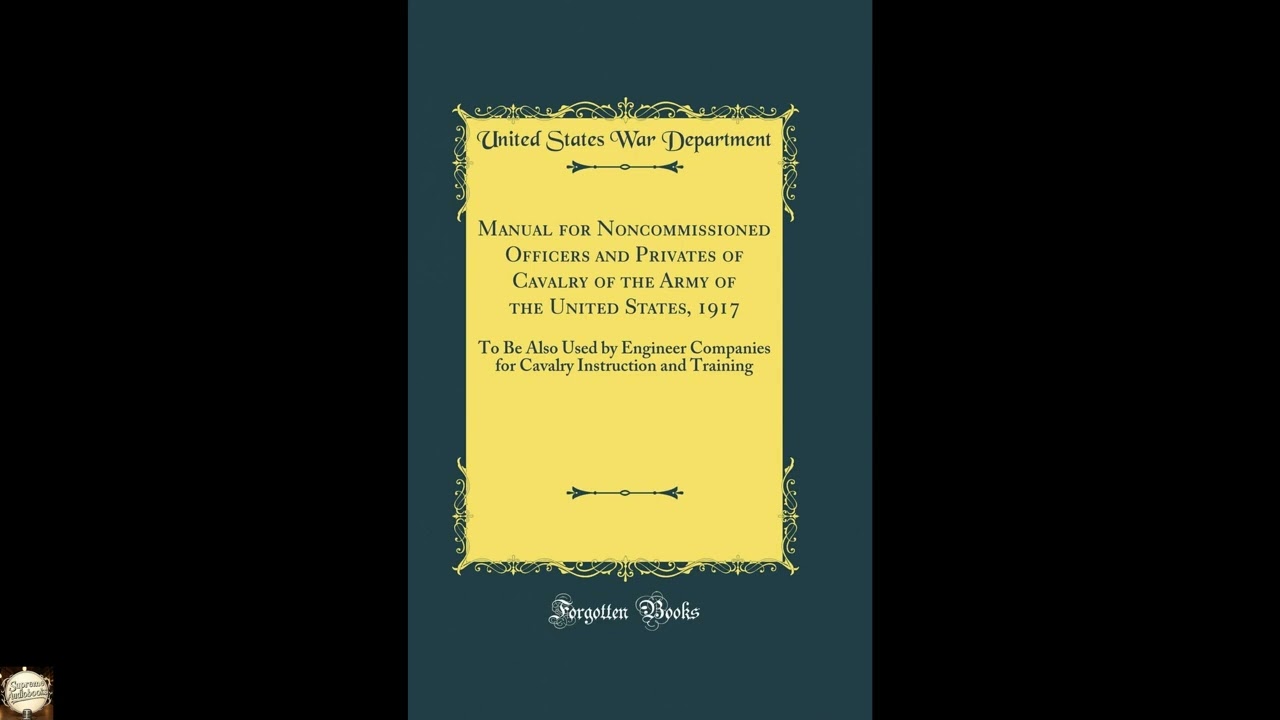
Manual for Noncommissioned Officers and Privates of Cavalry of the Army of the Unit