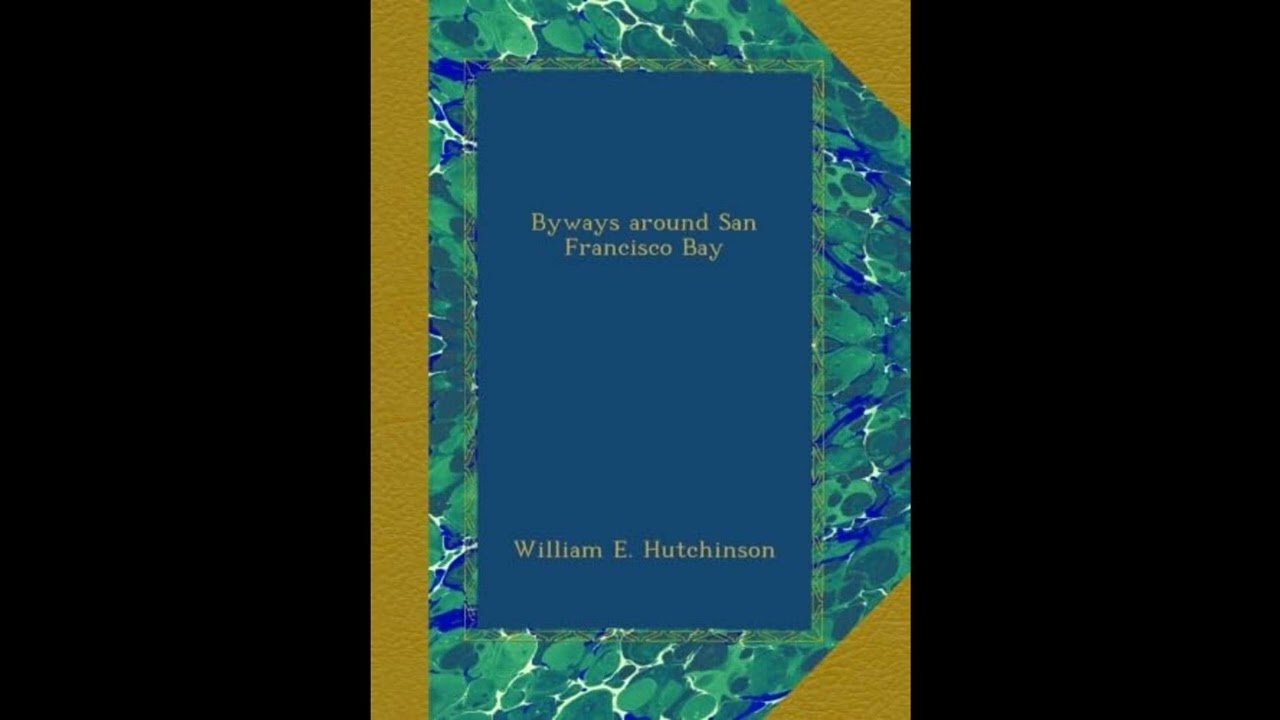
Byways around San Francisco Bay
Imagine a quiet invitation, whispered from a past era, to rediscover a place you might think you know. Byways around San Francisco Bay is precisely that—a literary passage, a series of thoughtful rambles guided by William E. Hutchinson, who possessed an uncommon sensitivity to the overlooked corners of a burgeoning region. This is not a travel guide for the hurried tourist, but rather a deeply reflective companion for anyone seeking to connect with the essence of a landscape, to understand how nature and history intertwine, and to appreciate the profound beauty found off the main thoroughfares. In an age dominated by speed and surface, Hutchinson’s enduring observations offer a valuable antidote, beckoning us to slow down, to observe with intention, and to find the extraordinary in the seemingly ordinary. The book unfolds not as a single dramatic narrative, but as a carefully woven series of excursions across the diverse terrain surrounding San Francisco Bay. Hutchinson acts as our observant narrator, moving through sun-drenched hills, quiet marshlands, sleepy waterfront towns, and the forgotten paths that once hummed with activity. He does not seek out grand pronouncements or popular landmarks, but rather focuses his gaze on the subtle shifts of light, the whisper of the wind through eucalyptus groves, the weathered textures of old farmhouses, and the resilient life found in tidal flats. Each outing brings new discoveries, whether it's a unique geological formation, a rare bird, or a snippet of local lore gleaned from a chance encounter with a fisherman or a solitary shepherd. The central thread connecting these individual explorations is Hutchinson's quiet determination to understand the spirit of the place—how human endeavors have shaped it, and how the immutable forces of nature continue to reclaim and reshape what humanity builds. There is no singular villain or hero in these pages, save perhaps the inexorable march of progress that threatens to erase the very "byways" Hutchinson so lovingly documents. The story arc is one of sustained observation and deepening appreciation, as the narrator slowly builds a comprehensive portrait of a landscape by meticulously detailing its components, always finding the hidden stories embedded in the soil, the structures, and the lives of its inhabitants. It’s a gentle unfolding, a patient revelation of the world just beyond the well-trodden track, culminating in a richer, more nuanced understanding of the Bay Area’s complex identity. William E. Hutchinson was, by all indications, a man with an uncommon eye for the overlooked detail, a patient chronicler of landscapes both natural and man-made. While specific dates of his birth and passing are not widely known, the character of his writing places him firmly within a period of significant change for California, likely the late nineteenth or early twentieth century. His prose suggests a background steeped in natural history, local lore, and a deep affection for the natural world that was beginning to face the pressures of urbanization. One can imagine him as a keen amateur botanist, an avid birdwatcher, or perhaps a local journalist who found more truth and beauty in the quiet countryside than in the bustling city centers. His literary output, including Byways around San Francisco Bay, stands as a testament to the burgeoning tradition of American regional writing and nature prose that flourished in this era. Writers of his kind sought to define and celebrate the unique character of specific locales, contributing to a broader understanding of America's diverse geography and cultural tapestry. Hutchinson’s method—direct observation paired with thoughtful reflection—aligns him with other notable figures of early American nature writing, though his focus remained distinctly rooted in the nuanced identity of the Californian landscape he knew so intimately. His contribution lies in providing a singular, deeply personal perspective on a region that would soon become globally recognized, capturing its essence before widespread development altered many of the very scenes he so carefully delineated. One of the most prominent themes running through Hutchinson’s prose is the passage of time and impermanence. He frequently pauses to consider the layers of history embedded in the landscape. For instance, while describing a seemingly ordinary stretch of coastline, he might reflect on the ancient shell mounds left by indigenous peoples, then on the remnants of an old logging road, and finally on a crumbling wharf—each a tangible example of successive human endeavors and nature’s gradual reclamation. This contemplation highlights how every present moment is built upon a vanished past, and how even the most robust human structures eventually yield to natural processes, imbuing seemingly static scenes with a profound sense of temporal depth. Another significant theme is the beauty of the overlooked and understated. Hutchinson possesses a remarkable ability to find profound significance in scenes that most passersby would dismiss. He finds compelling drama in the subtle interplay of light and shadow on a hillside, or in the intricate patterns of marsh grass swayed by the tide. For example, he might spend a paragraph detailing the particular quality of fog rolling in from the Pacific, not just as a weather phenomenon, but as an atmospheric presence that softens the edges of the world and invites quiet contemplation. This commitment to seeing beyond the obvious encourages readers to cultivate their own powers of observation, revealing that true beauty often lies in the details that demand patient attention. The period in which Hutchinson likely wrote Byways around San Francisco Bay was a time of dynamic transformation for California. Following the Gold Rush and the completion of the Transcontinental Railroad, the state was experiencing rapid demographic growth, economic expansion, and increasing industrialization, particularly around the San Francisco Bay Area. Cities were expanding, infrastructure was developing, and the landscape was undergoing significant changes. This era also saw the rise of a nascent environmental consciousness, as people began to witness the impact of human activities on natural resources. Hutchinson's book can be seen as a direct response to these societal shifts—a quiet act of preservation, an attempt to document and celebrate the natural and historical integrity of the Bay Area's less-developed corners before they were irrevocably altered. It was a time when the concept of "byways" still truly meant paths less traveled, offering a clear contrast to the increasingly busy arteries of commerce and travel. His work served to remind a rapidly modernizing populace that profound beauty and historical resonance still existed beyond the urban sprawl, waiting to be discovered by those willing to seek it out with a patient and appreciative spirit. Listening to Byways around San Francisco Bay as an audiobook offers a uniquely immersive and meditative experience. Hutchinson’s prose, with its descriptive richness and reflective pacing, lends itself perfectly to the spoken word. The several hours of content make it an ideal companion for unhurried walks, long drives through scenic landscapes, or quiet evenings at home where one wishes to escape the din of contemporary life. A skilled narrator will undoubtedly bring Hutchinson’s keen observations to life, allowing listeners to visualize the shifting light on the Bay, hear the cries of gulls, and feel the dust of an old country road. The gentle rhythm of the language, free from complex dialogue or rapid-fire plot developments, invites a focused, almost meditative listening, creating an atmosphere of calm discovery that resonates deeply with the book’s inherent charm and purpose.
Enjoyed Byways around San Francisco Bay? A few ways to support us
Audible & Amazon links are affiliate; we may earn a small commission at no extra cost.
About this production
Human narration by a volunteer reader from LibriVox.org, the public-domain audiobook project. LibriVox volunteers record literary works whose copyright has expired in the United States, releasing the resulting recordings into the public domain.
Byways around San Francisco Bay by William E. Hutchinson. The underlying text is in the U.S. public domain. We do not republish any modern copyrighted edition, translation, or commentary.
The 4K cinematic visuals accompanying this audiobook are generated by an AI image model from prompts derived from the source text. No copyrighted photos, paintings, or stock footage are used. AI generation is disclosed on every video on our YouTube channel as required by YouTube's altered/synthetic content policy.
English subtitles are transcribed from the LibriVox recording with OpenAI Whisper. Translations into the 11 other supported languages are produced by Meta's NLLB-200 neural translation model. No human translator's copyrighted translation is used.
Questions about sourcing or rights? See our DMCA & Sourcing policy or contact us.
Enjoyed this audiobook?
If you'd like to own a copy of Byways around San Francisco Bay or hear a professionally produced edition, the links below help support free audiobook production at no extra cost to you.
As an Amazon Associate we earn from qualifying purchases. Audible / print links are affiliate.