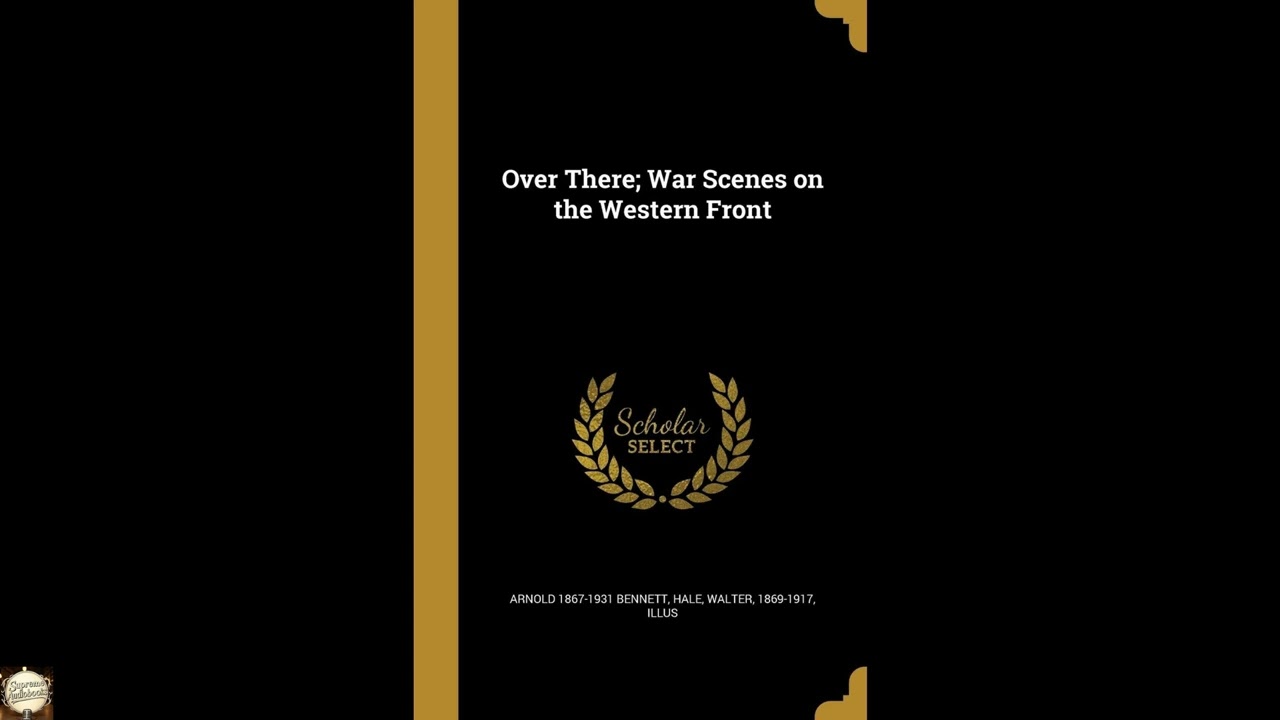
Over There; War Scenes on the Western Front
In the cacophony of modern life, the echoes of history often fade, yet some voices pierce the intervening decades with remarkable clarity, offering direct testimony to moments that reshaped the world. Arnold Bennett's Over There; War Scenes on the Western Front is precisely such a voice. Far from a dry historical chronicle, this compelling collection of observations brings the visceral reality of World War I to vivid, immediate life, unfiltered by retrospective sentimentality. For anyone seeking to understand the human experience within the crucible of unprecedented conflict—the fear, the camaraderie, the mundane horror, and the moments of unexpected beauty—Bennett's scenes from the Western Front offer a unique, potent lens. It is an essential listen for those who wish to connect directly with the past and grasp the profound impact of global war on ordinary lives, ensuring its lessons resonate today. This extraordinary collection doesn't follow a single narrative arc with a conventional hero, but rather presents a kaleidoscopic view of the Western Front, revealing the vast, often contradictory experiences of soldiers and civilians caught in the sweep of the Great War. Bennett, with his keen eye for detail and human behavior, escorts the listener through a series of vignettes and observations, painting a panoramic picture that stretches from the muddy, rat-infested trenches where men fought and died, to the bustling, often chaotic, base camps behind the lines. He takes us into field hospitals brimming with injured soldiers, portrays the logistical complexities of supplying an army, and even offers glimpses of the war-scarred French countryside and its resilient inhabitants. The "characters" in this unfolding drama are not individuals with names and backstories, but rather archetypes of the war itself: the weary Tommy, the stoic French peasant, the overworked nurse, the bewildered civilian displaced by shelling. The central conflict, then, is not between specific antagonists, but rather the overwhelming, impersonal struggle between humanity and the mechanised destruction of modern warfare. Bennett renders the constant tension between survival and despair, the brutalizing effects of combat, and the surprising resilience of the human spirit. Each scene contributes to a broader understanding of the conflict, building an immersive landscape of impressions, sounds, and emotions that together convey the overwhelming scale and personal tragedy of the war without resorting to conventional plot devices or a singular protagonist's fate. It offers a window into the raw, unvarnished day-to-day existence during one of history's most devastating periods. Arnold Bennett, born in 1867 in Hanley, Staffordshire, at the heart of England's industrial Potteries region, rose from relatively humble origins to become one of the most prominent and commercially successful authors of his era. His early life involved working for his father's law firm, an experience that likely sharpened his observational skills and provided insight into the social strictures of provincial life. However, his literary aspirations soon called him to London, where he began his career as a journalist before dedicating himself fully to fiction. Bennett eventually moved to France, living there for many years, which offered him a cosmopolitan perspective that often infused his later works. He was a remarkably prolific writer, producing novels, plays, short stories, and essays with an almost industrial regularity. His most enduring works, such as The Old Wives' Tale (1908), Clayhanger (1910), and Riceyman Steps (1923), cemented his reputation as a master of realistic fiction, meticulously documenting the lives of ordinary people in the British Midlands. Bennett's work is often associated with the Edwardian literary period, bridging the gap between Victorian sensibilities and the emerging modernist movements. He was admired for his psychological depth, his unflinching portrayal of social realities, and his ability to infuse the mundane details of everyday existence with profound meaning. His death in 1931 marked the loss of a writer who, despite his immense popularity, consistently pushed the boundaries of literary realism and earned a lasting place in the English literary canon. Over There enacts several profound themes through its collection of war scenes. One central theme is the brutalizing impact of industrial warfare on the human spirit. Bennett illustrates this not with grand pronouncements, but through specific observations: the way soldiers become desensitized to constant shellfire, or the weary, almost mechanical movements of men digging trenches under threat. He shows how the relentless grind of conflict erodes individuality, replacing it with a collective, survival-driven mindset. Another prominent theme is the unexpected resilience and camaraderie that emerges amidst extreme adversity. In one scene, we might witness soldiers sharing a meager meal in a dugout, their banter cutting through the oppressive atmosphere, highlighting the human need for connection and humor even in the face of imminent danger. This simple act of shared experience becomes a powerful testament to endurance. The contrast between the civilian world and the front lines also surfaces as a significant theme. Bennett might present a vivid description of a devastated French village, its homes shattered and fields churned by artillery, juxtaposed with the distant, almost carefree atmosphere of a leave town. This stark comparison underscores the profound psychological chasm that separated those directly experiencing the war from those in relative safety. Finally, the sheer futility and absurdity of war often shine through Bennett's precise depictions. The endless cycles of attack and defense, the monumental effort expended for minimal gains, and the senseless loss of life are conveyed through the accumulation of small, telling details rather than overt authorial commentary, leaving the listener to draw their own sobering conclusions about the nature of conflict. When Over There was written and published, the world was still reeling from the shockwaves of the First World War. This period, often termed the interwar years or the immediate aftermath of the conflict, saw a burgeoning of literature attempting to process the unprecedented scale of death and destruction. Culturally and politically, there was a profound sense of disillusionment following the initial patriotic fervor that had gripped nations at the war's outset. The romantic notions of glory and heroism were swiftly replaced by a stark understanding of trench warfare, gas attacks, and the brutal efficiency of modern weaponry. Works like Bennett's emerged from a pressing need to document, understand, and perhaps come to terms with the war's reality. The literary world, too, was undergoing a transformation. The rigid conventions of Victorian literature were giving way to new forms of expression, including modernism, which sought to reflect the fragmented and complex nature of contemporary existence. While Bennett himself was firmly rooted in realism, his unflinching gaze at the realities of war resonated with the emerging desire for authenticity over sentimentality. His ability to render the ordinary experiences of soldiers and civilians offered a vital counter-narrative to official reports and propaganda, providing a more human, immediate perspective on the conflict. Such accounts were crucial in shaping public memory and understanding of the Great War, helping to demystify the front lines and illustrate the immense human cost. Listening to Over There as an audiobook offers a uniquely powerful and immersive experience. The narrator's voice becomes the guiding presence, carrying Bennett's observations and descriptions directly into the listener's imagination, bypassing the printed page to evoke an immediacy that few other formats can match. With a run length of several hours, this allows for extended, uninterrupted engagement with the material, perfect for focused listening sessions or accompanying daily routines like commutes or chores. A skilled narrator can modulate their pace to match Bennett's measured yet impactful prose, allowing moments of grim realism to land with full weight while also conveying the subtle shifts in atmosphere and the quiet dignity of the scenes. Listen for the narrator's ability to differentiate between the various voices Bennett might imply—a weary soldier's murmur, a sharp command, the rustle of equipment—without over-dramatizing. The nuanced delivery can amplify the sense of being present, allowing the listener to absorb the grim beauty and profound human insights embedded in Bennett's meticulous documentation of war.
Enjoyed Over There; War Scenes on the Western Front? A few ways to support us
Audible & Amazon links are affiliate; we may earn a small commission at no extra cost.
About this production
Human narration by a volunteer reader from LibriVox.org, the public-domain audiobook project. LibriVox volunteers record literary works whose copyright has expired in the United States, releasing the resulting recordings into the public domain.
Over There; War Scenes on the Western Front by Arnold Bennett. The underlying text is in the U.S. public domain. We do not republish any modern copyrighted edition, translation, or commentary.
The 4K cinematic visuals accompanying this audiobook are generated by an AI image model from prompts derived from the source text. No copyrighted photos, paintings, or stock footage are used. AI generation is disclosed on every video on our YouTube channel as required by YouTube's altered/synthetic content policy.
English subtitles are transcribed from the LibriVox recording with OpenAI Whisper. Translations into the 11 other supported languages are produced by Meta's NLLB-200 neural translation model. No human translator's copyrighted translation is used.
Questions about sourcing or rights? See our DMCA & Sourcing policy or contact us.
Enjoyed this audiobook?
If you'd like to own a copy of Over There; War Scenes on the Western Front or hear a professionally produced edition, the links below help support free audiobook production at no extra cost to you.
As an Amazon Associate we earn from qualifying purchases. Audible / print links are affiliate.