Behind a Mask or a Woman's Power
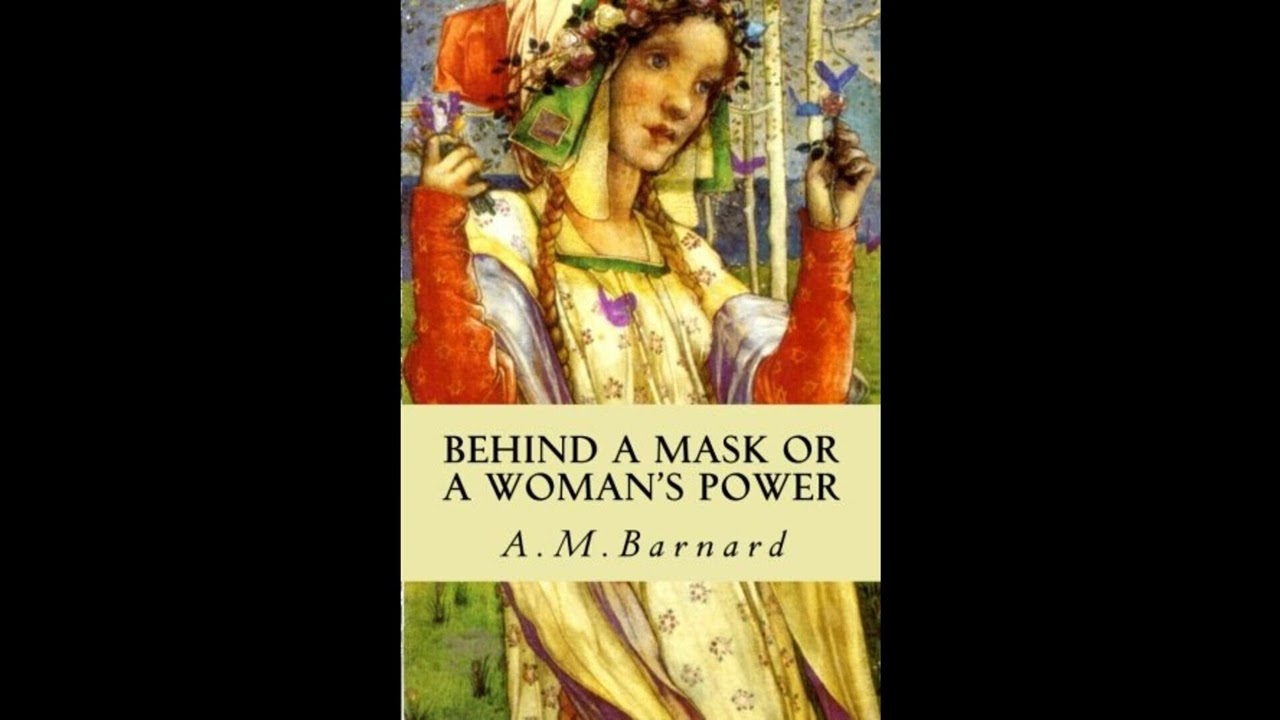
"Behind a Mask or a Woman's Power" presents a gripping portrait of a woman who redefines what it means to be truly free in a world eager to constrain her. More than a simple tale of intrigue, it’s a shrewd psychological study, a domestic drama that peels back layers of identity and expectation. A governess arrives at a prominent Southern estate, seemingly demure and unassuming, yet she quickly asserts a quiet, almost hypnotic influence over everyone she meets. Her past is a blank canvas, her future a calculated design, and her present a performance crafted to shatter conventions. Listeners today will question the nature of truth, appearance, and the lengths one might go to shape destiny when society offers few avenues for agency. This story challenges perceptions of femininity, power, and the societal masks we all wear, revealing a startlingly modern sensibility beneath its Victorian veneer. The story opens in the post-Civil War American South, at the elegant country estate of the wealthy Coventry family. Into this refined world steps Jean Muir, a new governess for young Bella. Muir is initially a quiet, pale woman, seemingly shy and unassuming, with a noticeable limp. Yet, beneath this facade lies an intellect as sharp as a razor and a will of iron. The Coventry men – the widowed Mr. Coventry, his eldest son Gerald, and the youngest son Ned – are each drawn to her, captivated by her mysterious allure. Even the cynical aunt, Lucia, finds her initial suspicions softened by Jean’s apparent sweetness and competence. As Jean establishes herself, her influence grows almost imperceptibly. She manages the difficult Bella with ease, offers counsel to Ned, and subtly appeals to the chivalrous instincts of Gerald and Mr. Coventry. She speaks several languages, displays unexpected knowledge of literature, and shows remarkable skill at the piano, all contradicting her initial simple presentation. Whispers and questions circulate amongst the household regarding her origins. Who is this woman? Where did she come from? Why does she guard her past with such impenetrable secrecy? The central conflict becomes the unraveling of Jean Muir's true identity, the exposure of the multiple personas she inhabits. As various Coventry family members attempt to discover her background, they are met with evasions, inconsistencies, and dramatic displays that only deepen the enigma. Jean Muir is not merely a woman with a secret; she lives secrets, each persona a carefully chosen instrument in her calculated ascent. The tension builds as her world begins to show cracks, threatening to reveal the extraordinary truth of her past and the audacious ambition driving her present. "Behind a Mask or a Woman's Power" was penned under the pseudonym A. M. Barnard, a name chosen by the celebrated American author Louisa May Alcott. Born in Germantown, Pennsylvania, in 1832, Alcott grew up in Concord, Massachusetts, amidst the intellectual ferment of Transcendentalism. Her father, Amos Bronson Alcott, was an educator and philosopher, and her mother, Abigail May Alcott, an active social reformer. Louisa's childhood, marked by poverty and a stimulating environment, saw her interacting with literary giants like Ralph Waldo Emerson, Henry David Thoreau, and Nathaniel Hawthorne. This upbringing instilled a strong sense of independence, social justice, and a deep understanding of human nature. While Alcott is best known for Little Women, her beloved children's novel published in 1868, her early career was far more daring and financially driven. She supported her family through teaching, sewing, and writing, often publishing sensational "blood-and-thunder" tales anonymously or under pseudonyms for popular magazines. These stories, written quickly for immediate income, offered a stark contrast to the domestic virtues celebrated in Little Women. They featured strong, often manipulative female protagonists, dark plots, and dramatic reversals—a genre then known as sensation fiction. Alcott's Civil War nursing experiences, documented in her Hospital Sketches, further shaped her understanding of hardship and resilience, cementing her commitment to social causes like abolition and women's suffrage. The mid-20th century discovery of her sensation fiction, including "Behind a Mask," completely reshaped her literary legacy. It revealed a broader, more complex writer than the "children's author" label suggested. These works firmly place her not only as a pioneer in American domestic fiction but also as a significant, albeit initially covert, contributor to psychological suspense, offering a fascinating counterpoint to her more conventional narratives. At its heart, "Behind a Mask" is a profound examination of identity and performance. Jean Muir is a master of self-reinvention, presenting different personas to different individuals, each tailored to elicit a specific response. Her exaggerated limp, for instance, is a calculated affectation designed to evoke sympathy and lower suspicions. Her sudden bursts of intellectual wit or musical talent reveal fleeting glimpses of a more formidable self she usually keeps hidden. The novel forces us to question the authenticity of self, suggesting identity can be a fluid construct, deliberately shaped to navigate societal expectations and personal ambition. Another potent theme resonating throughout is female power and agency in a restrictive era. Jean Muir, despite lacking conventional wealth or status, wields immense influence over the Coventry household. She manipulates the men through a shrewd understanding of their desires and vulnerabilities, transforming herself from a humble governess into an object of fascination. Her ability to command attention and affection demonstrates a radical form of independence for a woman of her time, albeit one achieved through unconventional means. The text highlights limited avenues for female self-determination and how some, like Jean, resorted to cunning and deception to carve out their own destinies. It also touches upon class and social mobility, showing how an individual, through sheer will and a crafted image, can aspire to move beyond their assigned station. Published in 1866, "Behind a Mask or a Woman's Power" arrived during a tumultuous period in American history, just a year after the Civil War. The nation grappled with reconstruction, rapid industrialization, and profound social changes. Women's roles were intensely debated, with increasing calls for suffrage and greater independence, even as traditional domestic expectations remained powerful. It was a time of heightened anxiety and societal flux, making fertile ground for stories that explored unconventional characters and challenged established norms. In the literary world, the mid-nineteenth century saw the rise of sensation fiction, a genre that emerged from England but found a ready audience in America. These stories, often serialized in popular magazines, featured mystery, crime, scandal, and dark secrets, frequently centered around strong, morally ambiguous female protagonists. Authors like Mary Elizabeth Braddon and Wilkie Collins were hugely popular. Alcott, needing to provide for her family, shrewdly tapped into this market. Her sensation tales, written with speed and skill, allowed her to comment on societal hypocrisies and gender roles in ways her more overtly moralistic works might not have. "Behind a Mask" perfectly exemplifies this trend, offering thrilling escapism and psychological drama, while subtly weaving in trenchant observations about women's struggle for power. Experiencing "Behind a Mask or a Woman's Power" as an audiobook truly heightens the tension and psychological drama inherent in Alcott's prose. The narrator's voice becomes crucial in differentiating Jean Muir's various personas, conveying subtle shifts in her tone—the deceptive sweetness or the steel hidden beneath. Listen for the precise pacing, allowing suspense to slowly build, mirroring the story's gradual revelations. The spoken word amplifies the cunning dialogue, revealing layers of meaning and unspoken motives. Over several hours of listening, atmospheric details—the grand Southern estate, the hushed whispers, the growing unease—come alive, drawing the listener into Jean's carefully constructed world and making her slow burn of deception all the more compelling and chilling.
Enjoyed Behind a Mask or a Woman's Power? A few ways to support us
Audible & Amazon links are affiliate; we may earn a small commission at no extra cost.
About this production
Human narration by a volunteer reader from LibriVox.org, the public-domain audiobook project. LibriVox volunteers record literary works whose copyright has expired in the United States, releasing the resulting recordings into the public domain.
Behind a Mask or a Woman's Power by A M Barnard. The underlying text is in the U.S. public domain. We do not republish any modern copyrighted edition, translation, or commentary.
The 4K cinematic visuals accompanying this audiobook are generated by an AI image model from prompts derived from the source text. No copyrighted photos, paintings, or stock footage are used. AI generation is disclosed on every video on our YouTube channel as required by YouTube's altered/synthetic content policy.
English subtitles are transcribed from the LibriVox recording with OpenAI Whisper. Translations into the 11 other supported languages are produced by Meta's NLLB-200 neural translation model. No human translator's copyrighted translation is used.
Questions about sourcing or rights? See our DMCA & Sourcing policy or contact us.
Enjoyed this audiobook?
If you'd like to own a copy of Behind a Mask or a Woman's Power or hear a professionally produced edition, the links below help support free audiobook production at no extra cost to you.
As an Amazon Associate we earn from qualifying purchases. Audible / print links are affiliate.