Bad Hugh
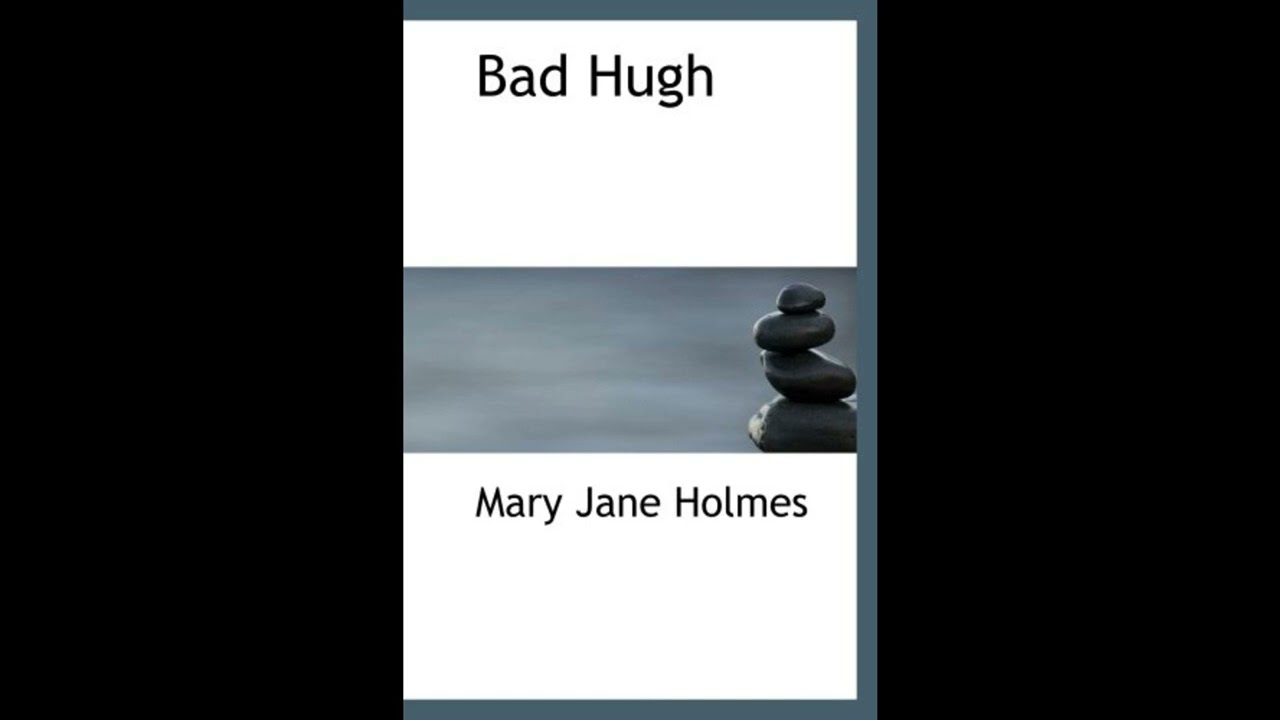
Step into a literary landscape where reputations are fragile, and the path to redemption is fraught with suspicion. Bad Hugh, a beloved classic by the incredibly popular 19th-century American novelist Mary Jane Holmes, offers a compelling look at how society judges its own, and the quiet strength it takes to defy those judgments. This story, steeped in the moral questions and social dynamics of its era, still resonates deeply today, inviting listeners to consider the enduring power of human kindness, the corrosive nature of gossip, and the possibility of a second chance. It is a tale that asks whether a past defined by rumor can ever truly be overcome, and why some hearts are quicker to condemn than to understand. The narrative unfolds in a small, seemingly tranquil American town, a place where reputations are forged and broken on the anvil of community opinion. Our central figure is Hugh Maxwell, a man shrouded in a cloud of local legend and whispers. He arrives in this close-knit community, or perhaps returns after an absence, carrying with him the weighty moniker that gives the book its title: "Bad Hugh." The exact nature of his past misdeeds is left tantalizingly vague at first, fueling speculation and fear among the townspeople. His presence immediately stirs a quiet storm, as some residents recoil, while others are simply curious about the mysterious figure who seems determined to live an honest, if solitary, life. Amidst this backdrop of skepticism and prejudice, the story introduces a young woman, whose compassion and clear-sightedness offer a counterpoint to the prevailing sentiment. She is one of the few willing to look beyond the whispered accusations and observe Hugh for himself. As the narrative progresses, we witness the subtle battles Hugh fights daily: the cold shoulders, the averted gazes, and the outright hostility from those convinced of his inherent depravity. Yet, through his quiet actions and the gradual unfolding of his character, the foundations of the community's judgment begin to crack, revealing the complex layers beneath the surface of his supposedly "bad" reputation. The plot carefully constructs a world where appearances deceive, and the truth of a man’s heart is often hidden behind layers of rumor and misunderstanding, leading toward a dramatic unveiling of the circumstances that led to Hugh's ill repute. Mary Jane Holmes (1825-1907) was a literary phenomenon of her time, a woman whose prolific output captivated millions of readers across America. Born in Brookfield, Massachusetts, she would go on to live a life deeply connected to the literary world, settling for many years in Brockport, New York, with her husband, Daniel Holmes. Her writing career spanned several decades, from the mid-19th century well into the early 20th, during which she penned more than 30 novels. Her books consistently topped bestseller lists, rivaling, and often surpassing, the sales figures of many of her male contemporaries. She was, in her day, as popular and widely read as any author in the United States, a testament to her ability to tap into the emotional and moral currents of her audience. Holmes carved a significant niche for herself within the tradition of the domestic novel, a genre that focused on home life, familial relationships, and the moral struggles of ordinary people. Her stories often featured strong, virtuous heroines facing adversity, themes of redemption, and a clear moral compass. While she wrote about various regions of the country, many of her most popular works, like Tempest and Sunshine and Lena Rivers, demonstrated a keen understanding of both rural life and the complexities of human nature. Her lasting legacy is not found in avant-garde experimentation but in her mastery of storytelling that resonated deeply with the sensibilities of a broad, predominantly female readership seeking both entertainment and moral uplift from their fiction. Bad Hugh enacts several profound themes that hold their relevance even now. One prominent idea is the concept of redemption and second chances. Hugh Maxwell's constant battle against his tarnished image perfectly illustrates the uphill struggle individuals face when trying to outrun a past reputation. We see this in the subtle scenes where Hugh performs a quiet kindness, perhaps helping a child or offering aid to someone in distress, only to have his motives questioned or his good deed minimized by onlookers who refuse to believe in his capacity for virtue. The novel carefully shows how genuine character must slowly but surely chip away at ingrained prejudice, highlighting the slow, arduous process of rebuilding trust and proving one's worth when society has already passed judgment. Another compelling theme is the critical distinction between appearance and reality. The entire premise of "Bad Hugh" hinges on the chasm between the town's perception of Hugh and the actual truth of his character and history. The story deftly portrays how rumors, often baseless or exaggerated, can coalesce into an unshakeable public image, regardless of the facts. For instance, early in the novel, a simple misunderstanding or an act taken out of context is quickly blown out of proportion, creating the very "bad" reputation Hugh must then contend with, forcing the listener to question the reliability of first impressions and the danger of groupthink. Holmes uses this central conflict to underscore the damaging effects of gossip and the importance of individual discernment. The period in which Mary Jane Holmes was writing—the mid to late 19th century—was a time of immense social and cultural transformation in America. Following the turbulence of the Civil War, the nation sought stability and a return to established moral values, even as industrialization and westward expansion reshaped daily life. This era saw a booming expansion in publishing, making books more accessible to a growing middle class, and women were increasingly significant as both readers and writers. Authors like Holmes responded to a hunger for stories that engaged with domestic issues, offered moral instruction, and provided a sense of order and justice in a rapidly changing world. Her novels, with their clear moral lessons and focus on family and community, perfectly fit this cultural moment, providing solace and guidance to a society grappling with new complexities. Bad Hugh emerged from this fertile ground, reflecting the concerns of its readership about virtue, reputation, and the power of community ties. It spoke to the hopes and anxieties of a time when personal character was seen as paramount, yet easily threatened by external forces. The popularity of such novels was not merely about entertainment; they served as a form of social commentary and moral education, reinforcing societal norms while also gently challenging prejudices through narratives of redemption and perseverance. This work is a wonderful example of popular literature that both mirrored and shaped the cultural landscape of its time. Listening to Bad Hugh as an audiobook transforms the experience of this classic narrative into an intimate, immersive encounter. The several hours of its duration allow for a leisurely unfolding of the plot, making it an ideal companion for long drives, focused household tasks, or quiet evenings curled up with a cup of tea. A skilled narrator brings the quiet intensity of Hugh's struggle and the varied textures of the town's characters to vivid life, giving distinct voices to the gossipy neighbors, the sympathetic few, and Hugh himself. Listen for the subtle shifts in tone that convey unspoken emotions, the precise pacing that builds suspense around Hugh's true story, and the evocative descriptions of the setting that draw you directly into the heart of this enduring tale. The spoken word allows the atmosphere of suspicion and eventual understanding to truly settle around you, making the journey of Bad Hugh feel deeply personal and immediate.
Enjoyed Bad Hugh? A few ways to support us
Audible & Amazon links are affiliate; we may earn a small commission at no extra cost.
About this production
Human narration by a volunteer reader from LibriVox.org, the public-domain audiobook project. LibriVox volunteers record literary works whose copyright has expired in the United States, releasing the resulting recordings into the public domain.
Bad Hugh by Mary Jane Holmes. The underlying text is in the U.S. public domain. We do not republish any modern copyrighted edition, translation, or commentary.
The 4K cinematic visuals accompanying this audiobook are generated by an AI image model from prompts derived from the source text. No copyrighted photos, paintings, or stock footage are used. AI generation is disclosed on every video on our YouTube channel as required by YouTube's altered/synthetic content policy.
English subtitles are transcribed from the LibriVox recording with OpenAI Whisper. Translations into the 11 other supported languages are produced by Meta's NLLB-200 neural translation model. No human translator's copyrighted translation is used.
Questions about sourcing or rights? See our DMCA & Sourcing policy or contact us.
Enjoyed this audiobook?
If you'd like to own a copy of Bad Hugh or hear a professionally produced edition, the links below help support free audiobook production at no extra cost to you.
As an Amazon Associate we earn from qualifying purchases. Audible / print links are affiliate.