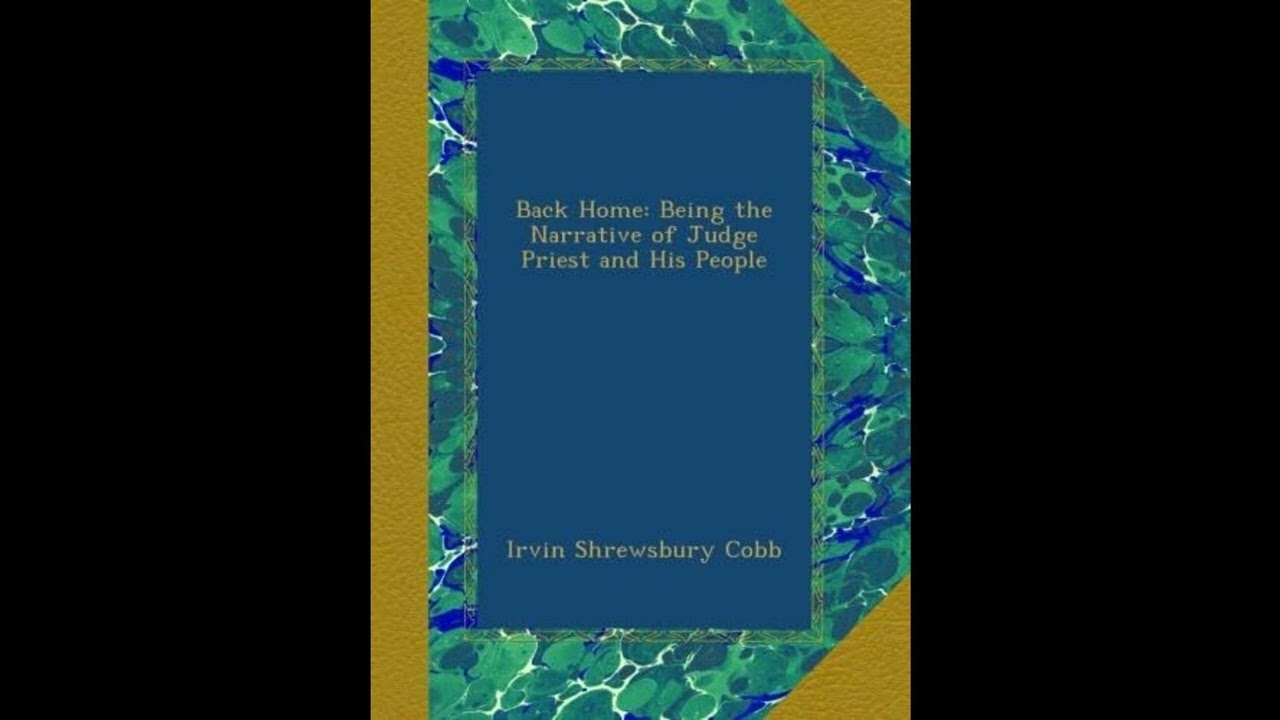
Back Home: Being the Narrative of Judge Priest and His People
In the quiet, sun-drenched streets of a small Kentucky town, where gossip travels faster than the mail and history lingers in every porch swing, lies a collection of stories waiting to be heard. "Back Home: Being the Narrative of Judge Priest and His People" offers more than just entertainment; it provides a direct portal to a bygone era, allowing modern listeners to step into a world of simple pleasures, complex human nature, and enduring community spirit. This isn't a book of grand epics or revolutionary ideas, but rather a loving, humorous, and sometimes poignant portrait of small-town American life at the turn of the 20th century, rendered through the eyes of one of literature's most beloved characters. It’s a chance to slow down, to listen, and to find echoes of our own lives in the seemingly distant past. The setting for these tales is Fairfield, Kentucky, a fictional but deeply recognizable Southern town still grappling with the shadows and proud memories of the post-Civil War period. Life moves at a measured pace in Fairfield, dictated by seasons, local events, and the ever-present rhythm of human connection. At the heart of this community stands Judge William Priest, a figure of immense moral authority, common sense, and gentle humor. The Judge is an aging Confederate veteran, a widower whose quiet wisdom and deep understanding of human foibles make him the town’s unofficial arbiter of disputes, a confidante, and a source of endless, often hilarious, anecdotes. He is a man who sees beyond the surface of things, understanding that law is often secondary to the needs of the heart and the bonds of a community. The book isn't structured around a single, overarching plot but rather as a series of interconnected vignettes and short stories. Each chapter introduces us to different facets of Fairfield life, presenting its eccentric characters, petty squabbles, surprising acts of kindness, and the challenges that arise from living in close quarters. We encounter local lawyers, colorful shopkeepers, formidable matriarchs, and aspiring young lovers, all brought to life through Cobb’s keen observation and ear for dialogue. The central tension in many of these narratives often stems from misunderstandings, inherited grudges, or the quiet clash between old traditions and the subtle encroachments of modernity. Judge Priest, with his blend of shrewdness and sympathy, often acts as the catalyst for resolution, his actions driven not by strict legalism but by a profound commitment to fairness and the well-being of his neighbors. Listeners will find themselves drawn into the rhythm of Fairfield, observing its residents as they navigate the everyday dramas of life, love, and community. The author behind these vivid descriptions was Irvin Shrewsbury Cobb, born in Paducah, Kentucky, in 1876. Cobb began his career in journalism at a remarkably young age, first with local Kentucky papers and eventually moving to New York City, where he became a star reporter for the New York World. His sharp wit, keen observational skills, and ability to weave a compelling narrative quickly established him as a significant literary voice. He gained widespread recognition as a humorist and short story writer, with his work frequently appearing in popular magazines of the era. Cobb’s career extended beyond the written word; he served as a war correspondent during World War I, later became a popular speaker, and even contributed to early Hollywood as a screenwriter and actor. Throughout his prolific career, which ended with his passing in New York in 1944, he penned over 60 books and numerous short stories. While he produced a wide range of works, including "Speaking of Operations..." and his autobiography "Exit Laughing," it is his stories featuring Judge Priest that cemented his literary legacy. He is often categorized as a Southern regionalist, capturing the dialect, customs, and spirit of his native Kentucky with a warmth and authenticity that distinguished him among his peers and earned him comparisons to authors like Mark Twain, for his ability to blend humor with incisive social commentary and a deep understanding of Americana. "Back Home" enacts several profound themes that resonate far beyond its specific Southern setting. One prominent theme is the enduring power of memory and nostalgia. The book is steeped in a longing for a past that, while perhaps imperfect, is recalled with affection and a sense of loss. Judge Priest himself often uses his own recollections of old events and characters to shed light on current predicaments, demonstrating how history, both personal and collective, shapes the present. For instance, in one story, an old feud between families, seemingly long forgotten, resurfaces, and the Judge's understanding of its origins, passed down through generations, becomes crucial to its eventual resolution. Another central theme is justice tempered with compassion. Judge Priest, despite his legal title, often dispenses a form of justice that prioritizes understanding and reconciliation over strict adherence to the letter of the law. He recognizes that human hearts and relationships are more complex than statutes. A quiet scene might show him mediating a dispute between two neighbors over a shared property line, where his solution isn't just about legal ownership, but about mending years of quiet resentment and restoring harmony to the community. Finally, the book powerfully renders the theme of community and identity, showing how individuals are inextricably linked to the fabric of their town. Fairfield is a living entity, its residents defining themselves by their place within its social structure, their family legacies, and their shared experiences. The book subtly showcases the changing South, acknowledging that even in a place seemingly resistant to progress, new ideas and challenges inevitably arise, forcing the community to adapt while clinging to its core values. "Back Home" emerged during a pivotal period in American history, published in 1912, a time when the nation was rapidly industrializing and urbanizing, yet still held strong ties to its rural past. Culturally, the shadow of the Civil War still loomed large over the South, influencing narratives and shaping identity. This was an era where the "Lost Cause" narrative was often present in Southern literature, a romanticized view of the Confederacy, and Cobb, while not uncritically endorsing it, certainly captures the lingering pride and melancholy associated with that period through his characters. In the literary world, realism and regionalism were thriving, moving away from the more overtly romantic or sentimental styles of earlier generations. Authors sought to depict specific American locales with authenticity, focusing on dialect, local customs, and the nuances of everyday life. Cobb's work fits squarely within this movement, offering an authentic, humorous, and sometimes bittersweet portrayal of a Southern town that felt both unique and universally human, providing a valuable snapshot of a particular place at a particular moment in time. Listening to "Back Home" as an audiobook offers a uniquely immersive experience, perfectly suited to Cobb’s storytelling style. These narratives are inherently oral, designed to be heard, not just read silently. A skilled narrator brings to life the regional dialects and unique cadences of Fairfield’s inhabitants, especially the slow, considered speech of Judge Priest himself. The run length, totaling several hours, makes it an ideal companion for long drives, quiet evenings, or while engaging in tasks that allow for contemplative listening. Pay attention to the unhurried pacing, which mirrors the tranquil rhythm of the town it depicts, allowing listeners to fully absorb the atmosphere. The voices create distinct characters, enhancing the wit and pathos woven into the dialogue, while the overall auditory experience crafts a palpable sense of time and place, allowing you to truly step into the world of Judge Priest and his unforgettable people.
Enjoyed Back Home: Being the Narrative of Judge Priest and His People? A few ways to support us
Audible & Amazon links are affiliate; we may earn a small commission at no extra cost.
About this production
Human narration by a volunteer reader from LibriVox.org, the public-domain audiobook project. LibriVox volunteers record literary works whose copyright has expired in the United States, releasing the resulting recordings into the public domain.
Back Home: Being the Narrative of Judge Priest and His People by Irvin Shrewsbury Co. The underlying text is in the U.S. public domain. We do not republish any modern copyrighted edition, translation, or commentary.
The 4K cinematic visuals accompanying this audiobook are generated by an AI image model from prompts derived from the source text. No copyrighted photos, paintings, or stock footage are used. AI generation is disclosed on every video on our YouTube channel as required by YouTube's altered/synthetic content policy.
English subtitles are transcribed from the LibriVox recording with OpenAI Whisper. Translations into the 11 other supported languages are produced by Meta's NLLB-200 neural translation model. No human translator's copyrighted translation is used.
Questions about sourcing or rights? See our DMCA & Sourcing policy or contact us.
Enjoyed this audiobook?
If you'd like to own a copy of Back Home: Being the Narrative of Judge Priest and His People or hear a professionally produced edition, the links below help support free audiobook production at no extra cost to you.
As an Amazon Associate we earn from qualifying purchases. Audible / print links are affiliate.