At the Deathbed of Darwinism
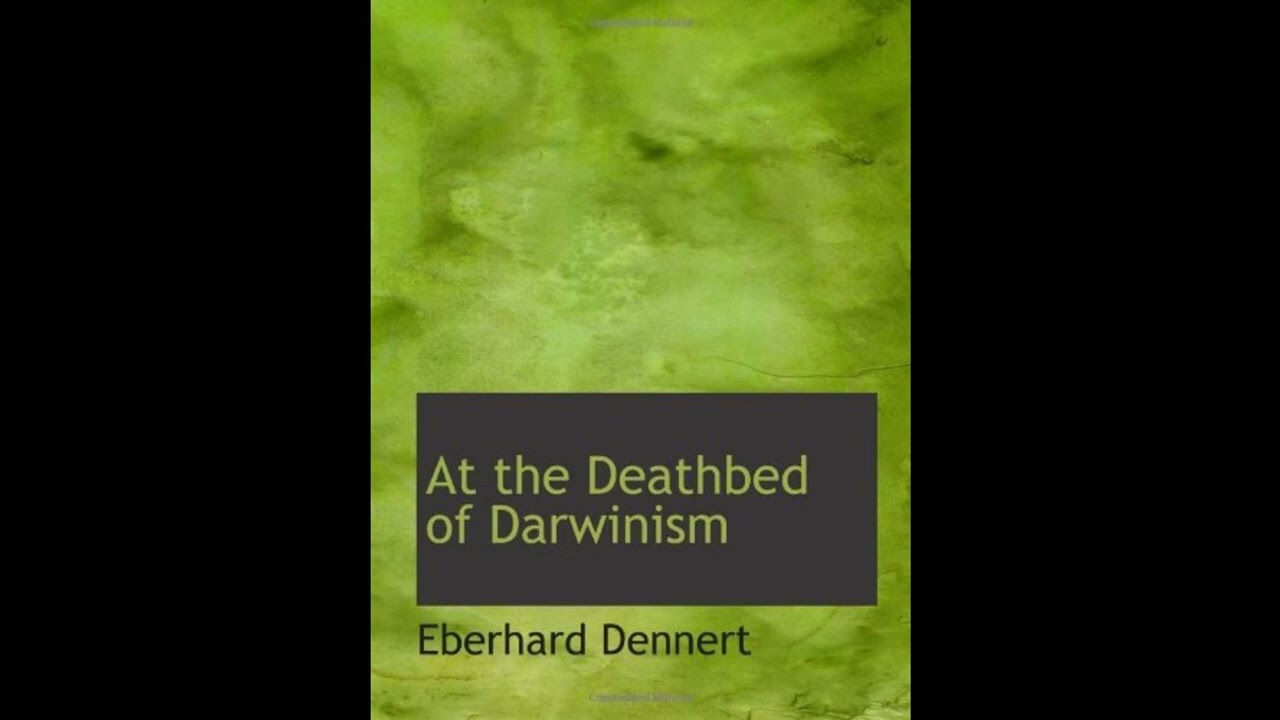
In the early years of the twentieth century, as the dust settled on the initial wave of Darwinian theory, a profound intellectual unease began to stir among certain scientific and philosophical circles. It was into this fertile ground of doubt and re-evaluation that Eberhard Dennert's provocative work, At The Deathbed of Darwinism, first appeared, shaking the foundations of an emergent scientific consensus. This book is not merely a historical curiosity; it stands as a pivotal early critique, offering a comprehensive and systematic challenge to evolutionary theory that continues to resonate in contemporary discussions about science, faith, and the origins of life. Why did a prominent scientist declare Darwinism near its end over a century ago? And what can his arguments teach us about the ongoing dialogue between competing worldviews even today? This audiobook invites listeners to confront these enduring questions through the lens of a highly influential, yet often overlooked, historical text. Dennert's central premise, laid out with methodical precision, asserts that Darwin's theory of evolution by natural selection was, by 1903, already crumbling under the weight of new scientific discoveries and unresolved internal contradictions. He did not dismiss biological change outright, but rather launched a frontal assault on the mechanism of natural selection, arguing that it lacked the explanatory power attributed to it by its proponents. Dennert meticulously examines various scientific fields, beginning with biology and paleontology, pointing to perceived gaps in the fossil record, the sudden appearance of complex life forms, and the challenges of explaining intricate biological structures through gradual variation. He suggests that the very evidence touted by Darwinians could, in fact, be interpreted to support a different conclusion—one hinting at an underlying design rather than blind chance. The book then broadens its scope, critiquing the philosophical implications of a purely materialist evolution. Dennert expresses concern that if life's complexity is solely the product of random mutation and natural selection, then human morality, purpose, and even consciousness might be stripped of their intrinsic meaning. He marshals an array of arguments from physiology, embryology, and genetics – fields still in their nascent stages – to bolster his claim that the scientific community itself was increasingly divided, with many scientists seeking alternatives to Darwin's ideas. Dennert portrays a scientific landscape where neo-Lamarckian theories, mutationism, and other non-Darwinian evolutionary models held significant sway, collectively signaling what he perceived as the imminent demise of orthodox Darwinism. His arc is one of sustained argumentation, building layer upon layer of scientific and philosophical objections to systematically dismantle the edifice of Darwinian thought, leading the listener to understand why he declared it at its "deathbed." Eberhard Dennert (1862-1945) was a German natural scientist, botanist, and educator who dedicated a significant portion of his life to the intersection of science and religious faith. Born in Siegen, Germany, Dennert pursued an education in natural sciences, completing his doctorate in botany at the University of Marburg. He subsequently worked as a gymnasium professor, balancing his pedagogical duties with prolific scientific and philosophical writing. Dennert possessed a rigorous scientific mind, yet he harbored profound reservations about the purely materialistic interpretations of life offered by late 19th-century Darwinism. His most notable contribution was not merely through his books, but also through his leadership. In 1907, just a few years after publishing At The Deathbed of Darwinism, Dennert founded the Kepler Bund (Kepler Society for the Spreading of Natural Knowledge in the Spirit of Christianity). This organization became a crucial intellectual hub in German-speaking countries, providing a platform for scientists and thinkers who sought to reconcile scientific discovery with a Christian worldview, often by critiquing evolutionary materialism. Through the Kepler Bund and his extensive publications, Dennert established himself as a leading voice in the early 20th-century anti-Darwinian movement, leaving a lasting legacy as a foundational figure in the development of modern creation science and intelligent design arguments. Other works, such as Die Weltanschauung des Naturforschers (The Worldview of the Natural Scientist), further cemented his reputation as a thoughtful, if controversial, commentator on science and its philosophical implications. One of the prominent themes woven through Dennert's critique is the persistent tension between scientific observation and its interpretation. He repeatedly illustrates how the same empirical data—for instance, the fossil record or comparative anatomy—could be viewed through different conceptual frameworks to yield vastly divergent conclusions about life's origins and development. Dennert demonstrates this by examining specific examples such as the apparent stasis of certain species over geological time, which he presents as an argument against the gradual accumulation of change central to Darwin's view, or the intricate design of an eye, which he posits as beyond the reach of undirected natural selection. His work thus highlights the philosophical underpinnings that often guide scientific inquiry, even when presented as purely objective. Another significant theme is the broader impact of scientific theories on human worldview and morality. Dennert contends that the embrace of Darwinian materialism threatened to undermine traditional ethical frameworks and a sense of human dignity. He implies that if humanity is merely the accidental product of struggle and survival, then concepts of inherent value or divine purpose become tenuous. His arguments here serve as an early warning against what he perceived as the nihilistic implications of a mechanistic universe, advocating instead for a perspective that could accommodate both scientific rigor and transcendent meaning. This concern over the ethical and spiritual consequences of scientific theories remains a central point of contention in many contemporary debates. The period in which At The Deathbed of Darwinism emerged was a dynamic and tumultuous one, both scientifically and culturally. The early 1900s represented a fascinating interstitial phase in evolutionary thought. While Darwin's Origin of Species had been published decades earlier, the "Modern Synthesis" – the fusion of Darwinian natural selection with Mendelian genetics – was still decades away. This meant that the scientific community was grappling with various alternative theories of evolution, including neo-Lamarckism (the inheritance of acquired characteristics) and Hugo de Vries's mutation theory. Dennert capitalized on these ongoing scientific debates and uncertainties, presenting them as evidence of Darwinism's fundamental weakness rather than as normal scientific refinement. Culturally, the fin de siècle and early twentieth century in Europe saw widespread intellectual ferment. Rapid advancements in science and technology were challenging established religious and philosophical traditions, leading to an often-polarized intellectual landscape. Dennert's work can be seen as part of a broader reaction among those who felt that science, particularly evolutionary biology, was encroaching on territory traditionally held by religion and philosophy. His book served as a rallying cry for those seeking to mount a scientifically credible challenge to a perceived materialistic worldview, providing intellectual ammunition for a growing movement that sought to defend traditional belief systems by highlighting perceived scientific flaws in the dominant paradigm. It emerged precisely when the scientific field was ripe with alternative hypotheses and public discourse was keenly engaged with the societal implications of scientific discovery. Listening to At The Deathbed of Darwinism as an audiobook offers a unique opportunity to engage directly with Dennert's carefully constructed arguments as they unfold. The length, spanning several hours, allows for a comprehensive and unhurried presentation of his multifaceted critique, giving the listener ample time to absorb each point and consider its historical and intellectual weight. A clear, articulate narration is crucial for conveying the precision of Dennert's scientific observations and the nuanced philosophical reasoning that underpins his challenge to Darwinism. Listeners will appreciate how the voice guides them through complex scientific discussions, allowing them to follow the structured disassembly of prevailing theories and the presentation of alternative interpretations. It becomes an immersive experience, allowing the historical voice of a significant intellectual figure to speak directly to the present, inviting reflection on how such debates continue to shape our understanding of science and its place in human thought.
Enjoyed At the Deathbed of Darwinism? A few ways to support us
Audible & Amazon links are affiliate; we may earn a small commission at no extra cost.
About this production
Human narration by a volunteer reader from LibriVox.org, the public-domain audiobook project. LibriVox volunteers record literary works whose copyright has expired in the United States, releasing the resulting recordings into the public domain.
At the Deathbed of Darwinism by Eberhard Dennert. The underlying text is in the U.S. public domain. We do not republish any modern copyrighted edition, translation, or commentary.
The 4K cinematic visuals accompanying this audiobook are generated by an AI image model from prompts derived from the source text. No copyrighted photos, paintings, or stock footage are used. AI generation is disclosed on every video on our YouTube channel as required by YouTube's altered/synthetic content policy.
English subtitles are transcribed from the LibriVox recording with OpenAI Whisper. Translations into the 11 other supported languages are produced by Meta's NLLB-200 neural translation model. No human translator's copyrighted translation is used.
Questions about sourcing or rights? See our DMCA & Sourcing policy or contact us.
View 10 famous quotes from this book →
Enjoyed this audiobook?
If you'd like to own a copy of At the Deathbed of Darwinism or hear a professionally produced edition, the links below help support free audiobook production at no extra cost to you.
As an Amazon Associate we earn from qualifying purchases. Audible / print links are affiliate.