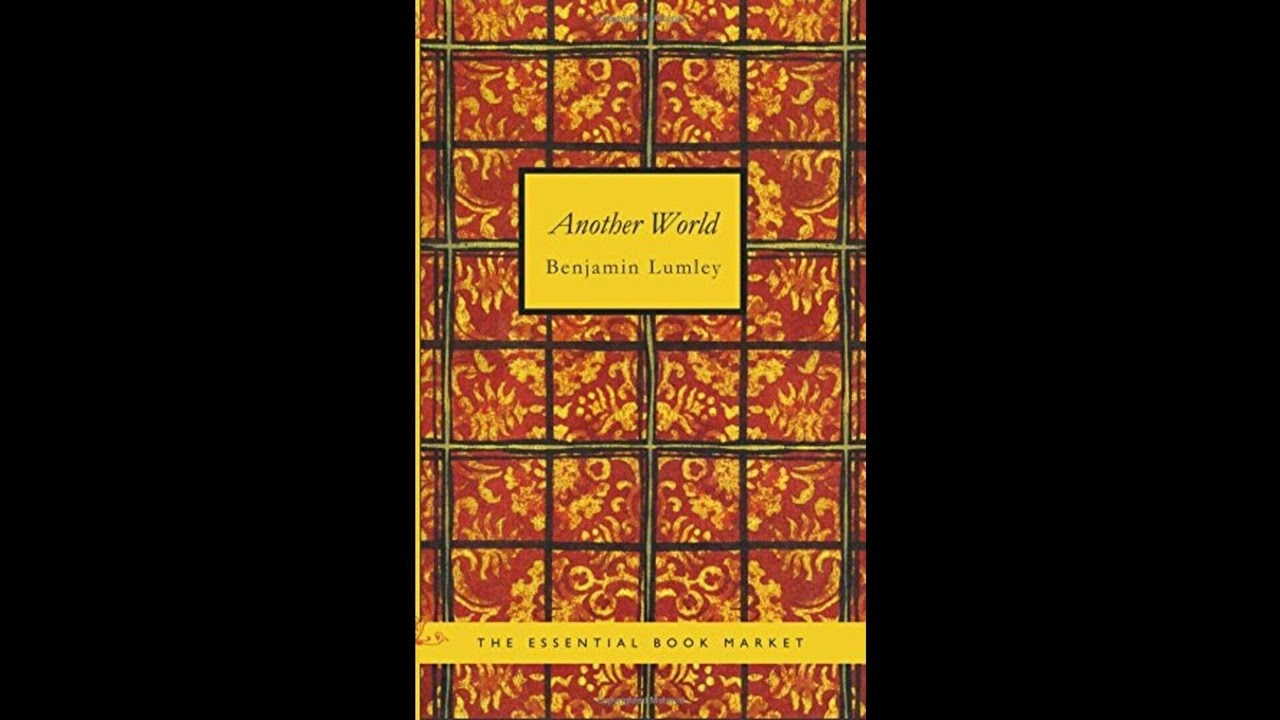
Another World: Fragments from the Star City of Montalluyah
Imagine a civilization so ancient, so utterly alien, that its remnants defy human understanding, appearing less like ruins and more like cryptic data packets scattered across an unthinkable expanse. Benjamin Lumley’s singular vision, Another World: Fragments from the Star City of Montalluyah, presents just such a conundrum, a literary archaeological dig into the deepest mysteries of cosmic existence. This is not a novel in the conventional sense, but a meticulously assembled compendium of reports, observations, and translated inscriptions purporting to originate from a star-spanning metropolis called Montalluyah. Listeners today will find themselves drawn into a profound meditation on the limits of perception and the humbling scale of the universe, a work that continues to challenge our assumptions about life beyond Earth and the very nature of history itself. The book unfurls through the eyes of a nameless, dedicated scholar, who acts as our compiler and translator, presenting what he claims are authentic "fragments" discovered through an unspecified, extraordinary means. These pieces – some poetic, some disturbingly factual, others maddeningly ambiguous – slowly paint a picture of Montalluyah, a city unlike any conceived on Earth. We learn of its impossibly tall structures that pierce the very atmosphere, its inhabitants who communicate through shifting light patterns and resonant frequencies, and a societal structure built upon principles incomprehensible to human logic. The early fragments introduce us to a seemingly utopian existence, where technology and consciousness have merged, allowing Montalluyans to manipulate matter and energy with effortless grace. As the narrative progresses, pieced together from these disparate sources, a subtle unease begins to creep into the portrayal of Montalluyah. Later fragments hint at a deep, cosmic melancholy underlying their advanced civilization, whispers of a looming threat, or perhaps an inevitable decay that even their prodigious science could not circumvent. The compiler grapples with inconsistencies, gaps, and contradictory accounts, mirroring the listener's own struggle to synthesize a complete truth. The central conflict becomes the very act of knowing: can one truly grasp the essence of an alien culture, millennia removed and light-years distant, through such shattered reflections? The story builds not to a conventional climax, but to a profound awareness of absence, of the echoes left behind by a civilization that may have reached ultimate apotheosis or ultimate dissolution. Benjamin Lumley, though not as widely celebrated as some of his contemporaries, left an indelible mark on speculative fiction with his peculiar brand of cosmic mysticism. Born in 1878 into a family of academics and dilettantes, Lumley’s early life was marked by a solitary pursuit of esoteric knowledge. He read voraciously in ancient history, comparative mythology, and the nascent fields of astronomy and quantum physics, developing a worldview that sought connections between seemingly disparate branches of human understanding and the greater cosmos. His reclusive nature and intensely scholarly output meant his works, including earlier, less ambitious fictional treatises like The Obsidian Codex and Whispers from the Aether, were initially confined to a small but fervent readership among those interested in spiritualism and philosophical science fiction. Another World, published around 1908, marked a turning point in Lumley’s career, garnering a quiet but significant critical appreciation for its bold originality and intellectual rigor. While he produced only a handful of other works before his death in 1941, including a posthumously released collection of essays titled On the Nature of Cosmic Consciousness, Fragments from the Star City of Montalluyah remains his most enduring and influential piece. Lumley is now recognized as a vital, if often overlooked, progenitor of what would become cosmic horror and philosophical science fiction, a writer who dared to imagine not just other planets, but fundamentally other ways of being, paving the way for authors who would follow decades later. His place in the literary canon is that of a quiet innovator, a bridge between the Gothic tradition and the dawning age of scientific speculation. At its core, Another World engages with the theme of epistemology — the philosophical study of knowledge. How do we know what we know, especially when faced with incomplete, alien information? The very structure of the book, as a collection of "fragments," forces the listener to grapple with the limitations of human perception and the subjective nature of interpretation. One fragment might describe a Montalluyan ritual in terms of light and sound, while another, seemingly contradicting it, could describe a complex mathematical equation, leaving the listener to reconcile these disparate views. This echoes in the profound sense of otherness, another key theme, as we are confronted with a civilization whose thought processes and motivations are utterly distinct from our own, challenging the anthropocentric view of intelligence and progress. The book also grapples with the enduring power of memory and the transience of even the most advanced civilizations. Montalluyah, for all its cosmic grandeur, is presented through what appear to be remnants, echoes of a past glory or a present that exists far beyond our grasp. The melancholic beauty of the star city’s descriptions often carries an undertone of elegy, a quiet contemplation of what is lost to time and distance. Finally, the work touches on humanity's place in the vast, indifferent cosmos. Lumley's narrative evokes both awe and a quiet dread in the face of Montalluyah’s scale and the unimaginable eons it represents, compelling the listener to reflect on the fragility of our own existence against a backdrop of cosmic immensity. Lumley’s work emerged at a fascinating juncture in literary and intellectual history, during the late Victorian and Edwardian periods, when scientific advancements were rapidly expanding human understanding of the universe, simultaneously fueling a fascination with the unknown and challenging traditional beliefs. This was an era marked by the rise of spiritualism, theosophy, and an increasing interest in ancient, forgotten civilizations, often fueled by archaeological discoveries in Egypt and Mesopotamia. Writers like H.G. Wells were popularizing scientific romance, while the Symbolist movement in poetry and art emphasized the suggestive power of language and imagery over direct representation. Lumley’s Another World fits squarely into this milieu, blending a scientific curiosity about alien life with a deeply contemplative, almost spiritual approach to the mysteries of existence, reflecting the era's simultaneous embrace of scientific progress and its yearning for metaphysical understanding. To experience Another World as an audiobook offers a unique and particularly resonant engagement with Lumley’s vision. The nature of the "fragments" lends itself perfectly to the spoken word; each entry can be savored, its ambiguities pondered, before the narrator moves on to the next piece of the cosmic puzzle. A skilled narrator brings a vital cohesion to the disparate texts, their voice becoming the guiding thread through Montalluyah’s bewildering beauty. Listen for the subtle shifts in tone – from scholarly detachment to moments of awe, fear, or profound sadness – as the compiler presents each new revelation. The pacing allows for contemplation, letting the atmosphere of the star city slowly envelop you, enhancing the sense of discovery and the often-eerie silence that surrounds the ultimate fate of Montalluyah. The rhythm of the prose, the deliberate choice of words, and the very sound of these fragments being spoken aloud combine to create an immersive, almost meditative experience of cosmic wonder and intellectual pursuit across several hours of listening.
Enjoyed Another World: Fragments from the Star City of Montalluyah? A few ways to support us
Audible & Amazon links are affiliate; we may earn a small commission at no extra cost.
About this production
Human narration by a volunteer reader from LibriVox.org, the public-domain audiobook project. LibriVox volunteers record literary works whose copyright has expired in the United States, releasing the resulting recordings into the public domain.
Another World: Fragments from the Star City of Montalluyah by Benjamin Lumley. The underlying text is in the U.S. public domain. We do not republish any modern copyrighted edition, translation, or commentary.
The 4K cinematic visuals accompanying this audiobook are generated by an AI image model from prompts derived from the source text. No copyrighted photos, paintings, or stock footage are used. AI generation is disclosed on every video on our YouTube channel as required by YouTube's altered/synthetic content policy.
English subtitles are transcribed from the LibriVox recording with OpenAI Whisper. Translations into the 11 other supported languages are produced by Meta's NLLB-200 neural translation model. No human translator's copyrighted translation is used.
Questions about sourcing or rights? See our DMCA & Sourcing policy or contact us.
Enjoyed this audiobook?
If you'd like to own a copy of Another World: Fragments from the Star City of Montalluyah or hear a professionally produced edition, the links below help support free audiobook production at no extra cost to you.
As an Amazon Associate we earn from qualifying purchases. Audible / print links are affiliate.