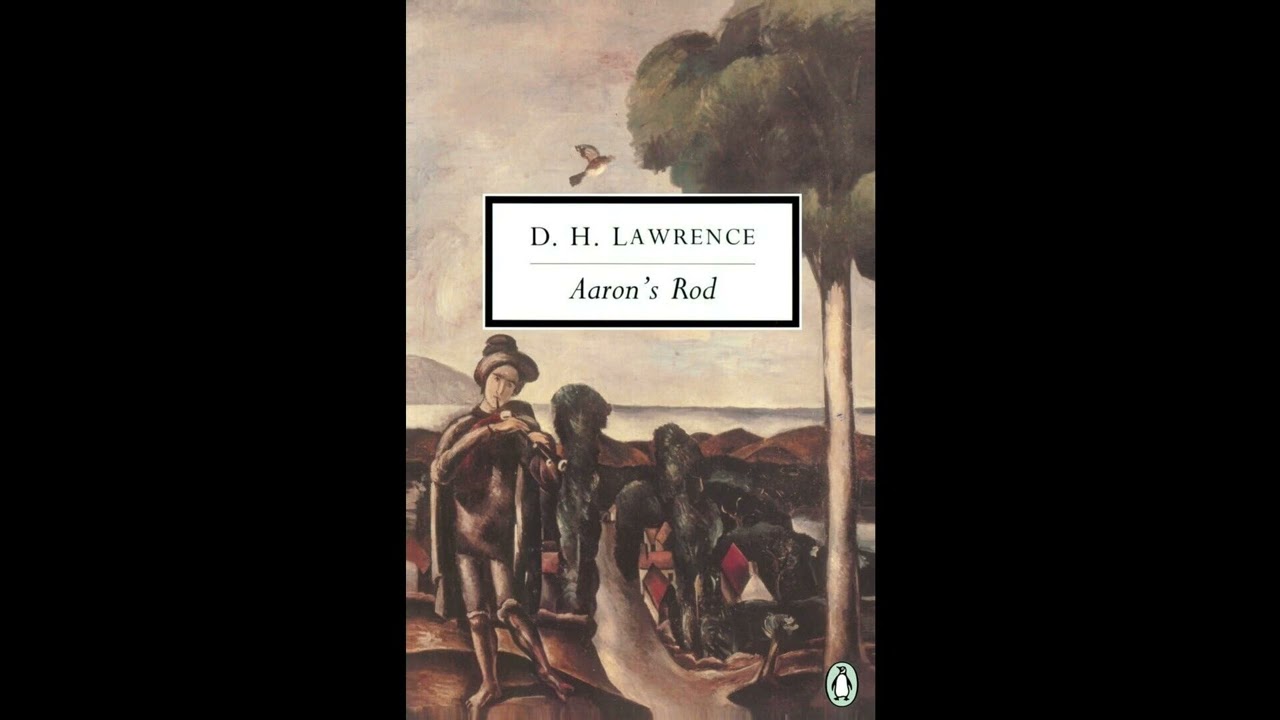
Aaron's Rod
Step into the unsettling, exhilarating world of D. H. Lawrence's Aaron's Rod, a novel that captures the profound disquiet and searching spirit of a generation emerging from the cataclysm of World War I. This compelling story introduces us to a man who, like many of his era, feels the ground shifting beneath his feet, prompting an urgent quest for personal liberation and a new definition of self. Far from a simple narrative, it's a deep dive into the human psyche, examining the delicate balance between individual desire and societal expectation, and asking what it truly means to be free when old certainties have crumbled. Listeners today will find its questions about autonomy, connection, and the very nature of human will as pertinent and provocative as they were a century ago. The story opens in the immediate aftermath of the Great War, in the bleak industrial landscape of a coal-mining town in England. We meet Aaron Sisson, a working-class flautist and a husband and father who suddenly finds himself stifled by the ordinary rhythms of his life. One fateful Christmas Eve, a domestic dispute becomes the catalyst for a radical decision: Aaron walks out on his wife and children, taking little more than his beloved flute, which he refers to as his "rod." This impulsive act of rebellion propels him first to London, where he tries to make a new start as an orchestral musician, then across the English Channel to Italy. As Aaron wanders through the sun-drenched, yet spiritually adrift, landscapes of Italy, he encounters a diverse cast of characters: bohemian artists, intellectuals, and women seeking their own forms of emancipation. These encounters challenge his preconceived notions about love, power, and the purpose of existence. He forms a complicated bond with Rawdon Lilly, a writer who becomes a sort of philosophical guide, advocating for a new order of human relationships based on an acknowledgment of inherent spiritual and physical hierarchy. Aaron's personal struggles reflect the wider societal upheaval, as he navigates a world struggling to find its footing, experimenting with various forms of intimacy and independence, always seeking a truth that remains just beyond his grasp. His journey is less about finding a definitive answer and more about the relentless, often painful, process of self-discovery and the rejection of conventional paths. The author, David Herbert Lawrence, was born in 1885 in Eastwood, Nottinghamshire, England, the son of a coal miner and a former schoolteacher. His early life was marked by intellectual curiosity, the grim realities of industrial England, and a deep, complex bond with his mother, whose death had a profound impact on him. Lawrence's fragile health, particularly tuberculosis, led him to seek warmer climates throughout his life, taking him to Italy, Australia, and New Mexico. This nomadic existence greatly influenced his writing, which often contrasted the vital energy of nature with the stultifying effects of modern industrial society. Lawrence's literary career was both brilliant and controversial. He emerged as a central figure of English modernism, though his unique focus on instinct, sexuality, and the unconscious mind set him apart from contemporaries like Virginia Woolf or James Joyce. His frank portrayal of human desire and the complexities of relationships often led to charges of obscenity and censorship, most famously with Lady Chatterley's Lover. Beyond Aaron's Rod, his other notable works include Sons and Lovers, a semi-autobiographical account of his youth, and the powerful, psychologically dense novels The Rainbow and Women in Love. Despite facing considerable public scrutiny and health struggles, Lawrence remained a prolific writer until his death in 1930, leaving behind a body of work that continues to provoke and inspire, securing his place as one of the twentieth century's most significant and enduring literary voices. Aaron's Rod grapples with several powerful themes that resonate deeply with the human condition. Central to the narrative is the tension between individualism and societal convention. Aaron's dramatic departure from his domestic life serves as a stark example of his rebellion against the suffocating expectations of marriage and stable employment. His subsequent aimless wanderings and refusal to commit fully to any single path illustrate a profound yearning for a self-defined existence, even if it means isolation. Another significant theme concerns the nature of power and leadership within human relationships. Through Aaron's evolving friendship with Lilly, the novel introduces the idea of an innate "male dominance" or leadership based on instinct and will, challenging traditional notions of equality. Their philosophical discussions, particularly about the necessity for one spirit to temporarily submit to another for a deeper, more authentic connection, are central to this complex idea. The novel also pulses with the currents of sexuality and desire, reflecting Lawrence's lifelong preoccupation with the instinctual life. While not as explicit as some of his later works, the narrative consistently foregrounds the underlying sexual tension in Aaron's various relationships and his internal struggles with intimacy and independence, suggesting that true liberation involves an authentic expression of one's deepest desires. Finally, the backdrop of post-war disillusionment and the widespread search for meaning provides a crucial context. The pervasive sense of lost values and the desperate quest for new spiritual or personal anchors are evident in the characters' philosophical debates and their often-unfulfilling personal relationships, mirroring a broader societal malaise that plagued Europe after the Great War. The period immediately following World War I, when Aaron's Rod was published in 1922, was a time of immense cultural and political upheaval across Europe. The sheer scale of death and destruction had shattered old certainties, leading to widespread disillusionment and a profound questioning of established hierarchies and values. Freud's theories of the unconscious mind were gaining traction, challenging conventional morality and leading to a greater openness in discussing human psychology and sexuality. Women's suffrage movements were gaining ground, irrevocably altering gender roles and social structures. It was a broken world searching for new paradigms, a sense captured by the emergence of the Jazz Age's frantic hedonism and modernism's fragmented artistic expressions. Lawrence's work, including Aaron's Rod, emerged directly from this crucible, reflecting the spiritual exhaustion and the urgent need to redefine human relationships and individual purpose in a world where old answers no longer held true. Listening to Aaron's Rod as an audiobook offers a uniquely immersive experience, allowing the listener to truly inhabit Aaron Sisson's protracted, restless quest for selfhood. Lawrence's prose, often characterized by its dense philosophical passages and lengthy dialogues, benefits immensely from a skilled narrator who can bring nuance to the internal monologues and emotional subtext. The spoken word can highlight the distinct voices of the various European characters, creating a vivid atmosphere of post-war uncertainty and the beauty of the Italian settings. Listen for the subtle shifts in Aaron's internal state as he grapples with profound questions of desire, power, and autonomy, and how the rhythm of Lawrence's declarative, sometimes incantatory, sentences guides the listener through this challenging yet deeply rewarding narrative. The several hours of listening time provide ample opportunity to sink into this complex world and ponder its enduring questions.
Enjoyed Aaron's Rod? A few ways to support us
Audible & Amazon links are affiliate; we may earn a small commission at no extra cost.
About this production
Human narration by a volunteer reader from LibriVox.org, the public-domain audiobook project. LibriVox volunteers record literary works whose copyright has expired in the United States, releasing the resulting recordings into the public domain.
Aaron's Rod by D. H. Lawrence. The underlying text is in the U.S. public domain. We do not republish any modern copyrighted edition, translation, or commentary.
The 4K cinematic visuals accompanying this audiobook are generated by an AI image model from prompts derived from the source text. No copyrighted photos, paintings, or stock footage are used. AI generation is disclosed on every video on our YouTube channel as required by YouTube's altered/synthetic content policy.
English subtitles are transcribed from the LibriVox recording with OpenAI Whisper. Translations into the 11 other supported languages are produced by Meta's NLLB-200 neural translation model. No human translator's copyrighted translation is used.
Questions about sourcing or rights? See our DMCA & Sourcing policy or contact us.
Enjoyed this audiobook?
If you'd like to own a copy of Aaron's Rod or hear a professionally produced edition, the links below help support free audiobook production at no extra cost to you.
As an Amazon Associate we earn from qualifying purchases. Audible / print links are affiliate.