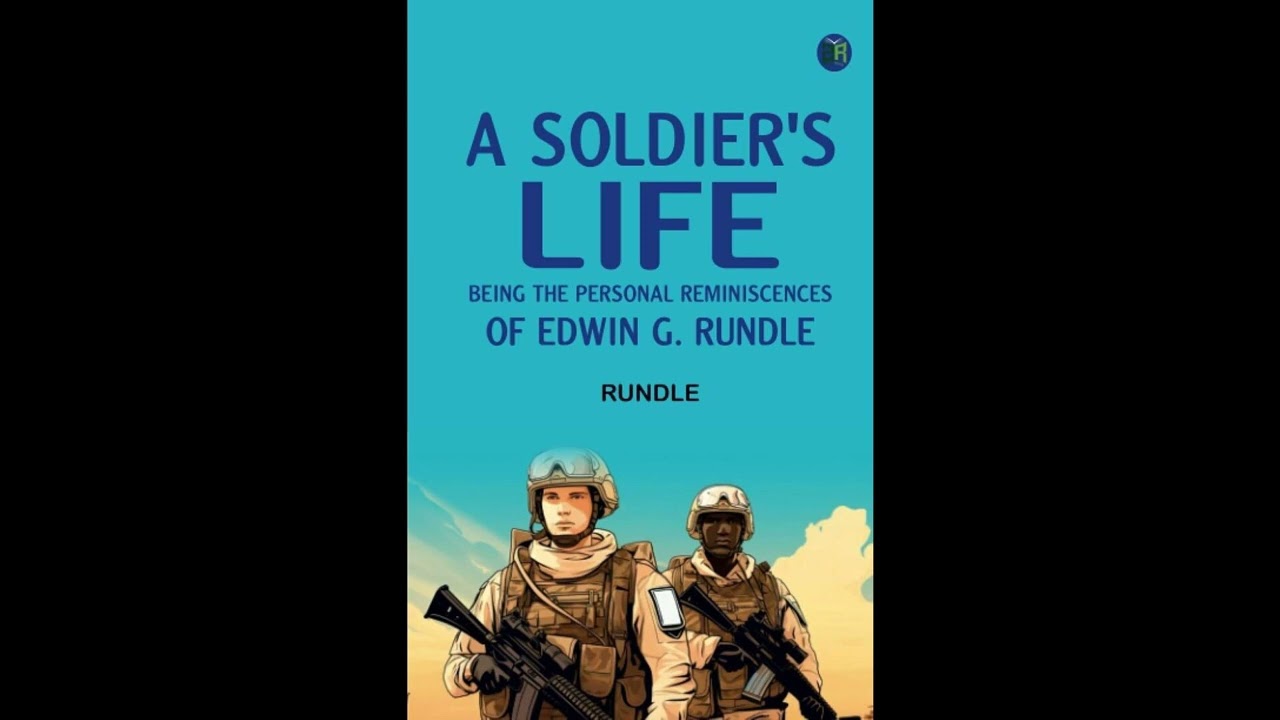
A Soldier's Life: Being the Personal Reminiscences of Edwin G. Rundle
Step into the raw, unvarnished world of a soldier’s mind with "A Soldier's Life: Being the Personal Reminiscences of Edwin G. Rundle," a compelling first-person account that tears back the veils of time and official history. This classic work offers a singular window into the crucible of conflict, seen not through the lens of generals and strategists, but through the eyes of a man who lived and bled on the battlefield. It is a testament to the enduring human spirit in the face of unimaginable hardship, a document that resonates with urgent relevance today, reminding us of the profound personal cost of war and the unwavering courage often found in ordinary men. Prepare to hear the echoes of cannon fire, the hushed conversations of comrades, and the profound silence that follows the storm, all from a voice that feels as immediate now as it did when these memories were first committed to paper. The narrative transports listeners to a period of intense national strife, a time when the fate of a people hung in the balance, decided not in legislative chambers, but in the muddy fields and forests of a nation at war. Edwin G. Rundle, a young man of ordinary background, answers the call to arms, leaving behind the familiar comforts of home for the grim realities of military service. His story unfolds as a poignant progression from naive recruit to seasoned veteran, chronicling his enlistment, the arduous training, and his first, terrifying taste of combat. We follow Rundle through forced marches, the monotonous routines of camp life, and the sudden, brutal shock of pitched battles, where the lines between life and death blur with each volley. He recounts the daily struggle for survival—scavenging for food, enduring harsh weather, battling sickness—alongside the omnipresent threat of the enemy. As the conflict intensifies, Rundle matures under fire, witnessing both profound acts of heroism and the depths of human cruelty. His account paints vivid pictures of the desperate engagements, the strategies that played out in blood and smoke, and the devastating aftermath that scarred both the land and its inhabitants. Throughout his reminiscences, Rundle grapples with the moral complexities of his duty, the loss of comrades, and the psychological toll of prolonged exposure to violence. His observations extend beyond the immediate fighting, offering glimpses into the lives of the diverse men he served alongside, their hopes, fears, and the deep bonds that formed in the shared crucible of war. Without revealing the precise events that conclude his service, Rundle’s story culminates in a powerful reflection on the lasting impact of his experiences, a personal reckoning with the meaning of sacrifice and survival. While the original author or compiler of these personal reminiscences remains cloaked in the mists of history, the significance of "A Soldier's Life" endures precisely because of its authenticity. This work belongs to a venerable tradition of personal military accounts, emerging often from the diaries, letters, and spoken narratives of those who directly experienced major conflicts. Such texts often surface decades after the events they describe, compiled either by the veterans themselves in their later years, or meticulously assembled by dedicated historians and family members from preserved primary sources. The anonymity of its precise literary creation lends it an almost folkloric quality, making Edwin G. Rundle's voice feel like a conduit for countless others who served, whose stories might otherwise have been lost to the official record. It stands as a vital counterpoint to grand historical narratives, privileging the ground-level perspective and the lived experience over the strategic overview. This kind of personal testimony holds a crucial place in literature and historical understanding. It is not merely a record of events, but a deeply human document that seeks to bridge the chasm between past and present, allowing future generations to connect with the visceral reality of historical struggle. "A Soldier's Life" embodies the power of individual memory to illuminate the collective experience, offering insights into the true character of war—its horrors, its moments of unexpected grace, and its indelible mark on the human psyche. The work functions as both a historical artifact and a piece of poignant literature, reminding us of the fundamental human responses to extraordinary circumstances. Several profound themes resonate throughout Rundle's account. One undeniable thread is the dehumanizing effect of war, vividly brought to life through Rundle’s observations. He describes how prolonged exposure to violence and suffering slowly erodes initial idealism, turning men into cogs in a larger, brutal machine. For instance, he recounts the desensitization that creeps in after seeing too many comrades fall, describing how a once-shocking sight becomes disturbingly commonplace, a chilling adaptation to the grotesque. Another central theme is the unbreakable bond of camaraderie, which forms between soldiers in the face of shared peril. Rundle frequently highlights moments of profound mutual support, such as when men share their meager rations in a freezing trench, or offer a word of comfort to a shell-shocked comrade, demonstrating how these relationships become a lifeline against despair. The narrative also powerfully illustrates the stark contrast between the illusion of glory and the harsh reality of combat. Rundle’s early recollections often include patriotic fervor and a youthful eagerness for adventure, which are gradually replaced by a grim determination and a weary understanding of the true nature of fighting. He contrasts the stirring speeches delivered far from the front with the silent, desperate courage displayed by men enduring unimaginable conditions, showing how personal bravery often arises not from a desire for accolades, but from the simple will to survive and protect one’s fellow soldiers. Finally, the act of Rundle’s remembering itself underscores the theme of memory and trauma, as he revisits events that clearly continue to haunt him. His occasional pauses in recounting a particularly difficult scene, or his admission of how certain smells or sounds still trigger vivid flashbacks, reveal the deep, enduring scars left by his wartime experiences. This work emerged during a cultural period that increasingly valued individual experience and sought a more authentic, less romanticized understanding of conflict. In the wake of major national conflicts, there was a societal need to process the vast human cost and to understand the events from the perspective of those who fought. This era saw a burgeoning interest in personal accounts, diaries, and memoirs, which offered a stark contrast to the often heroic or sanitized official histories. Literary trends of the time were also shifting towards realism, favoring an unvarnished portrayal of life, stripping away sentimentality to reveal the harsh truths of existence. "A Soldier's Life," regardless of its specific date of composition, fits squarely within this movement, serving as a powerful example of how individual testimony began to reshape public consciousness and contribute to a more nuanced, empathetic understanding of historical events and their profound human impact. It is a work born from a desire to bear witness, to ensure that the sacrifices and experiences of one generation would not be forgotten by the next. Listening to "A Soldier's Life" as an audiobook offers a particularly immersive and resonant experience. A skilled narrator breathes life into Edwin G. Rundle's observations, giving voice to his courage, his weariness, and his reflective wisdom. The several hours of listening time allow for deep engagement, whether consumed in focused sessions or absorbed gradually during daily activities. Pay attention to the subtle shifts in pacing—the measured, often somber tone of reminiscence punctuated by the sudden urgency of battle descriptions—which mirrors the ebb and flow of Rundle's memories. The careful vocalization of dialogue and the nuanced delivery of Rundle’s inner thoughts craft an atmosphere that transports the listener directly into the heart of his experience, allowing the raw emotion and stark realities of a soldier’s life to truly resonate. It is an opportunity to hear history not as a set of facts, but as a living, breathing story.
Enjoyed A Soldier's Life: Being the Personal Reminiscences of Edwin G. Rundle? A few ways to support us
Audible & Amazon links are affiliate; we may earn a small commission at no extra cost.
About this production
Human narration by a volunteer reader from LibriVox.org, the public-domain audiobook project. LibriVox volunteers record literary works whose copyright has expired in the United States, releasing the resulting recordings into the public domain.
A Soldier's Life: Being the Personal Reminiscences of Edwin G. Rundle by Edwin G. Rundle. The underlying text is in the U.S. public domain. We do not republish any modern copyrighted edition, translation, or commentary.
The 4K cinematic visuals accompanying this audiobook are generated by an AI image model from prompts derived from the source text. No copyrighted photos, paintings, or stock footage are used. AI generation is disclosed on every video on our YouTube channel as required by YouTube's altered/synthetic content policy.
English subtitles are transcribed from the LibriVox recording with OpenAI Whisper. Translations into the 11 other supported languages are produced by Meta's NLLB-200 neural translation model. No human translator's copyrighted translation is used.
Questions about sourcing or rights? See our DMCA & Sourcing policy or contact us.
Enjoyed this audiobook?
If you'd like to own a copy of A Soldier's Life: Being the Personal Reminiscences of Edwin G. Rundle or hear a professionally produced edition, the links below help support free audiobook production at no extra cost to you.
As an Amazon Associate we earn from qualifying purchases. Audible / print links are affiliate.