A Master of Mysteries
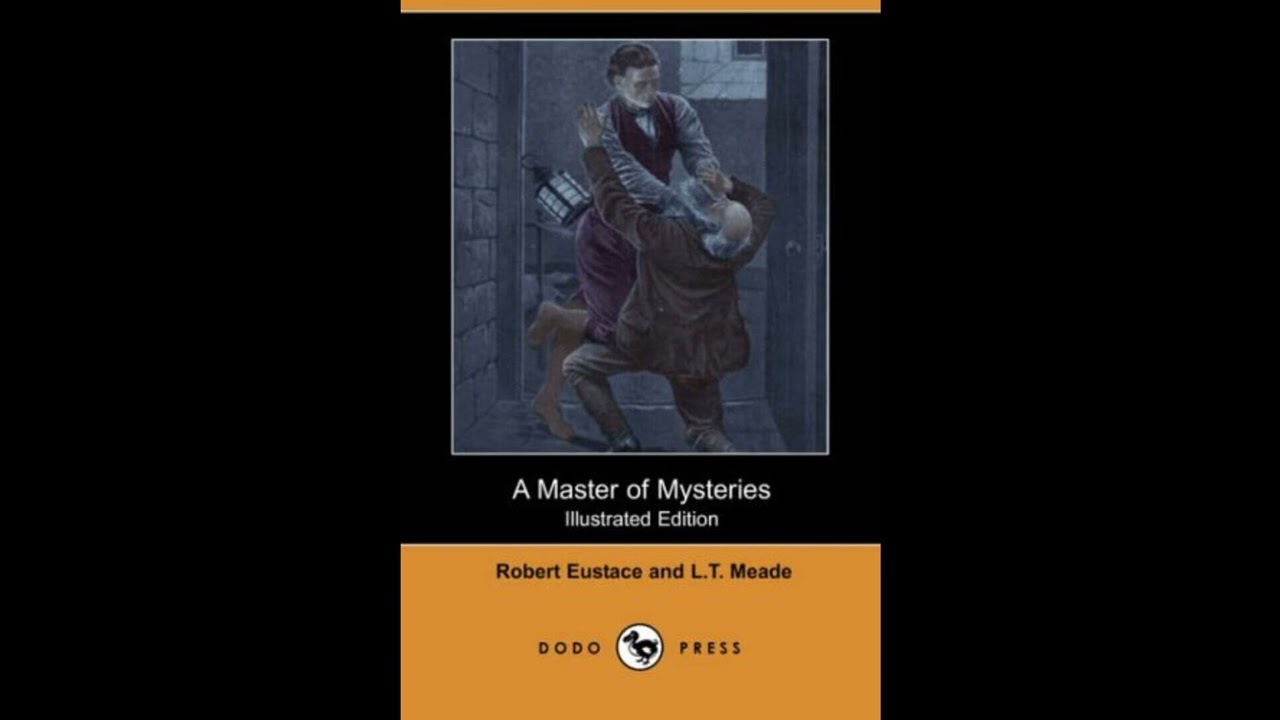
Step into a world where the gaslight flickers uncertainly against the shadows of human ingenuity and fear, where the emerging certainties of science clash with the persistent whispers of the supernatural. Robert Eustace’s A Master of Mysteries invites listeners to a series of chilling investigations, each a testament to the era’s fascination with the inexplicable, the psychological, and the scientific edges of crime. This collection of stories isn't merely a relic of a bygone age; it’s a foundational text for the genre, offering keen observations on human nature and the boundaries of belief that resonate powerfully today, especially for those who appreciate the genesis of the modern psychological thriller and the 'scientific detective' archetype. It’s a chance to hear the very pulses of a period wrestling with its own understanding of the world. The stories generally unfold in the late Victorian or early Edwardian period, a time of both rapid scientific advancement and a lingering, sometimes fervent, belief in the occult. Listeners are introduced to Dr. Xavier Chalke, a truly singular protagonist who defies easy categorization. He is, by profession, a medical man, grounded in the scientific method and meticulous observation. Yet, Chalke possesses an unusual sensitivity, an almost psychic intuition that allows him to perceive nuances and connections often missed by more conventional investigators. His practice takes him from the opulent drawing-rooms of the gentry to the dimly lit chambers of spiritualists, from hushed consultations in Harley Street to remote country houses shrouded in local legend. The central conflict in each narrative revolves around an inexplicable event—a sudden, seemingly unprovoked death, a bizarre haunting, a curse that appears to defy rational explanation, or a crime committed by means that seem utterly impossible. Chalke is often called upon when all other avenues have failed, when the police are baffled and the public whispers of ghosts or dark magic. The arc of each story sees Chalke painstakingly gather clues, applying his medical knowledge and his peculiar insight to peel back layers of deception, fear, and misdirection. He seeks to uncover the often startlingly human or scientific truth hidden beneath the veneer of the supernatural, demonstrating a sophisticated understanding of poisons, psychology, and trickery that makes his conclusions all the more startling. The beauty of these tales lies in their ability to maintain a potent sense of mystery and dread, even as they ultimately strive for a logical, albeit sometimes unsettling, explanation. The listener is pulled along, questioning every shadow, every strange sound, until Chalke reveals the hidden mechanism. Robert Eustace was the pen name of Eustace Robert Barton, a British physician born in 1854. His medical background fundamentally shaped his literary output, providing him with a unique expertise in poisons, physiology, and unusual diseases that became hallmarks of his often macabre and ingenious plots. While he wrote some solo works, Eustace is perhaps best known for his prolific collaborations with L.T. Meade, whose real name was Elizabeth Thomasina Meade Smith. Together, they produced a significant body of detective fiction, often featuring the female medical detective, Florence Cusack, or other scientifically minded protagonists. These collaborations established their reputation for crafting intricate puzzles that frequently incorporated scientific fact and medical pathology into their criminal schemes and solutions. Eustace’s solo efforts, including A Master of Mysteries, further cemented his place as an innovative voice at the turn of the twentieth century. He belonged to a burgeoning literary movement that sought to ground crime fiction in scientific realism, moving away from purely sensationalist tales towards narratives that emphasized forensic detail and the psychological underpinnings of crime. His work contributed significantly to the "scientific detective" subgenre, influencing later writers who would also blend medical or scientific expertise with the art of deduction. He died in 1932, leaving behind a legacy of pioneering detective and horror fiction that skillfully wove together the scientific and the uncanny. One of the most compelling themes threaded throughout A Master of Mysteries is the fascinating tension between science and superstition. In many stories, a seemingly supernatural event—a poltergeist manifesting in a country house, for example, or a death attributed to a malevolent spirit—is rigorously examined by Chalke, who uses his medical and scientific acumen to uncover a mundane, albeit often cleverly concealed, explanation. For instance, a persistent 'haunting' might be revealed as the result of a cleverly engineered draught, creating unsettling sounds, or a specific chemical agent causing hallucinations in susceptible individuals. This constant demystification offers a compelling dialogue between the anxieties of an age still grappling with the unknown and the burgeoning confidence of scientific inquiry. Another significant theme is deception and human ingenuity. Eustace delights in showcasing the extraordinary lengths to which people will go to mislead, to commit a crime, or to maintain a secret. The mysteries often pivot on elaborate hoaxes, masterful misdirection, or the cunning exploitation of human credulity. Chalke’s role is frequently that of an illusionist revealing another illusionist’s tricks, as when he uncovers how a supposed act of telekinesis was achieved through hidden wires or precise timing. This focus on the darker side of human cleverness highlights the eternal struggle between those who seek to manipulate and those who strive to uncover the truth, making each story a battle of wits. The stories also touch on human frailty and obsession, showing how greed, jealousy, or madness can drive individuals to extraordinary, often horrifying, acts. The cultural and literary landscape at the time Eustace was writing was one of profound change and often contradictory impulses. The late nineteenth and early twentieth centuries witnessed astonishing technological advancements—the advent of electricity, the telephone, new medical theories—which fostered a belief in human progress and the power of rationality. Simultaneously, there was a widespread fascination with spiritualism, séances, and the occult, fueled by figures like Sir Arthur Conan Doyle, who himself became a staunch advocate for spiritualism. This era, therefore, was a fertile ground for stories that pitted the cold logic of science against the eerie allure of the supernatural. Literarily, the foundations of modern detective fiction were being laid. Sherlock Holmes had already captured the public imagination, creating a massive appetite for intellectual puzzles and brilliant detectives. Eustace’s work emerged into this environment, offering a distinct flavor: a more medically informed, often grittier, and sometimes more horrifying approach to crime solving. His stories, blending elements of the Gothic, the scientific romance, and the nascent psychological thriller, spoke directly to an audience that was both intellectually curious and eager for tales of suspense that pushed the boundaries of the known world. A Master of Mysteries is a product of its time, capturing the anxieties and excitements of a society caught between the gas lamp and the electric light, between reason and revelation. Listening to A Master of Mysteries as an audiobook brings these historical and thematic layers to life in a way reading often cannot. The "several hours" run length is perfectly suited to the episodic nature of a short story collection, allowing for convenient listening during commutes, daily chores, or dedicated relaxation. A skilled narrator can amplify the atmosphere of each tale, from the unsettling calm before a revelation to the heightened tension of a confrontation. The specific voice chosen for Dr. Xavier Chalke—perhaps conveying his detached analytical mind balanced with his unusual sensitivity—can profoundly influence the listener’s connection to this unique protagonist. The careful pacing of dialogue, the nuances in tone that distinguish between a frightened witness, a cunning culprit, and Chalke’s methodical questioning, all contribute to a truly immersive experience, transporting listeners directly into the heart of these compelling, often unsettling, puzzles. It becomes an intimate performance, allowing the stories’ original power to resonate with renewed clarity.
Enjoyed A Master of Mysteries? A few ways to support us
Audible & Amazon links are affiliate; we may earn a small commission at no extra cost.
About this production
Human narration by a volunteer reader from LibriVox.org, the public-domain audiobook project. LibriVox volunteers record literary works whose copyright has expired in the United States, releasing the resulting recordings into the public domain.
A Master of Mysteries by Robert Eustace. The underlying text is in the U.S. public domain. We do not republish any modern copyrighted edition, translation, or commentary.
The 4K cinematic visuals accompanying this audiobook are generated by an AI image model from prompts derived from the source text. No copyrighted photos, paintings, or stock footage are used. AI generation is disclosed on every video on our YouTube channel as required by YouTube's altered/synthetic content policy.
English subtitles are transcribed from the LibriVox recording with OpenAI Whisper. Translations into the 11 other supported languages are produced by Meta's NLLB-200 neural translation model. No human translator's copyrighted translation is used.
Questions about sourcing or rights? See our DMCA & Sourcing policy or contact us.
Enjoyed this audiobook?
If you'd like to own a copy of A Master of Mysteries or hear a professionally produced edition, the links below help support free audiobook production at no extra cost to you.
As an Amazon Associate we earn from qualifying purchases. Audible / print links are affiliate.