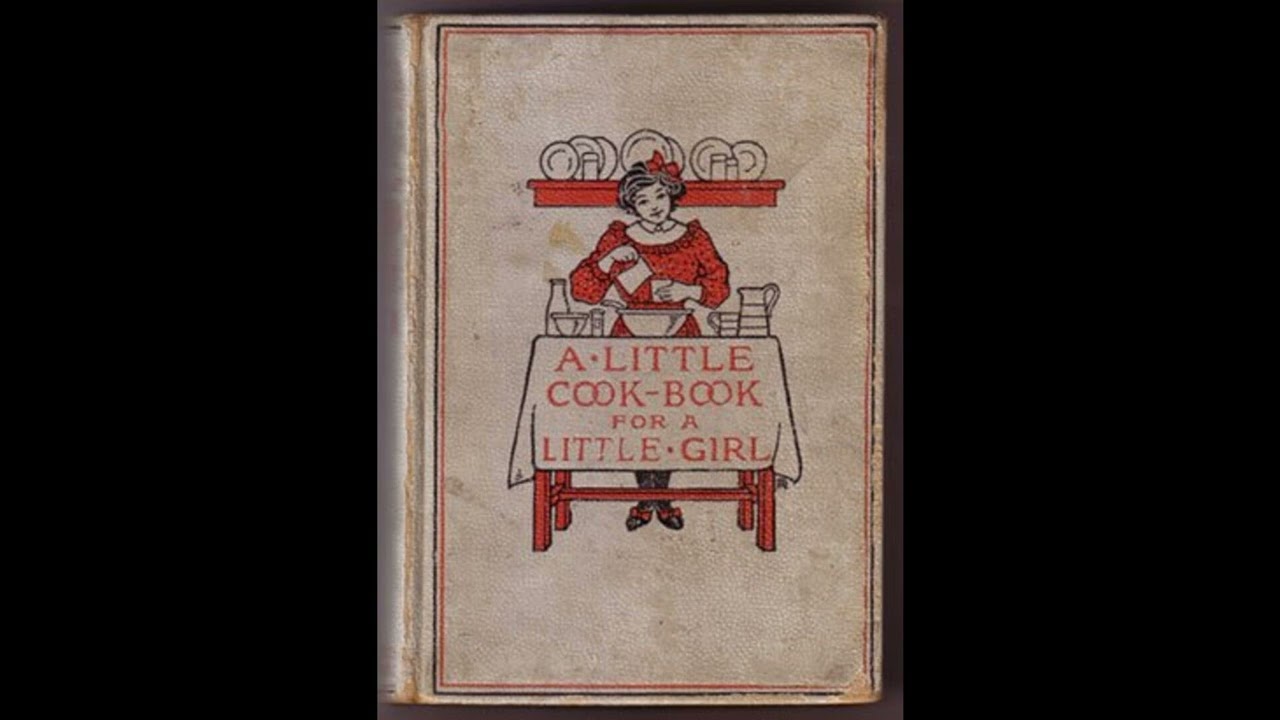
A Little Cook Book For A Little Girl
"A Little Cook Book For A Little Girl" is far more than its straightforward title suggests; it is an inviting portal into a simpler era, a gentle guide that transcends its original purpose as a children's recipe collection. First published in the early years of the twentieth century, this charming volume from Caroline French Benton offers modern listeners a unique blend of culinary instruction, historical insight, and heartwarming nostalgia. It isn't merely about mixing ingredients or following directions; it is about cultivating a sense of capability, nurturing a spirit of helpfulness, and understanding the rhythm of a home where food preparation was a central, grounding activity. For anyone seeking a soothing auditory experience, a connection to domestic traditions, or a sweet memory of childhood innocence, this audiobook presents a delightful escape, revealing how the foundational act of cooking can instill confidence and joy in even the smallest hands. The story, in the most delightful and unassuming sense, follows an unnamed "little girl"—a stand-in for any child eager to learn—as she takes her first steps in the kitchen. The setting is comfortably domestic, evoked by the clear, encouraging voice of the narrative, painting a picture of a sunlit kitchen, perhaps with flour dusting the countertop and the gentle clatter of bowls. The central "conflict" isn't one of grand drama, but rather the universal challenge of learning a new skill: the initial trepidation, the careful following of instructions, the thrill of a successful outcome, and the minor setbacks that are part of any educational process. This narrative arc begins with the simplest tasks, like making "One Egg Cake" or "Little White Cookies," designed to build confidence with minimal fuss and readily available ingredients. As the book progresses, the little girl’s skills are gradually developed, moving from basic baking to preparing more complex dishes like "Creamed Potatoes" or even a rudimentary "Luncheon." She is guided not by a specific character within the text, but by the author's kind and patient instruction, which acts as a gentle mentor. Each recipe serves as a new lesson, a small victory, contributing to a growing sense of accomplishment. The "story" here is less about a dramatic confrontation and more about the quiet triumph of mastery, the satisfaction derived from contributing to the household, and the burgeoning understanding of how food connects family and comfort. Listeners witness her metaphorical growth, not through explicit plot points, but through the cumulative effect of her culinary experiments, culminating in a repertoire of dishes that would make any young cook proud. Caroline French Benton, born Caroline French in 1863, emerged as a significant voice in American domestic literature during a period of considerable social and educational change. A prolific writer, she often published under her married name, Caroline French Benton, and dedicated much of her career to instructing women and children in the practical arts of home management and cooking. Her works provided practical advice and encouragement for managing a household efficiently, often with an eye toward health and economy. Her life spanned a transformative era, seeing the shift from predominantly agrarian societies to industrialization, which profoundly impacted domestic life and the roles of women. Benton authored numerous books across several decades, establishing her as a trusted authority on home economics. Beyond "A Little Cook Book For A Little Girl," her bibliography includes popular titles such as "Living on a Little" (1908), which offered strategies for economical living, and "Saturday Mornings" (1906), a collection of stories and activities for children. Her approach was consistently practical and empowering, making domestic skills accessible and appealing. She stood among a cohort of writers and educators who championed home economics as a vital field of study, ensuring that the next generation, especially girls, would be well-equipped to manage their own homes with competence and confidence. Benton passed away in 1935, leaving behind a legacy of foundational texts that continue to offer insights into the domestic ideals and instructional methods of her time. One of the core themes running through "A Little Cook Book For A Little Girl" is the empowerment of children through practical skill acquisition. The book doesn't merely list recipes; it frames the act of cooking as an accessible, achievable endeavor for young learners. For example, the recipe for "Toasted Muffins" is broken down into incredibly simple steps—"cut them in halves," "toast them quickly," "put butter on them"—instilling a sense that even complex-seeming tasks can be managed. This gentle guidance helps foster independence and a belief in one's own capabilities, teaching children that they can contribute meaningfully to the household. Another significant theme is domesticity and the value of home economics. Published at a time when home economics was solidifying as a field of study, the book champions the creation of a comfortable and well-run home. It subtly promotes the idea that preparing food is not just a chore, but an act of care and an essential part of family life. Consider the instructions for making "Lemonade," which go beyond just combining ingredients to suggest the pleasure of preparing a refreshing drink for others. This highlights the social aspect of food and the satisfaction of providing for one's family and guests. The book also quietly instills principles of efficiency and resourcefulness, such as using ingredients wisely and minimizing waste, which were central to the home economics movement. Caroline French Benton's "A Little Cook Book For A Little Girl" emerged from the heart of America's Progressive Era, a period roughly from the 1890s to the 1920s, marked by widespread social activism and political reform. This era saw a concerted effort to improve society through education, scientific methods, and a focus on efficiency, all of which extended into the domestic sphere. The growing field of Home Economics, spearheaded by figures like Ellen Swallow Richards and Martha Van Rensselaer, sought to apply scientific principles to household management, making homes more efficient, healthful, and orderly. Benton's book, published in 1905, perfectly aligns with this movement, presenting cooking not as an arcane art but as a systematic skill that could be taught and mastered. At this time, American society was undergoing rapid industrialization and urbanization. While women's roles were slowly expanding outside the home, the ideal of the competent, organized homemaker remained powerful. Books like Benton's served a dual purpose: they educated children in practical skills, preparing girls for their anticipated domestic responsibilities, while also subtly reinforcing societal expectations. It also reflects a shift from purely oral traditions of recipe sharing to more formalized, published instructions, and the nascent rise of a consumer culture, though the recipes themselves often emphasize basic, scratch ingredients rather than convenience foods, which were still relatively uncommon. The book thus stands as a cultural artifact, illustrating the values placed on domestic education and the cultivation of self-sufficiency in the early twentieth century. Listening to "A Little Cook Book For A Little Girl" as an audiobook transforms a printed historical document into a living, breathing experience. The narration breathes warmth and gentle encouragement into what might otherwise be perceived as a simple list of instructions. A skilled voice actor can convey the author's patient, nurturing tone, making the listener feel as if they are receiving personal guidance, much like the "little girl" persona in the book. The several hours of run length make this an ideal companion for quiet afternoons, long drives, or while engaged in your own domestic tasks, offering a soothing presence without demanding intense concentration. As you listen, pay attention to the careful pacing of the instructions, designed to be clear and easy to follow even for a child. The voice brings out the subtle humor and the sincere desire to empower young cooks, creating an atmosphere that is both educational and deeply comforting. Without visual distractions, the auditory experience allows the imagination to conjure images of those early twentieth-century kitchens, the simple ingredients, and the satisfaction of a perfectly baked cookie. It's an opportunity to immerse oneself in a bygone era, to appreciate the simple wisdom of its domestic teachings, and to perhaps even be inspired to try a few of these classic recipes oneself, guided by the inviting sound of a friendly voice.
Enjoyed A Little Cook Book For A Little Girl? A few ways to support us
Audible & Amazon links are affiliate; we may earn a small commission at no extra cost.
About this production
Human narration by a volunteer reader from LibriVox.org, the public-domain audiobook project. LibriVox volunteers record literary works whose copyright has expired in the United States, releasing the resulting recordings into the public domain.
A Little Cook Book For A Little Girl by Caroline French Benton. The underlying text is in the U.S. public domain. We do not republish any modern copyrighted edition, translation, or commentary.
The 4K cinematic visuals accompanying this audiobook are generated by an AI image model from prompts derived from the source text. No copyrighted photos, paintings, or stock footage are used. AI generation is disclosed on every video on our YouTube channel as required by YouTube's altered/synthetic content policy.
English subtitles are transcribed from the LibriVox recording with OpenAI Whisper. Translations into the 11 other supported languages are produced by Meta's NLLB-200 neural translation model. No human translator's copyrighted translation is used.
Questions about sourcing or rights? See our DMCA & Sourcing policy or contact us.
Enjoyed this audiobook?
If you'd like to own a copy of A Little Cook Book For A Little Girl or hear a professionally produced edition, the links below help support free audiobook production at no extra cost to you.
As an Amazon Associate we earn from qualifying purchases. Audible / print links are affiliate.