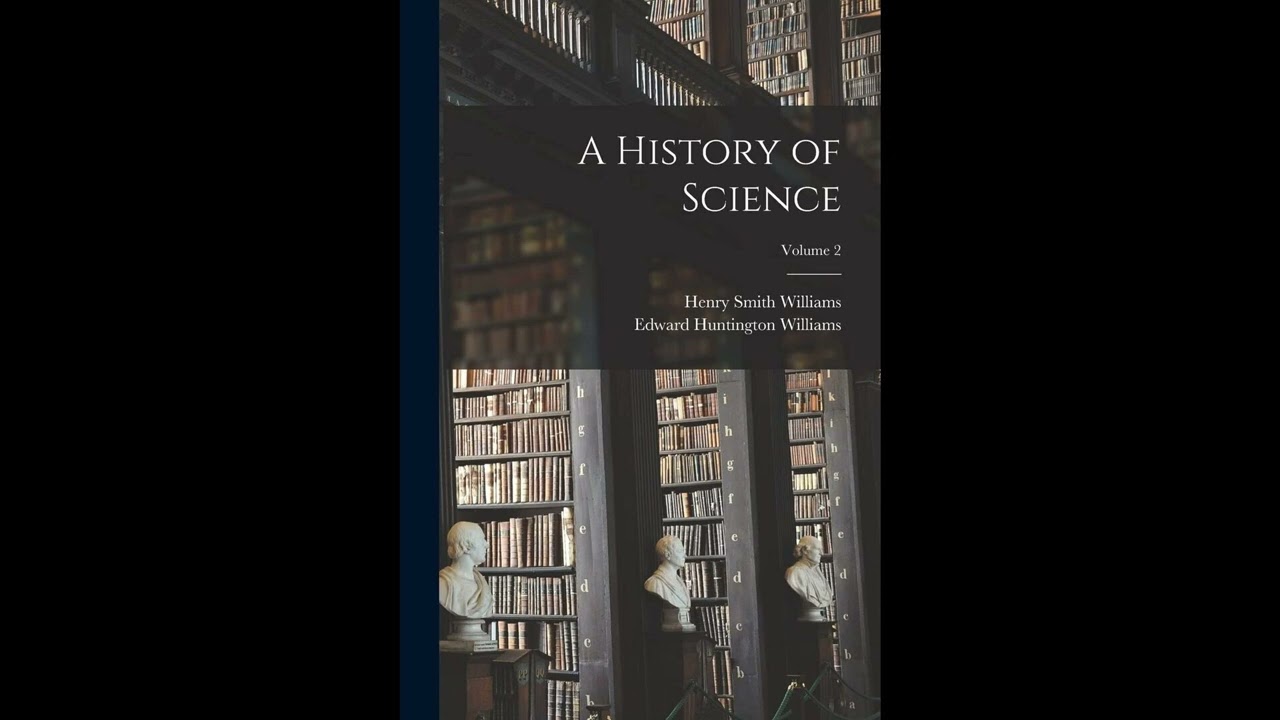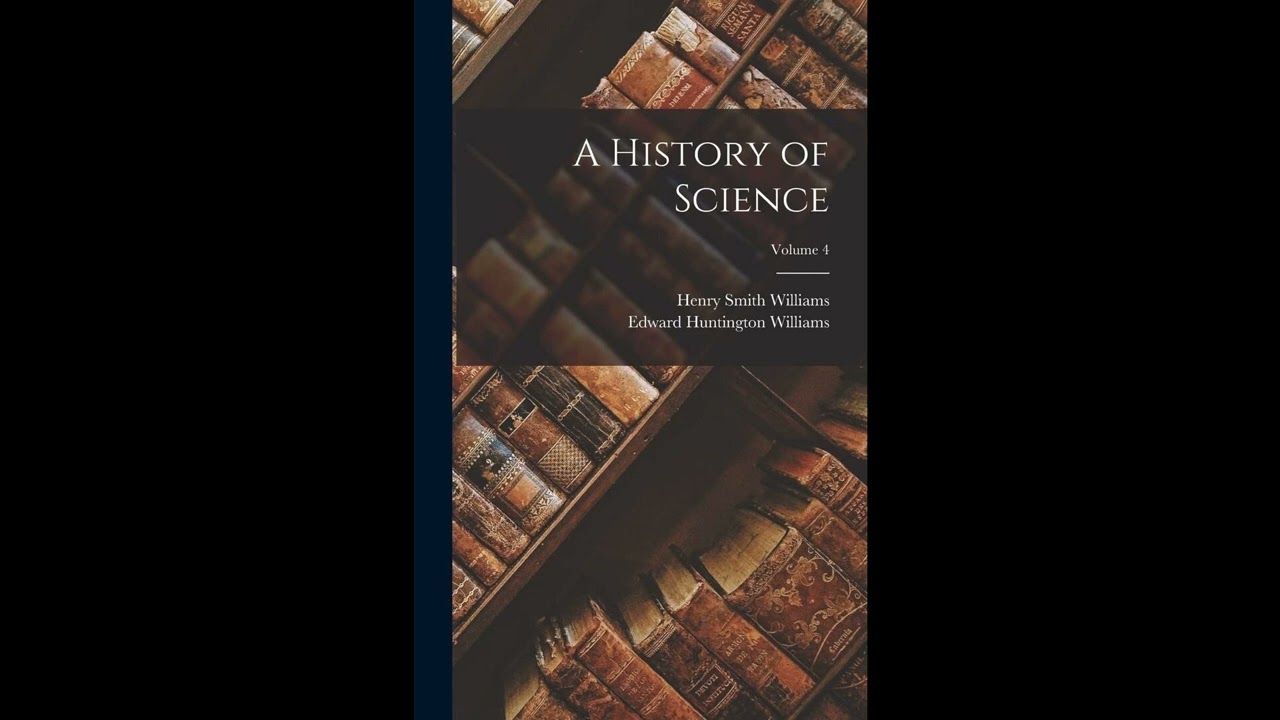
A History of Science; Volume 4
Open the pages, or rather, the sonic gateway, to a foundational understanding of human intellectual striving with Henry Smith Williams’s A History of Science; Volume 4. This is more than just a chronological recounting of facts; it’s an invitation to witness the relentless march of discovery, the towering achievements of intellect, and the very human drama behind the ideas that shaped our world. In an age where scientific advancement feels instantaneous and overwhelming, stepping back to see the intricate, often painstaking, processes by which our current knowledge base was constructed offers perspective, humility, and profound inspiration. It reveals science not as a static body of truths, but as a dynamic, evolving conversation spanning centuries, a testament to humanity’s enduring curiosity. This particular volume lifts the curtain on a crucial era in scientific thought, detailing the breakthroughs and paradigm shifts that redefined our understanding of the cosmos and the natural world. From the quiet studies of isolated thinkers to the burgeoning laboratories of institutions, Williams paints a picture of a world slowly, yet inexorably, yielding its secrets to rigorous inquiry. The narrative unfolds like an intricate intellectual puzzle, with each chapter bringing forth a new piece of the grand design. We encounter the foundational observations, the audacious hypotheses, and the meticulous experiments that, often against prevailing dogma, forged new pathways of thought. The story isn't one of inevitable progress, but of intense debate, trial and error, and the occasional stroke of genius that propels an entire field forward. While not a novel in the traditional sense, the "characters" who populate these pages are some of history’s most brilliant minds – individuals whose names echo through the annals of physics, chemistry, biology, and medicine. We meet them not just as abstract intellects, but as figures wrestling with the limitations of their instruments, the resistance of established beliefs, and the sheer complexity of the universe they sought to comprehend. The central conflict that drives this narrative is humanity's eternal struggle against ignorance, the slow, arduous process of replacing conjecture with evidence, and superstition with rational understanding. It is the story of how our species learned to ask better questions and to devise ingenious methods for finding answers. The arc of this volume follows the intellectual currents of its period, showcasing how different fields of knowledge began to intersect and inform one another, building a more coherent and comprehensive picture of existence. It illuminates the intellectual lineage that connects past discoveries to present-day marvels, leaving the listener with a deep appreciation for the groundwork laid by generations of dedicated minds. Henry Smith Williams, born in 1863, was an American physician, editor, and prolific author whose professional life was dedicated to making complex scientific and historical subjects accessible to the general public. He studied medicine, earning his degree from Yale University in 1887, an education that provided him with a profound understanding of the scientific method and a broad appreciation for various disciplines. Williams practiced medicine for a period before transitioning primarily to writing and editing, driven by a desire to communicate the wonders of scientific progress to a wider audience. He understood that the accelerating pace of discovery in the late nineteenth and early twentieth centuries necessitated a bridge between specialized knowledge and public understanding. Throughout his career, Williams authored or co-authored numerous works that often spanned multiple volumes, demonstrating his commitment to comprehensive historical narratives. Alongside his brother, Edward Huntington Williams, he contributed significantly to the popularization of science. His writing was distinguished by its clarity, its engaging narrative style, and its ability to synthesize vast amounts of information into coherent and compelling accounts. His influential contributions placed him among a cohort of authors who helped shape public discourse around science during a transformative period, cementing his reputation as a significant interpreter of scientific history. He continued his work until his death in 1943. At its core, A History of Science; Volume 4 enacts several profound themes. One prominent theme is the spirit of inquiry itself – the innate human drive to question, observe, and rationalize the phenomena of the world. For instance, the text details the painstaking efforts of early astronomers, meticulously cataloging celestial movements, long before the theoretical frameworks existed to fully explain them. Their persistent observation, driven by pure curiosity, laid the groundwork for future revolutions in astrophysics. Another significant theme is the interconnectedness of knowledge. Williams often demonstrates how advancements in one field – perhaps improvements in optics or metallurgy – directly facilitate breakthroughs in seemingly unrelated areas, such as biology or chemistry. A scene describing how new microscopic techniques revolutionized the study of cellular structures beautifully illustrates this symbiotic relationship between different scientific domains. The text also powerfully conveys the theme of paradigm shift – the often-painful process by which established ideas are challenged and eventually superseded by new, more robust theories. The initial resistance to ideas that contradicted long-held beliefs, and the eventual triumph of evidence-based reasoning, serve as a recurring motif. We see how scientists, armed with novel data, slowly chipped away at conventional wisdom, leading to fundamental reorientations of thought. Furthermore, the book underscores the human element of discovery, showing that science is not a cold, impersonal pursuit. It is filled with human ambition, collaboration, rivalries, and moments of profound personal insight, as when a lone experiment yields an unexpected, world-altering result. Written during a time of immense scientific and technological transformation – the late nineteenth and early twentieth centuries – Williams’s work emerged into a world eager to comprehend its own rapid evolution. The period saw the rise of industrialization, the spread of global communication, and a general cultural belief in progress, fueled largely by scientific and technological advancements. There was a widespread public appetite for explanations of new phenomena, from electricity and radio to new medical treatments. This work was born from a cultural moment where science was increasingly seen not just as an academic pursuit, but as a driving force shaping modern society and improving everyday life. Williams’s ability to articulate these complex changes in an accessible manner made his history a vital intellectual resource for his contemporaries. Listening to A History of Science; Volume 4 as an audiobook transforms the experience of learning history into an immersive narrative. The several hours of listening time allow for a sustained engagement with the material, ideal for commuting, daily tasks, or simply relaxing into a rich intellectual experience. A skilled narrator brings clarity and nuance to Williams’s prose, guiding listeners through intricate scientific explanations with a steady, articulate voice. The pacing allows for absorption of complex ideas, never rushing past pivotal moments of discovery, but instead offering listeners the space to truly grasp the significance of each advancement. While not a work of fiction, the narrator’s delivery can bring a sense of dramatic weight to the intellectual struggles and triumphs described, making the historical figures feel more immediate and their monumental achievements even more inspiring. The carefully modulated voice ensures that the atmosphere is one of thoughtful exploration and enduring wonder.
Enjoyed A History of Science; Volume 4? A few ways to support us
Audible & Amazon links are affiliate; we may earn a small commission at no extra cost.
About this production
Human narration by a volunteer reader from LibriVox.org, the public-domain audiobook project. LibriVox volunteers record literary works whose copyright has expired in the United States, releasing the resulting recordings into the public domain.
A History of Science; Volume 4 by Henry Smith Williams. The underlying text is in the U.S. public domain. We do not republish any modern copyrighted edition, translation, or commentary.
The 4K cinematic visuals accompanying this audiobook are generated by an AI image model from prompts derived from the source text. No copyrighted photos, paintings, or stock footage are used. AI generation is disclosed on every video on our YouTube channel as required by YouTube's altered/synthetic content policy.
English subtitles are transcribed from the LibriVox recording with OpenAI Whisper. Translations into the 11 other supported languages are produced by Meta's NLLB-200 neural translation model. No human translator's copyrighted translation is used.
Questions about sourcing or rights? See our DMCA & Sourcing policy or contact us.
Enjoyed this audiobook?
If you'd like to own a copy of A History of Science; Volume 4 or hear a professionally produced edition, the links below help support free audiobook production at no extra cost to you.
As an Amazon Associate we earn from qualifying purchases. Audible / print links are affiliate.