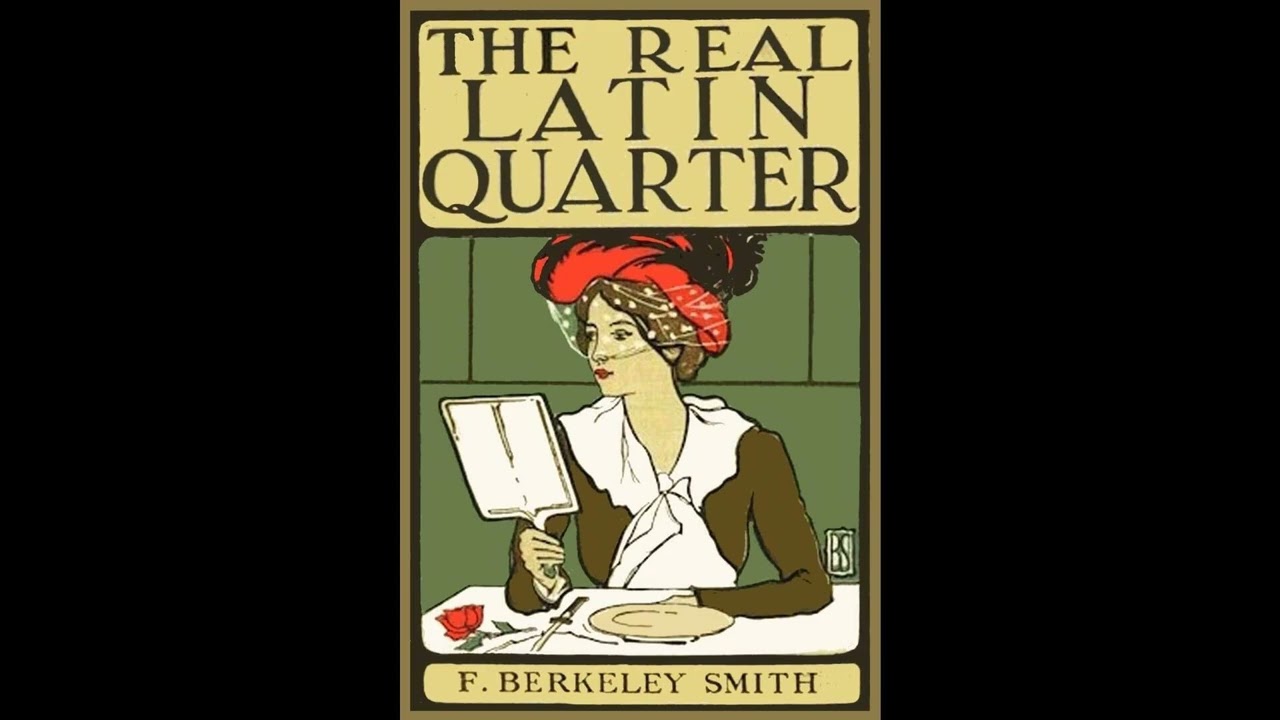
The Real Latin Quarter
Frank Berkeley Smith’s The Real Latin Quarter is more than a simple travelogue; it is a profound literary portrait that peels back the romanticized veneer of one of the world’s most fabled districts, revealing the vibrant, often stark, realities beneath. First published at a time when Paris still held an almost mythical allure for artists and intellectuals alike, this compelling narrative invites listeners to consider the enduring tension between idealism and reality, a struggle as relevant to today’s dream-chasers as it was to the aspiring bohemians of a bygone era. It challenges us to look beyond the picture postcard and confront the authentic heart of a place and the people who inhabit it, asking what sacrifices and truths are discovered when one truly lives in the thick of a dream. The story unfolds through the eyes of Julian Thorne, a young, idealistic American writer who arrives in Paris with little more than a trunk full of ambition and a head full of literary aspirations. He gravitates naturally to the Latin Quarter, drawn by its reputation as a haven for thinkers, poets, and painters—a place where genius was said to ripen under the shadow of the Pantheon. Julian quickly finds lodging in a cramped garret room overlooking a cobbled street, and his initial days are a whirlwind of café encounters, spirited debates, and the intoxicating scent of possibility. He befriends a diverse cast of characters: the cynical painter Etienne, whose work struggles to find an audience; the spirited but financially strapped student Camille, balancing her studies with the need to earn a living; and Madame Dubois, the formidable landlady whose brusque exterior hides a surprising depth of understanding for her eccentric tenants. As Julian settles into the rhythms of Parisian life, the romantic glow he first perceived slowly begins to give way to a more nuanced understanding. He witnesses the grinding poverty that underlies much of the artistic struggle, the fleeting nature of inspiration, and the quiet despair that can shadow even the most brilliant minds. His own writing—at first a torrent of enthusiastic, if unpolished, prose—becomes a battle against self-doubt and the overwhelming weight of the city’s past masters. He experiences both the camaraderie and the betrayals inherent in a community built on shared dreams and fierce competition. The novel meticulously documents his transformation from a starry-eyed newcomer to someone who has truly grappled with the soul of the Latin Quarter—its beauty, its cruelty, its undeniable spirit—all without ever revealing the specific path his personal or artistic future ultimately takes. Frank Berkeley Smith himself was a figure of quiet observation, reportedly born in the waning years of the nineteenth century in the American Midwest, though he spent much of his productive adult life abroad, particularly in European capitals. While specific dates surrounding his birth and death are not widely recorded, his emergence as a writer coincides with a period of intense cultural exchange between America and Europe. Smith was known for his keen eye for social detail and his subtle psychological portraits, distinguishing him from the more overtly experimental modernists of his day. His literary output, though not extensive, includes several other works that similarly interrogate the lives of expatriates and the complexities of belonging, such as Echoes on the Rhine and A Bridge to Nowhere, often dealing with individuals caught between two worlds or seeking a definitive sense of place. He can be considered a transitional figure, bridging the realism of the late nineteenth century with a more introspective, psychologically charged narrative style that would influence later generations of writers exploring themes of alienation and identity. At its heart, The Real Latin Quarter grapples with the enduring themes of idealism versus realism, the artistic struggle, and the search for authentic selfhood. Julian's initial belief in a bohemian paradise, for instance, is steadily eroded by the harsh realities of artistic rejection and the constant financial strain faced by his friends, such as Etienne, whose canvases gather dust while bills pile up—a clear demonstration of the gap between romantic aspiration and the prosaic demands of survival. The novel also powerfully foregrounds the theme of community and isolation, illustrating how even amidst a bustling quarter filled with fellow dreamers, individuals can feel profoundly alone in their struggles, or conversely, find unexpected solace in shared hardship, as Julian does in his quiet, late-night conversations with Madame Dubois, revealing a hidden human connection beneath her gruff exterior. The work emerged from a specific cultural moment, following the seismic shifts of the Great War, when many intellectuals and artists sought escape or reinvention in the relatively untouched cultural hubs of Europe. Paris, in particular, became a magnet for an international set, often disillusioned with the perceived moral and artistic conservatism of their homelands. Smith’s writing stands in subtle counterpoint to some of the more overtly glamorous portrayals of this "lost generation," offering a more grounded, less romanticized view of their daily lives and challenges. It reflects a growing literary interest in depicting the internal lives of characters with psychological depth, moving beyond mere surface-level descriptions to truly dissect the motivations and anxieties of people navigating a world irrevocably altered by conflict and rapidly changing social norms. Listening to The Real Latin Quarter as an audiobook offers a unique opportunity to immerse oneself in the sonic landscape of turn-of-the-century Paris. The narration's pacing carefully builds the atmosphere, allowing listeners to visualize the narrow streets, smell the coffee from the bustling cafés, and hear the distant murmur of conversation and debate. Pay close attention to the distinct voices given to each character—Julian's initial youthful optimism, Etienne's weary cynicism, Camille's bright determination, and Madame Dubois's formidable yet caring tones. The subtle shifts in vocal inflection and rhythm during moments of deep reflection or lively dialogue truly bring the Latin Quarter to life, transforming the written word into a visceral experience that resonates long after the final chapter concludes.
Enjoyed The Real Latin Quarter? A few ways to support us
Audible & Amazon links are affiliate; we may earn a small commission at no extra cost.
About this production
Human narration by a volunteer reader from LibriVox.org, the public-domain audiobook project. LibriVox volunteers record literary works whose copyright has expired in the United States, releasing the resulting recordings into the public domain.
The Real Latin Quarter by Frank Berkeley Smith. The underlying text is in the U.S. public domain. We do not republish any modern copyrighted edition, translation, or commentary.
The 4K cinematic visuals accompanying this audiobook are generated by an AI image model from prompts derived from the source text. No copyrighted photos, paintings, or stock footage are used. AI generation is disclosed on every video on our YouTube channel as required by YouTube's altered/synthetic content policy.
English subtitles are transcribed from the LibriVox recording with OpenAI Whisper. Translations into the 11 other supported languages are produced by Meta's NLLB-200 neural translation model. No human translator's copyrighted translation is used.
Questions about sourcing or rights? See our DMCA & Sourcing policy or contact us.
Enjoyed this audiobook?
If you'd like to own a copy of The Real Latin Quarter or hear a professionally produced edition, the links below help support free audiobook production at no extra cost to you.
As an Amazon Associate we earn from qualifying purchases. Audible / print links are affiliate.