Sounding the Ocean of Air
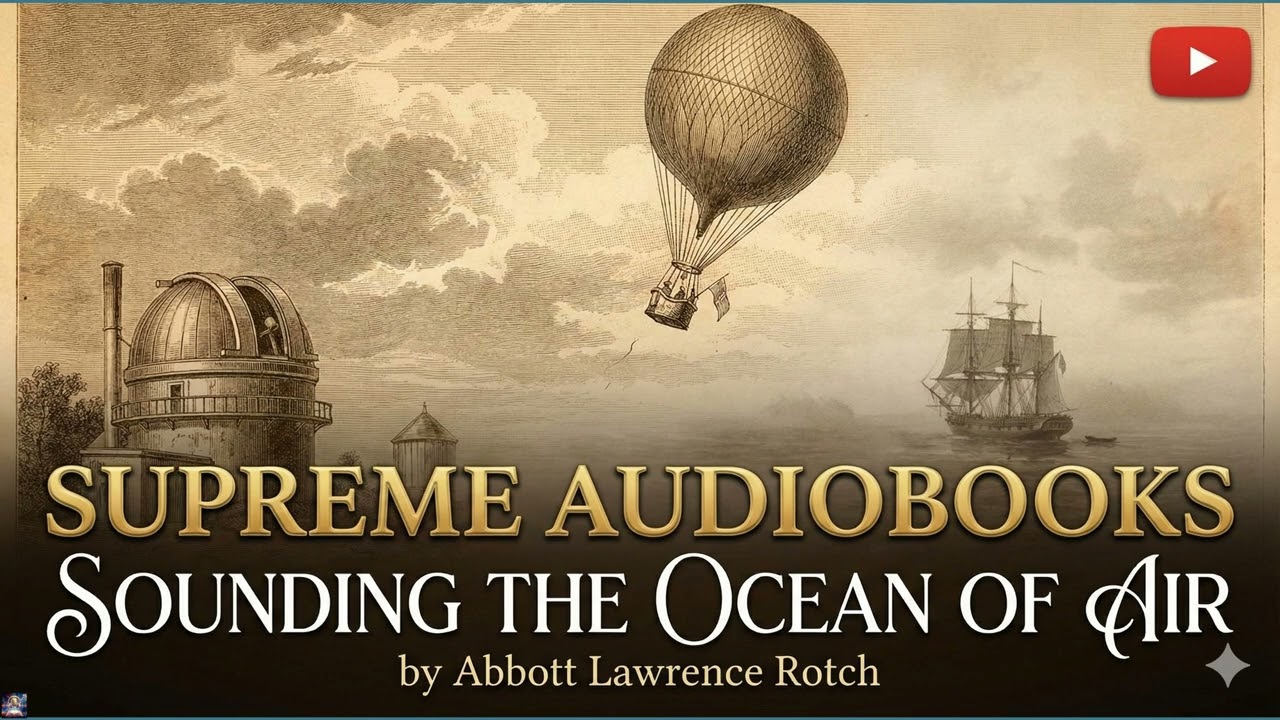
Within the pages of Sounding the Ocean of Air, Abbott Lawrence Rotch presents a monumental undertaking: nothing less than a foundational attempt to map, measure, and comprehend the invisible realm that envelops our world. This work stands as a testament to human curiosity and scientific rigor, a classic not in the realm of fiction, but as a pivotal document charting the birth of modern atmospheric science. For contemporary listeners, it offers an extraordinary window into the origins of our understanding of weather and climate, revealing the spirit of discovery that powered a nascent field. It reminds us how profoundly our lives are shaped by the "ocean of air" above us, and how painstakingly early pioneers worked to make its currents and depths legible. The book commences by establishing its grand theatre: the Earth's atmosphere itself, a dynamic, often inscrutable medium. Rotch introduces his primary "characters" not as individuals, but as the elemental forces and phenomena he seeks to define: the prevailing winds, the formations of clouds, the shifting barometric pressures, and the dramatic interplay of temperature and humidity. The setting is less a geographical location and more a methodology—the meticulous, ground-level observation points of early meteorology, contrasted with the vast, unmeasured expanses of the upper atmosphere. The central intellectual tension of the narrative arises from humanity's profound ignorance of this critical environment; Rotch frames the "ocean of air" as a frontier, demanding penetration and precise measurement. He details the early, often crude, attempts to gather data, from ground-based readings to the adventurous deployment of kites and balloons carrying delicate instruments high above the land. As the text progresses, the narrative arc follows a process of scientific illumination. Rotch systematically moves from describing the tools of his era—barometers, thermometers, anemometers—to explaining the fundamental principles these tools helped reveal. He articulates the nascent understanding of atmospheric layers, the mechanisms driving weather systems, and the ambitious vision of predicting phenomena that once seemed utterly arbitrary. The book chronicles the slow, incremental victories in this scientific quest: the first reliable measurements of upper-air temperatures, the mapping of prevailing air currents, and the earliest attempts to synthesize disparate observations into a coherent, global picture. It’s an unfolding drama of intellect against the immense complexity of nature, where each observation, each carefully recorded datum, contributes to a larger, emerging truth about our planet’s aerial envelope. The author guides the reader through the challenge of piecing together this immense puzzle, showcasing the ingenuity required to collect data from a realm largely inaccessible just a few decades prior. Abbott Lawrence Rotch, born in New England in the late nineteenth century, was a visionary figure whose contributions fundamentally shaped the field of meteorology. Educated at Harvard, Rotch displayed an early passion for understanding the Earth’s atmosphere. His most notable achievement, and indeed his life's defining endeavor, was the founding of the Blue Hill Meteorological Observatory in Milton, Massachusetts, in 1884. This institution quickly became a world-renowned center for pioneering research in atmospheric science. Rotch was not just an administrator; he was an active researcher, deeply involved in developing new instruments and methodologies for atmospheric sounding. He was among the first to systematically use kites and balloons to carry meteorological instruments to unprecedented heights, thereby collecting invaluable data from the upper atmosphere, a region previously only conjectured about. Rotch’s significance within the scientific canon is immense. He represented a generation of scientists who transformed meteorology from a collection of folklore and local observations into a rigorous, empirical science. His efforts at Blue Hill, meticulously detailed and widely published, laid much of the groundwork for modern weather forecasting and climatology. While he might not be traditionally classified within a "literary movement," his writing itself possessed a clarity and directness that made complex scientific concepts accessible. His prose, even when discussing technical measurements, conveys a profound respect for the natural world and a contagious enthusiasm for scientific discovery. Beyond Sounding the Ocean of Air, his prolific output included numerous scientific papers and reports detailing the innovative research conducted at Blue Hill, cementing his legacy as a foundational figure in the global network of meteorological observation. The overarching themes that resonate through Sounding the Ocean of Air are several. First is human ingenuity and the relentless pursuit of knowledge. Rotch consistently showcases the inventive spirit required to overcome the physical limitations of his era, vividly describing the creation of instruments capable of measuring invisible phenomena at great heights. One compelling example is his detailed account of developing and launching kites laden with recording instruments, a process requiring engineering skill, perseverance through numerous failures, and a deep understanding of aerodynamics—all to gather data from the seemingly limitless "ocean of air" above. Another significant theme is the sublime power and mystery of nature. Despite the scientific focus, Rotch’s descriptions of atmospheric phenomena—the sudden violence of storms, the ephemeral beauty of clouds, the sheer scale of global wind patterns—convey a profound sense of awe and respect for the forces he seeks to quantify. He consistently reminds us of the humbling complexity of weather, even as he details the methodical efforts to understand it. Furthermore, the book enacts the theme of interconnectedness on a global scale. Rotch's work, while rooted in local observations, inherently points towards the idea that atmospheric phenomena do not respect geographical boundaries. His discussions implicitly, and sometimes explicitly, underscore the need for international cooperation in data collection and sharing, laying the conceptual groundwork for the global weather networks we rely on today. This foreshadows the contemporary understanding of climate as a planetary system. A final, powerful theme is the transformative role of technology in scientific progress. From the earliest barometers to the advanced kites and early pilot balloons, the book illustrates how each new technological advancement unlocked new layers of understanding about the atmosphere. Rotch demonstrates how these tools were not mere instruments, but extensions of human perception, allowing scientists to "see" and "hear" the dynamics of the air in ways previously unimaginable, pushing the boundaries of what was scientifically possible. Sounding the Ocean of Air emerged during a period of intense scientific and technological advancement, specifically in the late nineteenth and early twentieth centuries. This was an era marked by a growing public and scientific fascination with the unseen forces of nature and the potential to harness or predict them. The industrial revolution had spurred an increased demand for reliable weather information for agriculture, shipping, and nascent aviation. Culturally, there was a widespread belief in progress through scientific discovery, and a drive to categorize and understand all aspects of the natural world. Politically, nations were beginning to recognize the strategic importance of meteorology, both for military applications and for fostering trade. The invention of the telegraph, in particular, revolutionized the ability to collect and disseminate weather data, transforming meteorology from a localized endeavor into a global science. Rotch’s work was a direct product of this context, providing the rigorous methodology and foundational data needed to propel meteorology into its modern scientific form, driven by both intellectual curiosity and pressing practical needs. To experience Sounding the Ocean of Air as an audiobook is to gain a unique appreciation for the lucidity of early scientific prose and the sheer ambition of its author. With a running time of several hours, it offers ample space for a thoughtful narrator to bring clarity to Rotch's meticulous observations and explanations. Listen for the narrator's pacing, which can emphasize the careful, step-by-step nature of scientific inquiry, allowing the listener to absorb complex concepts without feeling rushed. A skilled voice will highlight Rotch's precise language, making the historical scientific terminology accessible and lending an air of intellectual discovery to the descriptions of instruments and phenomena. The atmosphere evoked is one of quiet diligence, punctuated by moments of genuine wonder as Rotch describes the incredible scale and behavior of the atmosphere. It’s an opportunity to engage with the very sound of scientific thought, articulated with an earnestness that still resonates today.
Enjoyed Sounding the Ocean of Air? A few ways to support us
Audible & Amazon links are affiliate; we may earn a small commission at no extra cost.
About this production
Human narration by a volunteer reader from LibriVox.org, the public-domain audiobook project. LibriVox volunteers record literary works whose copyright has expired in the United States, releasing the resulting recordings into the public domain.
Sounding the Ocean of Air by Abbott Lawrence Rotch. The underlying text is in the U.S. public domain. We do not republish any modern copyrighted edition, translation, or commentary.
The 4K cinematic visuals accompanying this audiobook are generated by an AI image model from prompts derived from the source text. No copyrighted photos, paintings, or stock footage are used. AI generation is disclosed on every video on our YouTube channel as required by YouTube's altered/synthetic content policy.
English subtitles are transcribed from the LibriVox recording with OpenAI Whisper. Translations into the 11 other supported languages are produced by Meta's NLLB-200 neural translation model. No human translator's copyrighted translation is used.
Questions about sourcing or rights? See our DMCA & Sourcing policy or contact us.
View 10 famous quotes from this book →
Enjoyed this audiobook?
If you'd like to own a copy of Sounding the Ocean of Air or hear a professionally produced edition, the links below help support free audiobook production at no extra cost to you.
As an Amazon Associate we earn from qualifying purchases. Audible / print links are affiliate.