Seven wives and seven prisons: or Experiences in the life of a matrimonial monomani
Step into a world where desire becomes destiny and obsession is a cage. Seven Wives and Seven Prisons: Or Experiences in the Life of a Matrimonial Monomaniac pulls back the curtain on an extraordinary existence, chronicling one man’s relentless, ruinous pursuit of romantic bliss. This compelling narrative, whose precise origins remain veiled in time, offers a stark and unforgettable examination of a soul ensnared by its own peculiar compulsion. Why should listeners care about the trials of a "matrimonial monomaniac" today? Because the story speaks to timeless human vulnerabilities: the longing for connection, the perilous grip of delusion, and the unforgiving weight of societal judgment. It's a darkly fascinating account that resonates with anyone who has ever wrestled with an intractable desire or watched helplessly as another succumbed to their own peculiar folly. Our protagonist, a man defined by his singular, unyielding fixation, finds himself continually drawn to the altar. From his very first ill-fated union, a pattern emerges: an initial burst of hope and romantic fervor quickly dissolves into discord, misunderstanding, and often, outright legal entanglement. He is not merely unlucky in love; he is afflicted by a deep-seated, almost pathological inability to maintain a conventional marriage, yet utterly incapable of ceasing his quest for it. Each wife represents a fresh start, a new iteration of his desperate hope, only to become another chapter in his unfolding tragedy. The narrative traces the trajectory of his relationships, showing how his peculiar mental state colors every interaction, leading him down paths of increasingly dire consequence. As the title starkly promises, his matrimonial misadventures lead him not to domestic bliss but to confinement. The "seven prisons" are more than a clever turn of phrase; they are the grim, tangible results of his repeated failures and his disregard for social and legal conventions. Each time he marries, he seems to invite disaster, resulting in separations, divorces, and, perhaps most strikingly, periods of literal incarceration. The story paints a vivid portrait of a man caught in a self-perpetuating cycle, where his longing for companionship clashes violently with his fundamental inability to sustain it, resulting in a life lived on the fringes of acceptable society, perpetually cycling between fleeting hope and crushing reality. The precise nature of his final fate remains to be discovered, but the path he treads is paved with escalating absurdity and poignant personal ruin. The author of this unique account remains unknown, a circumstance that lends an additional layer of mystique and power to the narrative. Such works, emerging from anonymity, often served as unfiltered conduits for social commentary or sensationalized personal histories during the period in which this text likely circulated. Rather than the product of a specific literary figure, Seven Wives and Seven Prisons seems to rise from the collective imagination, a cautionary tale perhaps passed down or a purportedly true account whose veracity was secondary to its dramatic impact. In a literary landscape that valued both moral instruction and the thrilling exposé, a story of an unnamed "matrimonial monomaniac" would have held immense appeal, bypassing the constraints often placed on known writers to deliver a raw, unvarnished depiction of human frailty. This work stands as a fascinating example of popular literature from an era that grappled with nascent understandings of psychology and the enduring strictures of social morality. It belongs to a tradition of compelling, often sensationalized narratives that aimed to both entertain and perhaps subtly warn readers about the dangers of unchecked passions or eccentric behavior. Its power stems not from a celebrated author's reputation, but from its audacious subject matter and the chillingly consistent pattern of the protagonist's life, allowing it to become a document of its time – a window into anxieties about deviance, the institution of marriage, and the boundaries of sanity. The book lays bare the destructive power of obsession, illustrating how a singular, irrational fixation can warp an individual's life and erode all stability. The protagonist's repeated attempts at marriage, despite clear evidence of his inability to sustain them, vividly illustrate this theme. For instance, early in his saga, the initial glow of a new courtship is described with a manic intensity, only for the subsequent domesticity to feel stifling and lead swiftly to conflict, showing how his ideal of marriage is fundamentally disconnected from its reality. Another central theme is the unforgiving nature of societal expectations and the legal consequences for those who transgress them. Each "prison" is a concrete manifestation of his conflict with the law, highlighting how his personal desires clash against the rigid structures of the period, demonstrating that unchecked passion often carries a high personal and legal cost. Furthermore, the narrative quietly interrogates the institution of marriage itself, particularly in a period when it was seen as the cornerstone of respectable society. By presenting a character so utterly compelled by marriage yet so incapable of fulfilling its traditional roles, the book subtly raises questions about what defines a "successful" union and what happens to those who don't fit neatly into conventional frameworks. The protagonist’s repeated failures, rather than making him retreat from the institution, only drive him back to it with renewed, if misguided, vigor. This circular pattern emphasizes both the magnetic pull of matrimony and the profound personal tragedy of an individual unable to conform to its demands. The cultural backdrop against which Seven Wives and Seven Prisons likely emerged was one keenly interested in morality, deviance, and the burgeoning field of psychology. The concept of "monomania"—a medical term then used to describe a singular, pathological obsession—would have been familiar to many readers. This was an era, perhaps the late 19th or early 20th century, where sensational stories of personal failings and peculiar mental states found a wide audience, often published in popular pamphlets, newspapers, or inexpensive books. Society grappled with definitions of sanity and responsibility, and narratives like this offered a compelling, if often exaggerated, lens through which to examine those concerns. The work serves as a reflection of its time, capturing anxieties about social order, individual liberty, and the darker recesses of human desire. To experience this extraordinary account through audio is to step directly into the protagonist's turbulent mind. The narrator's voice becomes the conduit for his almost feverish pursuits, his transient hopes, and his inevitable despair. With a run length of several hours, the audiobook allows for a gradual immersion into his bizarre world, letting the listener absorb the slow, agonizing unfolding of his life. Listen for the subtle shifts in tone that convey his delusional optimism followed by the crushing weight of reality. The pacing of the narration will likely mirror the cyclical nature of his experiences—moments of hurried excitement giving way to the somber reflections of his confinement. The period language and the protagonist's internal monologues come alive, painting a vivid atmospheric portrait of a life lived perpetually on the edge of social acceptability and personal ruin.
Enjoyed Seven wives and seven prisons: or Experiences in the life of a matrimonial monomani? A few ways to support us
Audible & Amazon links are affiliate; we may earn a small commission at no extra cost.
About this production
Human narration by a volunteer reader from LibriVox.org, the public-domain audiobook project. LibriVox volunteers record literary works whose copyright has expired in the United States, releasing the resulting recordings into the public domain.
Seven wives and seven prisons: or Experiences in the life of a matrimonial monomani. The underlying text is in the U.S. public domain. We do not republish any modern copyrighted edition, translation, or commentary.
The 4K cinematic visuals accompanying this audiobook are generated by an AI image model from prompts derived from the source text. No copyrighted photos, paintings, or stock footage are used. AI generation is disclosed on every video on our YouTube channel as required by YouTube's altered/synthetic content policy.
English subtitles are transcribed from the LibriVox recording with OpenAI Whisper. Translations into the 11 other supported languages are produced by Meta's NLLB-200 neural translation model. No human translator's copyrighted translation is used.
Questions about sourcing or rights? See our DMCA & Sourcing policy or contact us.
Enjoyed this audiobook?
If you'd like to own a copy of Seven wives and seven prisons: or Experiences in the life of a matrimonial monomani or hear a professionally produced edition, the links below help support free audiobook production at no extra cost to you.
As an Amazon Associate we earn from qualifying purchases. Audible / print links are affiliate.
More by Unknown
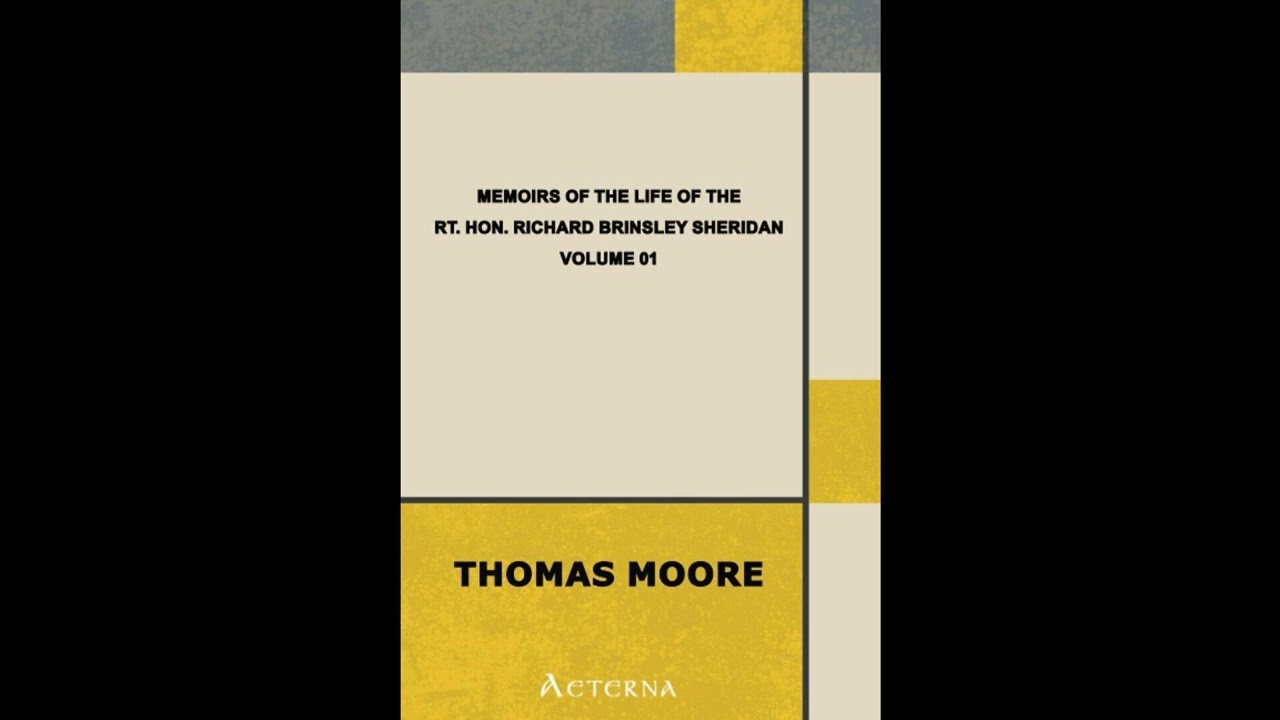
Memoirs of the Life of the Rt. Hon. Richard Brinsley Sheridan — Volume 01- Full Audiobook
My Lady of the Chimney Corner: A Story of Love and Poverty in Irish Peasant Lif- Full Audiobook

Children's Internet Protection Act (CIPA) Ruling- Full Audiobook