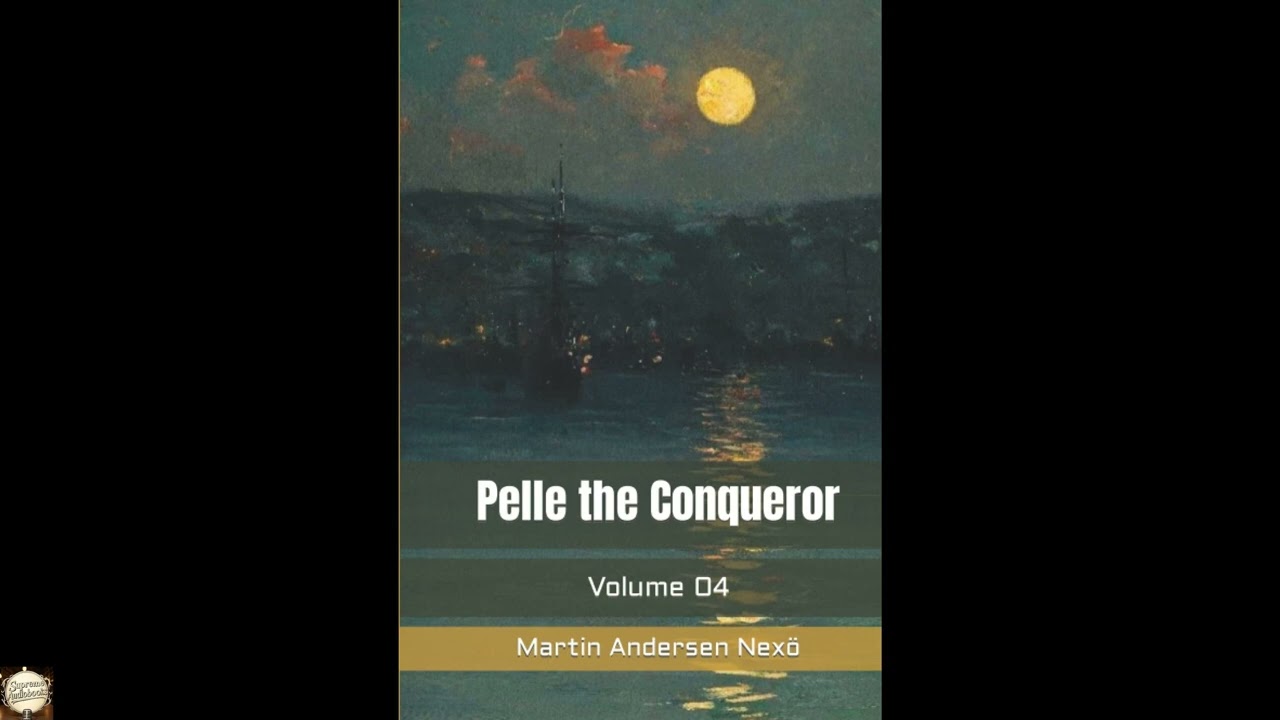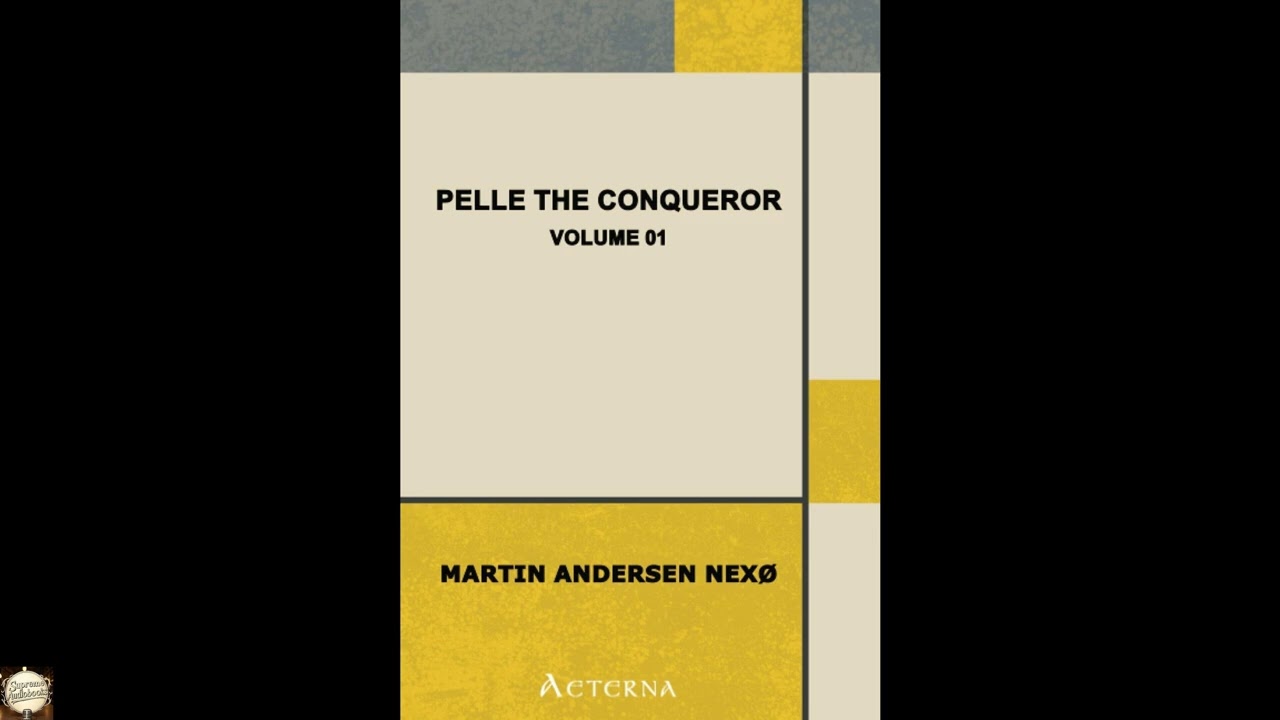
Pelle the Conqueror — Volume 01
Pelle the Conqueror — Volume 01 introduces listeners to one of the most poignant and powerful sagas in European literature: the story of a boy's struggle against poverty and injustice, and his slow, determined ascent towards a life of dignity and purpose. More than a century after its initial publication, Martin Andersen Nexø’s sprawling, deeply human narrative retains a stark relevance, speaking to anyone who has ever dreamed of a better tomorrow amidst the harsh realities of today. It is a foundational story of the working class, a testament to resilience, and a moving portrait of the human spirit’s capacity to endure and aspire, even when pitted against an indifferent world. The story opens in the late nineteenth century, as the aging Swedish laborer, Lasse Karlsson, arrives on the Danish island of Bornholm with his young son, Pelle, in tow. They are economic migrants, seeking a fresh start and a reprieve from the grinding poverty of their homeland. Their destination is Stone Farm, a large, isolated estate where Lasse has secured work as a cattleman. From the moment they set foot on the island, the stark contrast between their hopeful dreams and the brutal realities of their new lives becomes clear. Pelle, a wide-eyed boy on the cusp of adolescence, finds himself thrust into a world of ceaseless toil, hunger, and the arbitrary cruelty of those in power. At Stone Farm, life is a constant battle for survival. The farmhands, known derisively as "thralls," are exploited, often living in squalor and subjected to the whims of the farmer and his foremen. Pelle witnesses firsthand the degradations endured by his father and the other laborers. His own work is arduous, far beyond what a child of his age should bear, yet he approaches it with an innate sense of wonder and a growing awareness of the world around him. This first volume meticulously details Pelle’s early experiences—the camaraderie among the oppressed, the flashes of kindness that punctuate the harshness, and the slow awakening of his own intelligence and ambition. He begins to see that the world he inhabits is unjust, and a quiet, nascent desire for something more, something better, begins to stir within him. Martin Andersen Nexø, born in Copenhagen in 1869, grew up in the impoverished working-class district of Christianshavn. The son of a day laborer, Nexø's childhood was marked by scarcity, an experience that profoundly shaped his literary sensibilities. Forced to leave school early, he worked as a shoemaker’s apprentice, a stone quarry worker, and a farmhand—occupations that provided him with direct, visceral insight into the lives of the working poor. Despite his lack of formal education, Nexø was a voracious reader and a diligent self-learner, driven by an unshakeable belief in the power of knowledge and the importance of social justice. His early experiences ignited a lifelong commitment to socialist ideals, which he articulated both through his writing and his political activism. Nexø traveled extensively, observing the social conditions across Europe, and eventually settled in Germany during the Nazi era, before moving to the Soviet Union and then East Germany. He became a prominent voice in proletarian literature, using his craft to illuminate the struggles and aspirations of ordinary people. Beyond Pelle the Conqueror, his other significant work, Ditte, Child of Man, similarly focuses on the life of a working-class woman, further cementing his place as a pioneering figure in social realism and a pivotal Danish author of the twentieth century. He passed away in 1954, leaving behind a legacy of powerful, socially conscious storytelling. One of the central themes radiating through Pelle the Conqueror — Volume 01 is the pervasive issue of social injustice and class struggle. Nexø paints a vivid, unflinching picture of the chasm between the landowners and the landless, the powerful and the powerless. At Stone Farm, for instance, Pelle and Lasse are treated less as human beings and more as disposable cogs in a system designed to extract maximum labor for minimal compensation. Scenes depicting the squalid living conditions of the thralls, their meager meals, and the casual brutality they face from their employers serve as concrete illustrations of this profound societal imbalance. Another powerful theme is that of coming-of-age and self-discovery. Pelle, initially a naive and somewhat bewildered boy, gradually develops a keen sense of observation and an understanding of the world’s complexities. His interactions with the other farmhands—the stoic Krøj, the rebellious Erik—and his father's quiet perseverance, shape his worldview. While he endures the same hardships, Pelle's mind remains active, questioning, and dreaming. This intellectual and emotional awakening, the nascent realization that he is not destined merely to repeat his father's life, forms the crucial psychological underpinning of the first volume. The early twentieth century, when Pelle the Conqueror first appeared in Danish serial form between 1906 and 1910, was a period of immense social and political upheaval across Europe. Industrialization had dramatically reshaped societies, leading to the growth of large urban centers, an expanding working class, and intensified labor movements demanding better conditions and greater rights. Socialist and communist ideologies were gaining traction, challenging established capitalist orders. Nexø’s work emerged directly from this ferment, giving voice to a segment of the population that had largely been ignored or romanticized in mainstream literature. His novel was not merely a story; it was a potent social commentary, resonating deeply with a working class seeking recognition and change. It captured the widespread anxieties and hopes of an era grappling with rapid modernization, economic disparities, and the burgeoning calls for social reform. Nexø contributed to a growing body of "proletarian literature" that aimed to portray the lives of ordinary workers with authenticity and dignity, using realism to expose systemic inequalities and inspire solidarity. Listening to Pelle the Conqueror — Volume 01 as an audiobook offers a uniquely immersive experience, allowing the story's raw emotional power to fully unfold. The narrator’s voice becomes a conduit for Nexø’s carefully crafted prose, bringing to life the bleak landscapes of Bornholm, the cacophony of Stone Farm, and the quiet dignity of characters like Lasse. The several hours of listening time invite an unhurried appreciation of the narrative’s pacing, which mirrors the slow, grinding nature of the characters' lives while also building suspense towards Pelle’s eventual transformation. Pay attention to how the voice acting can differentiate the various farmhands, the authoritative tones of the masters, and the subtle shifts in Pelle's own internal monologue as he observes and learns. The spoken word enhances the atmospheric descriptions of hard labor, the cold winds, and the precious moments of human connection, drawing the listener directly into Pelle’s challenging yet ultimately hopeful world.
Enjoyed Pelle the Conqueror — Volume 01? A few ways to support us
Audible & Amazon links are affiliate; we may earn a small commission at no extra cost.
About this production
Human narration by a volunteer reader from LibriVox.org, the public-domain audiobook project. LibriVox volunteers record literary works whose copyright has expired in the United States, releasing the resulting recordings into the public domain.
Pelle the Conqueror — Volume 01 by Nexø Martin Andersen. The underlying text is in the U.S. public domain. We do not republish any modern copyrighted edition, translation, or commentary.
The 4K cinematic visuals accompanying this audiobook are generated by an AI image model from prompts derived from the source text. No copyrighted photos, paintings, or stock footage are used. AI generation is disclosed on every video on our YouTube channel as required by YouTube's altered/synthetic content policy.
English subtitles are transcribed from the LibriVox recording with OpenAI Whisper. Translations into the 11 other supported languages are produced by Meta's NLLB-200 neural translation model. No human translator's copyrighted translation is used.
Questions about sourcing or rights? See our DMCA & Sourcing policy or contact us.
Enjoyed this audiobook?
If you'd like to own a copy of Pelle the Conqueror — Volume 01 or hear a professionally produced edition, the links below help support free audiobook production at no extra cost to you.
As an Amazon Associate we earn from qualifying purchases. Audible / print links are affiliate.