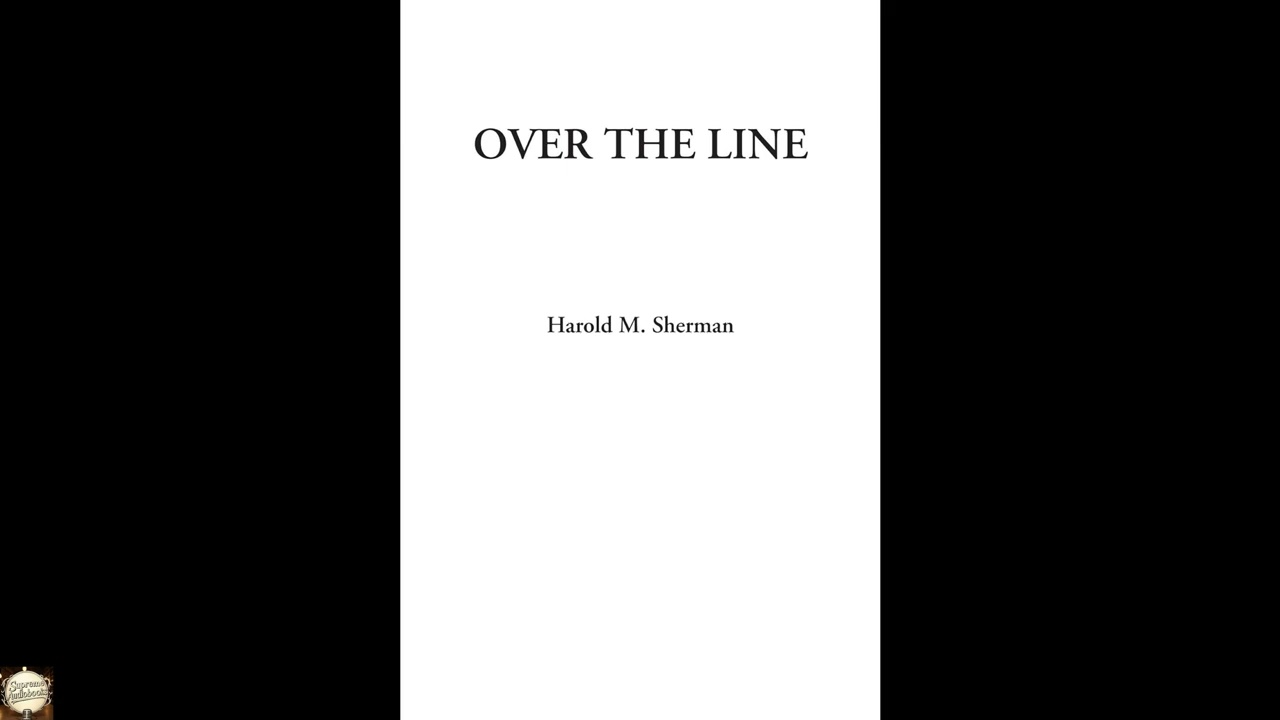
Over the Line
Harold M. Sherman's Over the Line stands as a potent examination of the choices that define a life, a compelling narrative that resonates with profound relevance even for today's listeners. This isn't merely a story of right and wrong; it delves into the nuanced territory where conviction clashes with consequence, where societal expectations vie with personal truth. It’s a powerful drama about the moments when an individual must decide if the pursuit of ambition or the dictates of circumstance are worth the crossing of an invisible, yet deeply felt, boundary. Those who appreciate character-driven narratives that dissect human morality and the ripple effects of a single pivotal decision will find this audiobook a thought-provoking and utterly absorbing experience, inviting reflection on their own personal "lines." The story unfolds in an American town, likely in the earlier part of the twentieth century, a period of burgeoning industry and shifting social mores, where community ties could be both a comfort and a constraint. We meet John Harding, a man of integrity and ambition, whose quiet life is thrown into disarray by a series of events that test his resolve. Harding, a respected figure in his profession, prides himself on his adherence to a strict personal code. However, an unexpected opportunity, fraught with tantalizing promise and considerable risk, presents itself, forcing him to weigh his established principles against the lure of advancement and security. His family, particularly his devoted wife, Clara, and their children, become indirect stakeholders in this moral calculus, their futures inextricably linked to the decisions John faces. The central conflict arises when John is presented with a situation that requires a slight deviation from his usual ethical stance—a seemingly minor compromise that could unlock significant gain. What begins as a small, almost imperceptible bend in his moral road quickly escalates, revealing the slippery slope of rationalization. The narrative meticulously builds the tension, portraying John’s internal struggle as he grapples with the potential fallout of his actions, both professional and personal. He finds himself caught between the desire to protect his loved ones and the imperative to maintain his self-respect, watching as the boundary he once held sacred begins to blur, and he questions just how far he is willing to go. Harold M. Sherman, the author of Over the Line, led a remarkably varied and prolific literary life, spanning the better part of the twentieth century. Born in Michigan in 1898, Sherman’s early career saw him establish himself as a gifted storyteller across multiple genres. He began writing around the time of the First World War, an era of significant social and technological upheaval, and continued to produce works throughout the Great Depression and beyond, capturing the changing spirit of America. His early output included a vast number of adventure stories, particularly those aimed at young boys, featuring tales of daring and perseverance. He was known for series like "Terry and the Hot Air Gang" and others that celebrated courage, friendship, and ingenuity, often with a clear moral compass. Beyond his popular fiction, Sherman also made a significant impact as a proponent of the New Thought movement, a philosophical system that emphasizes the power of positive thinking and spiritual self-improvement. Works like Your Key to Happiness and You Live After Death showcased his philosophical side, offering guidance and inspiration to countless readers seeking personal growth and meaning. This duality—a writer capable of crafting thrilling adventure narratives alongside profound works of self-help—highlights Sherman's deep understanding of human nature and his consistent interest in themes of character development, ethical decision-making, and the pursuit of a fulfilling life. His place in the literary canon is that of a widely read and accessible author who spoke directly to the concerns and aspirations of the American public through accessible, often didactic, storytelling. Over the Line effectively enacts several profound themes that remain pertinent. One primary theme is consequence and responsibility, illustrated vividly through John Harding’s increasingly complicated predicament. What appears initially as a minor transgression gradually expands, showing how even a single compromised choice can lead to a domino effect, impacting not only the individual but also their family and community. A specific scene, for example, depicts John’s growing unease as he overhears town gossip that, though not directly about him, mirrors the very ethical shortcuts he has considered, forcing him to confront the potential for public judgment. Another central theme is the nature of moral boundaries and personal ethics. The title itself alludes to this struggle, questioning where the "line" truly lies and what it takes for an individual to cross it. The narrative showcases the internal debate over what constitutes integrity versus pragmatic necessity, a tension palpable in John’s private ruminations during late nights, weighing the material benefits of his actions against the erosion of his self-respect. Furthermore, the story subtly explores societal pressure versus individual conscience, demonstrating how external expectations—whether from business associates or the unspoken demands of providing for one's family—can exert immense influence on one's private ethical decisions, making it difficult to adhere strictly to an inner moral compass. This story emerged during a period of considerable flux in American society, roughly corresponding to the interwar years when Harold Sherman was most active. The early twentieth century was a time of rapid industrialization and urbanization, leading to new economic opportunities but also new forms of ethical challenge. Traditional small-town values were often at odds with the demands of a growing, complex commercial world. The cultural landscape was marked by a lingering faith in individual initiative alongside anxieties about the potential for corruption and the erosion of moral standards. Literarily, this era saw the rise of both stark realism and popular, often uplifting, fiction. Sherman's work, including Over the Line, provided a form of popular literature that directly engaged with these societal tensions, offering narratives that were entertaining yet also held a mirror up to the moral dilemmas faced by everyday Americans navigating a changing world. It spoke to the universal human struggle to maintain integrity in the face of temptation and external pressures, reflecting the concerns of its time. Listening to Over the Line as an audiobook offers a particularly rich and intimate way to experience this powerful narrative. With a run length of several hours, it's perfectly suited for extended listening sessions, whether during a long drive, while tackling household tasks, or simply relaxing with a cup of tea. The narrator's voice becomes crucial in conveying the nuanced internal conflict of John Harding, allowing the listener to truly inhabit his perspective. Pay attention to the subtle shifts in pacing, which underscore the mounting tension and the emotional weight of each decision. The delivery of dialogue will bring the characters to life, making their arguments, fears, and hopes palpable. An experienced narrator will also skillfully evoke the atmosphere of the period, immersing listeners in the world Sherman crafted through careful attention to tone, rhythm, and the unspoken emotions embedded within the prose.
Enjoyed Over the Line? A few ways to support us
Audible & Amazon links are affiliate; we may earn a small commission at no extra cost.
About this production
Human narration by a volunteer reader from LibriVox.org, the public-domain audiobook project. LibriVox volunteers record literary works whose copyright has expired in the United States, releasing the resulting recordings into the public domain.
Over the Line by Harold M. Sherman. The underlying text is in the U.S. public domain. We do not republish any modern copyrighted edition, translation, or commentary.
The 4K cinematic visuals accompanying this audiobook are generated by an AI image model from prompts derived from the source text. No copyrighted photos, paintings, or stock footage are used. AI generation is disclosed on every video on our YouTube channel as required by YouTube's altered/synthetic content policy.
English subtitles are transcribed from the LibriVox recording with OpenAI Whisper. Translations into the 11 other supported languages are produced by Meta's NLLB-200 neural translation model. No human translator's copyrighted translation is used.
Questions about sourcing or rights? See our DMCA & Sourcing policy or contact us.
Enjoyed this audiobook?
If you'd like to own a copy of Over the Line or hear a professionally produced edition, the links below help support free audiobook production at no extra cost to you.
As an Amazon Associate we earn from qualifying purchases. Audible / print links are affiliate.
![Bylow Hill. [1902] by George Washington Cable — free full audiobook](https://img.youtube.com/vi/1D_sMd4QpZE/maxresdefault.jpg)