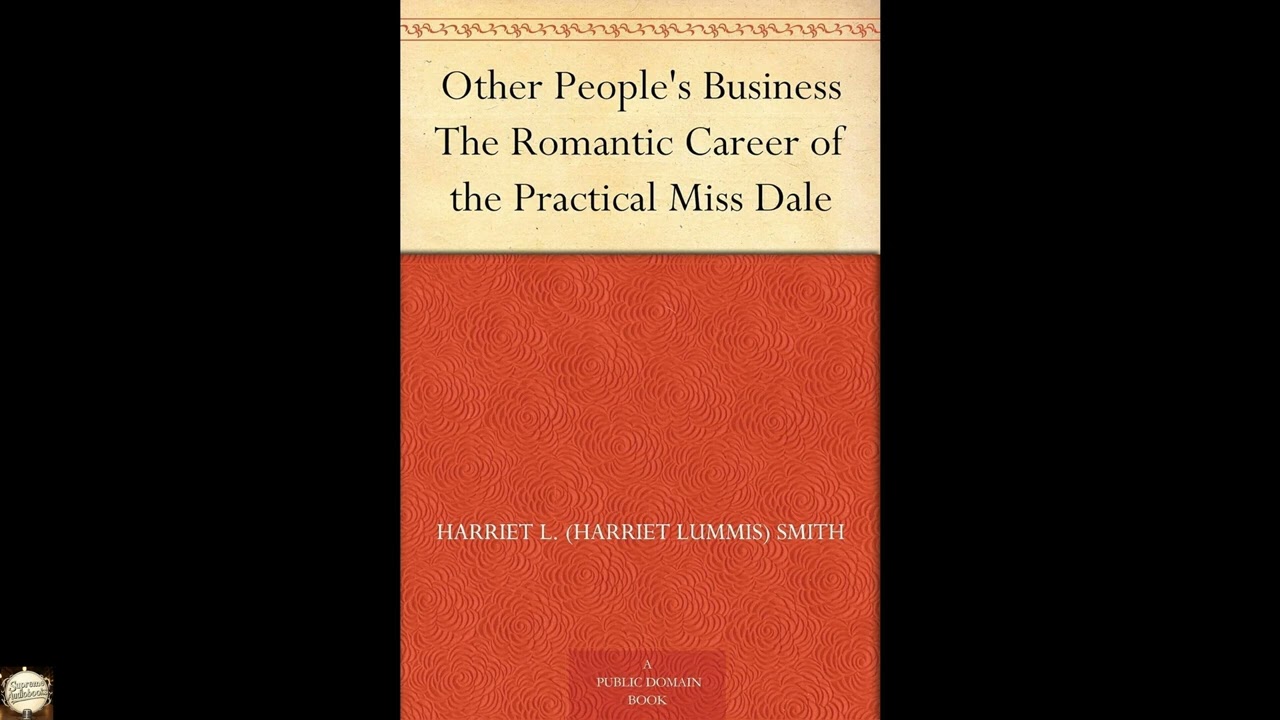
Other People's Business: The Romantic Career of the Practical Miss Dale
Step into a world where good intentions often pave the way for unexpected complications, and where the most practical advice can lead to the wildest romantic entanglements. "Other People's Business: The Romantic Career of the Practical Miss Dale" invites listeners to meet a character whose sharp intellect and well-meaning interference illuminate the societal expectations and personal desires of a bygone era, yet whose dilemmas resonate profoundly even today. This audiobook offers more than just a glimpse into past sensibilities; it presents a witty and often poignant examination of human relationships, the fine line between helping and meddling, and the enduring quest for love and purpose in a world that often prescribes very narrow roles. For anyone who has ever felt the urge to "fix" someone else's life, or who has struggled to balance their own practical nature with the irrational demands of the heart, Miss Dale's story is an engaging and reflective experience. Our story introduces listeners to Miss Dale, a woman whose keen observational skills and unwavering practicality are her defining traits. She is not a woman given to flights of fancy or sentimental illusions; rather, she approaches life, and particularly the lives of those around her, with a methodical, almost scientific precision. The setting is likely a close-knit community, perhaps a small town or an exclusive social circle, where everyone’s affairs are, to some degree, the topic of common discussion. Miss Dale, however, takes this general interest several steps further, seeing it as her personal vocation to advise, arrange, and orchestrate the romantic fates of her acquaintances, believing firmly that her sensible approach can steer them clear of the pitfalls of passion and impracticality. The central conflict of the narrative arises from this very inclination. Miss Dale frequently finds herself embroiled in the nascent courtships, budding romances, and even the established relationships of her friends and neighbors. She offers pointed counsel to hesitant suitors, dispenses strategies to anxious young ladies, and endeavors to smooth over misunderstandings, all with the sincere belief that she is acting for their ultimate good. Yet, as her efforts unfold, it becomes clear that human hearts, with their unpredictable whims and deeply personal yearnings, often resist the tidy logic Miss Dale tries to impose. Her well-intentioned meddling sometimes leads to humorous misfires, unexpected reversals, and even deeper complications, forcing her—and the listener—to question whether love can truly be managed by rational design. As the narrative progresses, Miss Dale herself faces a growing awareness of her own romantic career, often neglected in favor of others', and finds her own practical worldview challenged by the very emotions she so readily dissects in others. The authorship of "Other People's Business: The Romantic Career of the Practical Miss Dale" remains a fascinating enigma. The work is listed as having an "Unknown" author, a common occurrence in literary history, particularly for novels published during the late nineteenth or early twentieth century. Many works from this period, especially those appearing in popular magazines as serials or published by lesser-known presses, were attributed only to a pseudonym, "a lady of quality," or simply left anonymous, either by the author's choice for privacy or due to the publishing conventions of the time. The title itself, with its focus on "Miss Dale" and her "romantic career," strongly suggests a narrative voice and perspective characteristic of women writers of that era, who often used their fiction to comment on social norms, courtship rituals, and the limited yet evolving roles available to women. This anonymity, far from diminishing the work, enhances its historical appeal. It invites speculation about the circumstances of its creation—was it a first novel from an aspiring writer, a commentary from a seasoned observer of society, or perhaps a work designed to entertain while subtly critiquing the expectations placed upon women? The novel fits squarely within the tradition of domestic fiction and novels of manners that flourished during this period, offering insights into everyday life, moral quandaries, and the social fabric of its time. Its enduring presence, even without a named author, speaks to its inherent quality and its ability to capture the imagination of readers, then and now. The focus on a pragmatic female protagonist navigating societal pressures marks it as a compelling artifact from a period keenly interested in the internal lives and external struggles of women. One of the central themes running through "Other People's Business" is the inherent tension between social expectation and individual desire. Miss Dale, as a "practical" woman, often feels the weight of societal norms that dictate a woman's place, particularly regarding marriage and social standing. Her attempts to manage others' romantic lives can be seen as an effort to ensure they conform to what she perceives as the most sensible, socially acceptable path, often at odds with the true desires of the hearts involved. For instance, she might gently but firmly push a timid young man towards a financially advantageous match, overlooking his quiet affection for a less well-off but spirited woman, thus highlighting the clash between prudent calculation and genuine emotion. Another significant theme is the nature of benevolent interference. The title itself alludes to this. Miss Dale genuinely believes she is helping, acting out of a desire for order and happiness for her friends. Yet, the narrative skillfully demonstrates the often-unforeseen consequences of such well-meaning meddling. A scene where Miss Dale carefully crafts a letter for a shy suitor, only for its overly formal tone to alienate the intended recipient, vividly illustrates how even the best intentions can go awry when one assumes control over another's personal affairs. This underlines a deeper exploration of agency and autonomy, questioning who truly has the right to guide another’s destiny, particularly in matters of the heart. The book also subtly touches upon the evolving role of women in society, presenting a protagonist who, while engaging in traditionally feminine social observation, also exerts a strong, if sometimes misplaced, form of intellectual agency. To fully appreciate the world of "Other People's Business," it helps to understand the cultural and literary landscape from which it likely emerged. The late nineteenth and early twentieth centuries in America and Britain were periods of immense social flux. The Victorian era’s rigid moral codes were slowly giving way to more modern sensibilities, though established conventions regarding courtship, marriage, and a woman's place in the home and society still held considerable sway. This was a time when women's education was becoming more common, and the first waves of feminist thought were challenging traditional roles, yet economic dependence on men remained a stark reality for many. Novels of this period often served as both entertainment and a means of social commentary, dissecting the intricacies of class, reputation, and the delicate dance of romantic pursuit within these shifting constraints. Literarily, this was an age of realism, where authors moved away from pure romanticism to depict life as it truly was, with its everyday struggles and triumphs. "Other People's Business" fits this mold by focusing on the seemingly mundane details of social interaction and personal relationships, imbuing them with humor and psychological insight. The popularity of serialization in magazines meant that many novels were written to sustain interest across multiple installments, often featuring engaging characters and plot developments that kept readers eagerly awaiting the next chapter. This work, with its focus on a practical yet engaging female lead and her interventions, would have found a ready audience among readers navigating their own complex social worlds, eager for stories that reflected and perhaps gently critiqued their own experiences. Listening to "Other People's Business: The Romantic Career of the Practical Miss Dale" as an audiobook offers a unique and highly engaging experience. The "several hours" run length allows for a wonderfully immersive dive into Miss Dale's world, letting the narrative unfold at a natural, unhurried pace. A skilled narrator will bring Miss Dale’s pragmatic yet often ironic voice to life, allowing listeners to hear the subtle humor and underlying warmth in her observations, even as her plans go awry. Pay close attention to the dialogue, which is likely imbued with the charming formality and wit characteristic of the period, allowing the narrator's interpretation to convey unspoken intentions and social nuances. The distinct voices given to the various characters she interacts with – the hesitant lovers, the exasperated friends, the bewildered recipients of her advice – will paint a vivid soundscape of her "business," creating an atmosphere that perfectly balances the story's lightheartedness with its deeper insights into human nature.
Enjoyed Other People's Business: The Romantic Career of the Practical Miss Dale? A few ways to support us
Audible & Amazon links are affiliate; we may earn a small commission at no extra cost.
About this production
Human narration by a volunteer reader from LibriVox.org, the public-domain audiobook project. LibriVox volunteers record literary works whose copyright has expired in the United States, releasing the resulting recordings into the public domain.
Other People's Business: The Romantic Career of the Practical Miss Dale by Harriet Elizabeth Prescott Spofford. The underlying text is in the U.S. public domain. We do not republish any modern copyrighted edition, translation, or commentary.
The 4K cinematic visuals accompanying this audiobook are generated by an AI image model from prompts derived from the source text. No copyrighted photos, paintings, or stock footage are used. AI generation is disclosed on every video on our YouTube channel as required by YouTube's altered/synthetic content policy.
English subtitles are transcribed from the LibriVox recording with OpenAI Whisper. Translations into the 11 other supported languages are produced by Meta's NLLB-200 neural translation model. No human translator's copyrighted translation is used.
Questions about sourcing or rights? See our DMCA & Sourcing policy or contact us.
View 10 famous quotes from this book →
Enjoyed this audiobook?
If you'd like to own a copy of Other People's Business: The Romantic Career of the Practical Miss Dale or hear a professionally produced edition, the links below help support free audiobook production at no extra cost to you.
As an Amazon Associate we earn from qualifying purchases. Audible / print links are affiliate.