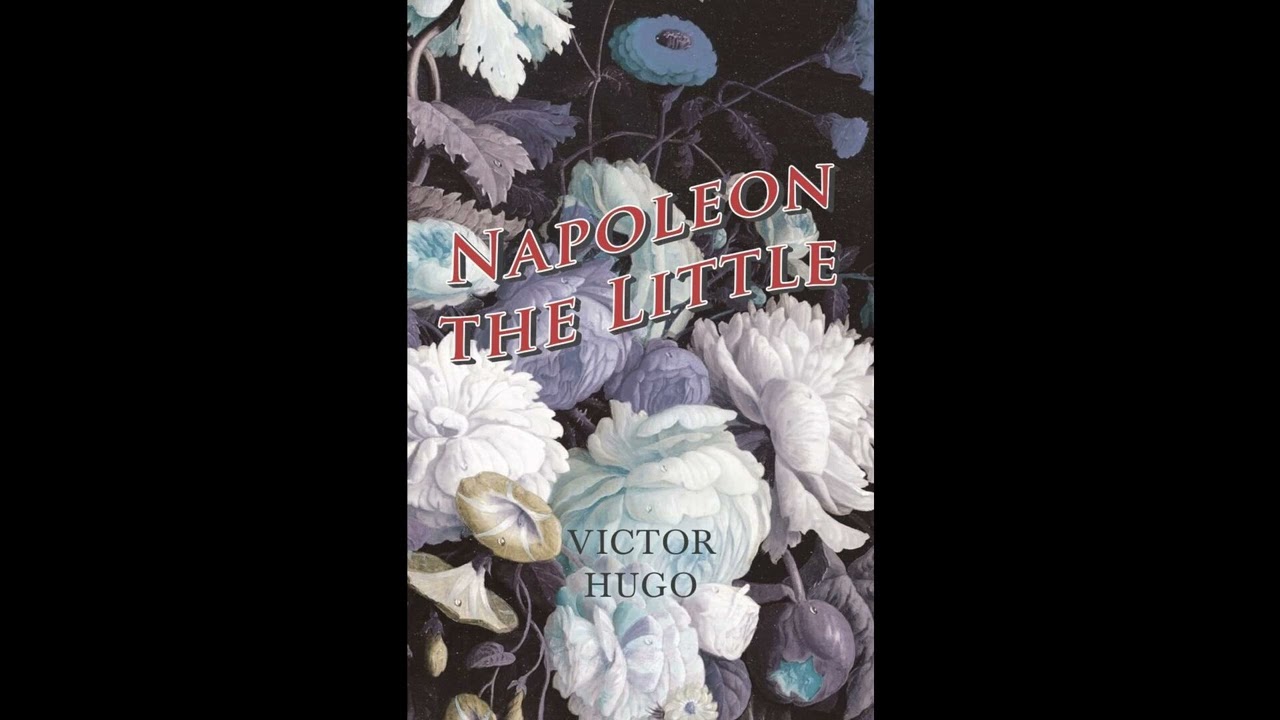
Napoleon the Little
Victor Hugo's Napoleon the Little is not a novel, nor a play, but a searing, immediate historical document and a cry of outrage penned by one of France's greatest literary figures. This book is Hugo's direct, impassioned denunciation of Louis-Napoleon Bonaparte's coup d'état of December 2, 1851, an event that violently overthrew the nascent Second Republic and paved the way for the Second French Empire. It stands as a timeless testament to the power of a writer's conscience against tyranny, a furious and eloquent defense of democratic ideals in the face of brute force and cynical ambition. More than just a historical account, it is a profound examination of how a democracy can be subverted by a charismatic leader, how constitutional safeguards can be shredded, and how a populace can be swayed or silenced. In an era where the fragility of democratic institutions and the rise of authoritarian figures remain potent global concerns, Hugo's thunderous protest resonates with startling relevance, offering not only a window into a pivotal moment in French history but also a stark, urgent warning for any society facing similar threats to its liberty. The narrative arc of Napoleon the Little begins in the hopeful, if turbulent, years of the French Second Republic, established in 1848 after the overthrow of King Louis-Philippe. Louis-Napoleon Bonaparte, nephew of the legendary Emperor Napoleon I, ascended to power first as a freely elected president. Hugo meticulously chronicles the creeping subversion of the republic, portraying Louis-Napoleon not as a grand figure of destiny, but as a calculating, opportunistic politician whose every move was designed to consolidate personal power at the expense of the constitution he had sworn to uphold. The central conflict erupts on December 2, 1851, when Louis-Napoleon orchestrates a sudden, violent coup. He dissolves the National Assembly, arrests leading political opponents—including Hugo himself, who initially tried to organize resistance in the streets of Paris—and ruthlessly suppresses any opposition, employing military force against the citizenry. Hugo’s account paints a vivid, often horrifying, picture of Paris under siege. He describes the systematic dismantling of democratic institutions, the censorship of the press, and the brutal suppression of any attempt at popular uprising. The book details the arbitrary arrests, the summary executions, and the climate of fear that descends upon the capital. Through Hugo's eyes, Louis-Napoleon transforms from a somewhat bumbling, underestimated figure into a ruthless dictator, whose actions are not merely illegal but deeply immoral, a grotesque parody of his famous uncle. The "plot" of the book, therefore, is the unraveling of a republic and the birth of an authoritarian regime, viewed through the lens of a horrified, yet defiant, participant and observer. Hugo’s voice throughout is one of unshakeable conviction, an unwavering belief in justice and the principles of liberty, even as he witnesses their profound betrayal. Victor Hugo, born in Besançon in 1802, grew to become one of the most towering figures in French literature and a significant political voice. His early life saw him embrace royalist and Catholic views, but his political and social conscience shifted dramatically over the decades, evolving into a passionate republican. He gained early acclaim for his poetry and plays, becoming a leading light of the Romantic movement in France. His play Hernani in 1830 famously sparked a literary battle, challenging classical conventions and cementing his reputation as an innovator. By the mid-19th century, Hugo was not only a celebrated writer but also an active participant in public life, serving as a Peer of France and later as a member of the National Assembly. His most widely recognized works include the monumental novels The Hunchback of Notre-Dame (1831), a historical novel set in medieval Paris, and Les Misérables (1862), an epic of social justice and human suffering set in 19th-century France. Both novels showcase his profound empathy for the downtrodden and his acute critical eye on society. Following the 1851 coup, Hugo’s fervent republicanism led him into voluntary exile, initially in Brussels, then on the Channel Islands of Jersey and Guernsey, where he would remain for nearly two decades. It was during this period of exile that he produced some of his most politically charged works, including Napoleon the Little, and also his vast poetic collection Les Contemplations. His return to France in 1870, after the fall of the Second Empire, was met with national rejoicing, solidifying his status as a national hero and an enduring symbol of liberty and artistic integrity. At its core, Napoleon the Little enacts several profound themes. First is the abuse of power and the corruption of ambition. Hugo relentlessly details how Louis-Napoleon, elected to a limited term, systematically dismantled the very institutions he swore to protect, turning legislative acts into tools for personal gain and transforming the presidency into a dictatorship. For instance, Hugo recounts the manipulation of the constitution, the dismissal of parliamentary bodies, and the strategic deployment of the army against its own citizens in Paris, all calculated moves to secure absolute control. Another potent theme is moral courage and the duty of resistance. Hugo’s own act of writing and publishing this book from exile, knowing it was forbidden in France, serves as a powerful illustration. He castigates those who stood by silently or, worse, collaborated with the coup, emphasizing the profound responsibility of every citizen to defend liberty, even at great personal cost. Furthermore, the book tackles the theme of false pretense and the mimicry of greatness. Hugo's title itself, Napoleon the Little, underscores this. He constantly contrasts Louis-Napoleon with his famed uncle, not to elevate the elder Napoleon but to expose the nephew as a mere imitation, a shadow figure lacking the true genius or even the sheer scale of his predecessor's ambition, instead possessing only a petty, cruel opportunism. Hugo’s descriptions of Louis-Napoleon's public pronouncements and theatrical gestures are always laced with scorn, highlighting their emptiness and their desperate attempt to evoke a past glory that the "Little" Napoleon could never truly embody. Finally, the book stands as a stark warning about the fragility of democratic institutions. Hugo demonstrates how swiftly a republic, even one born of revolution, can be undone by a concentrated effort to sow division, manipulate public opinion, and use military might to silence dissent. Napoleon the Little emerged from a period of intense political upheaval in France. The 1848 Revolution, which saw the overthrow of the monarchy and the establishment of the Second Republic, was itself a volatile mix of republican, socialist, and liberal aspirations. Louis-Napoleon Bonaparte, tapping into popular nostalgia for his illustrious uncle and promising stability, was elected president. However, his ambitions quickly clashed with the republican constitution, which limited presidents to a single term. Seeing his power threatened, he orchestrated the December 2, 1851 coup d'état, dissolving the assembly, revising the constitution, and arresting his opponents. This event marked the end of the Second Republic and the beginning of the Second Empire, with Louis-Napoleon eventually proclaiming himself Emperor Napoleon III. Hugo, a prominent republican and an eyewitness to the coup’s violence, found himself among the proscribed. He wrote the book in a white heat of indignation during his initial exile, publishing it in Brussels in 1852. It was immediately banned in France, but thousands of copies were smuggled into the country, becoming a potent symbol of resistance and a foundational text of anti-imperialist sentiment. The work was thus not merely a commentary but an act of political warfare, a direct challenge to the legitimacy of the new regime. Listening to Napoleon the Little as an audiobook transforms Hugo's polemic into a direct, spoken address, allowing the listener to fully absorb the urgency and the raw emotion embedded in every passage. This is not a text meant for quiet contemplation alone; it is a declaration, a thunderous sermon against injustice. A skilled narrator can perfectly convey Hugo's righteous indignation, his biting sarcasm, and his profound sorrow for France. The rhythmic quality of Hugo’s prose, his sweeping condemnations, and his powerful rhetorical questions gain immense force when delivered by a human voice. The audiobook format allows the listener to become immersed in Hugo's world of defiant exile, to hear the moral conscience of a nation articulated through one man's voice. It is a substantial listen, stretching for several hours, providing ample time to internalize the historical details and the timeless warnings about power and liberty. This is an experience for anyone seeking to understand the power of literary dissent and the enduring fight for freedom.
Enjoyed Napoleon the Little? A few ways to support us
Audible & Amazon links are affiliate; we may earn a small commission at no extra cost.
About this production
Human narration by a volunteer reader from LibriVox.org, the public-domain audiobook project. LibriVox volunteers record literary works whose copyright has expired in the United States, releasing the resulting recordings into the public domain.
Napoleon the Little by Victor Hugo. The underlying text is in the U.S. public domain. We do not republish any modern copyrighted edition, translation, or commentary.
The 4K cinematic visuals accompanying this audiobook are generated by an AI image model from prompts derived from the source text. No copyrighted photos, paintings, or stock footage are used. AI generation is disclosed on every video on our YouTube channel as required by YouTube's altered/synthetic content policy.
English subtitles are transcribed from the LibriVox recording with OpenAI Whisper. Translations into the 11 other supported languages are produced by Meta's NLLB-200 neural translation model. No human translator's copyrighted translation is used.
Questions about sourcing or rights? See our DMCA & Sourcing policy or contact us.
View 10 famous quotes from this book →
Enjoyed this audiobook?
If you'd like to own a copy of Napoleon the Little or hear a professionally produced edition, the links below help support free audiobook production at no extra cost to you.
As an Amazon Associate we earn from qualifying purchases. Audible / print links are affiliate.