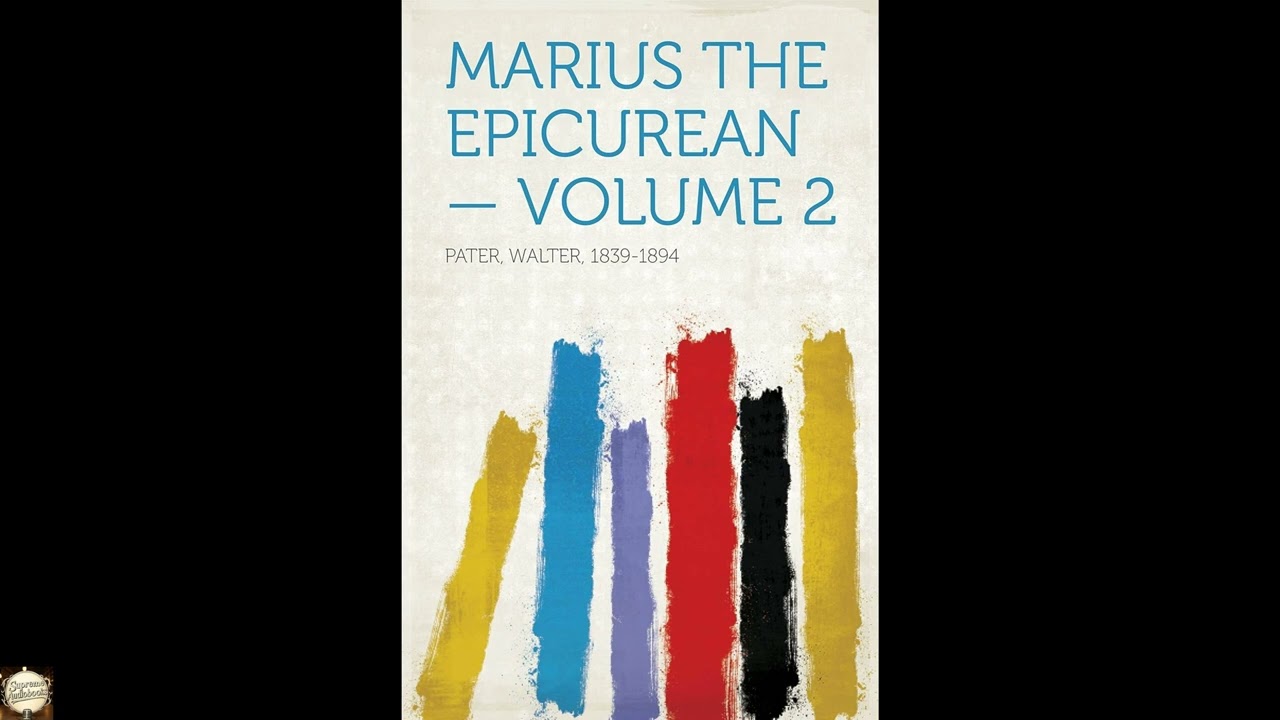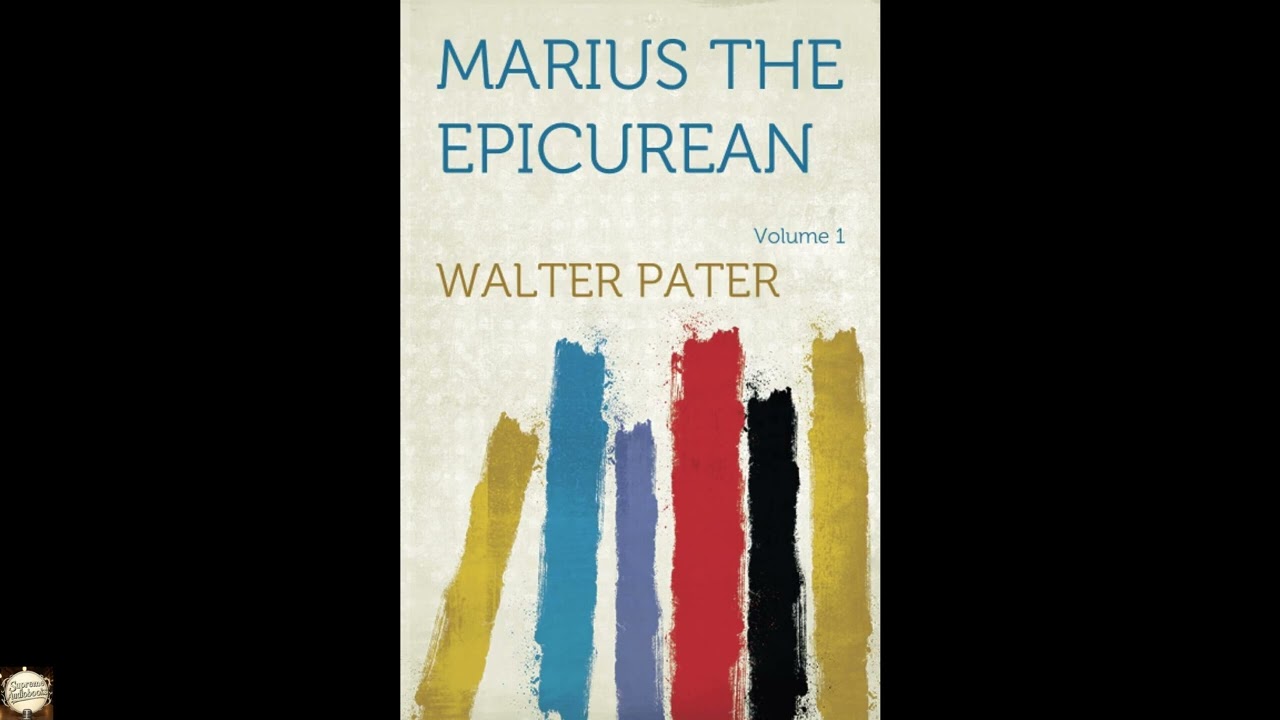
Marius the Epicurean — Volume 1
Step into the refined, contemplative world of Walter Pater's Marius the Epicurean — Volume 1, a novel that invites its listener to a sustained meditation on beauty, philosophy, and the search for a meaningful existence. Set in the twilight years of the Roman Empire, this is more than a historical novel; it is a profound intellectual and spiritual coming-of-age story, tracing one young man's quest for understanding amidst a shifting world. Its enduring appeal lies in its exquisite prose and its deep engagement with questions about how one ought to live, how to find joy, and how to forge an authentic self—concerns that resonate with striking clarity in any age of uncertainty and introspection. Pater's work offers not easy answers, but a beautifully articulated framework for appreciating the fleeting moments of life and the pursuit of inner harmony. Our story begins in the second century A.D., in a secluded Roman villa nestled in the hills of Etruria. Here we meet Marius, a young boy from an ancient, patrician family whose lineage is imbued with traditional Roman piety and a quiet, almost austere sense of duty. Marius grows up sensitive and observant, a child of thoughtful disposition, steeped in the customs and religious rites of his ancestors. The world outside his family estate, however, is a vast and complex empire stretching from Britannia to Mesopotamia, governed by the benevolent but philosophical Emperor Antoninus Pius, soon to be succeeded by the Stoic Marcus Aurelius. This is a time of both imperial grandeur and subtle societal shifts, where old pagan beliefs still hold sway, yet new philosophies and even the nascent murmurings of Christianity begin to challenge the established order. As Marius matures, his innate curiosity and a gentle discontent with the rigid strictures of his upbringing lead him to question the simple certainties of his youth. The novel follows his intellectual awakening, first through the formal education he receives, then through his experiences beyond the family estate. He encounters various philosophical schools—the disciplined, duty-bound tenets of Stoicism, the refined pursuit of pleasure advocated by Epicureanism, and the radical empiricism of Cyrenaicism, which emphasizes living purely in the present moment. Volume 1 of Marius the Epicurean captures this initial phase of his quest, as he leaves his childhood home, travels to Rome, and begins to grapple with the rich sensory experiences and diverse intellectual currents of the imperial capital. It charts the development of his aesthetic sensibility, his dawning appreciation for art, nature, and human connection, and his burgeoning attempts to synthesize these experiences into a coherent, satisfying philosophy of life. His journey is one of observation, introspection, and a tender, almost hesitant opening to the wider world of thought and sensation. The author, Walter Horatio Pater, was an influential English essayist, critic, and novelist, born in London in 1839. Educated at King's School, Canterbury, and Queen's College, Oxford, Pater spent most of his adult life as a Fellow of Brasenose College, Oxford, where he taught and wrote. His life was largely academic and contemplative, but his literary output profoundly impacted the artistic and intellectual landscape of the late Victorian era. Pater was a central figure in the Aesthetic movement, advocating for the idea of "art for art's sake"—a philosophy that prioritized the pursuit of beauty and sensory experience over moral or didactic purposes in art and life. Pater's first major critical work, Studies in the History of the Renaissance (1873), was groundbreaking for its exquisite prose and its emphasis on subjective experience and the intense appreciation of beauty. This collection of essays, particularly its "Conclusion," became a manifesto for Aestheticism, famously urging readers to "burn always with this hard, gem-like flame." Though he later softened some of its more radical implications, the core of his philosophy remained: to cultivate one's capacity for intense, beautiful experience. His other notable works include Appreciations, with an Essay on Style and Plato and Platonism, both demonstrating his deep erudition and meticulous command of language. Pater's unique literary style, characterized by its slow, deliberate rhythm, its precise word choice, and its ability to evoke subtle shades of meaning and sensation, secured his place as a significant voice in English literature, influencing a generation of writers from Oscar Wilde and Virginia Woolf to James Joyce. At its heart, Marius the Epicurean enacts the theme of Aestheticism, urging the listener to a heightened awareness of beauty in all its forms. Marius, for instance, possesses an almost preternatural sensitivity to the subtle shifts of light, the architecture of a Roman street, or the carefully chosen words of a philosophical discourse. He observes a particular arrangement of flowers, a passage of music, or the graceful lines of a statue with an intensity that elevates mere observation into a profound spiritual experience, embodying Pater's dictum to "value all the less for its sake." This pursuit of refined sensation becomes his guiding principle, a way to find meaning in an uncertain world. Another central theme is the philosophical search for a coherent way of life. Marius is not content with inherited beliefs; he actively seeks to understand and integrate different philosophical systems. He contemplates the rigorous self-discipline of Stoicism, which emphasizes duty and reason, yet he also finds himself drawn to the more refined Epicurean ideal of pleasure—not crude hedonism, but a carefully cultivated serenity achieved through moderation and intellectual enjoyment. Later, he encounters the Cyrenaic emphasis on the present moment, on seizing the fleeting sensation. The novel shows Marius grappling with these competing ideas, trying to discern how to live justly and beautifully, without necessarily committing to any single, dogmatic creed. His internal debates and his reflections on the lives of those around him illustrate this ongoing quest for intellectual and spiritual synthesis. When Walter Pater published Marius the Epicurean in 1885, he did so in an era marked by profound cultural and intellectual shifts. The Victorian age, for all its moral certainty, was also a period of increasing doubt. Charles Darwin's theories had shaken traditional religious beliefs, industrialization had transformed society, and a growing sense of spiritual disquiet pervaded the intellectual atmosphere. Many felt a loss of faith in conventional institutions and a need to find new sources of meaning. In this climate, Aestheticism emerged as a powerful counter-movement, a reaction against the perceived drabness and moralistic strictures of Victorian utilitarianism. Pater’s work provided an eloquent and sophisticated articulation of this aesthetic philosophy, suggesting that art, beauty, and individual sensory experience could offer a valid path to truth and fulfillment, independent of religious dogma or scientific materialism. Marius the Epicurean, with its historical setting, allowed Pater to explore these contemporary concerns through the lens of antiquity, examining how an individual might construct a meaningful life in an age of transition and fragmented beliefs. To experience Marius the Epicurean — Volume 1 as an audiobook is to immerse oneself fully in the unique rhythm and sonic beauty of Pater's prose. His sentences are not meant to be rushed; they unfold with a deliberate, almost musical quality, replete with subtle alliterations, carefully balanced clauses, and precise, evocative diction. A skilled narrator can bring out the quiet dignity of Marius's inner world, giving voice to his profound introspection and the lush descriptions of ancient Rome. Listening allows one to fully appreciate the ebb and flow of Pater's language, to absorb the atmosphere of a world long past, and to follow Marius's philosophical musings at a pace that encourages contemplation. The "several hours" length of this first volume makes it an ideal companion for extended periods of thought, allowing the listener to truly dwell in Pater's meticulously crafted universe and savor the nuances of his elegant literary style.
Enjoyed Marius the Epicurean — Volume 1? A few ways to support us
Audible & Amazon links are affiliate; we may earn a small commission at no extra cost.
About this production
Human narration by a volunteer reader from LibriVox.org, the public-domain audiobook project. LibriVox volunteers record literary works whose copyright has expired in the United States, releasing the resulting recordings into the public domain.
Marius the Epicurean — Volume 1 by Walter Pater. The underlying text is in the U.S. public domain. We do not republish any modern copyrighted edition, translation, or commentary.
The 4K cinematic visuals accompanying this audiobook are generated by an AI image model from prompts derived from the source text. No copyrighted photos, paintings, or stock footage are used. AI generation is disclosed on every video on our YouTube channel as required by YouTube's altered/synthetic content policy.
English subtitles are transcribed from the LibriVox recording with OpenAI Whisper. Translations into the 11 other supported languages are produced by Meta's NLLB-200 neural translation model. No human translator's copyrighted translation is used.
Questions about sourcing or rights? See our DMCA & Sourcing policy or contact us.
Enjoyed this audiobook?
If you'd like to own a copy of Marius the Epicurean — Volume 1 or hear a professionally produced edition, the links below help support free audiobook production at no extra cost to you.
As an Amazon Associate we earn from qualifying purchases. Audible / print links are affiliate.