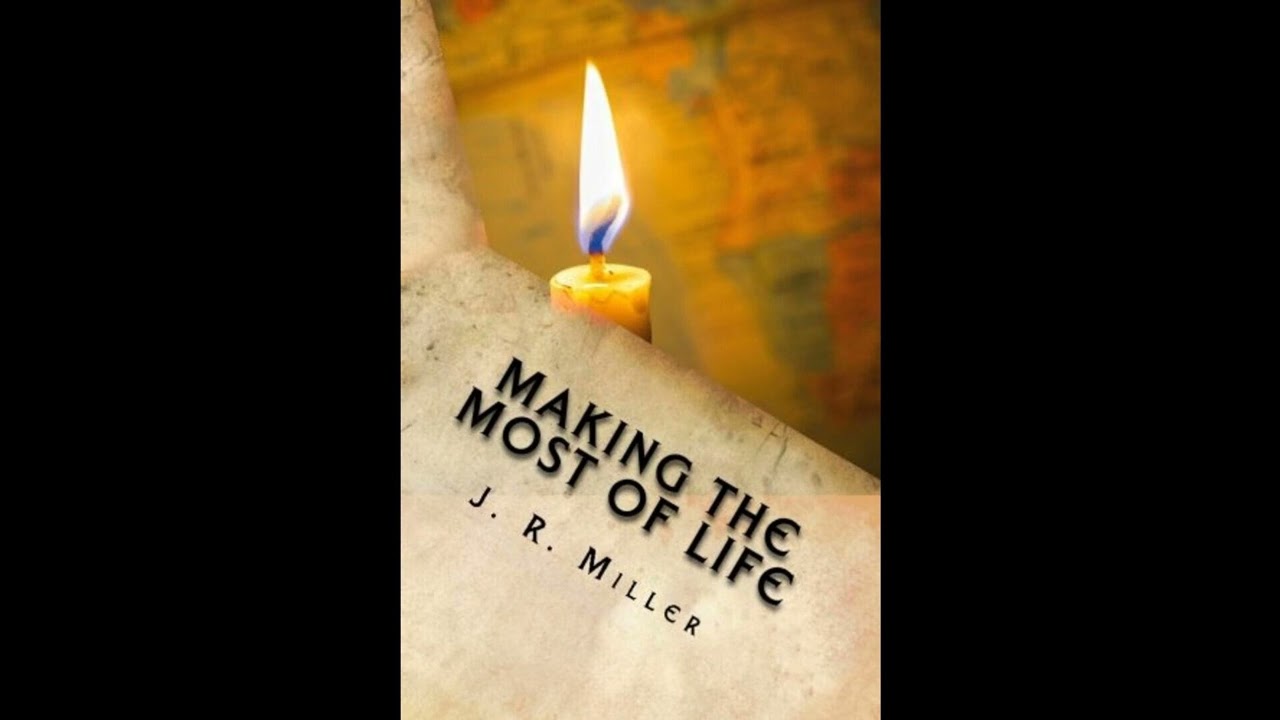
Making the Most of Life
In a world that often feels relentlessly fast-paced and overflowing with competing demands, the search for meaning, purpose, and a well-lived existence remains a universal human endeavor. It is this profound and perennial quest that J. R. Miller’s Making the Most of Life addresses with such directness and gentle wisdom. Penned over a century ago, this collection of insightful reflections acts as a comforting guide, urging us to pause, consider our actions, and cultivate a life rich in substance and spiritual depth. Far from being a relic of a bygone era, its principles resonate powerfully with contemporary anxieties and aspirations, offering a clear, accessible path to inner peace and outward contribution in our own complex times. This is not a story with a conventional cast of characters or a dramatic narrative arc leading to a climactic resolution. Instead, Making the Most of Life charts a journey within the listener themselves, presenting a series of meditations designed to illuminate the path toward personal growth and spiritual fulfillment. The setting for this profound exploration is the panorama of everyday existence – the mundane tasks, the fleeting moments, the significant choices that collectively shape a human destiny. Miller, acting as a sagacious companion, addresses the listener directly, inviting them to become the central figure in their own unfolding life story, to actively engage with the material and apply its teachings. The central conflict, if one can call it that, is the universal struggle to live intentionally, to overcome the inertia of habit, and to resist the superficial distractions that prevent genuine self-realization. Miller meticulously builds his argument through a series of focused essays, each chapter serving as a stepping stone on a path of self-improvement. The arc of the work progresses from an initial call to recognize the sanctity and preciousness of each day, through considerations of building strong character, exercising kindness in small moments, enduring adversity with grace, and ultimately finding enduring joy in service and spiritual connection. Each reflection is a discrete yet interconnected piece of a larger mosaic, revealing how consistent effort in seemingly minor areas can culminate in a life of profound significance. The author behind these resonant reflections was James Russell Miller, born in 1840 in Frankfort Springs, Pennsylvania. A distinguished Presbyterian pastor, editor, and immensely prolific author, Miller dedicated his life to spiritual instruction and encouragement. After studying at Princeton Theological Seminary, he served various pastorates before becoming the editorial superintendent of the Presbyterian Board of Publication, a role that allowed him to shape the religious reading material for a wide audience. He produced an extraordinary number of books, pamphlets, and articles, many of which — such as Come Ye Apart, The Building of Character, and In His Steps (not to be confused with Charles Sheldon’s novel of the same name) — achieved immense popularity, becoming staple texts in countless Protestant homes across America and beyond. Miller’s plainspoken yet profound style positioned him as a leading voice in the devotional literature movement of the late nineteenth and early twentieth centuries. He was celebrated for his ability to translate complex theological concepts into practical, relatable guidance for daily living. His writings offered comfort, moral clarity, and inspiration to millions grappling with the challenges of an increasingly modern world. Miller was not a groundbreaking literary stylist in the modernist sense, but his direct, warm, and consistently encouraging tone made him a beloved spiritual counselor, his words serving as a balm and a beacon for generations seeking a deeper connection to their faith and a more meaningful existence. Among the prominent themes woven throughout Making the Most of Life is the insistent call for intentional living and the pursuit of purpose. Miller continually stresses that life is a sacred trust, not merely a passage of time to be endured but a profound opportunity to be actively shaped. He illustrates this by emphasizing the significance of small duties, arguing that genuine purpose is often found not in grand gestures but in the faithful execution of daily responsibilities and opportunities for growth. Another key theme is character development and moral cultivation. Miller provides concrete counsel on virtues like patience, perseverance, and kindness, showing how these are not abstract ideals but practical tools for navigating personal relationships and internal struggles. For instance, he might describe how enduring a frustrating situation with good humor strengthens one’s resolve, or how a simple act of compassion can ripple outwards, affecting many. Further, the work highlights the power of small things. Miller frequently reminds his listeners that seemingly minor habits, fleeting moments, and individual acts of grace contribute immeasurably to the larger fabric of a life. He brings this to life by picturing how a thoughtful word spoken at the right moment, or a consistent effort in a quiet sphere, can have a profound and lasting impact. Lastly, the book offers a steady hand through endurance and hope in adversity. Miller acknowledges that life presents suffering and challenges, but he consistently frames these as opportunities for spiritual refinement. He guides the listener towards viewing difficulties not as roadblocks but as crucible moments that can forge inner strength and deepen faith, providing strategies for maintaining a hopeful outlook even when circumstances are grim. The period in which J. R. Miller wrote was one of profound transformation in America. The late nineteenth and early twentieth centuries witnessed rapid industrialization, massive social upheaval, and significant demographic shifts, particularly with waves of immigration. Traditional social structures were evolving, and the pace of life was quickening, often leaving individuals feeling disoriented or seeking moral anchors. Religiously, Protestantism remained a dominant cultural force, and there was a strong emphasis on personal piety, moral uplift, and a practical, everyday faith that could guide individuals through a rapidly changing landscape. It was against this backdrop that Miller's accessible and uplifting devotional writings found a ready audience. As mass communication expanded through widely circulated books and periodicals, his concise, encouraging essays perfectly fit the needs of a public yearning for guidance and comfort. His words offered a stable, reassuring voice amidst the din of change, providing clear moral frameworks and fostering a sense of individual agency in an increasingly complex society. The work emerged as a response to the era's spiritual hunger, acting as a compass for those striving to maintain their values and find personal meaning in a new age. Listening to Making the Most of Life as an audiobook offers a unique and deeply personal experience. Spread across several hours, it presents the perfect companion for quiet reflection during a morning walk, for thoughtful contemplation during a commute, or as a calming presence while tending to household tasks. The spoken word allows the listener to absorb Miller's gentle wisdom without the visual distraction of reading, fostering a meditative state. A thoughtful narration, delivered with a calm, encouraging voice, enhances the feeling of having a trusted mentor speaking directly to you. The deliberate pacing allows each essay's message to settle, offering ample time to ponder its implications. The absence of hurried dialogue or complex character interactions means the listener can focus entirely on the substance of Miller's reflections, letting his resonant words truly sink in and become a guiding presence in their own daily existence.
Enjoyed Making the Most of Life? A few ways to support us
Audible & Amazon links are affiliate; we may earn a small commission at no extra cost.
About this production
Human narration by a volunteer reader from LibriVox.org, the public-domain audiobook project. LibriVox volunteers record literary works whose copyright has expired in the United States, releasing the resulting recordings into the public domain.
Making the Most of Life by J. R. Miller. The underlying text is in the U.S. public domain. We do not republish any modern copyrighted edition, translation, or commentary.
The 4K cinematic visuals accompanying this audiobook are generated by an AI image model from prompts derived from the source text. No copyrighted photos, paintings, or stock footage are used. AI generation is disclosed on every video on our YouTube channel as required by YouTube's altered/synthetic content policy.
English subtitles are transcribed from the LibriVox recording with OpenAI Whisper. Translations into the 11 other supported languages are produced by Meta's NLLB-200 neural translation model. No human translator's copyrighted translation is used.
Questions about sourcing or rights? See our DMCA & Sourcing policy or contact us.
Enjoyed this audiobook?
If you'd like to own a copy of Making the Most of Life or hear a professionally produced edition, the links below help support free audiobook production at no extra cost to you.
As an Amazon Associate we earn from qualifying purchases. Audible / print links are affiliate.