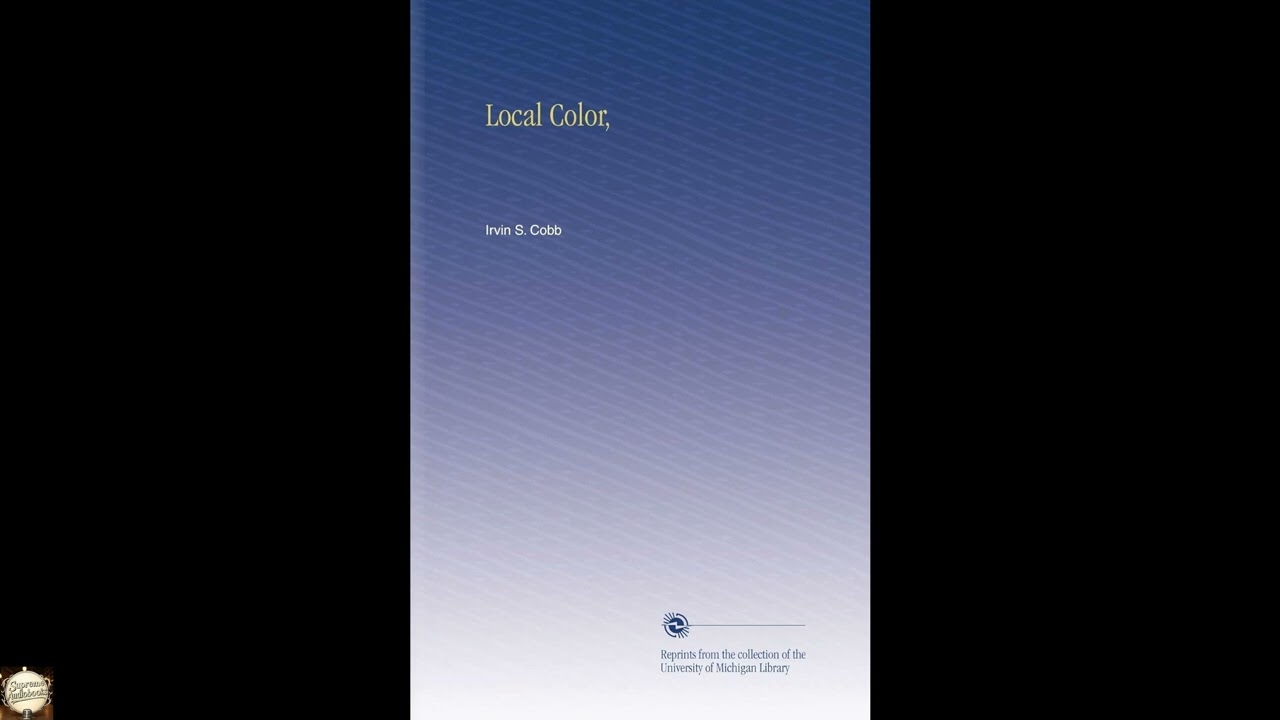
Local Color
Irvin S. Cobb's Local Color stands as a fascinating collection, a window into a particular time and place in American history, brought to life with a distinctive blend of humor, warmth, and sharp observation. For listeners today, it offers more than just entertainment; it provides an authentic glimpse into the culture, customs, and unique characters of the American South in the early twentieth century. These stories, penned by one of the era’s most celebrated humorists, invite us to slow down, listen to the rhythm of small-town life, and appreciate the enduring quirks of human nature. Cobb’s prose, full of personality and wit, makes this volume a delightful discovery for anyone interested in the foundational voices of American regional literature and a deeper understanding of the nation’s diverse heritage. The stories gathered in Local Color transport the listener directly into the heart of rural Kentucky and neighboring Southern states, usually in the decades leading up to the First World War. Cobb's most beloved creation, the wise and folksy Judge Priest, frequently presides over these narratives, offering his homespun wisdom and keen understanding of humanity to resolve local disputes and unravel perplexing situations. We encounter a spectrum of unforgettable individuals: the shrewd country lawyer, the proud but struggling farmer, the gossipy socialite, the earnest young man, and the aging veteran, each with their own peculiar charm and often a hidden streak of nobility or folly. Through these varied characters and their everyday predicaments, Cobb sketches a vivid picture of a society steeped in tradition yet beginning to feel the gentle tug of modernity. The central conflicts often revolve around misunderstandings, the clash of old values with new ideas, or the subtle social dynamics within a close-knit community. Whether it is a dispute over property lines, a personal grudge, a small-town election, or a simple tale of misfortune, Cobb crafts narratives that illuminate the essence of his characters without ever becoming overly sentimental. The arc of these stories is less about dramatic plot twists and more about the gradual revelation of character, the gentle unraveling of a mystery, or the quiet triumph of common sense and human decency over legalistic rigidity. Irvin S. Cobb, born in Paducah, Kentucky, in 1876, led a life as colorful as the stories he told. His career began remarkably early; by age sixteen, he was already working as a staff writer for the Paducah Daily News. His talent for observation and storytelling quickly propelled him from local journalism to the national stage. In 1904, he moved to New York City, where he joined the staff of the New York Evening Sun and later the prestigious New York World, earning a reputation for his incisive reporting and humorous columns. Cobb became one of the highest-paid journalists in the country, admired for his ability to cover everything from sensational court cases to the solemnities of war. Beyond his prolific newspaper career, Cobb was a hugely popular author, publishing more than sixty books and hundreds of short stories and essays. His Judge Priest stories, which began appearing in The Saturday Evening Post, were particularly beloved and cemented his place as a master of Southern regionalism and American humor. During World War I, he served as a war correspondent, producing gripping accounts from the front lines that further showcased his versatility. Cobb’s work often resonated with a broad public, placing him alongside other celebrated humorists like Mark Twain and O. Henry. He also found success in Hollywood, both writing screenplays and appearing in films, eventually passing away in New York City in 1944. Local Color enacts several significant themes, offering listeners insights into a bygone era. One prominent theme is the enduring nature of regional identity, particularly the distinct character of the American South. Cobb meticulously captures the unique dialects, social customs, and unspoken rules that govern interaction in these communities. For instance, in a story involving a courthouse debate, he illustrates how local honor and personal reputation often weigh as heavily as legal precedent, showcasing a justice system shaped as much by community values as by law books. This attention to detail highlights how individual lives are intrinsically linked to the cultural fabric of their home. Another central theme is the power of humor and gentle satire to reveal truth and cope with life’s absurdities. Cobb’s narratives frequently present characters who, despite their flaws or eccentricities, evoke a sense of affection rather than ridicule. He might depict a pompous local official or a misguided do-gooder, not with harsh judgment, but with an underlying current of understanding and good-natured amusement. A common scene might involve a character’s well-intentioned plan going comically awry, only for them to emerge with a new, often humbling, perspective on their own limitations or the unpredictability of life itself. When Local Color was published in 1917, America stood on the brink of significant change, both domestically and internationally. The nation was grappling with the social and economic shifts brought by industrialization, the lingering tensions of the post-Civil War era, and the gathering storm clouds of World War I in Europe. Within the literary world, the "local color" movement had been a significant force since the late nineteenth century, with writers seeking to capture the unique customs, dialects, and landscapes of specific American regions. Cobb's work emerged from this tradition, but also pointed towards the growing realism in American letters, moving beyond pure sentimentality to offer more nuanced, if often humorous, observations of life. His ability to present authentic Southern voices and settings provided a popular counterpoint to both the romanticized "moonlight and magnolias" depictions and the harsher, more critical portrayals of the South. Cobb offered a vision that was grounded in everyday life, focusing on the human elements and the charm of ordinary people. This collection, arriving as the world teetered on the edge of global conflict, offered readers a comforting escape into familiar, human-scaled stories that resonated with a sense of identity and place at a time when much seemed uncertain. Listening to Local Color as an audiobook amplifies the inherent strengths of Cobb's storytelling. These narratives, rich with dialogue and often presented through the voice of a distinct narrator like Judge Priest, truly come alive when spoken. A skilled narrator can render the specific cadences and regional accents, allowing the humor to land with perfect timing and the pathos to resonate with authentic warmth. The several hours of content make this an ideal companion for road trips, relaxed evenings, or quiet moments of reflection, allowing listeners to fully immerse themselves in each story without interruption. Pay attention to how the narration distinguishes between characters, how the pacing allows the subtle jokes and profound observations to sink in, and the overall atmosphere created by the vocal performance—it brings the charming, often wise, world of Irvin S. Cobb’s Kentucky vividly to life.
Enjoyed Local Color? A few ways to support us
Audible & Amazon links are affiliate; we may earn a small commission at no extra cost.
About this production
Human narration by a volunteer reader from LibriVox.org, the public-domain audiobook project. LibriVox volunteers record literary works whose copyright has expired in the United States, releasing the resulting recordings into the public domain.
Local Color by Irvin S. Cobb. The underlying text is in the U.S. public domain. We do not republish any modern copyrighted edition, translation, or commentary.
The 4K cinematic visuals accompanying this audiobook are generated by an AI image model from prompts derived from the source text. No copyrighted photos, paintings, or stock footage are used. AI generation is disclosed on every video on our YouTube channel as required by YouTube's altered/synthetic content policy.
English subtitles are transcribed from the LibriVox recording with OpenAI Whisper. Translations into the 11 other supported languages are produced by Meta's NLLB-200 neural translation model. No human translator's copyrighted translation is used.
Questions about sourcing or rights? See our DMCA & Sourcing policy or contact us.
Enjoyed this audiobook?
If you'd like to own a copy of Local Color or hear a professionally produced edition, the links below help support free audiobook production at no extra cost to you.
As an Amazon Associate we earn from qualifying purchases. Audible / print links are affiliate.