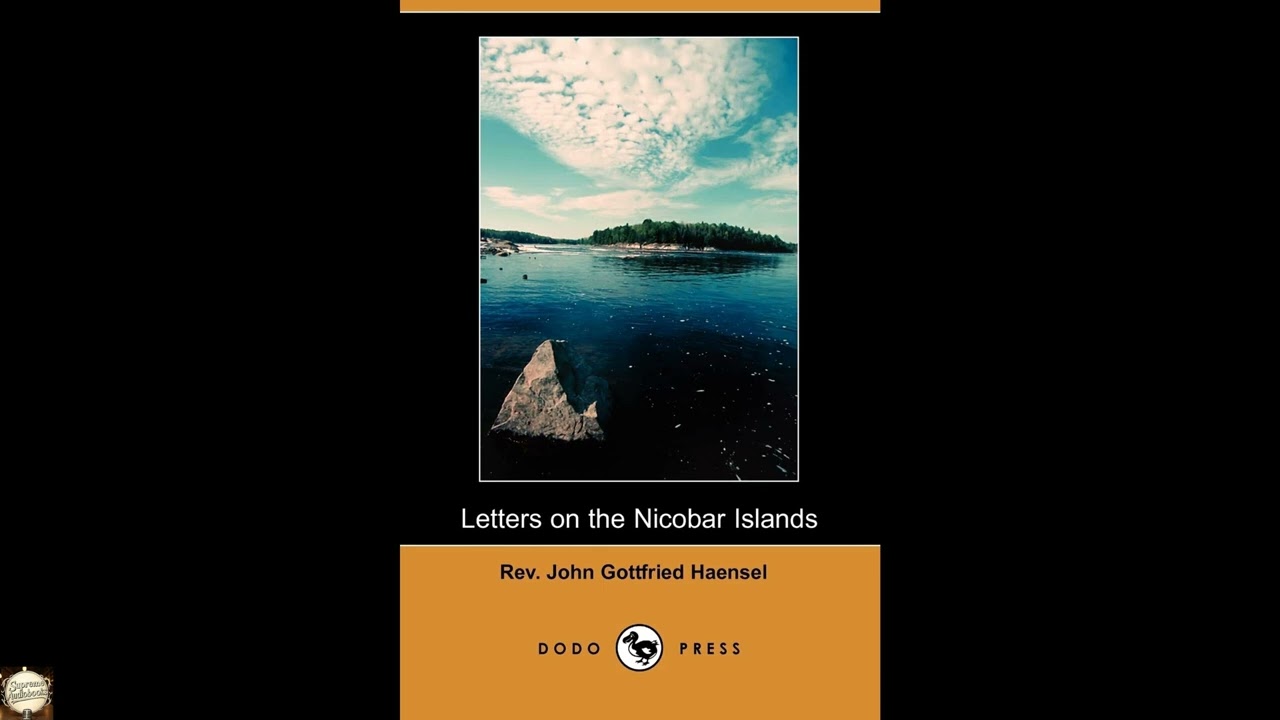
Letters on the Nicobar Islands, Their Natural Productions and the Manners, Customs
Step into a world simultaneously distant and intimately presented, a realm of verdant islands, unique wildlife, and human traditions observed through the discerning eye of an anonymous correspondent. Letters on the Nicobar Islands, Their Natural Productions and the Manners, Customs is more than a historical document; it is an act of sustained observation, a testament to curiosity, and a remarkable window into a moment when the world was being meticulously cataloged for the first time by European observers. For anyone fascinated by anthropology, natural history, or the compelling art of the epistolary form, this collection offers an unparalleled opportunity to hear the very thoughts and impressions of someone encountering a new world, grappling with the complexities of understanding. It is a work that speaks to the perennial human drive to document, to classify, and to comprehend the diverse expressions of life on Earth, inviting us to reflect on our own perceptions of difference today. The narrative unfolds through a series of letters, presumably dispatched from the remote Nicobar Islands, an archipelago nestled in the Bay of Bengal. The writer, whose identity remains veiled, assumes the role of an earnest chronicler, meticulously detailing the flora and fauna that comprise the islands’ natural bounty. Listeners will hear descriptions of exotic plants, unfamiliar birds, and the diverse marine life thriving around these shores, each observation rendered with a precision that hints at a scientific inclination. Beyond the natural world, the correspondent turns their attention to the human inhabitants, sketching vivid portraits of their daily routines, social structures, and spiritual beliefs. There is no traditional "plot" in the sense of rising action or a dramatic climax, but rather a progression of discovery, an accumulation of detail that builds a composite picture of an isolated society. The central drama of these letters lies in the ongoing interaction—or often, the careful non-interaction—between the observer and the observed. We hear the correspondent's struggle to interpret behaviors and rituals that lie outside their own cultural framework, their attempts to reconcile unfamiliar customs with their existing worldview. The arc of the story is the deepening understanding, or perhaps the growing awareness of the limits of understanding, as the writer moves from initial impressions to more nuanced observations. We witness the writer grappling with the practicalities of island life, the challenges of communication, and the sheer wonder of confronting a way of being far removed from their own. The final letters deepen this sense of quiet rumination, leaving the listener with a profound appreciation for the islands and their people, but without revealing the ultimate fate or conclusions of the letter writer's stay. The author of these remarkable letters remains unknown, their name lost to time, but the work itself speaks volumes about the tradition from which it emerged. Such anonymous accounts are not uncommon in the annals of early travel writing and scientific documentation, often originating from individuals—whether missionaries, colonial administrators, or independent naturalists—whose primary focus was on the subject matter rather than personal renown. The very anonymity lends a certain universality to the observations, allowing the reader to concentrate solely on the details presented. This type of epistolary reportage was a common method of circulating information in an era before organized scientific journals, enabling first-hand accounts to be shared with distant readers eager for knowledge of newly encountered lands. The author’s voice, though unnamed, suggests a person of keen intellect, considerable patience, and a genuine, if sometimes detached, curiosity. Their detailed observations of the Nicobarese people’s "manners and customs" place this work within the nascent field of ethnography, while the precise descriptions of "natural productions" align it with early botanical and zoological studies. It stands as a testament to the quiet dedication of those individuals who, often at great personal remove and even risk, contributed to humanity's growing understanding of global biodiversity and cultural diversity. The absence of a personal biography forces us to consider the text purely on its own merits, allowing the islands and their inhabitants to become the true protagonists of this compelling account. Several key themes emerge from the letters. One prominent theme is the clash of cultures and the challenges of interpretation. The writer repeatedly grapples with understanding the motivations behind Nicobarese rituals or social norms, often viewing them through a European lens while simultaneously striving for objective description. For instance, a passage might describe a local ceremony, detailing its visual components and participants’ actions, but then admit to the correspondent’s difficulty in fully grasping its spiritual significance, thus highlighting the inherent barriers to complete cross-cultural comprehension. Another theme is the beauty and vulnerability of the natural world. The meticulous listing of plants, animals, and geological features not only serves as a scientific record but also conveys a deep appreciation for the islands’ unique ecosystem, hinting at the potential fragility of such pristine environments in the face of external contact. The letters also demonstrate the power of sustained observation as a means of acquiring knowledge. The sheer volume of detail, from the construction of dwellings to methods of food preparation, underscores the idea that understanding comes from patient, prolonged attention rather than fleeting impressions. A scene describing the intricate weaving of a fishing net, for example, illustrates the ingenuity of the islanders while also showcasing the correspondent’s dedication to recording even the minutiae of their daily lives. Finally, the epistolary form itself acts as a central theme, providing an intimate and immediate window into the correspondent’s evolving thoughts. The structure of letters allows for a certain rawness and immediacy, giving listeners the sense of being privy to a private conversation, receiving direct dispatches from a distant land, complete with the correspondent’s doubts, insights, and moments of wonder. This collection of letters likely originated from a period when European powers were expanding their global reach, driven by both commercial interests and a burgeoning scientific curiosity. The late eighteenth or early nineteenth century saw a particular surge in organized expeditions and individual travels aimed at mapping uncharted territories, cataloging unknown species, and documenting the customs of indigenous peoples. Institutions like botanical gardens and natural history museums were growing, creating a demand for such detailed accounts. This was also an era of Enlightenment ideals, where empirical observation and rational classification were highly valued, influencing how individuals approached the study of the natural world and human societies. The remote location of the Nicobar Islands would have made such an account particularly valuable, offering fresh data for an eager scientific and administrative audience back home, keen to understand the world and its potential resources. To listen to Letters on the Nicobar Islands as an audiobook is to be transported directly into the world of the anonymous correspondent. The format breathes life into these historical documents, allowing the listener to truly appreciate the intimate, conversational tone inherent in letter writing. The narration, with its measured pacing and considered articulation, echoes the deliberate nature of the observations themselves. Listen for the subtle shifts in the narrator's voice as the correspondent moves from factual botanical descriptions to more reflective passages on human interaction, evoking the atmosphere of a mind at work. The run length, several hours in duration, encourages a deep immersion, allowing the details of island life and the nuances of the writer’s perspective to truly settle in, making it a perfect companion for thoughtful contemplation or a longer drive. It offers a profound, unmediated connection to a past era and a distant place.
Enjoyed Letters on the Nicobar Islands, Their Natural Productions and the Manners, Customs? A few ways to support us
Audible & Amazon links are affiliate; we may earn a small commission at no extra cost.
About this production
Human narration by a volunteer reader from LibriVox.org, the public-domain audiobook project. LibriVox volunteers record literary works whose copyright has expired in the United States, releasing the resulting recordings into the public domain.
Letters on the Nicobar Islands, Their Natural Productions and the Manners, Customs. The underlying text is in the U.S. public domain. We do not republish any modern copyrighted edition, translation, or commentary.
The 4K cinematic visuals accompanying this audiobook are generated by an AI image model from prompts derived from the source text. No copyrighted photos, paintings, or stock footage are used. AI generation is disclosed on every video on our YouTube channel as required by YouTube's altered/synthetic content policy.
English subtitles are transcribed from the LibriVox recording with OpenAI Whisper. Translations into the 11 other supported languages are produced by Meta's NLLB-200 neural translation model. No human translator's copyrighted translation is used.
Questions about sourcing or rights? See our DMCA & Sourcing policy or contact us.
Enjoyed this audiobook?
If you'd like to own a copy of Letters on the Nicobar Islands, Their Natural Productions and the Manners, Customs or hear a professionally produced edition, the links below help support free audiobook production at no extra cost to you.
As an Amazon Associate we earn from qualifying purchases. Audible / print links are affiliate.
More by Unknown
Notes and Queries, Number 171, February 5, 1853
Camps and Trails in China: A Narrative of Exploration, Adventure and Sport in Little- Full Audiobook
Presidential candidates; containing sketches, biographical, personal and political,