Leonie of the Jungle
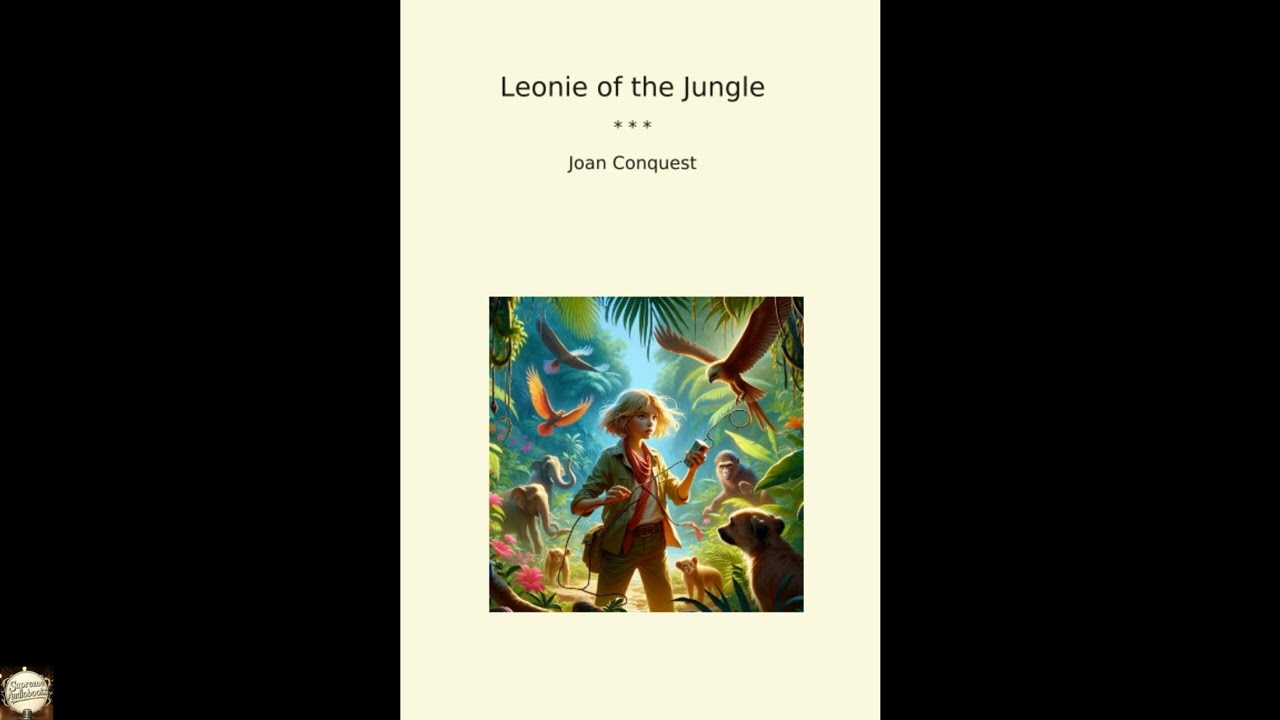
Stepping into the world of Leonie of the Jungle is an invitation to witness the collision of primal wilderness and the rigid conventions of early twentieth-century society. Joan Conquest’s forgotten classic sweeps listeners into a realm where survival means shedding expectations, where identity is forged not by birthright but by the very earth beneath one's feet. This audiobook offers more than a story; it presents a vivid thought experiment on what it means to be human, free, and bound by circumstance, a narrative that remains surprisingly resonant in its questions about selfhood and the definition of civilization even a century later. The story opens deep within the vast, verdant heart of an uncharted African jungle, a place teeming with life and unseen dangers, far removed from the maps and manners of the colonial world. Here, we meet Leonie, a young woman of European descent, raised from infancy by the jungle itself after a shipwreck left her orphaned and alone. She moves with the lithe grace of a leopard, understands the subtle whispers of the wind, and converses with the creatures of the forest more readily than with any human tongue. Her existence is one of pure, instinctual freedom, guided by the rhythms of nature and the fierce necessity of survival. This untamed Eden is dramatically disrupted by the arrival of an expedition led by Captain Alistair Finch, a British explorer driven by ambition and a thirst for discovery, representative of the very world Leonie has never known. Finch, initially captivated by the "wild woman" he encounters, struggles to reconcile her raw power and self-sufficiency with his own deeply ingrained notions of femininity and societal order. Leonie, in turn, finds herself torn between her profound connection to the jungle and a growing, unsettling curiosity about the world Finch represents—a world of complex emotions, unspoken rules, and an alien concept of belonging. The central conflict intensifies as Finch attempts to "rescue" Leonie, to bring her back to a society she neither understands nor desires, while simultaneously facing threats from within his own expedition and the formidable challenges of the jungle itself. The narrative charts Leonie’s struggle to retain her true self amidst these pressures, and Finch's gradual realization that perhaps the "savagery" he perceives holds a wisdom his own world has long abandoned. The tale builds towards a dramatic confrontation that will determine not only Leonie’s fate but also Finch’s understanding of humanity. Joan Conquest, though perhaps lesser known to contemporary audiences, was a distinctive voice in early twentieth-century adventure fiction. Born in England around the turn of the century, she developed an early fascination with remote cultures and the natural world, spending considerable time in British colonial territories in Africa and Asia. These travels provided a vivid backdrop for her novels, which often featured strong, unconventional female protagonists who challenged societal norms. Conquest was not merely a teller of thrilling tales; she subtly critiqued the imperialist mindset prevalent in her time, presenting indigenous cultures with a degree of respect and complexity rare for the period. Her published works, which included "Drums of the Delta" and "The Ivory Trail," often combined suspenseful narratives with anthropological curiosity and a keen eye for psychological drama, establishing her as a unique contributor to the adventure genre. Conquest's unique perspective placed her somewhat outside the mainstream literary movements, though her work shares thematic threads with both late Victorian romance and emerging modernist realism. She was a woman writing about wilderness and power at a time when women's roles were still largely circumscribed, and her characters often reflected this spirit of independence and defiance. While not explicitly an activist, her novels quietly advocated for a broader understanding of human potential, irrespective of gender or background, earning her a dedicated readership during her active publishing years. Leonie of the Jungle effectively dramatizes several enduring themes. Foremost among these is the stark contrast between nature and civilization. Leonie’s intrinsic understanding of the jungle—her ability to read its signs, to find sustenance, and to survive its dangers—stands in direct opposition to Finch’s dependence on technology, maps, and societal structures, showing how different environments shape intellect and intuition. For example, a scene where Leonie instinctively senses an approaching storm minutes before Finch’s instruments register it, highlights her innate connection to the natural world versus his learned, analytical approach. Another significant theme is identity and belonging. Leonie grapples with her dual heritage, a European body housing a spirit forged by the wild. When Finch tries to dress her in European clothes and teach her proper manners, her physical discomfort and emotional resistance vividly demonstrate her struggle to reconcile who she is with who society expects her to be. This internal conflict forms the emotional core of her story. The novel also touches upon the complexities of colonialism and the "other." Finch’s initial impulse to categorize Leonie as a "savage" needing redemption reflects the prevailing colonial attitudes of the era, yet her undeniable competence and grace force him to question these preconceptions. Finally, the novel engages with female agency and self-determination. Leonie is never a passive damsel; she actively fights for her freedom and dictates the terms of her engagement with the outside world, demonstrating a formidable will and independence that challenged the gendered expectations of her time. The climactic moments of the story often hinge on her proactive choices rather than her being acted upon. This narrative emerged during a period of intense global change, roughly the early decades of the twentieth century. The "Scramble for Africa" was still a recent memory, and European powers held vast colonial empires. There was a widespread public fascination with exotic lands, exploration, and the perceived "primitive" cultures found there. Writers like H. Rider Haggard and Edgar Rice Burroughs capitalized on this interest, producing adventure stories set in fantastic, untamed locales. Simultaneously, Western society was grappling with the rapid advancements of industrialization and the perceived loss of connection to nature. Leonie of the Jungle fit squarely into this cultural moment, offering both escapism to a wild frontier and a subtle commentary on the very concepts of progress and wilderness that society was debating. It provided a mirror to anxieties about modernity and a romanticized longing for a more elemental existence. Listening to Leonie of the Jungle as an audiobook transforms the text into an immediate, sensory experience. The spoken word allows the narrative's inherent drama to unfurl with vivid intensity. Imagine the narrator’s voice capturing the dense, humid atmosphere of the jungle, the sudden rustle of unseen creatures, or the profound silence of the deep forest. A skilled narrator can distinguish between Leonie’s more guttural, instinctual expressions and Finch’s cultured, British tones, allowing listeners to truly hear the clash of their worlds. The pacing of the narration becomes crucial here; moments of quiet observation can give way to heart-pounding suspense, enhancing the feeling of being truly present in Leonie’s wild domain. Listen for the subtle inflections in dialogue that reveal unspoken motives and the building tension, making this tale of survival and self-discovery feel remarkably alive.
Enjoyed Leonie of the Jungle? A few ways to support us
Audible & Amazon links are affiliate; we may earn a small commission at no extra cost.
About this production
Human narration by a volunteer reader from LibriVox.org, the public-domain audiobook project. LibriVox volunteers record literary works whose copyright has expired in the United States, releasing the resulting recordings into the public domain.
Leonie of the Jungle by Joan Conquest. The underlying text is in the U.S. public domain. We do not republish any modern copyrighted edition, translation, or commentary.
The 4K cinematic visuals accompanying this audiobook are generated by an AI image model from prompts derived from the source text. No copyrighted photos, paintings, or stock footage are used. AI generation is disclosed on every video on our YouTube channel as required by YouTube's altered/synthetic content policy.
English subtitles are transcribed from the LibriVox recording with OpenAI Whisper. Translations into the 11 other supported languages are produced by Meta's NLLB-200 neural translation model. No human translator's copyrighted translation is used.
Questions about sourcing or rights? See our DMCA & Sourcing policy or contact us.
Enjoyed this audiobook?
If you'd like to own a copy of Leonie of the Jungle or hear a professionally produced edition, the links below help support free audiobook production at no extra cost to you.
As an Amazon Associate we earn from qualifying purchases. Audible / print links are affiliate.